Playwright vs Selenium In-Depth Comparison: A Test Automation Tool Selection Guide for the AI Era

A comprehensive comparison of Playwright and Selenium for automation testing in the AI era.
This article provides an in-depth comparison of Playwright and Selenium, analyzing their architectural differences including DevTools Protocol vs WebDriver, async performance, intelligent locators, and browser support. It highlights Playwright's killer feature — native MCP integration with AI large language models — and offers practical selection guidance for different project scenarios.
Introduction: A New Choice in Browser Test Automation
In the world of Web automation testing, Selenium has long held a dominant position. However, since Microsoft launched Playwright, more and more developers and test engineers have been shifting to this more modern tool. Especially in the era of AI large language models, Playwright is becoming the go-to solution for test automation thanks to its deep integration capabilities with AI through the MCP protocol.
This article provides an in-depth analysis of Playwright's core advantages over traditional tools like Selenium, covering technical principles and applicable scenarios to help you decide whether Playwright should be part of your tech stack.
Playwright's Core Technical Advantages
Backed by Microsoft with Guaranteed Continuous Iteration
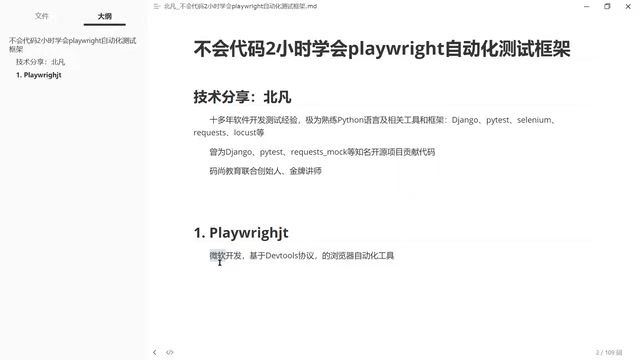
Playwright is developed and maintained by a Microsoft team, backed by a strong engineering organization and a consistent update cadence. For enterprise-level projects, choosing a tool backed by a major tech company means lower risk of abandonment — you don't have to worry about the project suddenly going unmaintained or the community shrinking.
In contrast, while Selenium has a long history and a mature ecosystem, its architectural design is showing its age. The Selenium project started in 2004, originally developed by Jason Huggins at ThoughtWorks. It went through a major architectural evolution from Selenium RC (controlling browsers via injected JavaScript) to Selenium WebDriver (controlling browsers through browser driver programs). WebDriver was later standardized by W3C, becoming the official standard protocol for browser automation. However, the WebDriver protocol uses a classic HTTP client-server model: test scripts send HTTP requests to browser drivers (like ChromeDriver or GeckoDriver), which then forward commands to the browser. This synchronous request-response pattern struggles with the heavy asynchronous operations in modern web applications.
Google's Puppeteer is also excellent, but it only supports Chrome/Chromium, limiting its applicability. It's worth noting that Playwright's core development team actually came from Google's Puppeteer project. Puppeteer is a Node.js library released by Google in 2017, also based on the CDP protocol to control Chrome/Chromium browsers, achieving tremendous success in headless browser automation. In 2019, Puppeteer's main contributors, including Andrey Lushnikov, joined Microsoft and launched the Playwright project. They built upon Puppeteer's foundation with comprehensive upgrades: multi-browser support (Firefox, WebKit), multi-language bindings (Python, Java, .NET), more powerful auto-wait mechanisms, browser context isolation, and more. Playwright can be considered the spiritual successor and comprehensive evolution of Puppeteer — designed from the ground up to incorporate lessons learned from its predecessors, solving many legacy issues at the architectural level.
Based on DevTools Protocol: Dual Boost in Speed and Capability
Playwright's most fundamental technical feature is its use of the DevTools Protocol (Chrome DevTools Protocol, or CDP) for browser control.
CDP was originally an internal communication protocol designed by Chrome for its Developer Tools (DevTools). It allows external programs to communicate bidirectionally with the browser engine via WebSocket connections, controlling page navigation, DOM manipulation, network interception, performance profiling, JavaScript execution, and virtually all other browser functions. CDP uses JSON-RPC format for message transmission, divided into multiple domains (such as Page, Network, Runtime, DOM), each responsible for a specific set of functions. Unlike Selenium's WebDriver protocol (based on an HTTP request-response model), CDP's WebSocket persistent connection mechanism avoids the overhead of frequently establishing HTTP connections while supporting the browser's ability to proactively push events to the client, making operations like listening to page events and network requests more efficient and real-time.
This protocol uses WebSocket for fast bidirectional asynchronous communication, delivering three key advantages:
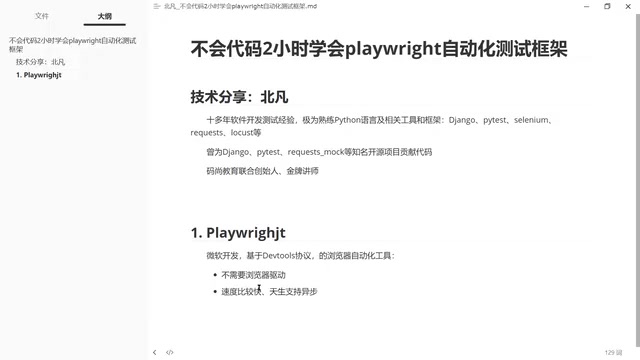
First, no browser drivers needed. When using Selenium, you need to download and configure the matching version of a browser driver (like ChromeDriver), and version mismatches are one of the most common issues beginners encounter. Although Selenium later added support for automatic driver downloads, this extra dependency layer always exists. Playwright controls browsers directly through the DevTools Protocol — as long as you have a browser, it works, significantly lowering the barrier for environment setup.
Second, faster execution speed. Thanks to the DevTools Protocol's WebSocket-based asynchronous communication mechanism, Playwright natively supports asynchronous operations. In large-scale UI automation testing, test execution speed itself is a pain point, and Playwright's async nature can significantly improve execution efficiency. This is also why more and more web scraping developers are choosing Playwright — in high-concurrency automation scenarios, the performance advantages of async support are very pronounced.
Third, it can control all browser functions. Since the DevTools Protocol is an interface provided by the browser engine itself, Playwright can automate virtually all browser capabilities. A concrete example: the browser's built-in translation feature cannot be invoked by Selenium, but Playwright can use it directly. This "full feature coverage" capability is especially important in complex testing scenarios.
Intelligent Locator Mechanism
Playwright includes a built-in intelligent locator system that provides more semantic locator strategies (such as getByRole, getByText, etc.) compared to traditional XPath or CSS selector approaches.
From a technical perspective, Playwright's intelligent Locator mechanism locates elements based on user-perceivable semantic attributes rather than relying on DOM structure paths. For example, getByRole locates elements based on WAI-ARIA role attributes (such as button, link, heading), getByText locates by visible text content, and getByLabel locates form elements by their associated label text. These locator methods simulate how real users identify page elements — users don't care about a button's XPath path in the DOM tree; they identify it by its text and role. Additionally, Playwright's Locators have strict mode and automatic retry mechanisms: when a locator matches multiple elements, it throws an error (preventing operations on the wrong element), and when an element is temporarily invisible or non-interactive, it automatically waits, significantly reducing flaky test issues.
This brings two practical benefits:
- Easier element location: Better code readability and lower maintenance costs
- Lower failure probability: Intelligent locators are more tolerant of page structure changes, reducing the problem of test cases failing en masse due to minor frontend modifications
Playwright's Limitations
Limited Browser Support
The DevTools Protocol is both Playwright's greatest strength and its limitation. Because Playwright relies entirely on the DevTools Protocol, it can only support browsers that implement this protocol, primarily including:
- Chromium-based browsers: Chrome, the new Edge (Chromium-based), Opera, etc.
- Firefox: Adapted by the Playwright team
- WebKit: For Safari testing
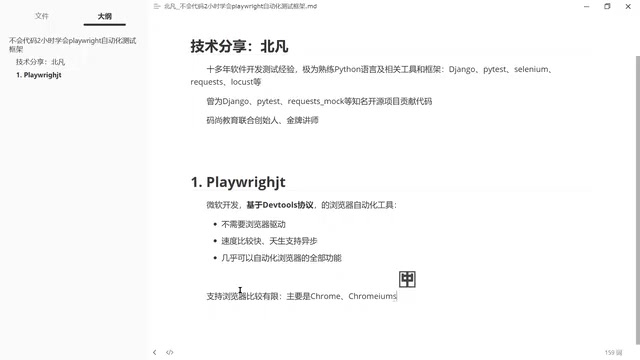
However, for legacy IE browsers, since their engine is completely incompatible with the DevTools Protocol, Playwright cannot support them. A detail worth noting: the new Microsoft Edge uses the Chromium engine and is fully supported, but the older Edge (based on the EdgeHTML engine) that came with Windows 8 is not.
If your project still needs to support IE or other non-mainstream browsers, Selenium remains the safer choice.
Ecosystem Maturity
Compared to Selenium's massive ecosystem and community resources accumulated over more than a decade, Playwright, as a newcomer, still has gaps in third-party plugins, tutorial resources, and community size. However, this gap is closing rapidly.
The Killer Feature in the AI Era: Playwright MCP Integration
This is Playwright's most forward-looking advantage today. Through Playwright MCP (Model Context Protocol), Playwright can deeply integrate with AI large language models.
MCP (Model Context Protocol) is an open protocol standard released by Anthropic in late 2024, designed to provide AI large language models with a unified way to connect and operate external tools, data sources, and services. MCP uses a client-server architecture: the AI model acts as the client, while various tools and services serve as MCP servers. Through MCP, AI models can discover available tools, understand their input/output formats, and dynamically invoke these tools during conversations. Playwright MCP Server is an official MCP service implementation provided by Microsoft that encapsulates Playwright's browser control capabilities (such as navigation, clicking, input, screenshots, page content retrieval, etc.) as MCP tools, enabling any AI model that supports the MCP protocol to directly drive browsers to complete complex web interaction tasks without manually writing automation scripts.
In simple terms, AI can directly invoke Playwright through the MCP protocol to control browsers, enabling:
- Natural language-driven testing: Describe testing requirements in natural language, and AI automatically generates and executes test scripts
- Intelligent test generation: AI analyzes page structure and automatically generates test cases
- Adaptive maintenance: When pages change, AI assists in updating test scripts
This means that even testers who aren't proficient in programming can leverage AI capabilities to complete complex automation testing tasks. This "AI + Playwright" combination is redefining how automation testing works.
Selection Recommendations: How to Choose Between Playwright and Selenium
| Dimension | Playwright | Selenium |
|---|---|---|
| Execution Speed | ⭐⭐⭐⭐⭐ | ⭐⭐⭐ |
| Environment Setup | Simple, no drivers needed | Requires browser drivers |
| Browser Support | Mainstream browsers | Almost all browsers |
| AI Integration | Native MCP support | Requires additional development |
| Community Ecosystem | Growing rapidly | Very mature |
| Async Support | Native support | Requires additional handling |
Scenarios where Playwright is recommended: New project launches, pursuit of execution efficiency, need for AI integration, primarily testing mainstream browsers, high-concurrency web scraping tasks.
Scenarios where Selenium is recommended: Need to support legacy browsers like IE, existing large Selenium test assets, team more familiar with Selenium.
Conclusion
Playwright represents the modern direction of browser automation tools. Its architecture based on the DevTools Protocol gives it natural advantages in speed, feature coverage, and async support, while its deep integration capability with AI large language models positions it ahead in the era of intelligent testing. Although there's still room for improvement in browser compatibility and ecosystem maturity, for most modern web projects, Playwright is already the superior choice.
Key Takeaways
Related articles
Deep Dive into vLLM Worker-Side GPU KV Cache Initialization
Deep dive into vLLM's Worker-side KV Cache GPU memory allocation, covering the full pipeline from KVCacheConfig generation to physical memory binding via ModelRunner.
Zepto Builds AI Customer Service with MLflow: An Evaluation-Driven Practice Guide
Deep dive into how Zepto built an evaluation-driven AI customer service system using MLflow and Databricks, achieving 60% faster responses and 40% less manual handling. From technical architecture to practical insights.

Iran Captures U.S. Underwater Drone in Strait of Hormuz: A Comprehensive Analysis
Iran announces capture of U.S. Navy underwater drone in Strait of Hormuz. In-depth analysis of the incident, strategic value of UUVs, U.S.-Iran geopolitical competition, and implications for global energy security and military dynamics.