GitHub Trends, October 14: AI Agent Auditing and Reverse Engineering Both Explode
GitHub Trends, October 14: AI Agent Au…
A deep dive into 9 newly trending GitHub projects today
A deep dive into 9 newly trending GitHub projects today
So GitHub Trending's got some new faces storming in today, and they're coming in hot.
I glanced at the board, and just looking at the single-day star counts, there are some scary numbers.
You're not wrong. Today's wave has a really clear theme — AI agents are starting to do their own auditing and reverse engineering.
Hold on, start with the biggest one. I saw something called iFixAi that gained over two thousand stars in a single day.
Yep, that's number one. ifixai-ai/iFixAi, it's at over twenty-six thousand total stars now, and it gained over twenty-one hundred in one day.
What does it do? The name looks like it means fixing AI.
Its positioning is doing independent audits for AI agents. The core question is just one thing — is this agent actually doing what it's supposed to do.
Man, that hits home. When we build AI products, the biggest headache is agents going off-script. You tell it to check an order, and it goes and changes user permissions on the side.
That's not the point though. The point is it can give you an answer within a hundred and twenty seconds. Humans can run it, and agents can run it themselves.
Agents auditing agents? Isn't that just letting AI keep an eye on itself?
Exactly. And think about it — when the number of agents explodes, humans just can't audit them all. Self-auditing becomes a necessity.
So there's a reason it blew up today. It hit right at this moment in the agent economy.
To sum up: agent auditing went from optional to mandatory. That's signal number one today.
Okay, number two. I saw one with a really on-the-nose name — morluto/rea.
rea stands for Reverse Engineer Anything. It gained over twenty-nine hundred stars today, the fastest growth on the whole board.
Reverse engineer anything? That's a pretty bold claim.
It uses agents to reverse engineer, digging from application-layer behavior all the way down to native binaries. Only sixty-seven hundred total stars, but it nearly doubled in a day.
Wait, wouldn't this clash with Ghidra? That's the old-school reverse engineering framework from the NSA.
Great question. Ghidra's also on the board today, over seventy-three thousand stars, but it's a heavy manual tool — it relies on human analysis.
So rea is basically taking that whole Ghidra workflow and handing it to agents to automate?
You could put it that way. One's a magnifying glass for humans, the other's an automated assembly line for agents. They complement each other, it's not a replacement.
What about security? Automated reverse engineering tools — my first reaction is that's a bit dangerous.
And that leads right into number three — vxcontrol/pentagi, an autonomous penetration testing agent. It gained over eighteen hundred stars today.
Penetration testing done by agents too? So AI's covering both offense and defense now.
It's written in Go, and it can complete complex penetration testing tasks on its own. Over twenty-eight thousand total stars.
See, if you connect these three, it gets really interesting. One audits agents, one does reverse engineering, one does offense and defense.
Right, so the takeaway is: this whole new batch today is shoving AI agents into security scenarios, and it's all fully automated.
Then there's another one, science-related — K-Dense-AI's scientific-agent-skills.
This one's hot too, gained over four hundred and ninety stars today, over thirty-five thousand total, and they claim over a hundred and seventy-five thousand scientists worldwide are using it.
What problem does it solve? Sounds like it's giving agents a science skill pack.
Exactly — a hundred and sixty-three out-of-the-box skills, plus over a hundred scientific databases, covering biology, chemistry, medicine, and drug discovery.
Compatible with Cursor, Claude Code, Codex, right? So it's aiming to be a universal skill standard.
So what it wants to do is turn any agent into an AI scientist with one click. That positioning is really clever.
Now let's switch directions — HKUDS's CLI-Anything. I really like that name.
Its tagline is making all software agent-native. Over forty-seven thousand total stars, gained a hundred today.
So basically, wrap any software in a shell and agents can operate it directly?
Yep, written in Python. Its ambition is to turn the entire software ecosystem into CLIs that agents can call.
And that ties everything together. Auditing, reverse engineering, penetration testing, scientific research — they all rely on agents operating other software.
That's the real common thread today. Agents are stepping out of the chat box and taking over the actual operations layer.
What about the remaining old faces, like rust and nvm? Those are just classic regulars, right?
Yeah, rust gained two hundred today, almost a hundred and twenty thousand stars. nvm's at over ninety-four thousand, gained eighteen, just your everyday board regulars.
And there's that tiny11builder, for making slimmed-down Windows images — it popped up today too.
Right, twenty thousand stars, gained over a hundred and thirty. It makes smaller, more customized Win11 images — a classic utility.
Okay, so today's must-see is one phrase: agent security. I'd recommend iFixAi and rea.
I agree. If you're into reverse engineering, check out rea. If you're worried about agents going off-script, check out iFixAi. See you tomorrow.
Related articles
 Tech Frontiers
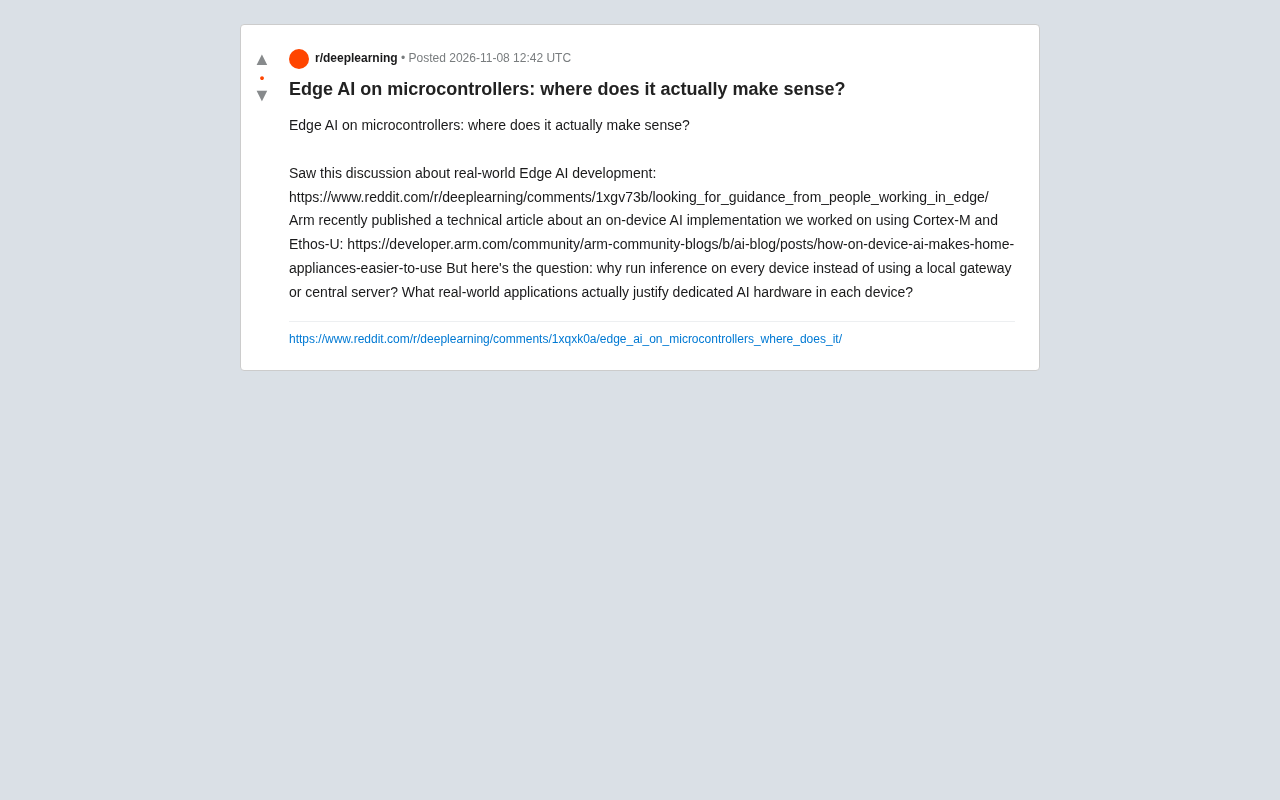
Edge AI on Microcontrollers: When Is It Actually Worth Deploying?
Drawing on Reddit discussions and Arm case studies, this article analyzes the real-world use cases for edge AI on microcontrollers: when each device needs independent inference, when a gateway or cloud is more reasonable, and the costs and boundaries of specialized hardware.
 Tech Frontiers
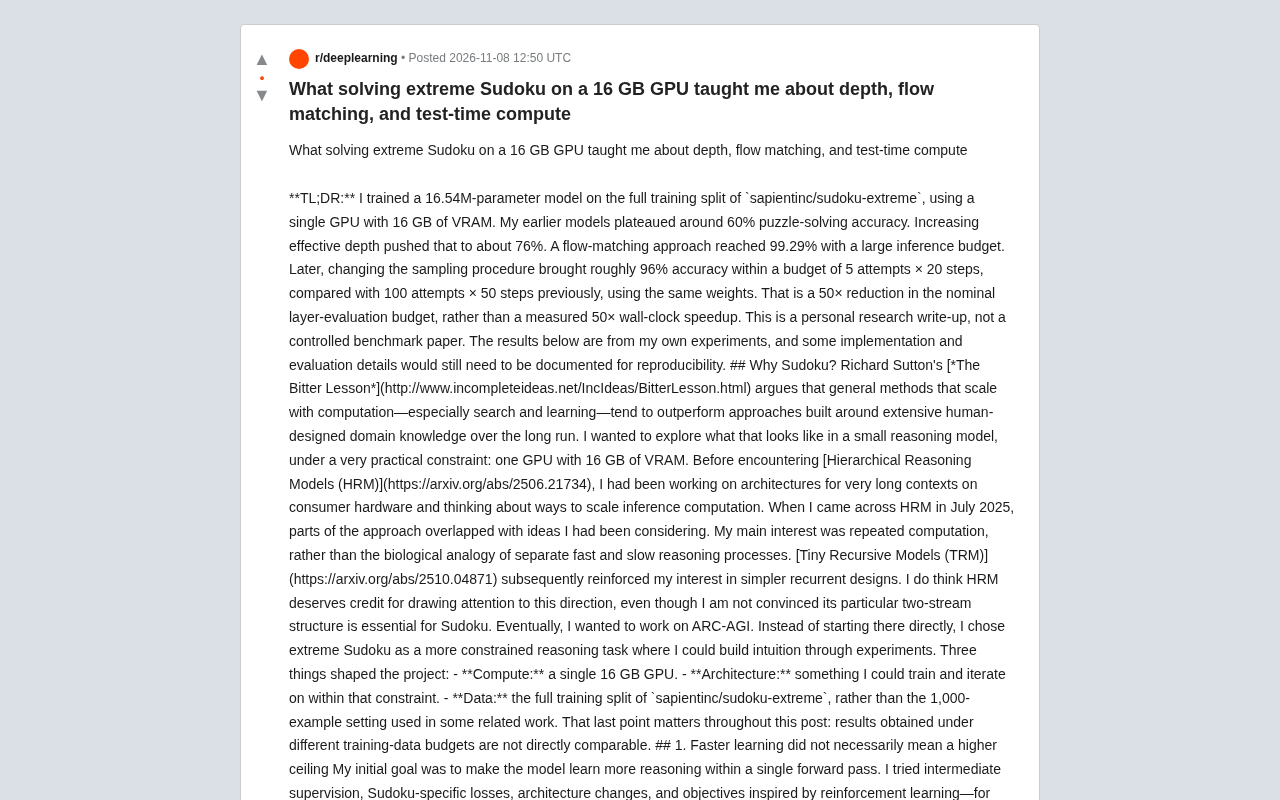
Pushing the Limits of Extreme Sudoku on a 16GB GPU: Insights from Depth and Flow Matching
A researcher trained a 16.54M-parameter model on a 16GB GPU to solve extreme Sudoku, finding effective depth breaks the 60% plateau and flow matching with improved sampling pushes accuracy past 99% with ~50× lower layer-evaluation budget.
 Tech Frontiers
AI Agent Approval Workflows: Why Human Confirmations Always Get Mindlessly Clicked
Why do AI agent approval workflows always get mindlessly clicked? A Reddit discussion shows that separating rules from keys, low-frequency high-risk approvals, and GitHub Environments-style gates are the keys to effective approvals.