GitHub Trending · Oct 26: The Claude Skills Security Arms Race
GitHub Trending · Oct 26: The Claude S…
A deep dive into today's 7 new GitHub trending projects
A deep dive into today's 7 new GitHub trending projects
GitHub Trending has a whole new batch of faces today. All those voice and robot projects from yesterday are gone.
And I noticed something really interesting—of the seven new projects today, six are related to agent skills.
Good catch. Let me give you the conclusion first: this isn't a coincidence—it's a whole industry chain exploding at once.
From writing skills, to security scanning for skills, to giving agents eyes and optimizing the harness—the whole set is here.
Let's break them down one by one. First up, andrej-karpathy-skills, ranked #4 overall today.
Just a single CLAUDE.md file, over 206,000 stars, and it gained another 490+ today. Isn't that a bit crazy?
Think about what problem it solves. When people use Claude Code, the biggest headache is the model keeps falling into the same traps.
Karpathy publicly complained about several common LLM coding pitfalls—like guessing APIs, or being overconfident.
This project condenses those observations into a CLAUDE.md you can drop straight into your repo.
So it turns a guru's experience into a config file. The barrier is so low anyone can copy-paste it.
But let me ask—why did it suddenly spike today?
That's not the point. The point is the传播 path. Karpathy's observations are traffic gold themselves.
Once the community shared it, everyone realized it's almost zero-cost to try—just install and run—so star growth took off.
Got it. So who's it for? I'd say teams just getting started with Claude Code.
Right. And veterans who've been burned by the model messing up their code. One file sets the rules—great value.
Okay, here's number two. And this transition is so natural—NVIDIA's SkillSpector.
Over 21,000 stars, up 200+ today. It does security scanning for agent skills.
This is the industry chain I mentioned. When everyone's frantically stuffing skills into their repos, security issues pop up.
SkillSpector checks for vulnerabilities, malicious patterns, prompt injection, and data exfiltration before installation.
Wait, so a skill you copy from the internet could itself be an attack vector?
Absolutely possible. A skill is essentially instructions for the agent—slip in a malicious one, and it'll obediently follow.
So this thing covers Claude Code, Codex, and MCP skills—it's a cross-platform security gate.
NVIDIA stepping in to do this—what does it mean? It means the skill ecosystem is big enough that someone needs to enforce order.
That's the signal. When an ecosystem moves from wild growth to infrastructure, security tools entering is the marker.
Number three, Agent-Reach. Giving agents eyes—over 64,000 stars, up 600+ today, the fastest grower today.
I like this one. It solves the agent's information silo problem.
A CLI that lets agents read and search Twitter, Reddit, YouTube, GitHub, Bilibili, Xiaohongshu.
And zero API cost—that's the key, right? Now that APIs charge, agent running costs are hard to control.
Exactly. Free API cost is the direct reason it blew up today. For teams building agent products, that alone is worth trying.
The use cases are concrete—like letting the agent search public sentiment across the web, find competitor discussions, without you manually feeding data.
That aligns perfectly with my product thinking. I've always felt half of an agent's capability bottleneck is in information access.
Next one is smaller in scale but interesting in direction—nightly-labs' openbot.
Only about 1,000 stars, up 86 today. A local-first desktop workbench that lets Codex, Claude, Grok be always-on teammates.
It's small, but it's betting on a trend: multiple models coexisting, each with its own workspace and task queue.
Plus agent-to-agent collaboration, browser control, file sharing. It's more like a prototype of an agent operating system.
So it's complementary to the previous ones—those manage rules for a single agent, this manages how multiple agents coexist.
Exactly. But it's still early—just over a thousand stars—more like an early bet worth watching.
Number five, this number is scary. affaan-m's ECC—over 225,000 stars, up 480+ today.
ECC is a performance optimization system for agent harnesses. The key word is harness.
The model itself doesn't change—you optimize the outer shell: skills, intuition, memory, security.
So does its coverage overlap with the previous ones?
There's overlap, and integration. It aims to be a unified optimization layer on top of Claude Code, Codex, Cursor.
You can think of the previous ones as point tools, while ECC wants to be the调度台.
Okay, number six is a change of pace. gitroomhq's postiz-app, a social media scheduling tool, over 37,000 stars.
It's the only non-dev tool today, focused on agentic social scheduling. Up 140+ stars.
But this direction shows one thing: agents are spilling from coding into content operations.
Right, my growth friends are already using agents to run content calendars. Automated scheduling is a real need.
Last one, 花叔设计 3.0. Type a sentence in the agent, get back design you can deliver.
Over 26,000 stars, up 170+ today. It can produce webpages, app prototypes, editable PPTX.
It has 84 style libraries with samples, and can pick 3 directions from 6 candidates—that design is clever.
The key is HTML-native—works directly with Claude Code, Codex, Cursor.
As a product manager, I'm most sensitive to this. Design delivery has always been the hardest nut for agents to crack.
It also says it learns your appearance ledger the more you use it—that personalization idea is quite striking.
So you see, connecting today's seven projects forms a complete lifecycle of agent skills.
Write skills, audit skills, feed agents info, optimize the harness, and finally land in concrete design and operations scenarios.
To sum up, today's biggest signal is that the skill ecosystem is becoming infrastructure—security and performance are the new battlegrounds.
Must-see today, I'll give two picks. One is Agent-Reach—zero-cost internet access is just too practical.
The other I'll give to SkillSpector. Scan before installing skills—that habit should be formed early.
Alright, that's it for today. Tomorrow's list will probably have new tricks—let's keep watching.
Let's go. Remember to run a scan before installing skills—don't go naked.
Related articles
 Tech Frontiers
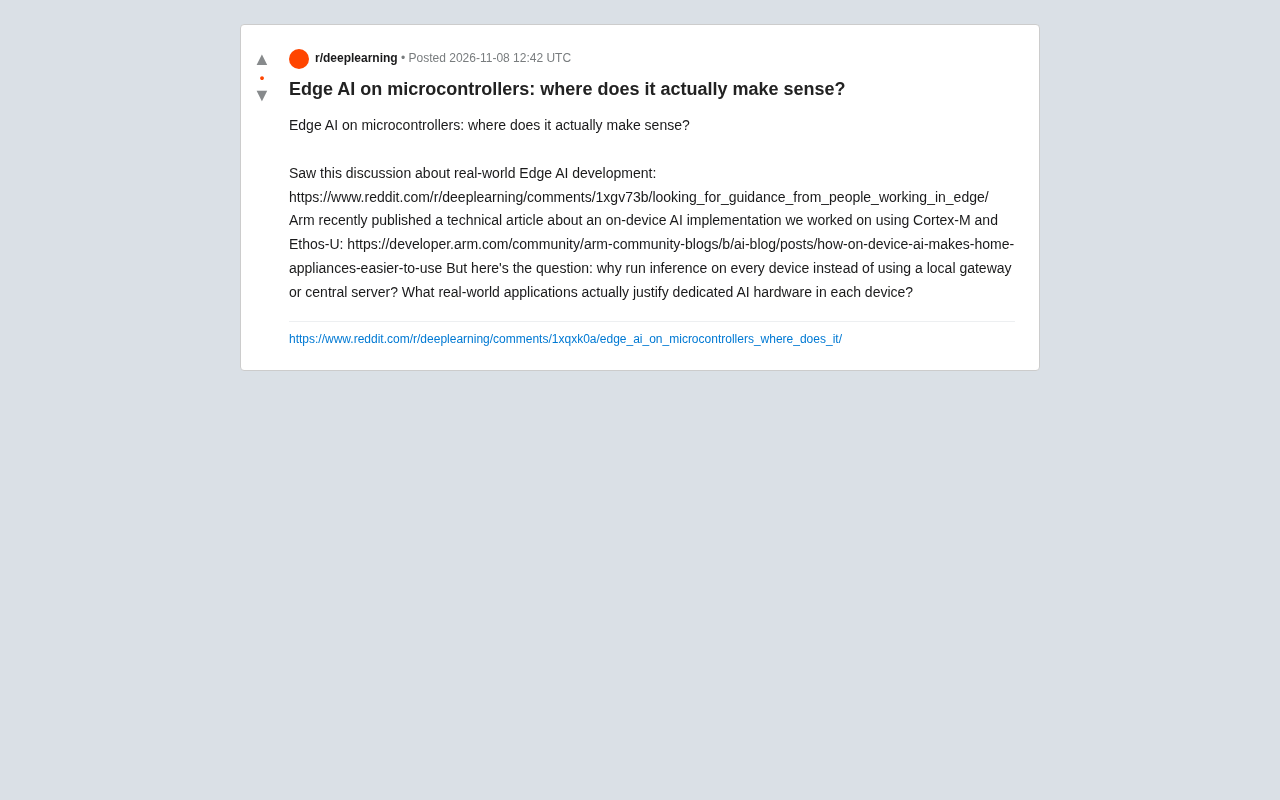
Edge AI on Microcontrollers: When Is It Actually Worth Deploying?
Drawing on Reddit discussions and Arm case studies, this article analyzes the real-world use cases for edge AI on microcontrollers: when each device needs independent inference, when a gateway or cloud is more reasonable, and the costs and boundaries of specialized hardware.
 Tech Frontiers
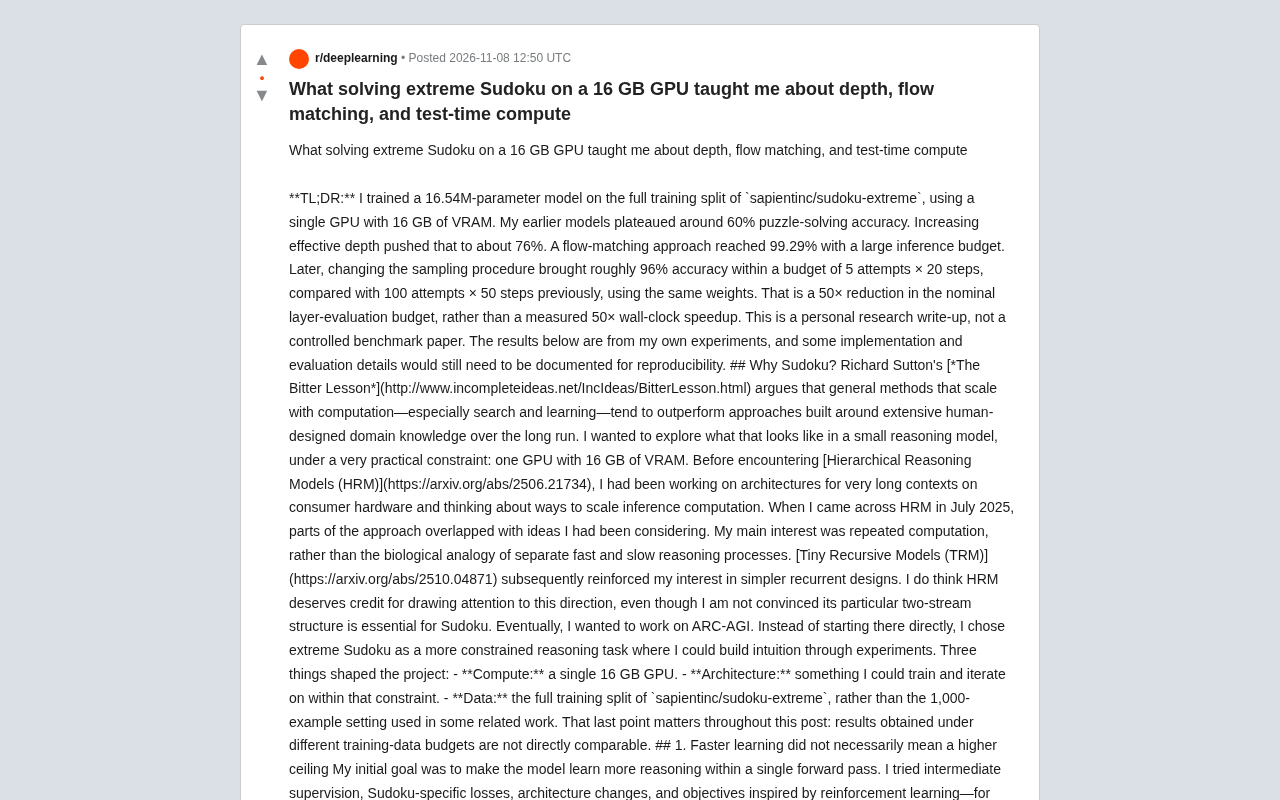
Pushing the Limits of Extreme Sudoku on a 16GB GPU: Insights from Depth and Flow Matching
A researcher trained a 16.54M-parameter model on a 16GB GPU to solve extreme Sudoku, finding effective depth breaks the 60% plateau and flow matching with improved sampling pushes accuracy past 99% with ~50× lower layer-evaluation budget.
 Tech Frontiers
AI Agent Approval Workflows: Why Human Confirmations Always Get Mindlessly Clicked
Why do AI agent approval workflows always get mindlessly clicked? A Reddit discussion shows that separating rules from keys, low-frequency high-risk approvals, and GitHub Environments-style gates are the keys to effective approvals.