GitHub Trending · Oct 28: AI Skill Packs Charge Into Design
GitHub Trending · Oct 28: AI Skill Pac…
Deep dive into 6 new projects on GitHub Trending today
Deep dive into 6 new projects on GitHub Trending today
A few new faces just hit Trending on GitHub today. And this time, the vibe feels a bit different from the past few days.
You're not wrong. The past few days it was all agent skills everywhere, and today it's starting to dig into vertical industries.
Let's take them one by one. First up, elayadesign's ai-design-skills.
This one's interesting. It breaks the design process down into skill packs that agents can actually execute.
Hold on — isn't design all about human taste?
That's not really the point. It tackles the repetitive stuff on design teams, like spec checks and component alignment.
So it frees designers from the grunt work.
Exactly. And it gained over 1,390 stars today, shooting straight up to number two.
A project with over ten thousand stars, gaining a thousand-plus in a day — that's some serious momentum.
Because someone in the design world finally made agent skills that work out of the box. The barrier's just gone.
As a product manager, I feel this deeply. When we argue with design over requirements, it's all back-and-forth on mockups.
So these skill packs are essentially automating the collaboration workflow.
So who's it for? Pure designers, or can PMs pick it up too?
Both work. Designers use it to enforce specs, PMs use it to quickly produce review-ready drafts.
Alright, number two — macro-inc's macro. Talk about a plain name.
But the thing itself isn't plain. What it's trying to do is connect email, chat, docs, tasks, and CRM all together.
So isn't that just Slack plus Notion plus Gmail plus Salesforce mashed into one?
On the surface, yeah. But the real keyword here is shared AI memory.
Unpack that for me — what does shared memory mean?
The context you've given the agent stays there for everyone on the team when they talk to it.
Now that's interesting. It's like the agent becomes a team member with a memory.
Right. And it's written in Rust, so they're clearly going for performance. It gained over 240 stars today.
Only about 1,100 stars — so it's just getting started.
So getting in now makes you an early adopter. With this kind of unified workspace, the real battle is team migration cost.
Microsoft and Google have both bet big in this direction. How does it survive?
By being light. The big vendors' suites are heavy assets; this one grew out of a memory core.
Number three is pretty down-to-earth — hmjz100's LinkSwift, direct download links for cloud drives.
It's not an AI project, but it gained over 590 stars today, with over 23,000 total.
What problem does it solve? That pain point where you have to install a client just to download a file?
Yep, it supports eight major cloud drives — Baidu, Aliyun, Quark, UC, basically all the ones you can think of.
Why does a tool like this blow up every so often?
Because cloud drive speed limits are a long-standing hard need. As long as the need lives, the project keeps coming back to the charts.
But isn't there compliance risk? I mean, it's grabbing direct links.
That's something you have to weigh yourself. The tool is neutral — how you use it is up to you.
Alright, number four — expo/skills. This is the official team stepping into agent skills.
Right, put out by the Expo team themselves, a skill set specifically for Expo projects and EAS services.
I think the signal here is more worth talking about than the project itself.
Absolutely. Framework teams are starting to write manuals for agents, which means the ecosystem is maturing.
Before, the community figured it out on their own. Now the official team tells you how agents should use my framework.
And it's written in Shell, lightweight. It gained 212 stars today, with over 3,300 total.
That's a direct win for anyone doing mobile.
To sum it up — official skill packs are going to become standard for AI coding tools.
The last one's a bit of a contrast — xiaolai's the-craft-of-selfteaching, the craft of self-teaching.
It's an old project by Li Xiaolai, but it gained over 140 stars today, with over 18,000 total.
A repo about self-learning cutting through a sea of AI projects — quite a sight.
Think about it — the stronger AI gets, the more valuable self-learning becomes. This comeback makes total sense.
Give me the common thread across today's new faces.
In one line: agent skills are moving from general to vertical, and from community to official.
Design, mobile dev, team collaboration — each has its own turf.
Plus a long-standing hard-need cloud drive tool, and you've got today's fresh mix.
So what's today's must-see? My pick is ai-design-skills — designers, don't miss it.
I'll add expo/skills — seeing how an official team writes docs for agents is really worth checking out.
Alright, that's it for today. See you tomorrow.
Related articles
 Tech Frontiers
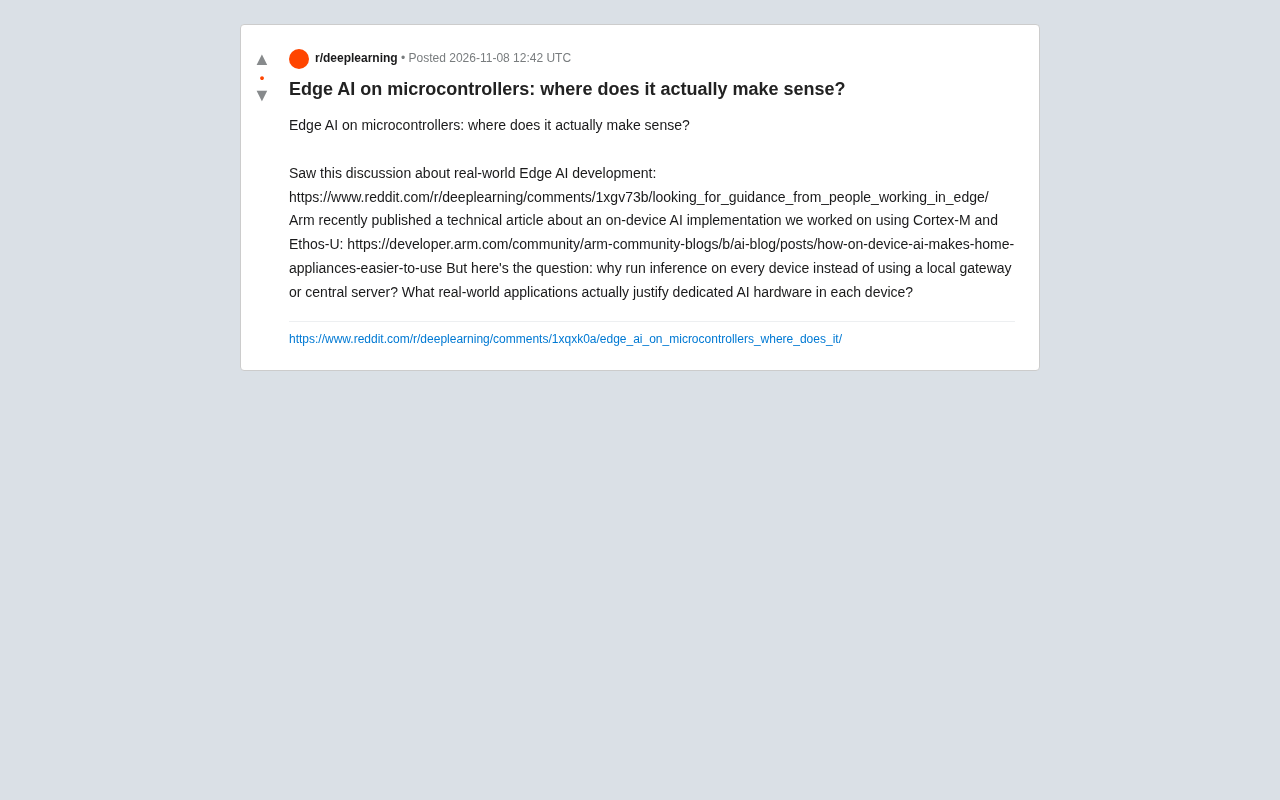
Edge AI on Microcontrollers: When Is It Actually Worth Deploying?
Drawing on Reddit discussions and Arm case studies, this article analyzes the real-world use cases for edge AI on microcontrollers: when each device needs independent inference, when a gateway or cloud is more reasonable, and the costs and boundaries of specialized hardware.
 Tech Frontiers
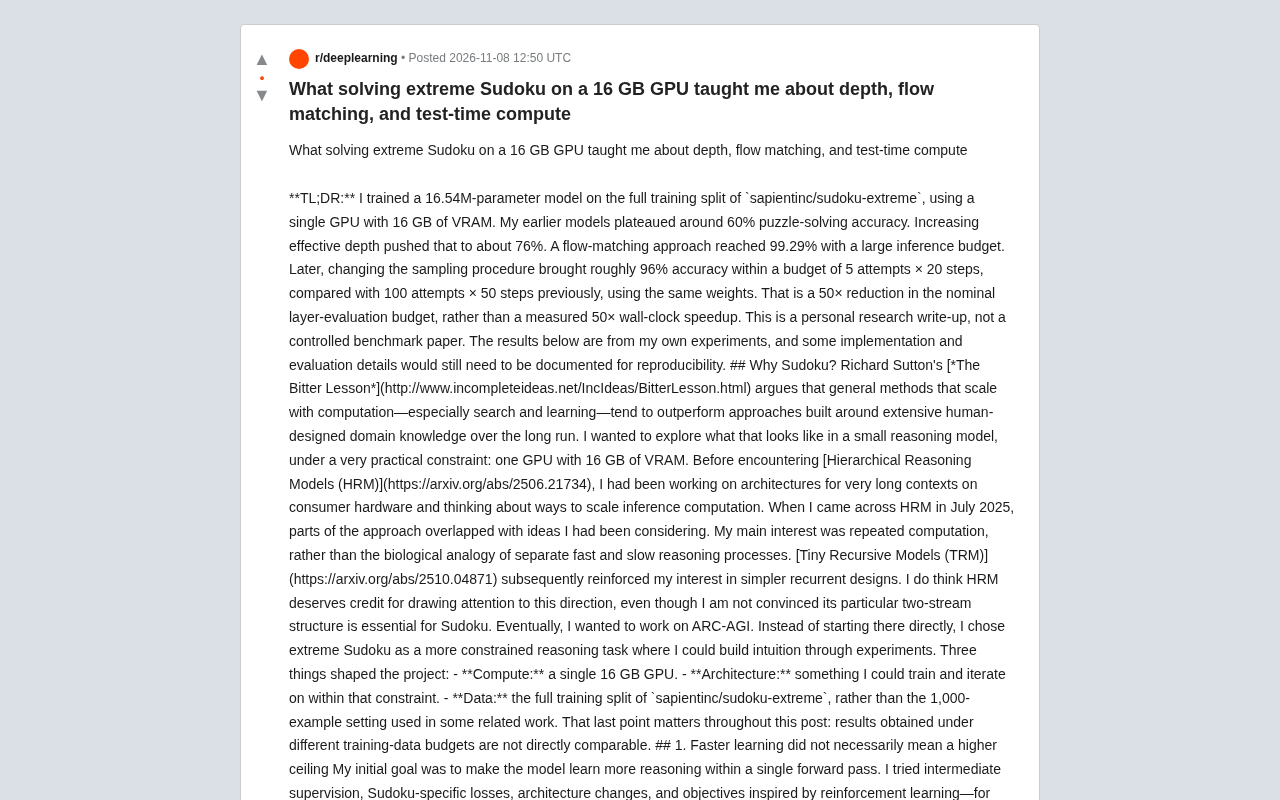
Pushing the Limits of Extreme Sudoku on a 16GB GPU: Insights from Depth and Flow Matching
A researcher trained a 16.54M-parameter model on a 16GB GPU to solve extreme Sudoku, finding effective depth breaks the 60% plateau and flow matching with improved sampling pushes accuracy past 99% with ~50× lower layer-evaluation budget.
 Tech Frontiers
AI Agent Approval Workflows: Why Human Confirmations Always Get Mindlessly Clicked
Why do AI agent approval workflows always get mindlessly clicked? A Reddit discussion shows that separating rules from keys, low-frequency high-risk approvals, and GitHub Environments-style gates are the keys to effective approvals.