GitHub Trending · November 5: The Skills Ecosystem Explodes
GitHub Trending · November 5: The Skil…
Deep dive into today's 8 new GitHub trending projects
Deep dive into today's 8 new GitHub trending projects
GitHub Trending has a fresh batch of new faces today — several projects that weren't even on the radar yesterday shot straight up.
And when I scanned the list, my first thought was — there's a really obvious common thread among today's projects.
Hold on, let me guess — is it all about agents?
Close, but more precisely — a ton of today's new entries are building Skills and context layers.
Let's go one by one. First up, NVIDIA's auto-ontology.
I've got to highlight this one — it gained over two thousand stars in a day, total is now past thirty-six hundred. There's a reason it shot to number one.
So what does it actually do? The name sounds pretty academic.
Simply put, it builds a graph-based semantic reasoning layer on top of your data, so when LLMs and agents query data, they're not just guessing.
Wait — isn't that basically turning your data into a knowledge graph that can reason?
Right, but the selling point is that it's deterministic — query generation is deterministic, not the model just freestyling.
That's such a key point. The scariest thing in product work is when the same input gives you two different results.
So think about it — when an agent queries enterprise databases, generating SQL or graph queries, if it can do it deterministically and explain every step, that's huge value.
What scenarios is it good for?
Enterprise knowledge bases, data analysis agents, and any compliance scenario with hard requirements for explainability — they all fit.
So the takeaway is, NVIDIA is trying to standardize the agent's context layer using graphs plus determinism.
Exactly. Okay, number two — Microsoft's VibeVoice.
I know this one — cutting-edge voice AI, over fifty-one thousand stars total, gained another three hundred plus today.
It's different from today's batch — it's an older project making a comeback, but the reason is interesting: everyone's now giving agents a voice.
You mean voice isn't just transcription anymore — it's an interaction channel for agents?
Right — full real-time voice interaction chain, front-end dialogue, back-end reasoning. This is becoming standard for agents landing on hardware.
So its rise today is being lifted by the whole agent voice wave.
You could say that. Then number three — a pretty wild project, garrytan's gstack.
I saw it — over a hundred thirty-nine thousand stars. I thought I misread the number at first.
It's basically Garvan open-sourcing his own Claude Code setup — twenty-three opinionated tools, each playing roles like CEO, designer, engineering manager.
Wait, isn't that just a personal workflow config? How does that get a hundred thousand stars?
That's not the point. The point is it proves one thing: what people want to copy most right now isn't the model — it's the methodology of how someone else uses agents.
I really feel that. What our team is most anxious about right now is how to consolidate prompts and configs.
So think of it as a replicable org chart for agents — then you get it.
Okay, next one that echoes it — vercel-labs' agent-browser.
This one's written in Rust, a browser automation CLI for AI agents, over forty-five thousand stars, gained a hundred plus today.
What's its relationship to agent-desktop from before?
They complement each other perfectly. agent-desktop reads the accessibility tree to operate the whole desktop, agent-browser specializes in the browser part.
So vercel-labs is playing a big game — taking over all the agent's OS interfaces.
Exactly that logic. Then let's talk about the most similar pair today — ConardLi's garden-skills and google's skills.
Yeah, both have 'skills' in the name and trended together today — definitely not a coincidence.
ConardLi's has over eleven thousand stars, up four hundred plus in a single day — one of the fastest growers today. It's got skill packs for web design, knowledge retrieval, image generation.
What about Google's?
google/skills is Agent Skills for Google's own products and technologies — over sixteen thousand stars, up three hundred plus.
So a trend is forming — Skills are becoming the app store of the agent era.
And you see individual developers and big companies doing it at the same time — that means the format has reached consensus.
There are two more projects — lz4 and DiscImageStudio — totally different styles.
lz4 is a classic compression algorithm, didn't gain much today, but making the list shows low-level tools are always needed.
DiscImageStudio is a mystery — no description, written in C#, gained over seventeen hundred stars today, shot to number eleven.
Something with no description that still explodes like that — either a community is collectively recommending it, or it hit a specific pain point. Worth keeping an eye on.
To sum up today — of the eight projects, six are building agent context and skill layers.
So the conclusion is, agent competition has shifted from model capability to ecosystem and context infrastructure.
Must-see today: I recommend NVIDIA's auto-ontology — the determinism angle cuts precisely.
I'll add gstack — beyond the star count, that agent config methodology is really worth copying.
Alright, that's it for today — let's see what new stuff pops up on the list tomorrow.
Related articles
 Tech Frontiers
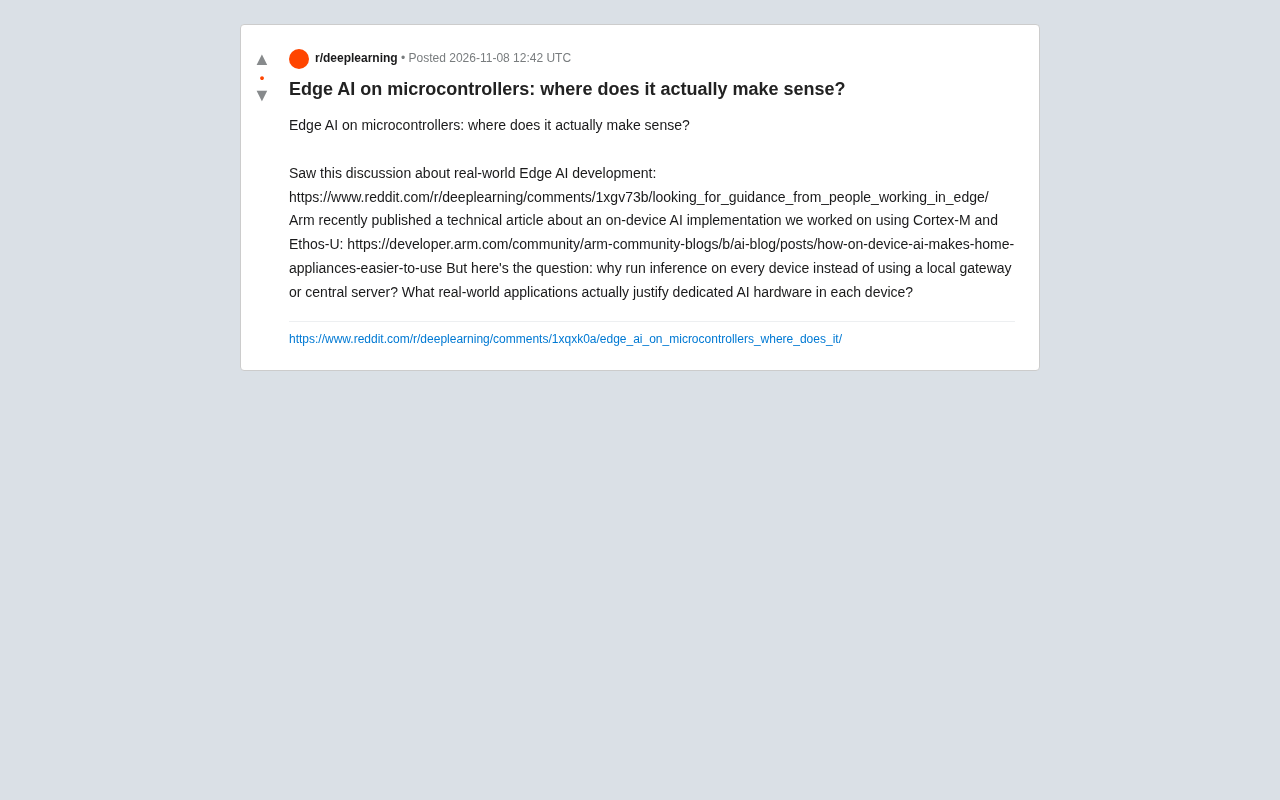
Edge AI on Microcontrollers: When Is It Actually Worth Deploying?
Drawing on Reddit discussions and Arm case studies, this article analyzes the real-world use cases for edge AI on microcontrollers: when each device needs independent inference, when a gateway or cloud is more reasonable, and the costs and boundaries of specialized hardware.
 Tech Frontiers
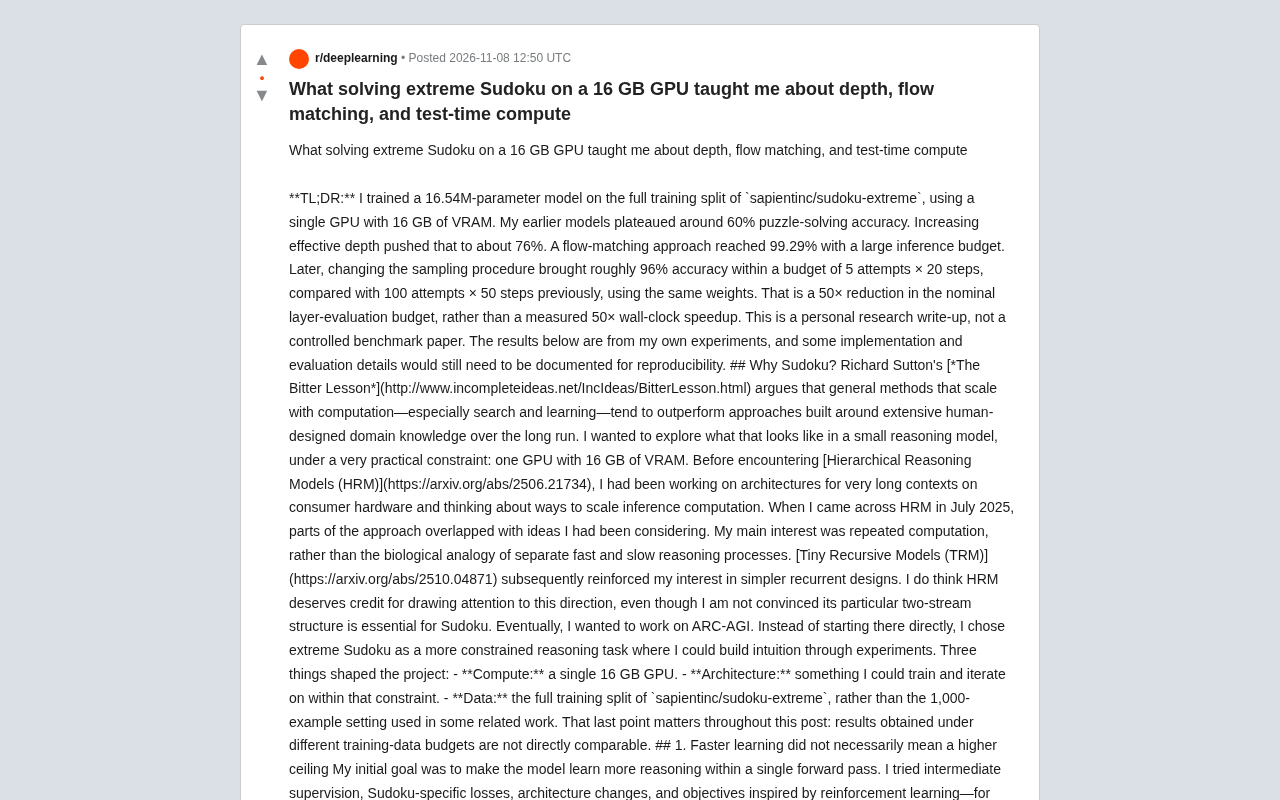
Pushing the Limits of Extreme Sudoku on a 16GB GPU: Insights from Depth and Flow Matching
A researcher trained a 16.54M-parameter model on a 16GB GPU to solve extreme Sudoku, finding effective depth breaks the 60% plateau and flow matching with improved sampling pushes accuracy past 99% with ~50× lower layer-evaluation budget.
 Tech Frontiers
AI Agent Approval Workflows: Why Human Confirmations Always Get Mindlessly Clicked
Why do AI agent approval workflows always get mindlessly clicked? A Reddit discussion shows that separating rules from keys, low-frequency high-risk approvals, and GitHub Environments-style gates are the keys to effective approvals.