Product Hunt Picks·Nov 09: AI Recommendations & Security Models
Product Hunt Picks·Nov 09: AI Recommen…
Today's Product Hunt top 3 new products deep dive
Today's Product Hunt top 3 new products deep dive
There are some interesting new products on Product Hunt today. Li Bo, have you seen them?
Yeah, I saw them. And today's products are kind of clustered—all around the AI ecosystem. Xiaoyu, have you noticed? People aren't competing on the models themselves anymore; they're competing on the stuff around the models.
Totally. So let's start with the first one: Dageno AI 2.0, ranked first with over 160 votes. Its slogan really hits home: 'See why AI recommends your competitors instead of you.'
That's a sharp pain point. Nowadays a lot of users ask ChatGPT or Perplexity before buying. If your brand isn't in the AI's answer, you lose that traffic instantly.
How does it actually work? I see it says it can check over a dozen AI models and also show which sources influenced the AI's answer.
Right, it essentially opens up the black box of AI search. It covers over 12,000 niche markets and 3 million brands, and it's free to check anything. You only pay when you want to track your own prompts.
That free strategy is pretty aggressive. Isn't it just taking the SEO logic and applying it to AI search?
Exactly—it's AEO and GEO. But I think the smarter part is that it lets you see the crisis for free first: your competitors getting recommended. You naturally get anxious, and then you pay up.
Classic monetization of anxiety. So this should be really attractive to brands and agencies, right?
Very much so. And think about it—ReSO AI did something similar before, but Dageno emphasizes 'source attribution,' telling you why the AI says what it says. That's a deeper level.
Okay, next up: Databox CLI, ranked second with over 150 votes. This one puts a data analytics platform right into the terminal.
I really like this one. It offers over 90 commands—you can create data sources, build metrics, and run workflows right in the terminal.
But the key thing is it provides ten ready-made skills for AI coding agents, right?
Yes, you can have Claude Code or Cursor do the work for you directly. It basically turns the CLI into a toolbox for agents.
That reminds me of Rill Browser from before—both are add-ons for AI coding tools. But Databox targets the data analytics scenario directly.
Exactly, and it solves a real pain point: analysts don't want to click around in a GUI; they just want to go all-in with the command line, and let an agent run it automatically.
So its target users are really technical data teams and people already used to Claude Code.
Right, and Databox itself is an established BI tool. Launching a CLI is defensive innovation—they're afraid of being left behind in the agent era.
Interesting. Okay, third one: Arcjet AI security models, ranked third with 120 votes. This one's more hardcore.
Definitely hardcore. It's specifically building security models for coding agents—the family includes Himalia 1, Thebe 1, and Carme 1.
Why do we need dedicated security models for agents? Can't general models do the job?
Good question. Because agents execute code and call APIs, the attack surface is much bigger than chat. General models often fail on prompt injection, especially in code scenarios.
So Arcjet thinks general models aren't enough and you need custom training. That's different from AUDR, which does audit logs.
Right, AUDR handles post-hoc auditing, Arcjet handles preemptive blocking. It's active defense—it blocks malicious prompts before the agent executes.
So their business model is probably API-call based, since it's embedded in the SDK.
Should be, and it's already live. Any call using their SDK for prompt injection detection can directly use Himalia 1.
To sum up, all three products today are basically patching the AI ecosystem, right?
Yes—one manages how your brand is seen in AI, one manages how agents work, and one manages how agents avoid trouble. They're all infrastructure for AI workflows.
So today's products are all AI workflow tools, which shows competition has shifted from the model layer down to the tool layer.
Exactly, that's a clear trend. Models are becoming like utilities—water and electricity—and the real money is in the sockets and switches on top.
Okay, for today's recommendation: if you had to pick just one worth trying, which would it be?
I'd pick Dageno AI 2.0. Because it's free to check, lowest barrier, and anyone doing branding will immediately feel that sting of 'AI is recommending my competitor.'
Agreed, and it's ranked first today, which shows that anxiety is real. Okay, that's all for today.
Related articles
 Tech Frontiers
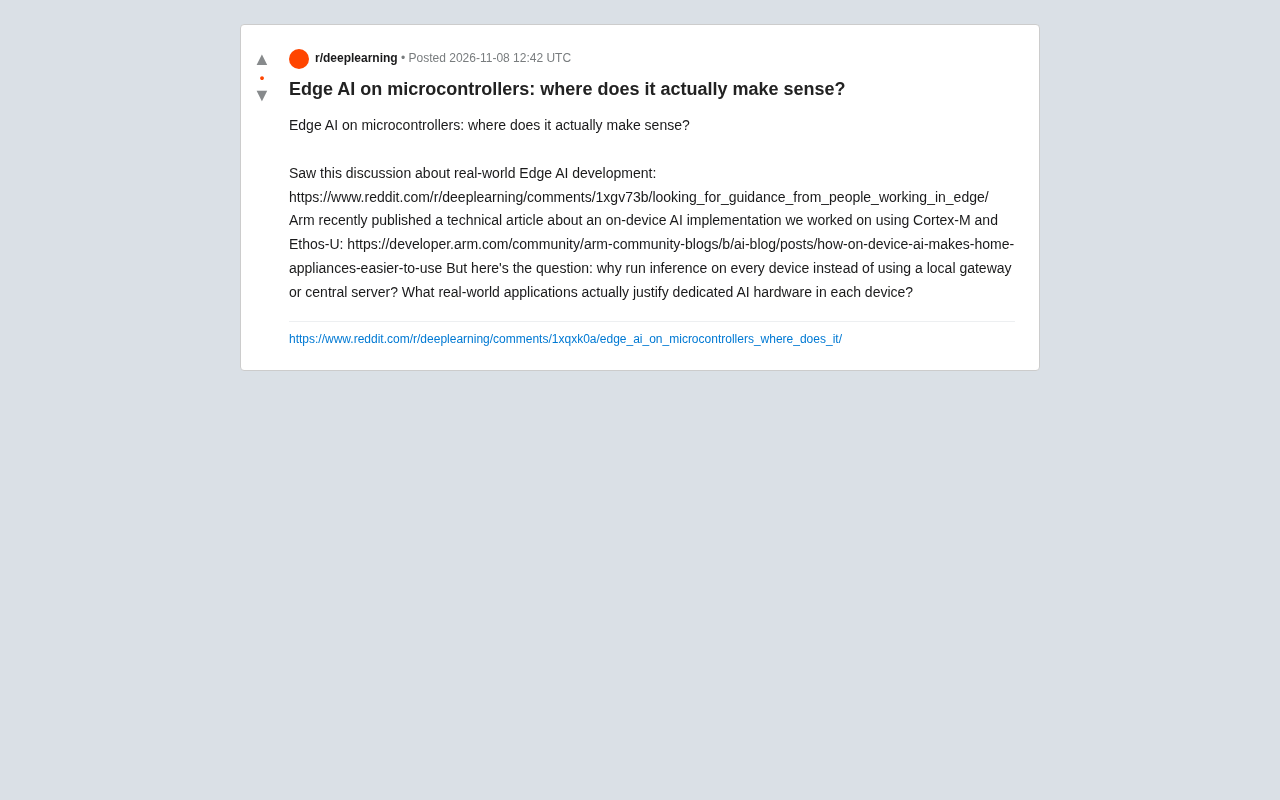
Edge AI on Microcontrollers: When Is It Actually Worth Deploying?
Drawing on Reddit discussions and Arm case studies, this article analyzes the real-world use cases for edge AI on microcontrollers: when each device needs independent inference, when a gateway or cloud is more reasonable, and the costs and boundaries of specialized hardware.
 Tech Frontiers
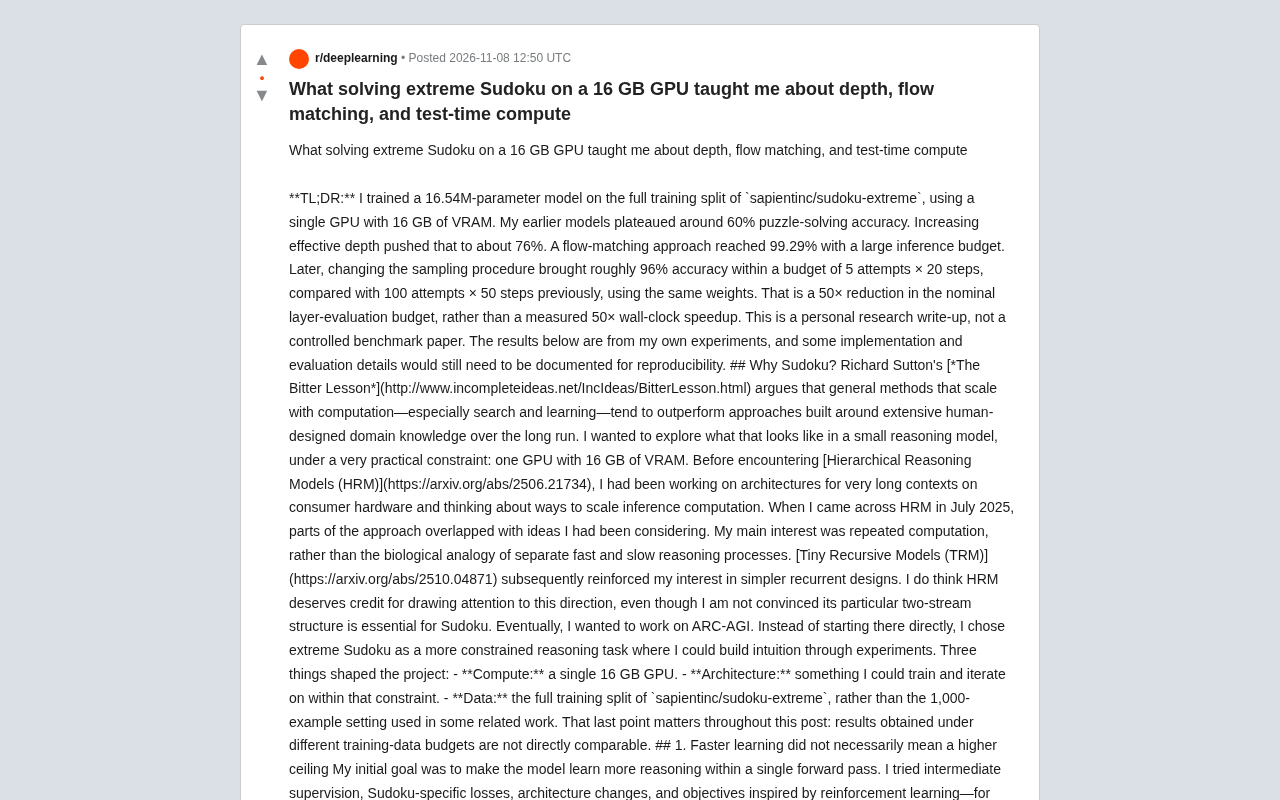
Pushing the Limits of Extreme Sudoku on a 16GB GPU: Insights from Depth and Flow Matching
A researcher trained a 16.54M-parameter model on a 16GB GPU to solve extreme Sudoku, finding effective depth breaks the 60% plateau and flow matching with improved sampling pushes accuracy past 99% with ~50× lower layer-evaluation budget.
 Tech Frontiers
AI Agent Approval Workflows: Why Human Confirmations Always Get Mindlessly Clicked
Why do AI agent approval workflows always get mindlessly clicked? A Reddit discussion shows that separating rules from keys, low-frequency high-risk approvals, and GitHub Environments-style gates are the keys to effective approvals.