AI Money Moves · Ep 17: Five Ways to Make Money with AI Video and Job-Search Tools
AI Money Moves · Ep 17: Five Ways to M…
Every week we break down at least five actionable AI money-making ideas — clear logic, real execution
Every week we break down at least five actionable AI money-making ideas — clear logic, real execution
Li Bo, I've been digging through a ton of AI money-making content this week. One stat actually blew my mind.
Hit me. I'm guessing it's one of those clickbait things where you can't actually make a cent.
Nope. The exact same ten-second AI video — running it in the cloud costs almost a hundred yuan per clip.
Run it locally, the electricity costs you eighty fen. That's over a hundred times cheaper.
Your instinct is right. That's the very first question you have to answer if you're doing AI video in 2026.
Cloud or local. And behind that choice are two completely different ways to make money.
So let's kick off right there. Let's dig into the specifics of how to actually make money with AI, yeah?
Let's do it. I've got five paths lined up — everything from zero barrier to advanced.
Alright, path one — let's start with this local AI video thing. Who's it actually for?
Content creators who've got a decent GPU. The whole point is volume and cost control.
Think about it — a hundred yuan per clip in the cloud, fifty clips a day, that's five thousand yuan gone.
Deploy an open-source model locally — something like the Jimeng stack — and your cost basically drops to zero.
Hold on though — isn't the local output a bit rough? Is the quality actually good enough to sell?
Great question. It's a little rougher, yeah, but for e-commerce assets and short-video traffic content it's totally fine.
Your toolkit is an open-source video model plus one GPU. You spend on hardware once, then you can run unlimited clips.
What about the learning curve? If a newcomer tries to set it up themselves, is it going to scare them off?
Medium to hard. Getting the environment configured is a real pain. But there's a zero-barrier alternative.
That's path two — one-click short video creation with MoneyPrinterTurbo.
Oh, I know that one — the project with over 120,000 stars on GitHub.
Exactly. You give it a topic, and it auto-generates the script, voiceover, and subtitles.
It's perfect for complete beginners who want to run a talking-head style channel without showing their face.
How does the ROI work though? You can't just rely on pumping out volume, right?
Actually, volume is exactly the play. Flood the mid-length video program, or take orders to make videos for other people.
The market rate for one commissioned video is a few dozen yuan. Once you're fast, you can knock out twenty or thirty a day.
Okay, those two are both video. Can we switch lanes for the next one?
Switching. Path three is one I'm really bullish on — local large model translation services.
Translation? Isn't that like the most saturated market there is?
Think about it differently. There's a media player called APTV that hooks into a local Qwen model for live subtitle translation.
One Mac mini running a 7B model gives you real-time translation of foreign-language live streams — zero cost.
But that's the contradiction, right? If it's free to run, how do you charge anyone for it?
You're not selling translation — you're selling the setup service. Help small teams build their own local translation gateway.
Then you use LiteLLM for smart routing — simple tasks go to smaller models, saves compute.
Got it — you're selling the build and the cost-saving solution. So what's path four?
Path four is the lightest lift — it's called batch job application analysis, and the tool is called JEV.
Someone actually tested it — analyzed four hundred companies in twelve seconds, cost less than one fen.
That cheap? So how does it turn into a real business?
You help job seekers batch-screen the highest-match positions and charge a few dozen to a hundred yuan per session.
Your cost is basically nothing, so it's all service margin. Great for anyone who knows a little scripting.
But how accurate are the predictions? If you sell this, could it blow up in your face?
Here's the key thing — it can only do priority ranking. It can't guarantee anyone gets hired.
Be honest about positioning it as a support tool. Don't hype it as a guaranteed offer, and you'll be fine.
Alright, save something big for the last one — gotta have a showstopper, right?
The closer is building infrastructure for AI coding agents. Highest barrier, but also the highest upside.
Take cmux — it's a terminal built specifically for Claude Code, and it's already closing in on thirty thousand stars.
But with an open-source project like that — how do you actually make money from it?
Enterprise plans and consulting. Cloudflare's open-source security audit skill framework is the perfect blueprint.
Build an agent tool that earns real community respect, and enterprises will come to you for custom work.
Like that blogger who vibe-coded for over two hundred days straight and hit twenty-five thousand dollars ARR?
Exactly that. No engineering background required to make it work — but you have to genuinely stick with it.
Let me pull this all together. These five paths go from easiest to hardest, right?
Right. Zero barrier is the one-click video and the job analysis tool, the middle ground is local deployment.
The advanced path is building agent infrastructure. And the returns pretty much track the difficulty.
So the takeaway is — start with the two zero-barrier options to get your reps in.
Exactly. Get moving, get familiar with the workflow, then work your way up. That's the right way to do it.
Alright, that's plenty of solid stuff for this episode. Pick one path and get started tonight.
Related articles
 Tech Frontiers
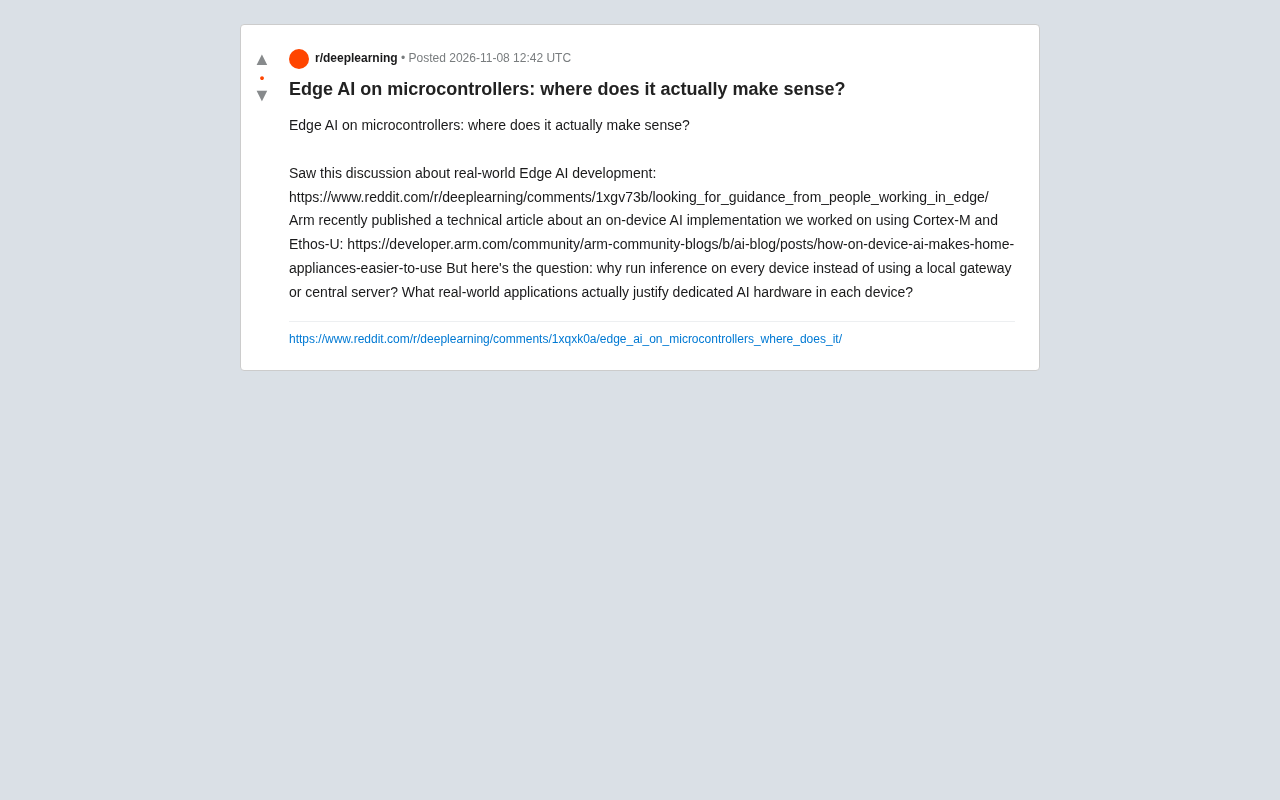
Edge AI on Microcontrollers: When Is It Actually Worth Deploying?
Drawing on Reddit discussions and Arm case studies, this article analyzes the real-world use cases for edge AI on microcontrollers: when each device needs independent inference, when a gateway or cloud is more reasonable, and the costs and boundaries of specialized hardware.
 Tech Frontiers
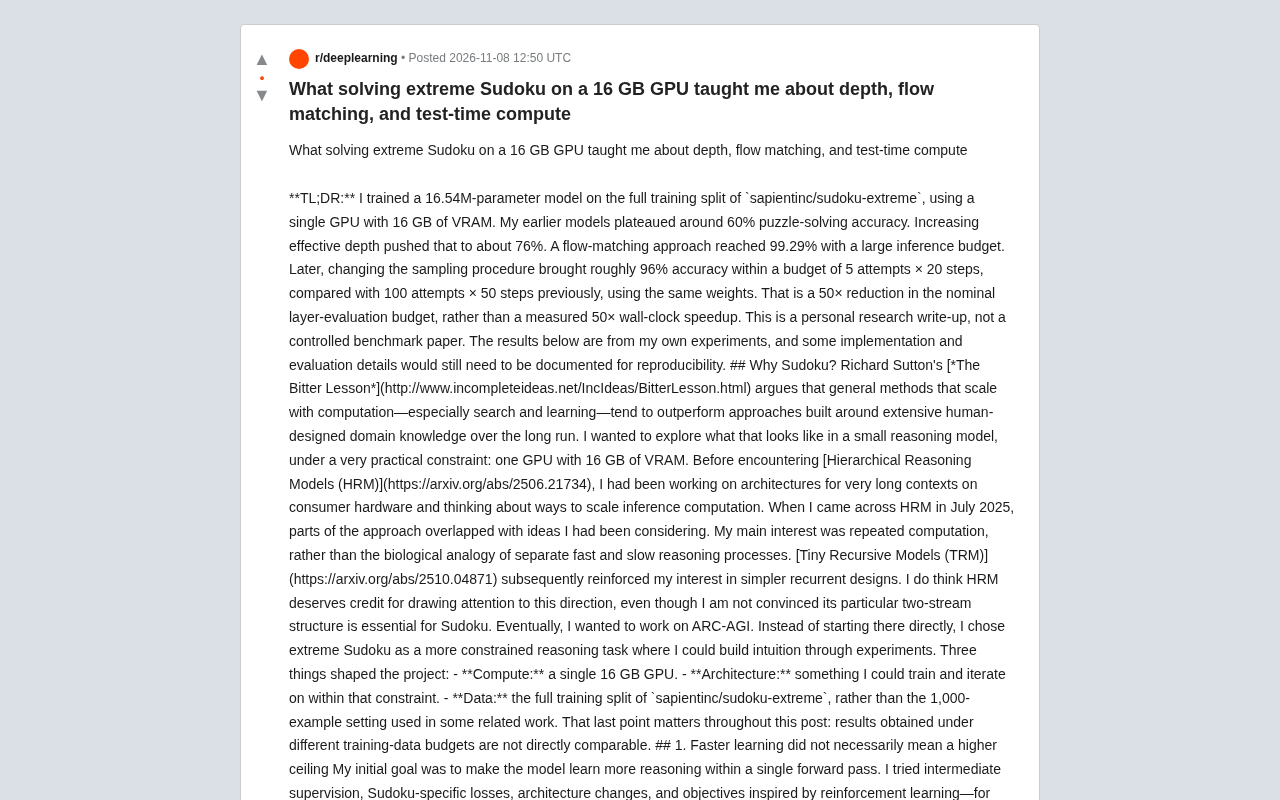
Pushing the Limits of Extreme Sudoku on a 16GB GPU: Insights from Depth and Flow Matching
A researcher trained a 16.54M-parameter model on a 16GB GPU to solve extreme Sudoku, finding effective depth breaks the 60% plateau and flow matching with improved sampling pushes accuracy past 99% with ~50× lower layer-evaluation budget.
 Tech Frontiers
AI Agent Approval Workflows: Why Human Confirmations Always Get Mindlessly Clicked
Why do AI agent approval workflows always get mindlessly clicked? A Reddit discussion shows that separating rules from keys, low-frequency high-risk approvals, and GitHub Environments-style gates are the keys to effective approvals.