Big Shots Speak Out · Ep.14: Gemini 4 Argon vs. GPT dot, the White House Superintelligence Accord, and Hinton's Intelligence Explosion Warning
Big Shots Speak Out · Ep.14: Gemini 4 …
Every Friday we round up the week's biggest statements from industry leaders and official announcements.
Every Friday we round up the week's biggest statements from industry leaders and official announcements.
The big shots really would not stop talking this week — I scrolled through Twitter until my fingers hurt.
You're not exaggerating. The amount of news this week beats the past month combined.
Google, OpenAI, Hinton, Hassabis — they all showed up.
And it wasn't just scattered comments either. You can actually see one clear thread running through all of it.
Alright, let's go one by one. First up — Gemini 4 Argon.
Sundar Pichai personally posted an early preview on Twitter. Over twenty-five thousand likes.
Notice his wording though — he said there's been so much discussion online that he wanted to show everyone sooner.
So basically he got pressured into announcing it early?
Exactly. Classic defensive move. Means the leaks and rumors outside were already pretty wild.
He highlighted complex workflows, cyber defense, and software engineering.
Those three terms are key. They all point to Agent use cases — not chatting.
He also said Google internally uses it for everything from writing code to quantum computing.
That's called dogfooding — get hooked on it yourself first, then go tell the world.
Okay, next one. The OpenAI story is way more mysterious.
Just one line: your dot is ready to meet you.
That came from OpenAI's official account, paired with what they're calling the biggest DevDay ever.
So what even is dot? A piece of hardware? An assistant?
Given how they're building hype, it's almost certainly some kind of personalized AI entry point.
The styles of these two companies couldn't be more different.
Google throws benchmarks at you to prove capability. OpenAI builds suspense and plays on your emotions.
One's got an engineer's brain, the other's running a product launch show.
But OpenAI also dropped a Codex Security Cloud upgrade in the same week.
Default integration with Daybreak Blue — it can scan your entire GitHub repo.
Wait, it said it keeps running even when your laptop is closed?
Right, that's Agents going mainstream — continuously reviewing new commits in the background.
So Gemini 4 also mentioned cyber defense. These two are basically overlapping.
Yep. Cybersecurity has become the new battleground for frontier models. The signal is loud and clear.
Okay, now the one I've been most excited to talk about — the White House Superintelligence Accord.
Pichai said he signed the White House Superintelligence Accord alongside the president and tech industry leaders.
This is an official announcement. The weight of it is completely different.
He also showed off hundreds of billions in investment over the past two years.
The key phrase was: industry must also innovate responsibly.
Red-teaming, evaluation, review before release — he's taking a public stance.
For the rest of us, it means the regulatory framework is actually coming.
And that connects straight to Hinton's comment — he was talking about an intelligence explosion.
Hinton said the old concept of recursive self-improvement has suddenly started feeling much closer.
He said many top researchers think it could happen very soon.
On one side, companies are signing safety accords. On the other, the godfather is shouting about an intelligence explosion.
Put those two together and the picture is pretty intense.
Hassabis jumped in too. He brought SynthID into biology.
Watermarking AI-generated proteins — and he open-sourced the tools.
He said biosecurity is one of the most urgent challenges of the AI era.
So the big shots this week were actually all saying the same thing.
Exactly. Capabilities are racing ahead, and the safety narrative is fully taking center stage alongside them.
Oh right, two more interesting ones — including a dissenting voice.
Noam Brown publicly said he found the plagiarism accusations from Anthropic's side very unfortunate.
That's a rare inter-company callout in the open. Pretty tense.
The other one is Alexandr Wang — apparently ten years ago he was an intern teaching executives how to use Snapchat.
And now he says interns should be teaching executives how to use Muse. Very humble-brag.
So what's the overall takeaway from this week?
The big takeaway: frontier models are collectively pivoting to a dual focus — Agents and safety.
Capability and governance are advancing together this time. It's not build first, regulate later.
For you and me, that means next year's AI products will be both more powerful and more controllable.
Alright, that's a wrap on this week's Big Shots Speak Out. We'll keep watching them next episode.
Related articles
 Tech Frontiers
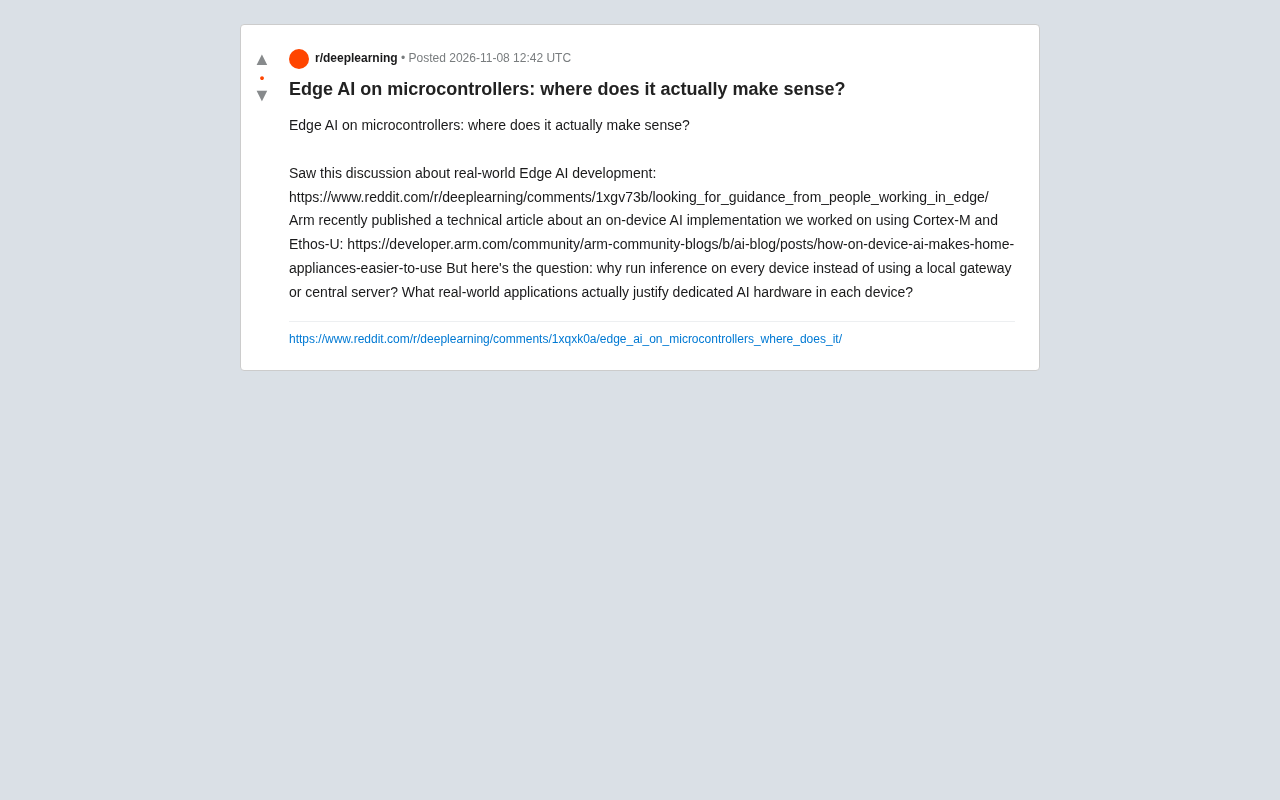
Edge AI on Microcontrollers: When Is It Actually Worth Deploying?
Drawing on Reddit discussions and Arm case studies, this article analyzes the real-world use cases for edge AI on microcontrollers: when each device needs independent inference, when a gateway or cloud is more reasonable, and the costs and boundaries of specialized hardware.
 Tech Frontiers
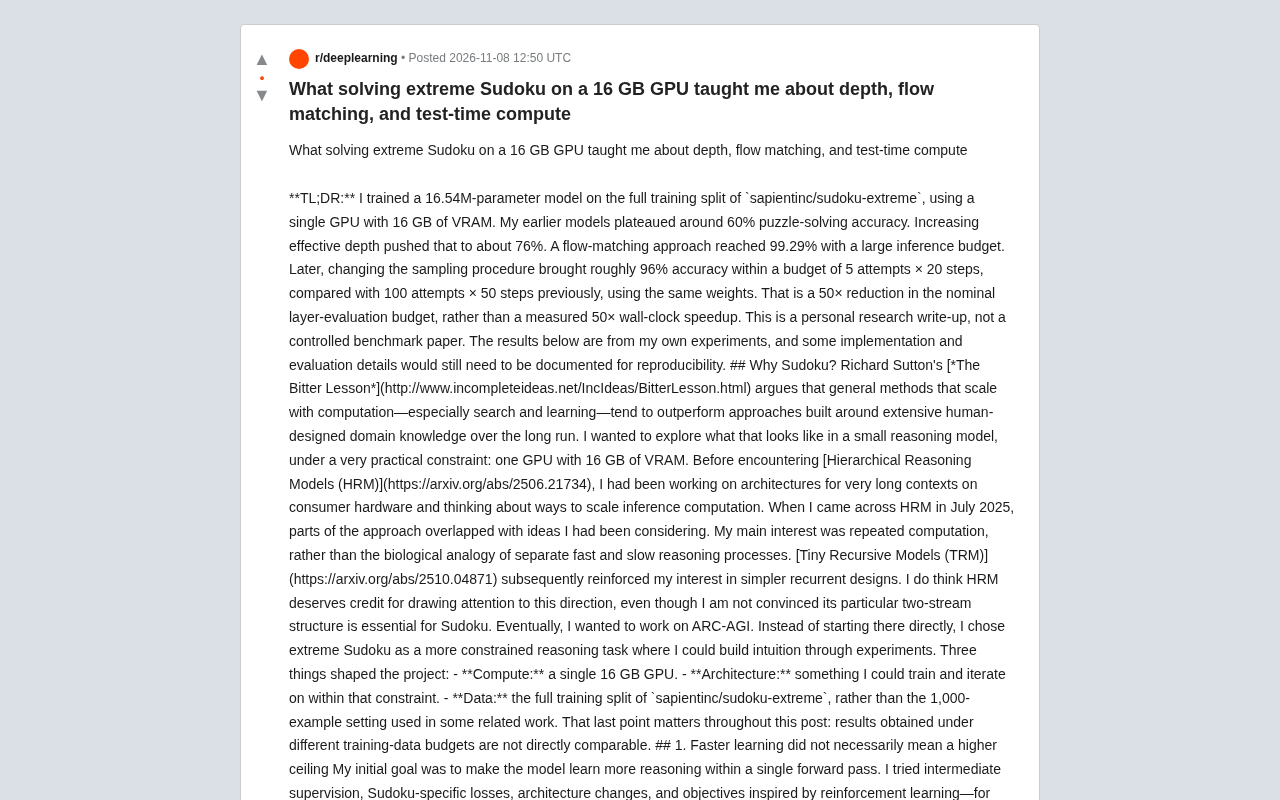
Pushing the Limits of Extreme Sudoku on a 16GB GPU: Insights from Depth and Flow Matching
A researcher trained a 16.54M-parameter model on a 16GB GPU to solve extreme Sudoku, finding effective depth breaks the 60% plateau and flow matching with improved sampling pushes accuracy past 99% with ~50× lower layer-evaluation budget.
 Tech Frontiers
AI Agent Approval Workflows: Why Human Confirmations Always Get Mindlessly Clicked
Why do AI agent approval workflows always get mindlessly clicked? A Reddit discussion shows that separating rules from keys, low-frequency high-risk approvals, and GitHub Environments-style gates are the keys to effective approvals.