Money-Making in Action Ep. 23: Five Ways to Make Money Taking Orders with AI Design Skills and SEO Skills
Money-Making in Action Ep. 23: Five Wa…
Every Wednesday, share at least 5 practical AI money-making ideas — clear logic, ready to execute
Every Wednesday, share at least 5 practical AI money-making ideas — clear logic, ready to execute
So this week while scrolling GitHub Trending, I noticed something really interesting. Several projects are basically packaging professional skills into skill packs that agents can use. My first thought was, this thing can make money.
You're not wrong. And let me tell you, this isn't just a trend — it's a very clear signal. The skill-pack economy is forming. Whoever turns their professional ability into an agent-callable module first gets to ride this wave first.
Don't just throw conclusions at me — break it down. As a product manager, what I care about most is: how does an ordinary person actually make their first buck from this?
Alright. Today I'll break down five paths for you, from zero-barrier to advanced. For each one I'll spell out who it suits, what tools to use, how to execute step by step, and roughly how much you can earn.
Great, so what's the first path?
First: use the huashu-design skill pack to take on design outsourcing gigs. This project has over 26,000 stars on GitHub, and its main pitch is: type one sentence inside the agent, get back a deliverable design draft.
Wait, one sentence and you get a design draft? What formats can it actually deliver?
Web pages, app prototypes, editable PPTX, animations, infographics — all of it. It has a built-in library of 84 styles with sample sheets. You type a sentence, it first gives you six candidate directions, you pick three, and it deepens those.
What does this require of the target audience? Do you need to know design?
The barrier is lower than you'd think. It suits people with basic aesthetic sense who can use Claude Code or Cursor. The toolchain is the huashu-design skill pack plus Claude Code. Here's the execution path: first find small gigs on Xiaohongshu or Zhubajie — things like PPT beautification or landing page drafts — use the skill pack to quickly produce three versions, then manually fine-tune and deliver.
What about investment and return? I need to do the math on this one.
Initial investment is basically the Claude subscription — twenty dollars a month. Learning curve is two or three days. Market price for one PPT beautification gig is 300 to 800 yuan, and once you're proficient you can turn out two or three a day. Expected monthly income of 5,000 to 15,000 yuan, depending on how densely you take orders.
I think this one's solid, because it solves the delivery speed problem. So what's the second one?
Second: use the claude-seo skill pack to do enterprise SEO diagnostics. This project has over 20,000 stars — 26 sub-skills plus 19 sub-agents, covering technical SEO and GEO, which is generative engine optimization.
I have to dig into this GEO term — how exactly is it different from traditional SEO?
Traditional SEO is about getting Google to find you. GEO is about getting ChatGPT and Perplexity to recommend you in their answers. A lot of brands are getting anxious about this now, but very few people out there know how to do it. That's the information-gap dividend.
So the target audience is people who know a bit of marketing and are willing to learn the tools?
Exactly — especially suited to people doing foreign trade or local business merchants. The toolchain is claude-seo plus Claude Code; it can directly generate PDF and Excel reports. Execution path: first do free diagnostic reports for three local businesses as case studies, then charge per report.
How do you price it? I'm curious about this one.
Market price for a complete diagnostic report is 1,000 to 3,000 yuan. You can produce five to eight a week. Learning cost is about a week. Expected income starts at 20,000 a month — and higher if you can sign annual retainer contracts.
This has a higher per-client value than the first one, but it requires you to communicate with merchants. OK, third one.
Third — zero barrier — use VoxCPM2 for multilingual voiceover. This project has 40,000 stars: a tokenizer-free TTS that supports multiple languages and realistic voice cloning.
Isn't the voiceover space already super crowded? How does this make money?
What's crowded is generic voiceover. But minority languages and dialects are still blue ocean. For example, cross-border e-commerce needs Portuguese product videos, local businesses need dialect ads. You use VoxCPM2 to clone a voice, batch it out, and the cost is basically zero.
Give me the toolchain and execution path in more detail.
VoxCPM2 plus any editing tool is enough. For execution, first open a shop on Fiverr or Taobao, focus on minority languages and dialects. Market price for a one-minute voiceover is 50 to 200 yuan. You can produce dozens a day. Expected monthly income of 3,000 to 8,000 yuan — good for starting as a side hustle.
This one really is zero barrier — no deep communication with people needed. Next, the fourth one.
Fourth: use postiz-app for social media management. This project has 37,000 stars — an agent-driven social media scheduling tool that can automatically schedule and publish.
Social media management has been around forever, hasn't it? Where's the AI increment?
The increment is that one person can manage ten accounts. postiz automates scheduling and publishing completely — you're only responsible for generating content once a week. Before, one operator maxed out at three accounts; now capacity is tripled. That's the profit margin.
Target audience and pricing model?
Suits freelancers with content sense. Toolchain is postiz plus any copywriting model. For execution, first take on monthly management for three small brands, charging 3,000 to 5,000 per client — one person can handle ten clients. Expected monthly income of 30,000 to 50,000 yuan, but you need consistent output.
This one's advanced — it's all about management ability. The last one, I'm guessing, is related to agent development itself?
You guessed right. Fifth: use the Claude Agent SDK or OpenAI Agents SDK to help small and medium businesses build automation agents. This is the most advanced, but the per-client value is also the highest.
What background does this require? I don't think just anyone can do it.
You need to know how to code — at least Python or TypeScript. Toolchain is Claude Agent SDK plus MCP servers. Execution path: enter through a specific scenario, like building automated customer service routing for an e-commerce company, or a contract preliminary review agent for a law firm. A project quotes 5,000 to 30,000 yuan.
Is the investment cycle relatively long?
Two to four weeks of learning — and you might need two months of buildup before your first project. But once it works, per-project profit is high and it's replicable. Expected to hit 50,000 a month in the first year is possible. To sum up: these five paths go from zero-barrier voiceover to advanced agent development, and the core logic is the same.
What logic? Give us a wrap-up.
It's about packaging your professional ability into skills an agent can execute, then making money off the capacity gap and the information gap. The tools change, but this underlying logic doesn't. So don't just watch the show — pick one and start trying it this week.
Related articles
 Tech Frontiers
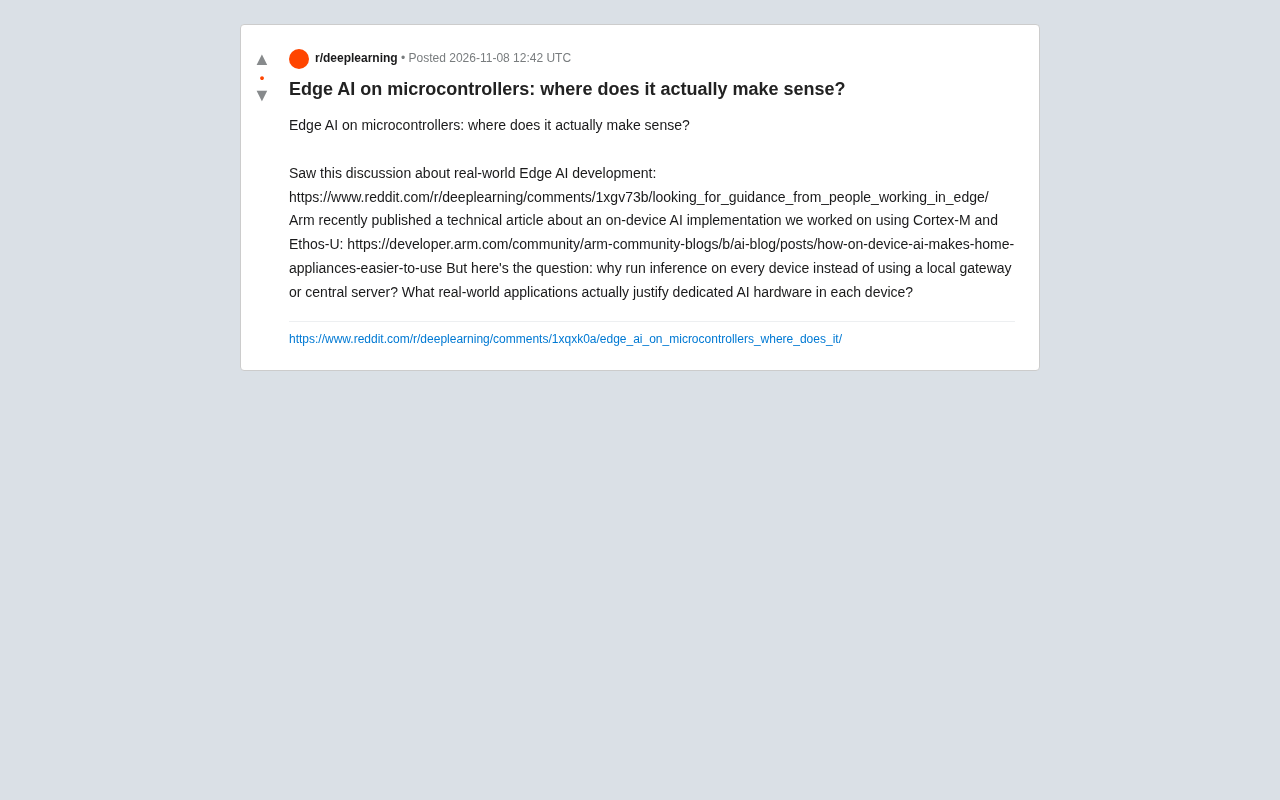
Edge AI on Microcontrollers: When Is It Actually Worth Deploying?
Drawing on Reddit discussions and Arm case studies, this article analyzes the real-world use cases for edge AI on microcontrollers: when each device needs independent inference, when a gateway or cloud is more reasonable, and the costs and boundaries of specialized hardware.
 Tech Frontiers
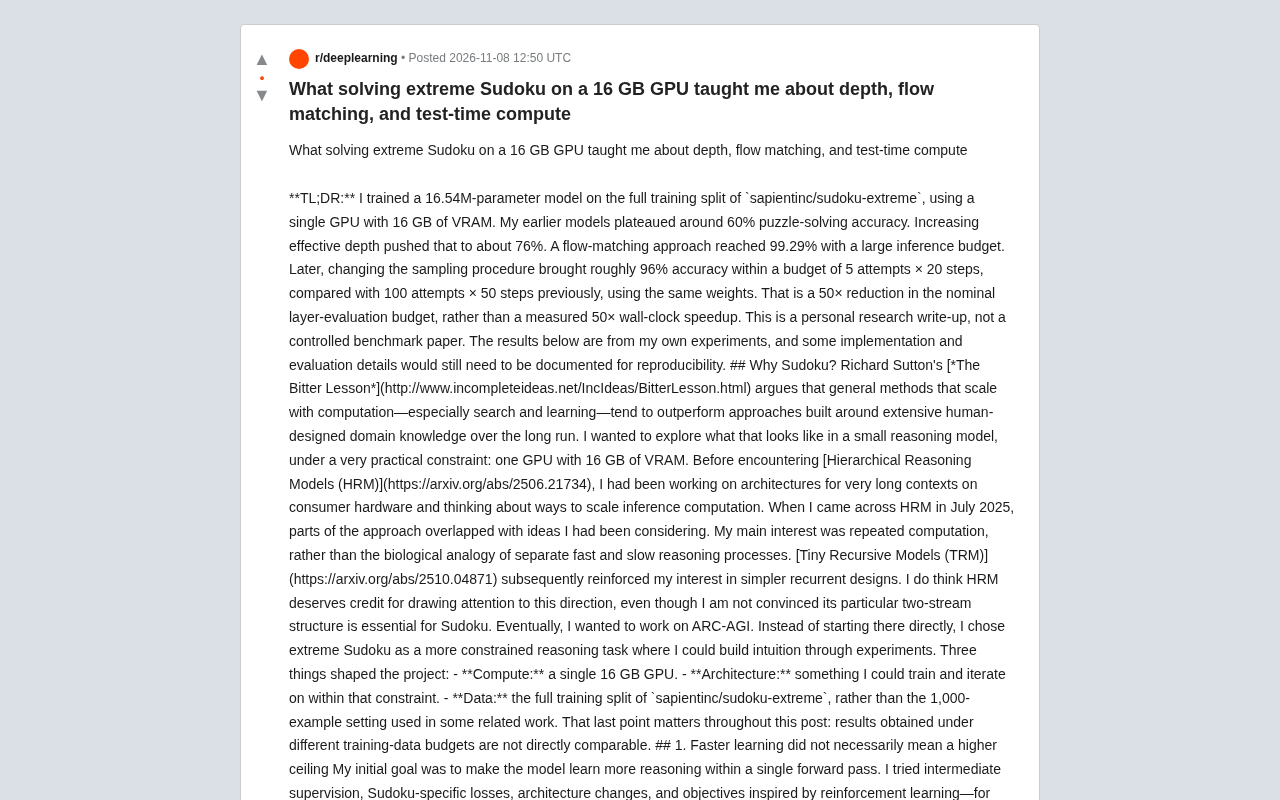
Pushing the Limits of Extreme Sudoku on a 16GB GPU: Insights from Depth and Flow Matching
A researcher trained a 16.54M-parameter model on a 16GB GPU to solve extreme Sudoku, finding effective depth breaks the 60% plateau and flow matching with improved sampling pushes accuracy past 99% with ~50× lower layer-evaluation budget.
 Tech Frontiers
AI Agent Approval Workflows: Why Human Confirmations Always Get Mindlessly Clicked
Why do AI agent approval workflows always get mindlessly clicked? A Reddit discussion shows that separating rules from keys, low-frequency high-risk approvals, and GitHub Environments-style gates are the keys to effective approvals.