Money-Making in Action · Episode 25: Five Ways to Turn Claude Code and Open-Source Scrapers into Cash
Money-Making in Action · Episode 25: F…
Every Wednesday, we share at least 5 actionable AI money-making ideas with clear logic and executable steps.
Every Wednesday, we share at least 5 actionable AI money-making ideas with clear logic and executable steps.
Li Bo, I've been watching the GitHub trending list for days this week. I noticed a pattern—a lot of these projects, when you break them down, can be pieced together into money-making paths.
You're not wrong. The key isn't whether the project itself is flashy—it's which part of the cost it brings down. Once costs drop, someone can make a living off the price difference.
So let's not float around today—let's break down a few practical plans for the listeners. From zero-barrier to advanced, one by one.
Alright. Let me lay out the conclusion first: these five paths range from zero barrier to needing coding skills, and the ROI varies hugely. I'll go from low to high difficulty.
Number one, the most down-to-earth. I recently saw that 'AI girl full set'—3D-to-2D modeling. This kind of demand is huge on Xiaohongshu and Bilibili.
Right, using various models as artists. You use GPT-6 to generate character design sheets, then use a 3D-to-2D pipeline to make them into animated characters, and deliver to UP creators doing fan works.
Who's the target audience? Do you need an art background?
Not too deep. You just need to know how to tweak prompts and do basic rigging. The toolchain is GPT-6 for images, plus a 3D-to-2D renderer, and finally editing to wrap up.
So this is hard-earned money—tens to hundreds per order, volume-based. If you can produce two or three sets a day, that's decent money in a month.
Zero barrier, it's all about aesthetics and delivery speed. ROI is average, but the cash flow is fast—good for practicing and building a portfolio.
Number two, I'm really bullish on this. Scrapling, this scraping framework, has over 90k stars—covers everything from single requests to large-scale crawling.
The lightweight version is an information-gap business. You scrape public data from a vertical industry, turn it into structured reports, and sell to people who need to monitor the market.
Wait, isn't that just a data broker? How does it solve anti-scraping?
Scrapling has a built-in adaptation layer. Pair it with a headless browser like Lightpanda to render dynamic pages. Put the two together, and the success rate goes up.
That gives it a product feel. You need basic Python, but the hard part is legal compliance—only touch public data, don't cross the line.
The investment is a small server, costing tens of yuan a month. Once you get your first paying customer, you basically break even.
Number three is where it gets intense. Karpathy's HackerTube—one person plus Claude, in two hours filtered over 20 million comments down to over 6,000 videos.
This is the real money-making template. He handed the entire development process to Claude Code, and he only clicked three times in the browser.
So you don't need to know how to code—just clearly state what you want, and it can even handle deployment and hardening by itself?
Exactly. So the first type of client is non-technical small business owners. They lack an internal tool—you quote by the day and deliver a working system.
The margin there is huge. A custom tool might be quoted at thousands, but your cost is just a couple evenings' worth of token fees.
The key is not to take on big, all-encompassing requirements. Pick a clear, small pain point and deliver it in one go. That's classic few-shot entrepreneurship.
Number four, subscription route. nanochat—the best ChatGPT you can buy for a hundred dollars. That title is very tempting.
It's the whole process of building a chat model from scratch. You use it as teaching material, turn it into a training camp with Q&A, and charge per person.
The target audience is people who want to get started but get stuck on environment setup. The toolchain is nanochat plus tutorials from ai-engineering-hub—content is ready-made.
Isn't that the old knowledge-payment routine, just with an AI wrapper?
The routine is old, but the demand is real. Others get stuck at the first step—you help them get through it, and value is created. Charge a few hundred per person; twenty people per cohort is enough.
Last one, the most advanced. Turn Claude Code into a game studio—49 agents, 72 skills, mirroring a real team division of labor.
This one is for people with an engineering background. An individual developer assembles a small team to take on indie game prototype outsourcing.
How does one person manage 49 agents? Won't it get chaotic?
That's exactly its selling point—a complete coordination system, like a real studio hierarchy. You act as the producer, responsible for breaking down requirements and acceptance.
So the game changes—you're not selling code, you're selling capacity. A prototype could be quoted at five figures.
Five paths done. Let me sum up. From character rendering to assembling a virtual studio, the essence is pocketing the arbitrage of AI's production capacity.
Right. The order is: first get delivery working, then scale up, and finally sell services. Don't chase the hardest one right away—it's easy to get tangled up.
So the conclusion is: the cheaper the tools, the more valuable the assemblers. Pick one path this week, get one order done, then talk.
Related articles
 Tech Frontiers
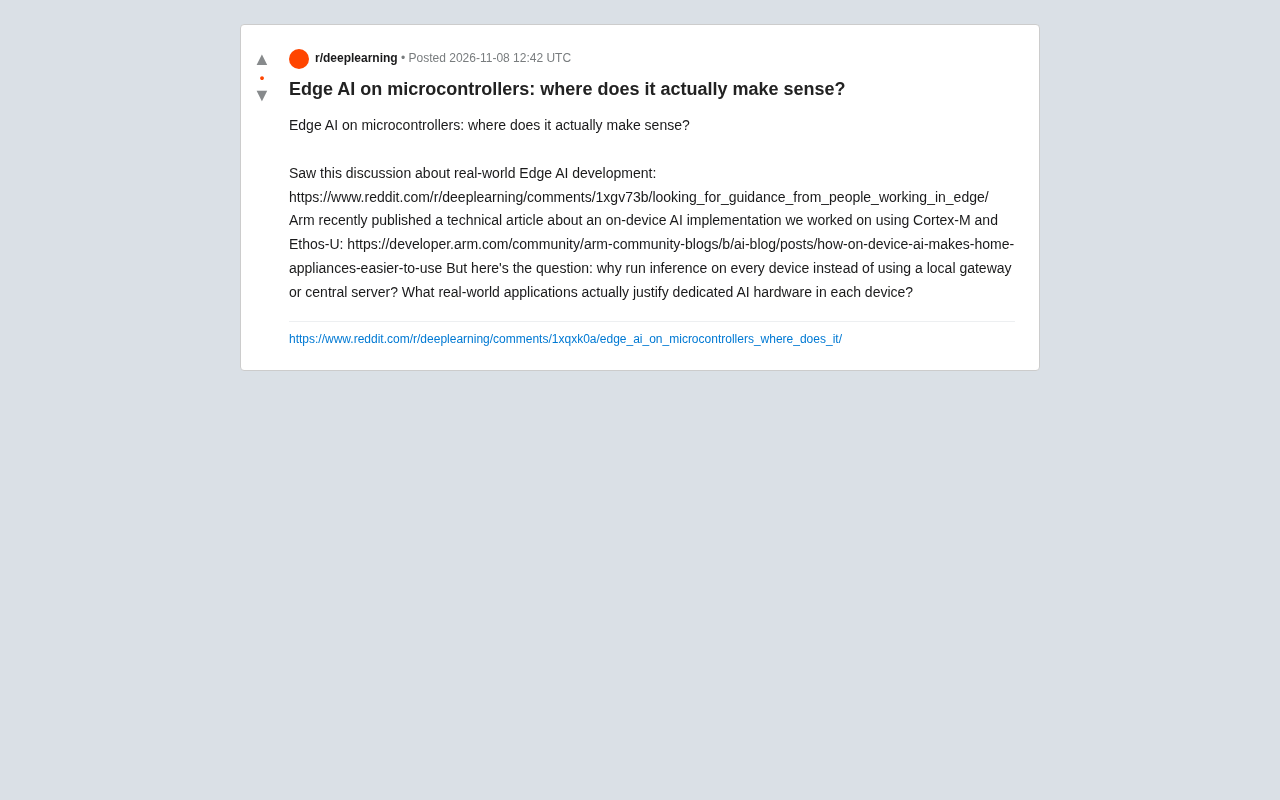
Edge AI on Microcontrollers: When Is It Actually Worth Deploying?
Drawing on Reddit discussions and Arm case studies, this article analyzes the real-world use cases for edge AI on microcontrollers: when each device needs independent inference, when a gateway or cloud is more reasonable, and the costs and boundaries of specialized hardware.
 Tech Frontiers
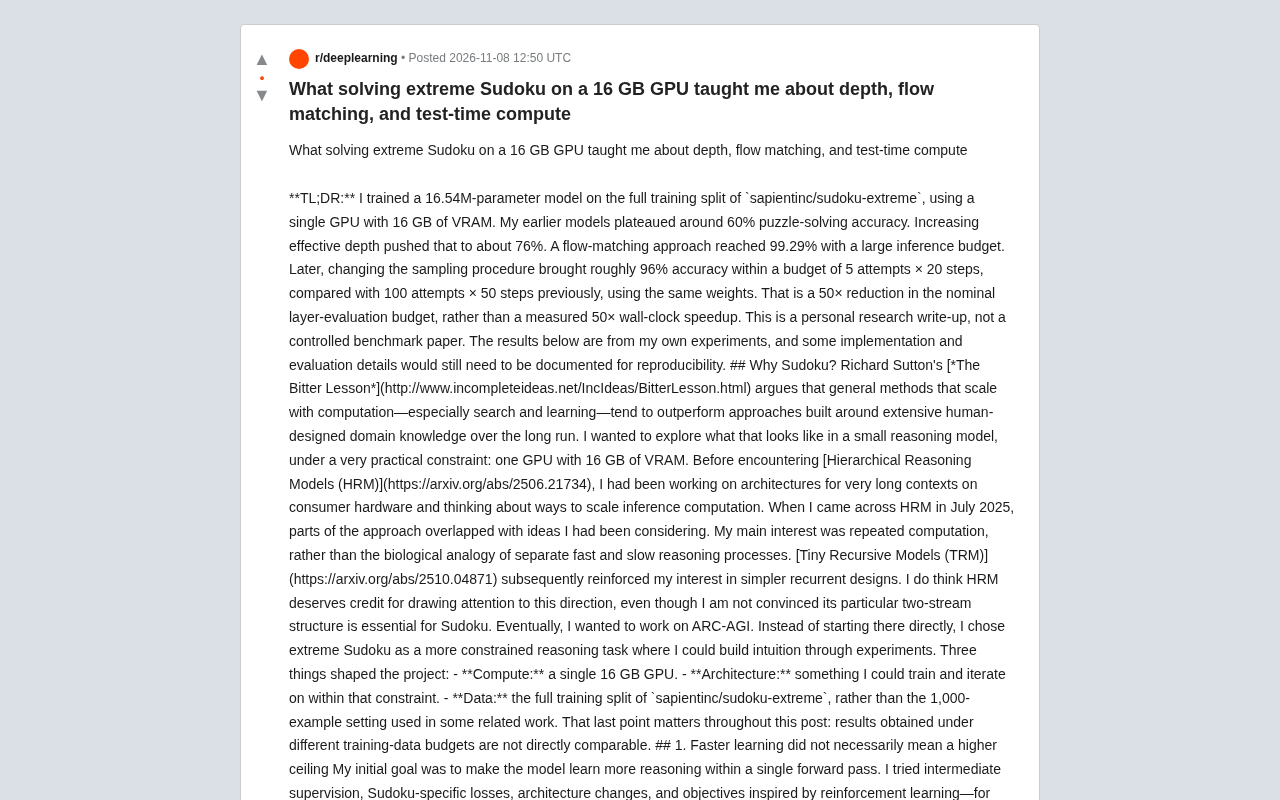
Pushing the Limits of Extreme Sudoku on a 16GB GPU: Insights from Depth and Flow Matching
A researcher trained a 16.54M-parameter model on a 16GB GPU to solve extreme Sudoku, finding effective depth breaks the 60% plateau and flow matching with improved sampling pushes accuracy past 99% with ~50× lower layer-evaluation budget.
 Tech Frontiers
AI Agent Approval Workflows: Why Human Confirmations Always Get Mindlessly Clicked
Why do AI agent approval workflows always get mindlessly clicked? A Reddit discussion shows that separating rules from keys, low-frequency high-risk approvals, and GitHub Environments-style gates are the keys to effective approvals.