Prisma In-Depth: The Go-To ORM for Node.js and TypeScript

A deep dive into Prisma, the next-gen type-safe ORM for Node.js and TypeScript.
Prisma is a next-generation ORM for Node.js and TypeScript, offering end-to-end type safety, declarative migrations, a visual Studio, and support for databases like PostgreSQL, MySQL, and MongoDB. With 47,000+ GitHub stars, it's a top choice for modern backend developers.
Why Modern Projects Still Need an ORM
Database operations are a core part of nearly every backend application. Writing raw SQL directly is not only tedious but also prone to issues like type unsafety and SQL injection. ORM (Object-Relational Mapping) tools were created precisely to solve these problems—they let developers work with databases using objects in their programming language, dramatically reducing repetitive SQL code.
Prisma stands out as a leader in this space. As a next-generation ORM built for Node.js and TypeScript, it has accumulated over 47,000 stars on GitHub, with more than 2,400 forks, and maintains an active growth trajectory of 85 new stars per day. Behind these numbers lies broad recognition and real-world adoption from the developer community.
What Is Prisma
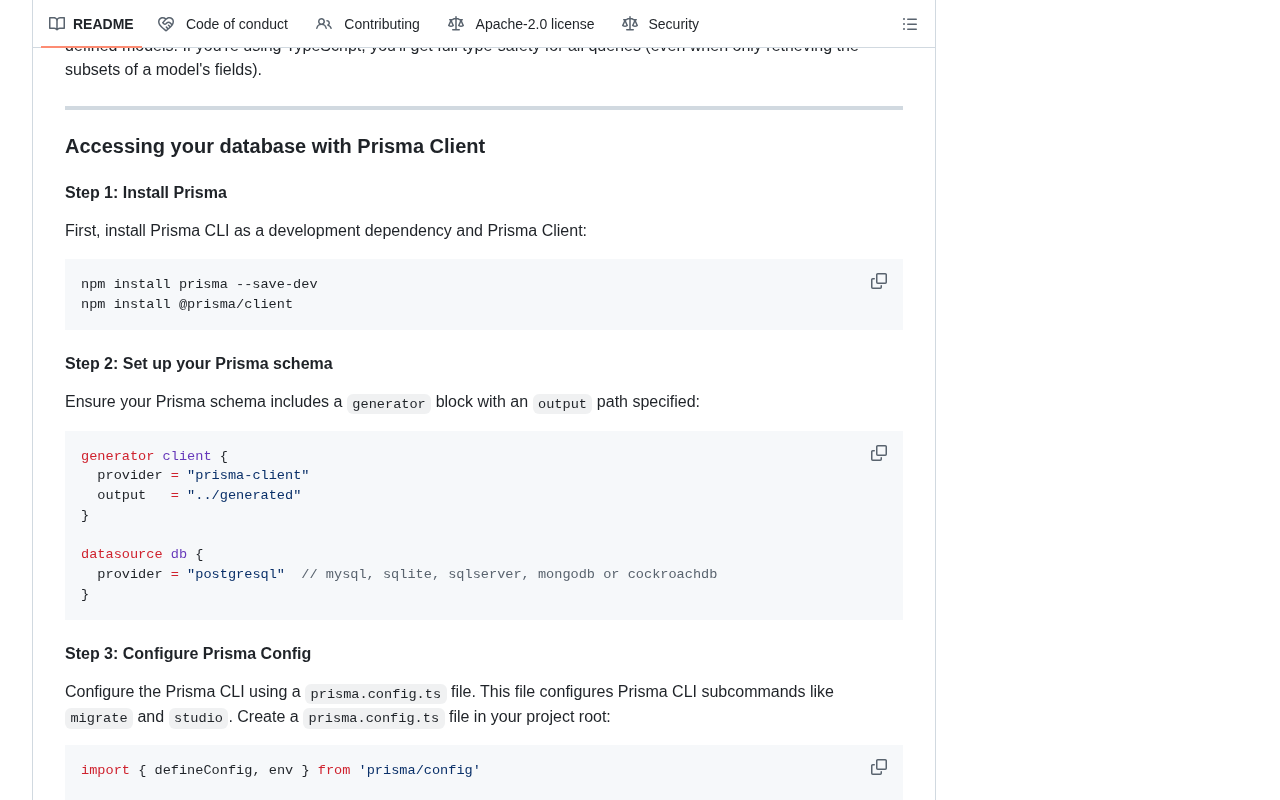
Prisma positions itself as a next-generation ORM solution. Compared with traditional ORMs (such as TypeORM and Sequelize), it adopts a distinctive design philosophy: rather than relying on a code-first approach using classes and decorators, it describes the data model through a declarative schema file, which serves as the single source of truth for the entire project's data structure.
Broad Database Compatibility
Prisma's comprehensive support for mainstream databases is one of its core strengths:
- PostgreSQL — a powerful open-source relational database
- MySQL / MariaDB — the most widely used open-source databases
- SQL Server — Microsoft's enterprise-grade database
- SQLite — a lightweight embedded database, ideal for prototyping
- MongoDB — the leading NoSQL document database
- CockroachDB — a distributed SQL database
Whether it's a small prototype or an enterprise-grade distributed system, Prisma delivers a consistent development experience. Particularly noteworthy is its support for both SQL and NoSQL (MongoDB)—a capability rarely found among comparable ORM tools.
A Detailed Look at Prisma's Core Components
Prisma is not a single tool but a complete toolchain made up of several components that work together.
Prisma Schema: Centralized Data Modeling
The schema.prisma file is the starting point for the entire Prisma toolchain. Here, developers use declarative syntax to define data models, table relationships, and database connection details. Centralized schema management keeps team collaboration and version control clear and organized, avoiding the chaos of traditional ORMs where model definitions are scattered across many places.
Prisma Client: A Type-Safe Query Builder
Prisma Client is a type-safe database query builder automatically generated from the schema, and it represents Prisma's most essential capability.
Its core value lies in complete TypeScript type inference: when writing queries, the IDE provides precise autocomplete suggestions, and any field typo or type mismatch is caught at compile time rather than surfacing at runtime. This feature significantly boosts development efficiency and code reliability, while making collaboration on large teams much safer.
Prisma Migrate: Declarative Database Migrations
Database migrations have long been a pain point in backend development. Prisma Migrate offers a declarative migration approach—simply modify the schema file, and Prisma automatically generates the corresponding SQL migration scripts, keeping the database structure in constant sync with the code definitions. The entire migration history is also versioned, making it easy to trace and roll back changes.
Prisma Studio: Visual Database Management
Prisma includes a graphical database management interface called Prisma Studio, which lets developers browse and edit database data directly without relying on external client tools—especially useful during local development and debugging.
Prisma's Core Advantages
End-to-End Type Safety
As TypeScript increasingly becomes the mainstream language for both frontend and backend, Prisma's deep support for type safety fits particularly well. Traditional ORMs often fall short on type inference, whereas Prisma automatically generates a fully typed Client from the schema, delivering end-to-end type guarantees from the database layer to the business code. When refactoring a data model, all affected call sites are precisely flagged by the TypeScript compiler, dramatically reducing refactoring risk.
Developer Experience at the Core
Prisma places developer experience (DX) at the forefront of its design. The declarative schema syntax, an intuitive and fluid query API, and clear, readable error messages together lower the barrier to entry for ORM adoption. Whether migrating from raw SQL or switching from another ORM, developers can build a mental model of Prisma relatively quickly.
Use Cases and Recommendations
Prisma is especially well-suited for the following development scenarios:
- TypeScript full-stack or backend projects — where type-safety advantages can be fully realized
- Platforms requiring multi-database support — a unified API lowers the cost of switching and migration
- Rapidly iterating product development — Migrate and Studio accelerate development and debugging workflows
- Team projects with multiple collaborators — a centralized schema simplifies code review and version management
Of course, every tool has its limits. Queries generated by Prisma may not be as flexible as hand-written SQL in certain complex scenarios, and the additional abstraction layer brings some learning cost and runtime overhead. For scenarios with extremely complex query logic or demanding performance requirements, it's advisable to evaluate Prisma's raw query capability ($queryRaw) as well—the two are not mutually exclusive.
Conclusion
With its type safety, outstanding developer experience, and broad database compatibility, Prisma has become one of the most recognized ORM tools in the Node.js and TypeScript ecosystem. Its 47,000+ GitHub stars and consistently active community attest to its real-world value in modern backend development.
For developers seeking a database toolchain that combines productivity and reliability, Prisma is a choice worth evaluating first. It not only addresses many of the pain points of traditional ORMs but also redefines what an ORM should look like with a modern engineering philosophy.
Related articles

Alibaba Launches Happy Shrimp: AI-Powered One-Click Complete Song Generation
Alibaba launches Happy Shrimp, an AI music generation tool that creates complete songs with lyrics, melody, arrangement, and vocals from natural language descriptions. In-depth analysis of its core features, differentiation from competitors like Suno, and industry impact.

GPT Sol Ultra vs Grok 4.6: Real-World Task Completion Benchmark in Reasoning Mode
Developer benchmark reveals GPT Sol Ultra completes draw.io scientific diagrams in one iteration while Grok 4.6 fails to converge despite maximum reasoning mode, exposing that reasoning depth ≠ task delivery capability.
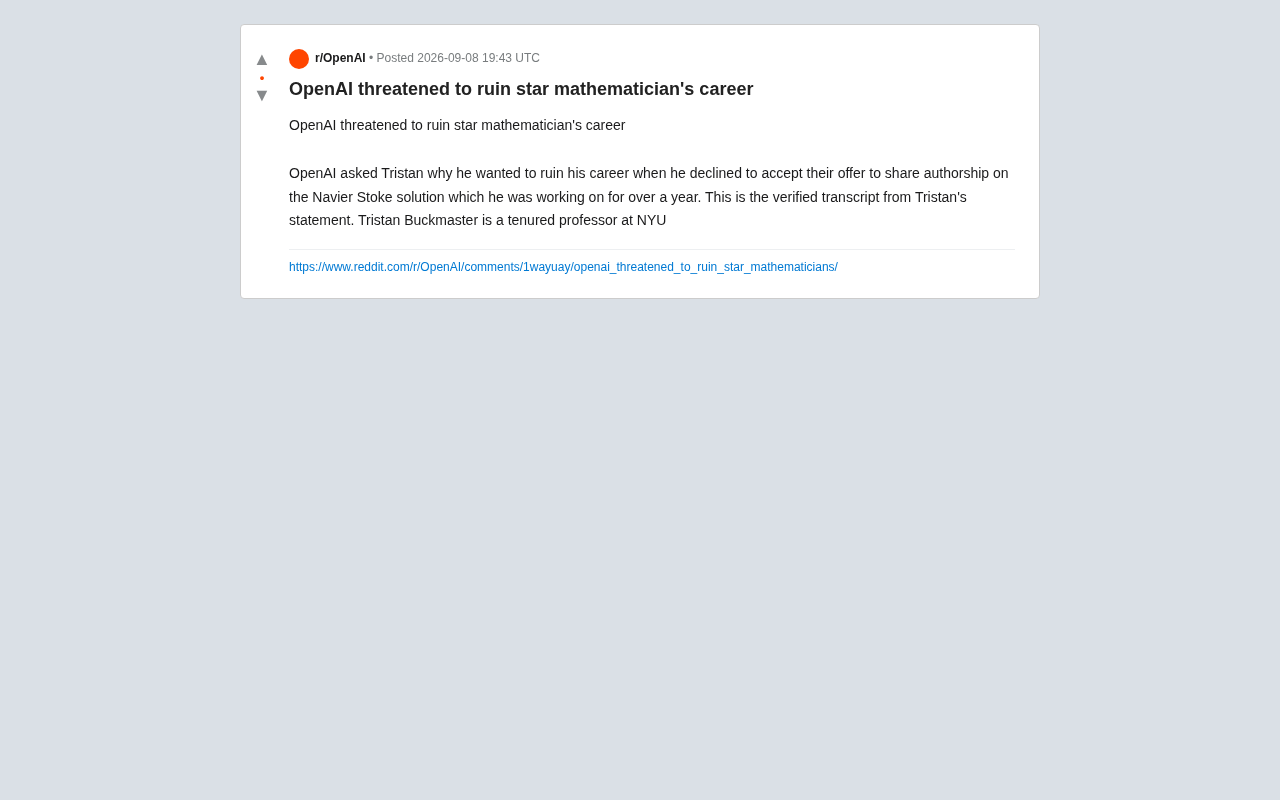
OpenAI Authorship Dispute: The Battle Over Academic Boundaries in the AI Era
OpenAI disputes authorship with mathematician Tristan Buckmaster over Navier-Stokes research, raising ethical questions about AI involvement in science.