Proactive AI Arrives: Cognition Launches On-Call Agent, Shifting the Software Engineering Paradigm

Cognition launches on-call and KPI agents, shifting AI from passive execution to proactively seeking work.
In an NYSE Wired interview, Cognition's Jeff Wang outlined the company's strategy of extending from Devin to proactive agents. He noted rapid model progress versus slow enterprise adoption, positioning Cognition to fill the tools and infrastructure gap. The newly launched on-call agent targets alert response and troubleshooting, while KPI-based agents let agents plan their own paths from goals rather than follow detailed instructions.
A Signal from Wall Street: AI Agents No Longer Wait Passively for Instructions
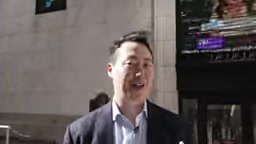
In front of the New York Stock Exchange, Jeff Wang, the new President of Enterprise Business at Cognition, sat down for an interview with NYSE Wired. The company, known for Devin—the world's first cloud-based agent—has recently turned its attention to a more radical direction: letting AI actively seek out work on its own.

In the interview, Wang stated plainly that enterprises tend to adopt the latest technology slowly, while progress on the model side is astonishingly fast. Cognition's positioning is to fill in that middle layer of tools and infrastructure so that agents can truly deliver productivity. This judgment isn't new, but combined with their just-released on-call agent, it points to a concrete use case: incident response, troubleshooting, and other tasks that require someone watching are being redefined.
After Devin, Cognition Bets on "Proactive"
Cognition is best known as the creator of Devin. Wang reiterated this on camera: Devin is "the first cloud-based agent."
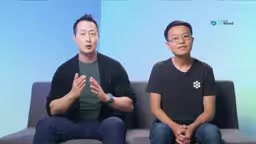
Moving from passive execution to proactive initiation is a key leap in agent capability. Traditional AI coding tools wait for developers to input a prompt, whereas proactive agents intervene on their own when they detect an anomaly—for example, when an online service raises an alert, the agent pulls logs, identifies changes, and suggests fixes before the engineer even starts. Wang called this kind of progress "one of the biggest developments" in AI today, with evident conviction in his tone.
The rapid advancement at the model layer is the backdrop. Wang mentioned that "a lot of crazy things are happening on the model side," and the implication is clear: capability supply isn't lacking—what's missing is the engineering layer that organizes capabilities into reliable workflows.
What Is a "Cloud Agent"?
Devin is called "the first cloud-based agent," and "cloud" here doesn't simply mean deployed on a server. It means the agent runs in an independent remote sandbox environment with its own browser, terminal, code editor, and file system, allowing it to work continuously like a remote engineer rather than being tied to a one-off session in a developer's local IDE. Compared with in-IDE completion or conversational assistants, cloud agents have the ability to maintain long-running tasks, isolate environments, and invoke multi-step tools; tasks can proceed asynchronously without the developer watching the whole time. This form factor is the prerequisite for "proactiveness": only when an agent has its own autonomous runtime environment and persistent context can it pull logs and initiate troubleshooting on its own without being triggered.
The On-Call Agent: The First Concrete Form of Proactive AI
Cognition's on-call agent deserves a closer look. Being on call is one of the most draining aspects of software engineering—late-night alerts, repetitive troubleshooting, and context switching all wear down teams. Handing this scenario to an agent is logically sound.

But the challenges are real. An on-call agent needs more than code generation capability; it also needs continuous awareness of system state, understanding of historical incidents, and the ability to make reasonable judgments when information is incomplete. Wang didn't elaborate on technical details, but judging from the product positioning, Cognition is trying to reuse Devin's cloud agent architecture for operations scenarios, trading proactiveness for response speed.
On-Call and Alert Response Mechanisms
On-call is a rotation system in SRE and operations: team members take shifts, and when monitoring systems trigger an alert (such as a spike in error rates, latency exceeding thresholds, or service unavailability), the on-call person must respond, locate the issue, and stop the bleeding within a specified time. A typical process includes alert triage, checking dashboards and logs, comparing recent changes (deployments, configurations, feature flags), assessing impact, and then deciding whether to roll back or fix. The pain points are high alert noise, scattered context, and the high cost of late-night response. For an on-call agent to be truly usable, it needs to connect to monitoring, logging, change records, and other multi-source systems, and have noise reduction, aggregation, and preliminary root-cause analysis capabilities—otherwise it's just piling alerts somewhere else for people to look at.
KPI Agents: Give Goals, Not Steps
Another direction Wang mentioned in the interview is KPI-based agents. You give the agent a goal, and it designs its own path to accomplish it.
This is fundamentally different from the current mainstream "instruction-execution" model. Developers no longer write detailed steps; instead, they define success criteria, and the agent explores the rest. This model demands more from an agent's planning and self-correction abilities, and is also more prone to accidents in production environments. Wang used the phrase "creative ways" to describe how agents solve problems—a term that is both exciting and cautionary, since creative paths are inherently less predictable.
From an industry perspective, proactive agents and KPI agents share the same underlying assumption: AI should evolve from a tool into a collaborator, even taking on some decision-making responsibilities. Whether enterprises can keep up with the pace of adoption is the key variable that determines whether this narrative holds. Wang himself acknowledged that enterprise adoption is slow, which may be why Cognition is cutting its product into essential scenarios like on-call and operations—the pain point has to be painful enough to overcome organizational inertia.
The Difference Between Goal-Oriented Agents and Instruction-Based Automation
Traditional automation relies on pre-orchestrated deterministic processes (such as if-then scripts and workflow engines), with every step hard-coded by humans. KPI-based agents, by contrast, belong to a goal-oriented paradigm: only success metrics and constraints are given, and the agent breaks down tasks, selects tools, and iterates on its own. Such systems typically rely on planning, reflection, and self-correction loops, technically related to mechanisms like ReAct, tool calling, and long-term memory. The risks are unpredictable paths and failure modes that are hard to enumerate, so deployment often requires permission boundaries, human review checkpoints, and observable execution traces to strike a balance between "creative problem-solving" and "controllability."
The Competition at the Engineering Layer Is Just Beginning
Putting together the information from the interview, Cognition's roadmap becomes much clearer: model capabilities are left to upstream providers, while the company focuses on agent orchestration, perception, and execution infrastructure. Proactive agents are a natural extension of this strategy and an attempt to find a second growth curve after Devin.
For developers, what's worth paying attention to isn't yet another agent product launch, but the shift in how work gets done—from writing code and watching alerts to defining goals and accepting results. This transition won't happen overnight, but this interview in front of Wall Street at least shows that someone is already treating it as a serious business.
Related articles

OpenAI Partners with Shield: How the Astra Agent Revolutionizes IT Troubleshooting
OpenAI and Shield launch the Astra agent, which autonomously logs into computers and legacy systems to fix IT issues in real time, 35-40% faster than traditional models, with humans involved only when judgment is needed.

iPhone Duo Battery Life Tested: One Charge a Day Is Unavoidable, and the Large Screen Is the Culprit
iPhone Duo battery test: heavy use needs at least one charge a day, and about 30% remains after 6.5 hours of screen-on time. How often the large screen is unfolded is key; a MagSafe battery pack helps, and long-term degradation is also worth watching.

Kimi K3.1 Pro Open-Sourced: 2.8 Trillion Parameters Close In on Opus
Moonshot releases the open-source MoE model Kimi K3.1 Pro, with 2.8T total parameters and 104B activated, trailing Opus 5.5 by under 1 point on Terminal Bench 4.0.