Proxy-Free Web-to-Markdown APIs: Choosing for RAG Pipelines
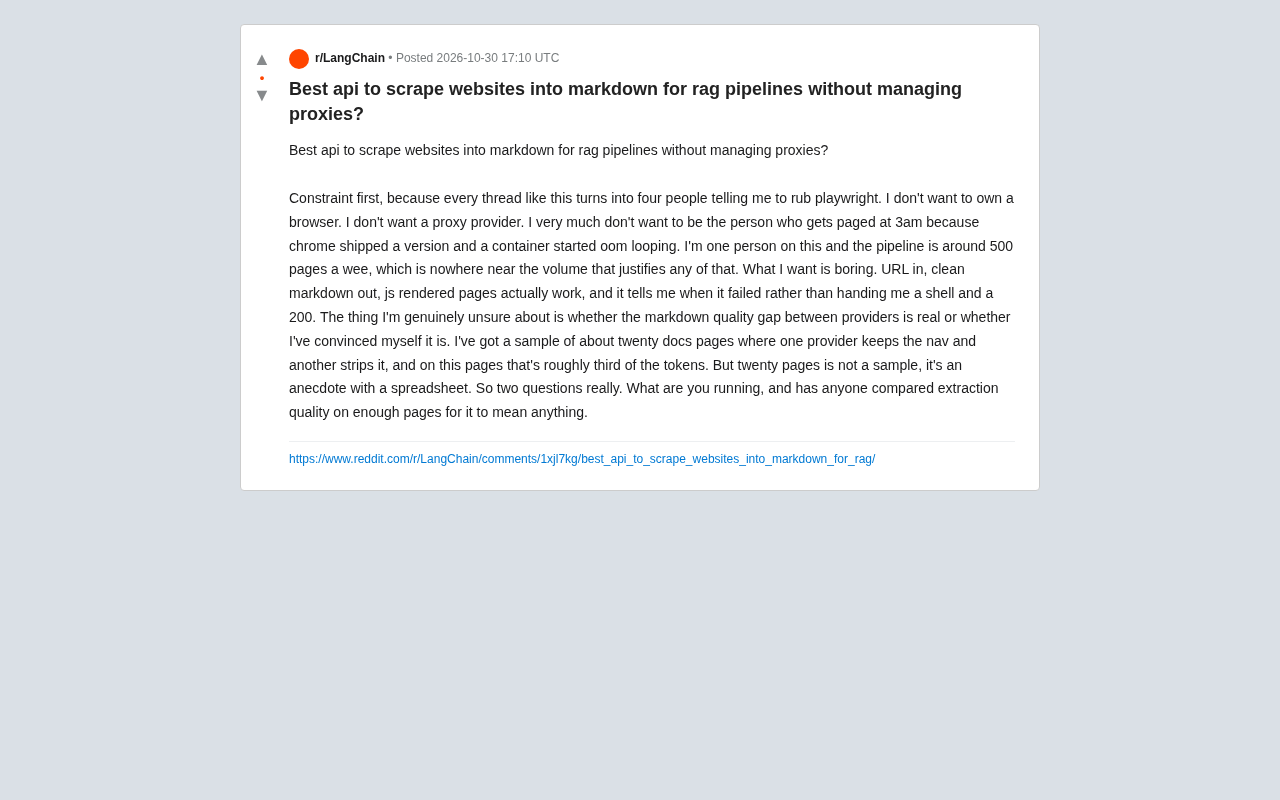
For small RAG pipelines, pick a web-to-Markdown API for stability, failure semantics, and consistency, not maximum quality.
The article discusses how a solo-maintained RAG pipeline (about 500 pages a week) should choose a web-to-Markdown API. The author argues that the hidden operational costs of self-hosting headless browsers and proxies far exceed managed API fees, so "boring reliability"—URL in, clean Markdown out, JS rendering working, clear errors on failure—is the core need. Community debate centers on whether the Markdown quality gap is real; the article says it exists mainly in boilerplate stripping, code block fidelity, tables, and heading hierarchy, though twenty pages is too small a sample. The author recommends building a 30-50 page evaluation set and selecting along five dimensions: JS rendering coverage, failure semantics, rate limits, output consistency, and pricing model.
Why You Need a "Boring" Web-to-Markdown API
If you're building a RAG pipeline, you've almost certainly hit this scenario: you need to process a few hundred web pages every week, and you want clean, structured Markdown straight from a URL, with JS-rendered pages actually working, and failures reported clearly instead of returning a 200 status code with an empty shell. You don't want to maintain your own browser instances, manage a proxy pool, or get woken up at 3 a.m. by container OOM alerts triggered by a Chrome version update.
A developer's question on Reddit captures this need precisely: "About 500 pages a week—there's really no reason to stand up a complex scraping infrastructure for this. What I want is a kind of boring reliability: URL in, clean Markdown out, JS-rendered pages actually work, and when it fails, tell me—don't hand me a shell and a 200." This description comes from a solo-maintained RAG pipeline—small in scale, but with clear requirements for reliability and output quality.
One core debate that keeps coming up in community discussions: is the gap in Markdown extraction quality between providers real, or is it psychological? The developer compared roughly twenty documentation pages and found that one provider kept the navigation bar while another stripped it—and on those pages, the navigation accounted for about a third of the tokens. But he admitted himself: "Twenty pages isn't a sample, it's an anecdote with a spreadsheet."
RAG (Retrieval-Augmented Generation) is a technical architecture that combines information retrieval with large language models: the system first retrieves document fragments relevant to the user's question from an external knowledge base, then feeds these fragments as context to the LLM to generate an answer. A typical RAG pipeline includes several stages: document collection, cleaning and chunking, vector embedding, storage and indexing, and retrieval and generation. The web-to-Markdown conversion discussed in this article belongs to the collection and cleaning stage—raw HTML contains a lot of noise such as navigation, ads, and scripts, and embedding it directly pollutes the vector space and lowers retrieval hit rates. Converting web pages into structured Markdown is precisely about giving downstream chunking and embedding semantically clear input with controllable noise, so the output quality of this stage propagates down the pipeline and directly affects the accuracy of the final answer.
Self-Built vs. Managed API: Weighing Cost and Complexity
Before discussing specific options, let's do the math. At 500 pages a week, that's under 100 pages a day on average. If you build it yourself, you need a server that can run a headless browser, and you'll have to deal with Chrome updates, memory leaks, proxy rotation, and changes in anti-scraping policies. The hidden cost of this work far exceeds the subscription fee of a managed API.
The core value of a managed API is that it removes two things from your to-do list entirely: "browser operations" and "proxy management." You only need to care about input and output: URL in, Markdown out. For a solo project or a small team, this increase in the level of abstraction directly determines whether the pipeline can run stably over the long term.
Some in the community mention that certain providers are unstable with JS rendering, especially when facing pages with a lot of dynamically loaded content. Others emphasize that the real differentiator isn't "can it render" but "does the content extracted after rendering preserve semantic structure"—heading hierarchy, lists, code blocks, tables. These elements have a big impact on RAG retrieval quality.
Headless Browser refers to a browser instance without a graphical user interface, such as Chrome Headless, Playwright, or Puppeteer, which can load pages programmatically on a server and execute JavaScript to obtain the dynamically rendered DOM. The content of many modern web pages relies on asynchronous JS loading; a plain HTTP request only gets an empty-shell HTML, so scraping JS-rendered pages usually requires a headless browser. But the operational burden of headless browsers is not light: each instance consumes hundreds of MB of memory, long-running instances are prone to memory leaks, Chrome version updates can break compatibility, and concurrent scraping requires managing an instance pool. This is precisely the technical root of "being woken up at 3 a.m. by OOM alerts" mentioned in the article, and also the core value of managed APIs abstracting away browser operations.
Markdown Quality Gap: Real or Psychological?
Back to the core question: how big is the quality gap between Markdown output from different APIs?
From community feedback, the gap is indeed real, but it shows up in the details. The most common differences include:
- Navigation and footer retention strategy: Some providers keep boilerplate content such as site navigation, sidebars, and footers, while others strip it automatically. For RAG, stripping is usually better, because navigation text dilutes the useful information in the embedding vector.
- Code block handling: If code blocks in technical documentation are incorrectly formatted as plain text, semantic matching during retrieval degrades significantly.
- Table structure: The degree to which Markdown tables are preserved directly affects the usability of structured information.
- Heading hierarchy: Accurate restoration of H1-H6 determines boundary judgments during document chunking.
The case the developer observed of "a third of the tokens taken up by navigation," if true, means embedding costs and retrieval noise both increase substantially. But as he said, a sample of twenty pages is not enough to draw a statistically significant conclusion.
Here's a practical suggestion: build your own small evaluation set. Pick 30-50 page types you actually need to scrape (documentation pages, blogs, product pages, forum posts), manually score each candidate API's output, and focus on boilerplate stripping, code block fidelity, table completeness, and heading hierarchy. This isn't much work, but it gives you a decision basis beyond the "anecdote" level.
Boilerplate refers to structural elements on a web page that are unrelated to the main information and repeat across a large number of pages, including global navigation bars, sidebars, footers, copyright notices, cookie prompts, and so on. For RAG pipelines, boilerplate is harmful noise: it gets chunked and embedded along with everything else, dilutes the vector representation of useful information, increases embedding costs, and introduces matches unrelated to the question during retrieval. Therefore, whether a web-to-Markdown service has boilerplate stripping capability is one of the key indicators of output quality. Stripping strategy also involves trade-offs—over-stripping may mistakenly delete tables of contents or related links from the main text, while conservative stripping leaves residual noise. Different providers sit at different points on this spectrum, which is one reason community evaluation conclusions diverge.
Selection Checklist: Work Backward from Requirements
Based on community discussions and actual pipeline needs, you can evaluate managed APIs along the following dimensions:
1. Real Coverage of JS Rendering
Not all APIs that "support JS rendering" are the same. Some only launch a browser when they detect a specific framework, while others take the browser path for every page. What you need to confirm is: for pages on your target sites that rely on JS to load content, is the output complete?
2. Failure Semantics
A good API should return a clear error code and reason when scraping fails, rather than returning empty content or an HTML page containing an error message. Some in the community complain that certain services "hand you a shell and a 200"—which is exactly what RAG pipelines fear most: garbage in, garbage out, and you have no idea.
3. Rate Limits and Concurrency
500 pages a week isn't much, but if you need to backfill historical data in bulk, short-term concurrency capability becomes important. Confirm the API's rate limit policy and whether it supports an asynchronous task mode.
4. Output Consistency
Is the output format stable across different pages on the same site? If it keeps navigation today and strips it tomorrow, your document chunking logic will need constant adjustment. Consistency matters more than absolute quality.
5. Pricing Model
Is it billed per page or per token? For Markdown output, per-page billing is usually more predictable. Watch out for hidden costs, such as whether JS-rendered pages are charged extra.
Community Consensus and Divergence
Synthesizing multiple discussion sources, the following points have relatively high consensus:
- For small-scale pipelines (a few hundred pages a week), the total cost of a managed API is lower than self-building.
- Proxy management is the most easily underestimated source of complexity in self-built solutions.
- The boilerplate stripping capability of output Markdown is one of the key indicators distinguishing providers.
The divergence centers on:
- Which provider has the best quality: Different developers have different evaluation sets, so conclusions vary widely. Some prefer minimalist output, while others need more context preserved.
- Whether post-processing is needed: Some developers believe any API's output needs secondary cleaning, while others expect it to work out of the box.
- The necessity of JS rendering: For static documentation sites, whether it's worth paying for JS rendering capability is disputed.
Conclusion: Define "Clean" First, Then Choose Tools
Before selecting, clarify what "clean Markdown" means for your RAG pipeline. Do you require zero boilerplate, or is a small amount of context acceptable? How high a priority are code block and table fidelity? What signal do you want when a failure occurs?
For a solo pipeline handling 500 pages a week, the most pragmatic path is: pick 2-3 candidate managed APIs, run a round of comparative evaluation on your real 30-50 pages, and focus on boilerplate stripping, code block and table handling, and failure semantics. Don't chase "the best"—find the "boring" option whose output behavior is predictable and that lets you know when it fails. After all, not being woken up at 3 a.m. is itself a core competitive advantage.
Failure Semantics refers to how a system expresses failure when an error occurs—whether it returns a clear error code and reason, or silently returns empty content or a response disguised as success. For automated pipelines, the clarity of failure semantics is often more important than feature coverage: a response that returns a 200 status code but has empty content will cause the pipeline to treat garbage data as normal input and continue processing, with the error only surfacing downstream, making diagnosis extremely costly. Ideal failure semantics should distinguish different causes such as network timeouts, anti-scraping blocks on the target site, JS rendering failures, and content parsing failures, and should be paired with a retryable/non-retryable classification so that the caller can decide whether to retry, degrade, or alert. When evaluating candidate APIs, you should actively construct failure scenarios (such as nonexistent URLs or pages requiring login) to test their behavior.
One-line Summary
For small RAG pipelines, choose a web-to-Markdown API based on stability, failure semantics, and output consistency rather than maximum quality.
Paragraph Summary
This article discusses how a solo-maintained RAG pipeline (about 500 pages a week) should choose a web-to-Markdown API. The author points out that the hidden operational costs of self-hosting headless browsers and proxy infrastructure far exceed the subscription fee of a managed API, so "boring reliability"—URL in, clean Markdown out, JS rendering working, and clear errors on failure—is the core requirement. The community debate centers on whether the Markdown quality gap between providers is real. The article argues that the gap does exist, mainly in boilerplate stripping, code block fidelity, table structure, and heading hierarchy restoration, but a twenty-page sample is insufficient to support a conclusion. The author recommends building a small evaluation set of 30-50 real pages and selecting along five dimensions: JS rendering coverage, failure semantics, rate limits, output consistency, and pricing model, ultimately finding a pragmatic solution with predictable behavior.
Related articles
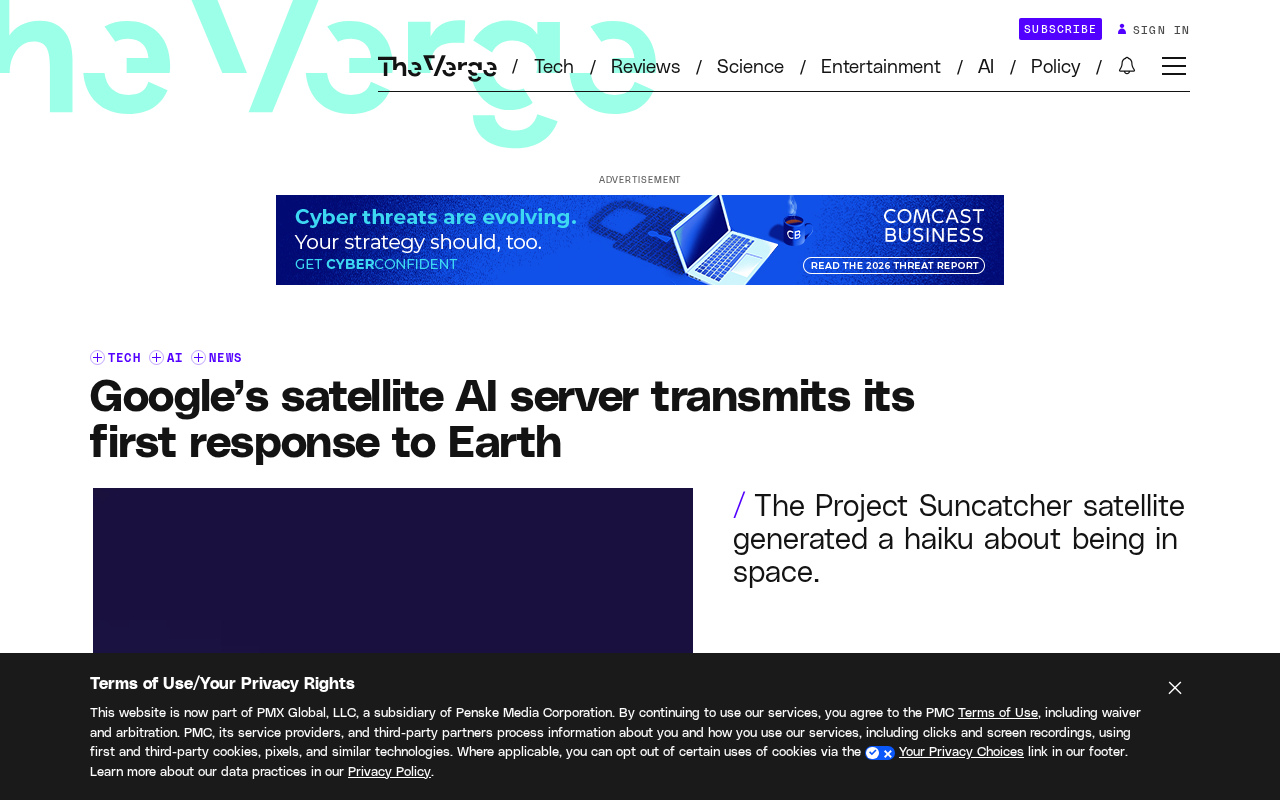
Google's Satellite AI Server Reaches Orbit: Gemma Model Generates First Reply in Space
Google's TPU-equipped satellite powers up in orbit, with the onboard Gemma 4 model generating the first reply from space. This article analyzes the technical path, real-world constraints, and implications for edge computing and satellite remote sensing.
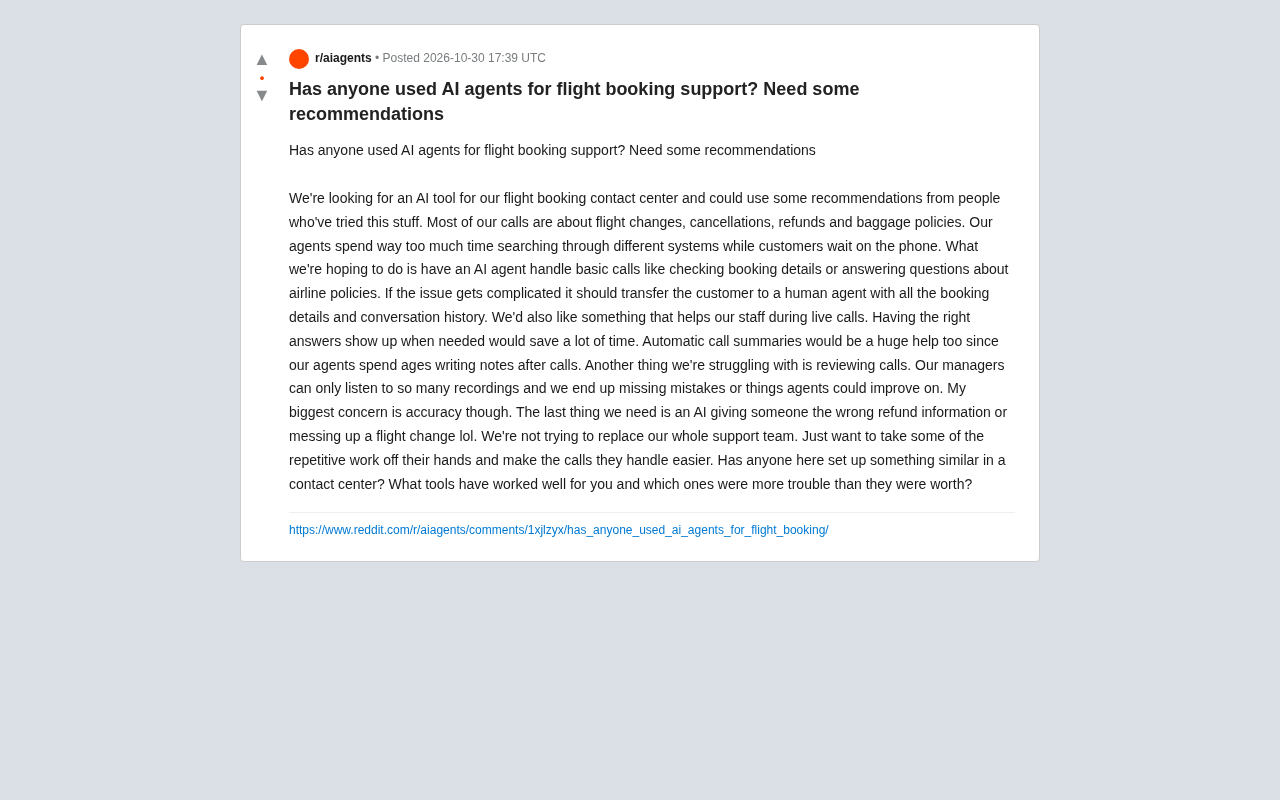
AI Agents for Flight Booking Customer Support: Real Needs and Implementation Challenges
Starting from a real Reddit question, this article breaks down four needs for introducing AI Agents into flight booking call centers: basic Q&A, agent assist, call summarization, and quality inspection, and analyzes accuracy concerns and handoff boundary design.
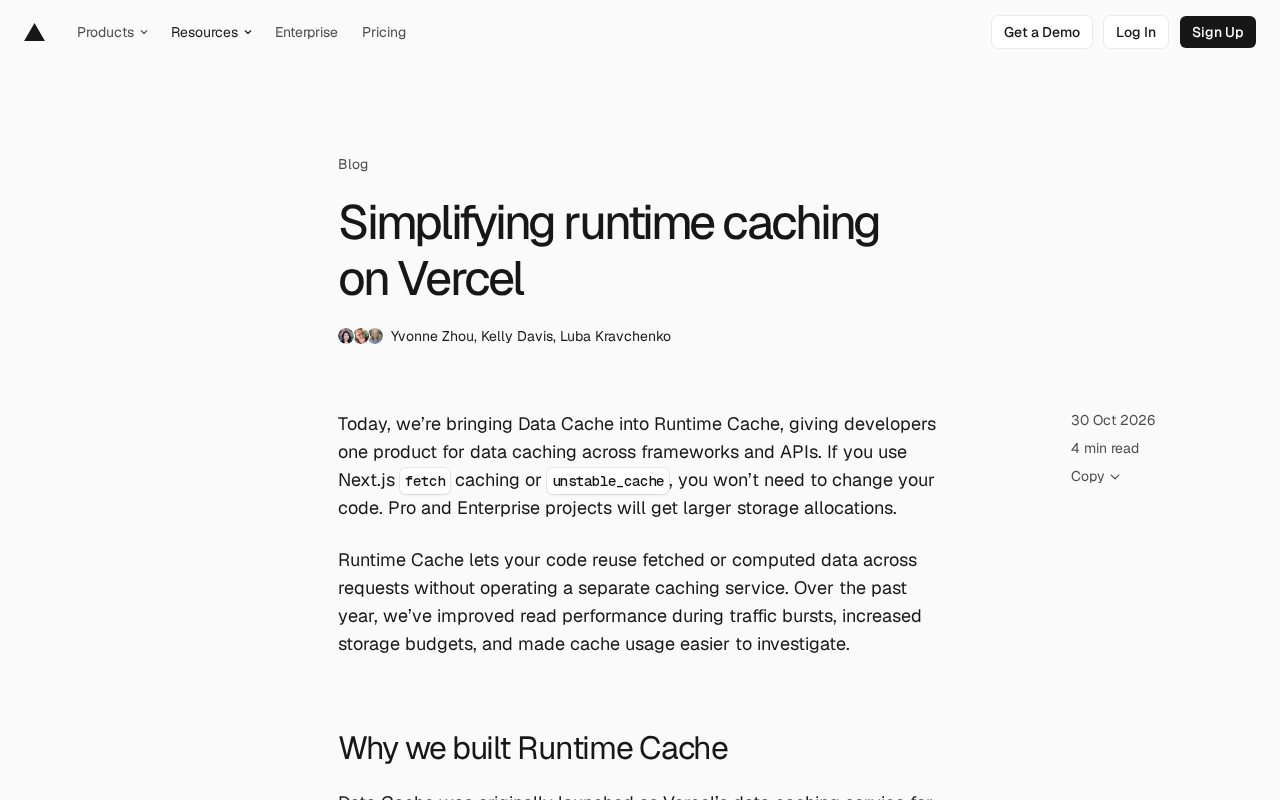
Vercel Unifies Runtime Cache: Data Cache Merges into Runtime Cache
Vercel merges Data Cache into Runtime Cache, unifying storage quotas and billing for Next.js fetch cache, unstable_cache, getCache, and use cache: remote. Pro and Enterprise projects get more storage, and cache reads/writes are now billed at Runtime Cache pricing.