Python Learning Roadmap for Beginners: A Three-Stage System to Avoid 90% of Detours

A systematic three-stage Python learning roadmap for beginners to avoid common detours.
This article breaks down a systematic Python learning path into three progressive stages—Fundamentals, Intermediate, and Skill Training—covering core topics from variables and OOP to web scraping and data analysis. It offers practical tips to help beginners avoid information overload and build a solid, structured foundation.
For beginners looking to get started with Python, the biggest challenge is often not a lack of tutorials, but rather too many scattered ones. A senior Python programmer with nine years of experience on Bilibili pointed out a common phenomenon in their complete tutorial series: the thousands of fragmented tutorials online lack a coherent system, and the more learners watch, the more confused they become—some even give up because their foundation is weak and they're too eager for quick results. Based on the course framework of this tutorial, this article organizes a systematic Python learning path to help beginners build a clear understanding of how to progress.
Why Python Is the Best Starting Point for Beginners
Python was born in 1991, designed by Dutch programmer Guido van Rossum, with its core design philosophy being "readability first." This philosophy doesn't just remain at the level of a slogan—it was systematically written into the famous "The Zen of Python," 19 aphorisms written by Tim Peters, which you can view by typing import this in the Python interpreter. Principles like "Beautiful is better than ugly" and "Simple is better than complex" deeply shaped every syntactic decision in Python. The most representative of these is the mandatory indentation design: Python uses indentation levels to delimit code blocks instead of the curly braces used in C and Java. This not only eliminates visual noise but also unifies coding style at the language mechanism level, giving code written by different programmers a high degree of consistent readability.
Compared to languages like Java and C++, Python's syntax is closer to natural English, removing a great deal of symbolic noise such as parentheses and semicolons. This allows beginners to focus their cognitive resources on the logic itself rather than syntactic details. According to the TIOBE programming language rankings, Python has long held the top spot as the world's most popular programming language since 2021, and the Stack Overflow Developer Survey has shown it to be the "most wanted language" for many consecutive years.
It's worth adding that Python's execution mechanism also fundamentally differs from compiled languages like C and Java. CPython (the official implementation) first compiles source code into bytecode (.pyc files), which is then interpreted and executed statement by statement by the Python virtual machine, rather than generating machine code directly. This mechanism brings the advantages of high development efficiency and strong cross-platform compatibility, at the cost of typically slower runtime speeds than compiled languages. It's also worth mentioning that Python has multiple implementations, including PyPy (a high-performance implementation with a JIT compiler), Jython (running on the JVM), and MicroPython (aimed at microcontrollers). Understanding this diversity helps beginners grasp the distinction between "Python" as a language specification and its concrete implementations.
However, this level of popularity has directly given rise to a vast number of tutorials of varying quality, which in turn creates the "information overload" dilemma described in this article—this is precisely why a systematic learning path matters more than the tutorials themselves.
Why Beginners Learning Python From Scratch Easily Take Detours
The content creator emphasized a core point in the video: if Python beginners don't build a solid foundation and blindly cobble together attempts at high-difficulty projects, they will ultimately end up with a "weak foundation but a rush for quick results," making their IT career exceptionally difficult. This judgment hits at a pain point for many beginners.
"Information Overload" is a well-documented phenomenon in cognitive psychology, first systematically discussed by sociologist Alvin Toffler in his 1970 book Future Shock. In the context of learning programming, this problem is especially prominent: the algorithmic recommendation mechanisms of search engines, short-video platforms, and online course platforms tend to present content of vastly different styles and quality side by side. When learners lack a framework for filtering, they easily fall into a cycle of "continuously acquiring new tutorials rather than digesting existing knowledge." Cognitive Load Theory indicates that when working memory simultaneously processes too much unrelated information, effective learning becomes nearly impossible—this is precisely the theoretical basis for why a systematic learning path holds a structural advantage over fragmented content.
The essence of learning programming is the systematic accumulation of knowledge. Seemingly tedious foundational concepts like variables, data types, and control flow are precisely the bedrock for all subsequent advanced applications. Skipping the fundamentals and jumping straight into web scraping or machine learning projects often leads to a state where "the code runs but you don't understand the principles at all"—and once an error occurs, you're helpless. This is also why the tutorial repeatedly emphasizes the logic of "building the foundation first, then talking about monetization."
A Complete Breakdown of Python's Three Learning Stages
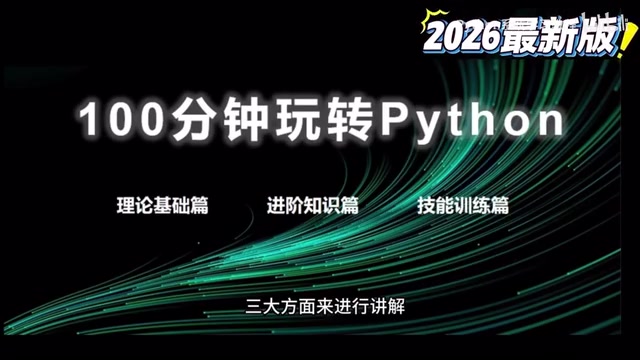
The tutorial divides the entire learning path into three progressive stages: Fundamentals, Intermediate, and Skill Training. This layered design aligns with cognitive patterns and is worth referencing for beginners.
Stage One · Fundamentals: Building Programming Intuition
The fundamentals stage covers core content such as software installation, variables, operators, loops, strings, and tuples. The goal of this stage isn't to have you write complex programs, but to "get acquainted with Python"—understanding how code executes and how data is stored and processed.
For beginners with zero experience, it's recommended to write plenty of code by hand during this stage rather than just watching videos. Even typing out the examples from the tutorial verbatim helps build muscle memory for the syntax. Correctly configuring the software environment is equally important—many people get stuck at the step of installing Python and configuring environment variables, which directly affects subsequent learning progress.
Supplementary Knowledge: Python Environment Configuration Common environment configuration tools for beginners include the official Python interpreter paired with VS Code, as well as the Anaconda distribution, which integrates a package manager. Anaconda is especially suitable for learners focused on data analysis and machine learning, as it comes pre-installed with commonly used libraries like NumPy and Pandas, avoiding the tedious process of manually installing dependencies. Understanding the concept of a "virtual environment" (virtualenv or conda env) is also important—it isolates dependencies between different projects, prevents version conflicts, and is a basic competency for engineering-oriented development.
The engineering value of virtual environments goes far beyond simply avoiding conflicts. When different projects depend on different versions of the same library (e.g., Project A needs Django 3.2 while Project B needs Django 4.1), a global installation will lead to irreconcilable version conflicts. Python's venv module (built in since Python 3.3) solves this by creating an independent copy of the Python interpreter and a site-packages directory for each project. The uv tool that has emerged in recent years is written in Rust and resolves dependencies 10–100 times faster than traditional pip, and is gradually becoming the new standard in production environments. Understanding the concept of a "reproducible environment" is a fundamental prerequisite for collaborative development and continuous integration, and an important step in moving from personal practice toward engineering practice. It's worth noting that package management tools in the Python ecosystem have also continued to evolve in recent years: the traditional combination of pip and virtualenv is the most universal solution, while newer-generation tools like poetry and uv further simplify the dependency management process. Understanding this direction of evolution helps beginners choose a more modern workflow.
Stage Two · Intermediate: From Knowing How to Truly Understanding
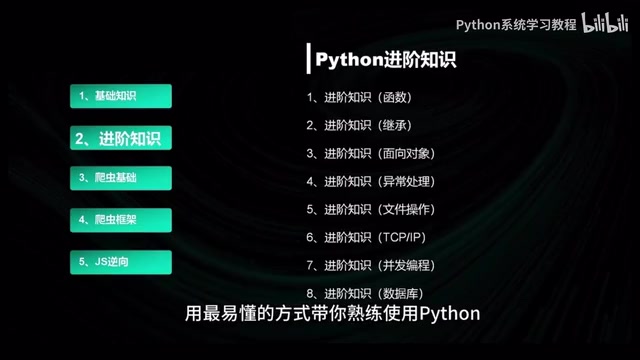
The focus of the intermediate stage is deeper knowledge such as functions, object-oriented programming (OOP), and regular expressions. This stage is the critical leap from "being able to write a few lines of code" to "being able to organize and design programs."
Object-Oriented Programming (OOP) is the first real hurdle many beginners encounter. The ideas behind OOP first sprouted in the 1960s with the Simula language, designed by Norwegian computer scientists Ole-Johan Dahl and Kristen Nygaard for simulating discrete systems—Simula was the first to introduce the concepts of "class" and "object." From the 1970s to 1980s, the Smalltalk language, designed under Alan Kay's leadership at Xerox PARC, developed the OOP philosophy to its fullest; Kay himself emphasized that the essence of OOP lies in "message passing" rather than inheritance, a view that still sparks discussion today. Its fundamental insight is binding "data" together with "the behaviors that operate on data," modeling complex systems in a way closer to how humans perceive the world. OOP is a programming paradigm that organizes a program as a collection of "objects," each encapsulating data (attributes) and methods that operate on the data. The four core pillars of OOP in Python are:
- Encapsulation: Binding data and methods within a class, hiding internal implementation details
- Inheritance: Subclasses can reuse the attributes and methods of parent classes, reducing duplicate code
- Polymorphism: The same interface can produce different behaviors for objects of different types
- Abstraction: Exposing only the necessary interfaces while hiding complex implementations
Python's OOP implementation leans toward the pragmatic: it supports multiple inheritance (handling conflicts through the MRO, or Method Resolution Order), duck typing, and operator overloading, and doesn't enforce a purely object-oriented style. This gives its OOP practice a significant difference from Java's strict class hierarchy system. Notably, Python is a multi-paradigm language—besides OOP, it also supports functional programming (such as higher-order functions, lambdas, and list comprehensions) and procedural programming. This flexibility means learners don't need to forcibly apply the object-oriented pattern in all scenarios, but rather choose the most appropriate paradigm based on the nature of the problem—which itself is a form of engineering judgment worth cultivating in the intermediate stage.
The key to understanding OOP lies in shifting your mindset—from "a program is a series of instructions" to "a program is a collection of collaborating objects." For example, using a class to describe a "student" object, where name and grades are attributes and "calculating the average score" is a method—this modeling approach is closer to how we cognitively understand the real world, and requires repeated appreciation through practical examples.
Regular Expressions (RegEx) are a powerful tool for text processing, frequently used in later web scraping and data cleaning. Their mathematical roots can be traced back to a paper published by American mathematician Stephen Kleene in 1956—while studying the mathematical description of neural networks, he proposed the concept of "regular sets" and introduced the asterisk (*) to denote zero or more repetitions, which is the origin of the Kleene star in today's regular expressions. Their mathematical equivalent is the "finite state automaton" (FSA)—every regular expression can be converted into an NFA (nondeterministic finite automaton) and then further determinized into a DFA (deterministic finite automaton) to perform matching. This also theoretically explains why regular expressions cannot match context-sensitive structures like nested parentheses. In 1968, Ken Thompson brought this theory into practice, implementing a regular expression engine for the Unix toolchain (grep, sed), after which it was widely integrated into nearly all mainstream programming languages. Python supports this functionality through the built-in re module, and introduced safer matching methods like re.fullmatch() after Python 3.8. Beginners often find regular expressions hard to memorize—this is normal. Even in actual development, programmers frequently consult reference manuals; the key is understanding the matching logic rather than memorizing all the symbols.
Stage Three · Skill Training: Putting What You've Learned Into Practice
The skill training stage covers application directions such as web scraping, data analysis, machine learning, and office automation. This is the stage where learning outcomes are transformed into real productivity, and it's also the core goal for most people learning Python.
Each direction has its own mature technology stack ecosystem. What's worth understanding deeply is that Python's dominance in data science and AI stems largely from its "glue language" characteristic—NumPy's core computation layer is written in C, PyTorch's underlying tensor operations are implemented in C++/CUDA, and Python provides a friendly calling interface rather than the low-level implementation. This "easy-to-use frontend + efficient backend" architecture allows Python to achieve near-low-level computational performance while maintaining concise syntax. More precisely, Python wraps high-performance low-level libraries into friendly Python interfaces through CPython's C extension API (or binding tools like ctypes, cffi, Cython, and pybind11)—the truly compute-intensive operations are never executed at the Python level. This explains why Python performs mediocrely in benchmark tests yet excels in scientific computing and AI. Mastering the Python technology stack essentially means standing on the shoulders of decades of accumulated achievements by the entire scientific computing community.
- Web Scraping: Primary tools include Requests (HTTP request library), BeautifulSoup/lxml (HTML parsing), and Scrapy (industrial-grade scraping framework), which can automate the collection of web data. It's worth noting that actual scraping development also involves dealing with anti-scraping strategies (such as request header spoofing, proxy IPs, and rate limiting) as well as engineering and compliance issues like adhering to the robots.txt protocol. The robots.txt protocol was proposed by Martijn Koster in 1994 as an informal standard for websites to declare crawling permissions to bots; many countries' laws impose clear restrictions on unauthorized large-scale data collection, and China's Data Security Law and Cybersecurity Law also have corresponding constraints. Modern anti-scraping systems have evolved to multiple layers of defense such as fingerprinting, behavioral analysis, and CAPTCHAs. The main technical challenge of industrial-grade scraping has shifted from "how to send requests" to "how to simulate real user behavior"—these are important leaps from a "runnable scraper" to a "usable scraper."
- Data Analysis: Relies on the "three-piece set" of NumPy (numerical computing), Pandas (structured data processing), and Matplotlib/Seaborn (data visualization) to mine the value behind data. Jupyter Notebook, as an interactive development environment, is nearly indispensable in this direction—it integrates code, output, and documentation into one, greatly lowering the barrier to data exploration.
- Machine Learning: Uses Scikit-learn (traditional machine learning algorithms) as the entry-level core, covering classic algorithms like classification, regression, clustering, and dimensionality reduction; advanced study then involves deep learning frameworks like TensorFlow or PyTorch. In recent years, the rise of large language models (LLMs) has made the Hugging Face Transformers library an important learning milestone as well. It's worth noting that while LLM tools (such as ChatGPT and GitHub Copilot) can instantly generate code snippets and explain errors, over-relying on them without understanding the underlying principles leads to a dilemma of being unable to debug, optimize, or assess security risks—which precisely echoes this article's core argument about a "weak foundation." Python developers are at the very core of technological evolution in the AI era, which further reinforces the long-term value of systematically learning Python.
- Office Automation: Commonly uses openpyxl/xlrd to handle Excel, python-pptx to manipulate PowerPoint, and PyAutoGUI to simulate mouse and keyboard input, greatly improving daily work efficiency. This direction has a relatively gentle learning curve and is the most closely tied to daily work, making it the fastest entry point for learners with non-technical backgrounds to achieve "learning applied to practice."
As the tutorial says: monetize what you've learned, turning skills into tangible returns. Understanding the existence of these technology stacks helps beginners clarify which libraries they need to focus on when entering the skill training stage, avoiding aimless broad dabbling.
Supporting Learning Resources: More Than Just Video Courses
Beyond the video course itself, this tutorial also comes with complete supporting materials including learning mind maps, video assets, software installation packages, courseware notes, and e-books.
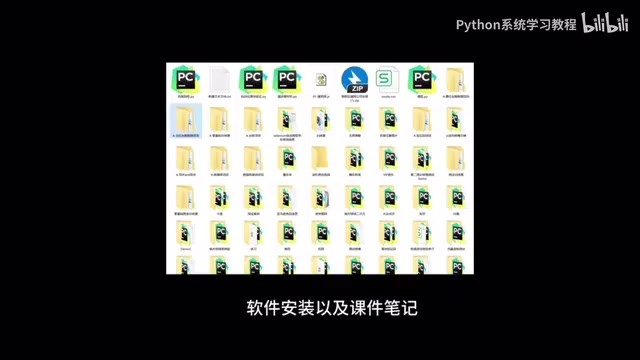
For beginners, mind maps are especially worth valuing—they help build logical connections between knowledge points and avoid falling into a fragmented state of "seeing the trees but missing the forest." The accompanying courseware and notes save the time of organizing materials yourself, allowing you to focus your energy on understanding and practice. Additionally, the official Python documentation (docs.python.org) is the most authoritative reference material. Developing the habit of consulting the official documentation builds a more systematic knowledge base than relying on secondhand tutorials—as your learning deepens, the official docs will gradually transform from "incomprehensible" to your "most useful" tool.
Four Practical Tips for Python Beginners
Synthesizing the ideas from this tutorial, learning Python from scratch should focus on the following key points.
1. Follow a systematic path. Don't hunt around online for scattered content. Choosing one complete tutorial and following it from start to finish is more effective than watching ten fragmented tutorials.
2. Value the fundamentals; don't skip levels. Basics like variables, loops, and functions must be solid. Rushing for quick results often defeats the purpose.
3. Drive practice with projects. After reaching the skill training stage, be sure to build a complete small project yourself—such as writing a web scraper or producing a data analysis report. Only hands-on practice can truly consolidate knowledge.
4. Clarify your learning goals. Do you want to do data analysis, web development, or office automation? Learning with a goal in mind allows you to better focus on key directions in the skill training stage, avoiding learning without applying.
In summary, the three-stage path of "Fundamentals—Intermediate—Practice" provides Python beginners with a clear and executable learning framework. As the most popular programming language today, Python's rich ecosystem means the returns on learning are extremely high—but precisely because of this, learning without direction easily leads one astray. What truly determines learning outcomes is not the quantity of tutorials, but whether you can settle down and systematically complete the entire path.
Related articles

Disaster and Glory of the Apollo Program: The History We Must Revisit Before Returning to the Moon
From the fatal Apollo 1 fire to Apollo 8's daring lunar orbit to Apollo 11's successful landing—revisiting the disasters, fears, and compromises of the Apollo program and their lessons for today's return to the Moon.
Netflix Trust Exercise Turns Into Firing Trap: Where Are the Boundaries of Corporate Trust?
A Netflix employee was fired after sharing private info in a trust exercise. We analyze the risks of corporate trust exercises and how employees can protect themselves.

AMD CDNA5 Architecture Deep Dive: Technical Evolution and the AI Computing Competition Landscape
Deep analysis of AMD's CDNA5 architecture covering Chiplet packaging upgrades, HBM memory evolution, and low-precision compute optimization, examining how AMD challenges NVIDIA's AI chip dominance.