PyTorch Foundation Announces 2026 Ambassador List: The Backbone of the Open Source AI Community

The PyTorch Foundation unveils its 2026 ambassador list, marking a shift in community operations from spontaneous contributions to an organized system.
The PyTorch Foundation has released its 2026 ambassador list, with ambassadors drawn from developers, researchers, and educators whose responsibilities include evangelism, education, documentation contributions, and organizing offline events. The article notes that this program marks PyTorch community building shifting from spontaneous contributions to an organized operations system, with ambassador roles covering dimensions such as developer relations, educational content production, and localized community operations that are hard to measure with code metrics. As competition among deep learning frameworks shifts toward ecosystem operations, community soft power becomes key to long-term competitiveness—the more open the governance, the stronger the willingness to participate. However, the official announcement has not yet disclosed the specific list, regional distribution, or detailed responsibilities, so the program's actual impact remains to be seen.
The Foundation of Open Source AI: Community and Contributors
Open source AI thrives when people come together to learn, build, share knowledge, and contribute. The official PyTorch blog recently published "Meet the 2026 PyTorch Foundation Ambassadors," officially unveiling the new class of PyTorch Foundation ambassadors.
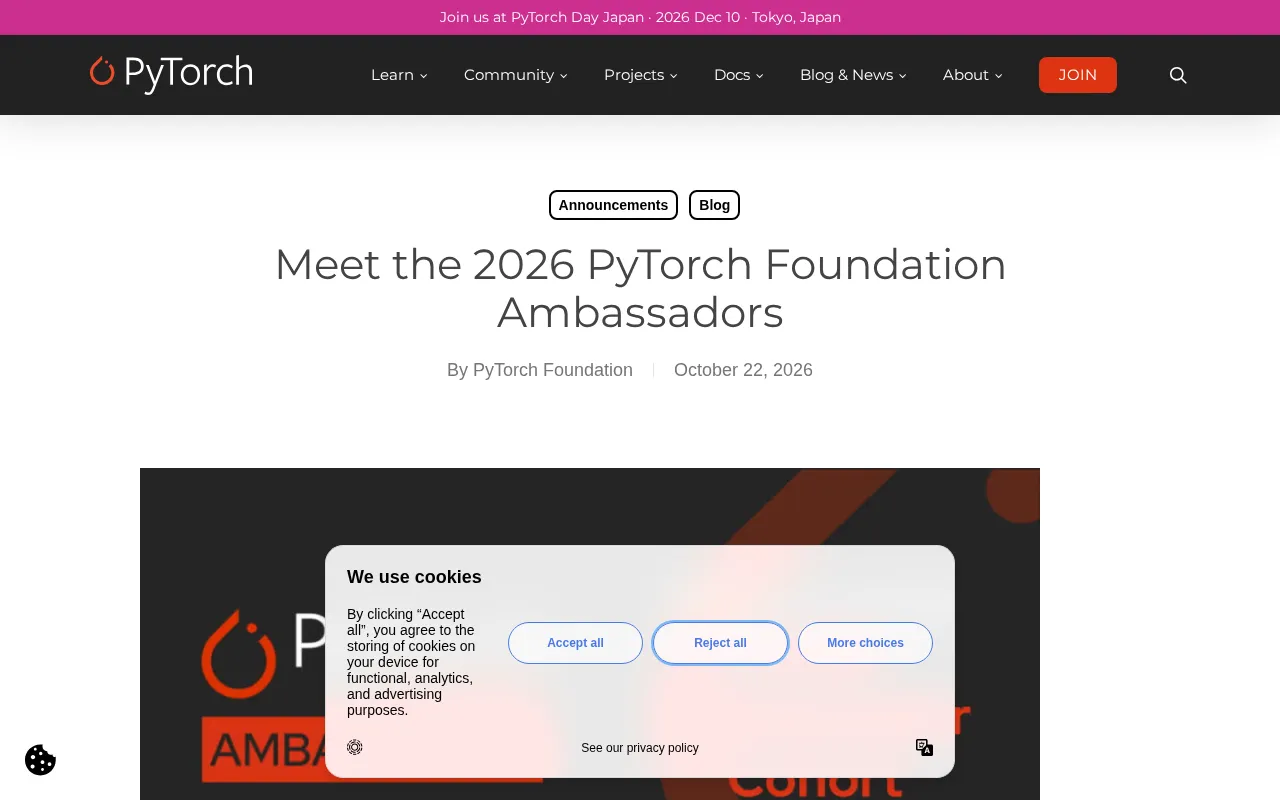
This is not a simple personnel announcement. For a deep learning framework that relies heavily on community collaboration, the ambassador program is a key link between the core development team and developers worldwide. After PyTorch evolved from a Meta-led project into a neutral open source project under foundation governance, the transparency and engagement of community governance have become important indicators of its long-term health. Ambassadors take on responsibilities such as evangelism, education, documentation contributions, and organizing offline events, directly influencing the framework's penetration speed in emerging markets and academic circles.
The Open Source Governance Logic Behind the Ambassador Program
From Code Contributions to Ecosystem Operations
Traditional open source project evaluation systems often focus on commit counts and issue resolution rates, but the PyTorch Foundation is clearly attempting a more multidimensional community operations model. The ambassador role covers dimensions such as developer relations, educational content production, and localized community operations. These efforts are difficult to measure with code metrics, yet they are crucial to the framework's ecosystem prosperity.
According to the official blog, these ambassadors come from the ranks of developers, researchers, and educators, and their common trait is "helping the community grow." This positioning means the PyTorch Foundation is shifting community building from spontaneous behavior to an organized operations system, motivating key contributors to stay engaged through official recognition and resource support.
The PyTorch Foundation is an independent governance body established in 2022 after Meta donated the PyTorch project to the Linux Foundation. It adopts a neutral multi-party governance model, with members including companies such as Meta, AMD, AWS, Google, Microsoft, and NVIDIA as well as academic institutions. The foundation has a Technical Advisory Council (TAC) and a Governing Board responsible for technical roadmap decisions, community affairs, and fund allocation. The core purpose of this shift from single-company leadership to foundation governance is to eliminate vendor lock-in concerns, attract more companies to invest resources, and institutionalize the participation paths of community contributors. The ambassador program is precisely a community incentive and operations mechanism under the foundation's governance framework.
The Practical Impact on Developers
For ordinary PyTorch users, the value of the ambassador program is reflected at several levels: localized technical events and learning resources are easier to access, community support is easier to find when encountering framework usage issues, and the path to participating in open source contributions is clearer. Especially in teaching scenarios, ambassadors often serve as curriculum design advisors and onboarding guides, lowering the learning barrier to deep learning frameworks.
Community Soft Power in Framework Competition
Competition among deep learning frameworks has long surpassed pure performance benchmarks. PyTorch has long led in adoption in academic papers, while competitors such as TensorFlow and JAX continue to invest in community building. Programs like foundation ambassadors are essentially a manifestation of "community soft power"—it determines the sense of belonging and long-term stickiness of the framework in developers' minds.
The more open the governance structure of an open source project, the stronger the willingness of community members to participate. Since its establishment, the PyTorch Foundation has continuously brought contributors from diverse backgrounds into governance layers, and the ambassador program is a continuation of this direction. For enterprise users, a framework with healthy governance and an active community means lower technology selection risk and a richer third-party ecosystem.
Academic adoption of deep learning frameworks is typically measured by the proportion of framework mentions in top conference papers. According to recent statistics, PyTorch accounts for more than 60% of paper implementations at conferences such as CVPR, NeurIPS, and ICLR, significantly ahead of TensorFlow and JAX. This advantage is closely related to the framework's ease of use, dynamic graph design, and community ecosystem, but penetration in academic circles also depends on teaching resources and localized community support. Through education and evangelism activities, the ambassador program directly influences new researchers' framework preferences, thereby consolidating the adoption advantage over the long term.
Signals Worth Watching
The official announcement itself is brief and has not yet disclosed the specific list, regional distribution, or detailed responsibilities of this year's ambassadors. For developers following the PyTorch ecosystem, what is worth watching next is: what types of community events the ambassadors will organize, whether the foundation will provide supporting resource support, and how the ambassador program will connect with PyTorch's technical roadmap. These details will determine whether the program is merely a formality or truly becomes an engine for community growth.
In any case, at a stage when open source frameworks are gradually maturing and competition is shifting toward ecosystem operations, this move by the PyTorch Foundation sends a clear signal: community investment is becoming a core part of the framework's long-term strategy.
One-line Summary
Paragraph Summary
Related articles
Microsoft Fabric Database Agent in Action: From Reactive Firefighting to Intelligent Detective
A deep dive into the Microsoft Fabric Database Agent: how to enable it, supported monitoring scenarios, a blocking-issue demo, and the roadmap from reactive to autonomous operations.

Zendesk Uses ChatGPT Enterprise to Build a Sales Agent with 1,000 Daily Active Users
Zendesk opened ChatGPT Enterprise to all employees, who built about 600 apps themselves, including a sales expansion agent with about 1,000 daily active users. This article analyzes how it turns internal data into sales opportunities and its "don't wait" implementation strategy.
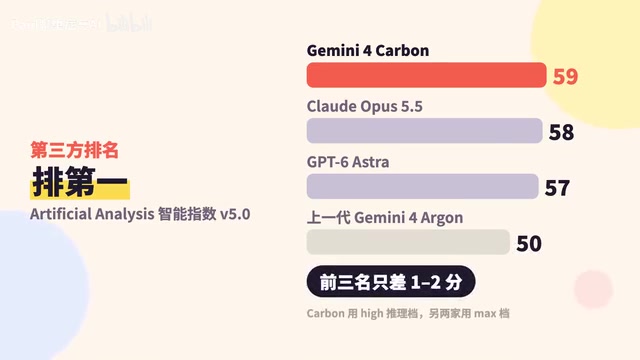
Google Releases Gemini 4 Carbon: Its Strongest Model Yet, Debuting with a Cybersecurity Focus
Google releases Gemini 4 Carbon, calling it its strongest model, with a cybersecurity focus. It tops the third-party composite ranking at 59 points but leads by only one or two. This article analyzes its security test results, staged rollout, token pricing, and the divergence between self-reported and third-party tests on hallucinations.