Q2D-Web: How Multi-Source Relevance Annotation Is Reshaping Retrieval Evaluation

Q2D-Web cross-validates retrieval quality using three independent relevance signals to reduce false negatives and improve evaluation robustness.
Q2D-Web is a multi-source relevance evaluation framework for retrieval systems designed to break dependence on single annotation pipelines. It builds three independent relevance sets — web pages actually cited by AI agents during task completion, real ranking data from production search systems, and a combined annotation set expanded via LLM judgments — to collectively define relevance from behavioral, product, and semantic dimensions. This effectively reduces false-negative bias caused by missed annotations. Beyond improving robustness, Q2D-Web provides an experimental basis for studying how differing relevance definitions affect model performance, reflecting the field's broader shift from single authoritative labels toward multi-source signal fusion.
From Single Labels to Multi-Source Validation
Retrieval system evaluation has long relied on a single relevance annotation pipeline — and this creates a hidden risk: when labels come from just one source, a model's apparent performance depends heavily on how the annotations were created, rather than on the model's actual retrieval capability. Q2D-Web aims to break this inertia by introducing three independent relevance judgment sets that cross-validate retrieval quality from different angles.
These three sets are: agent citations, production web rankings, and a combined set expanded through LLM judgments. Each defines "what counts as relevant" from a distinct perspective, together forming a more robust evaluation foundation.
The Design Logic Behind the Three Relevance Sets
Agent Citations
The first set is derived from the content that AI agents actually cite when completing tasks. When an AI agent answers a question or performs a retrieval task, it actively selects and references certain web pages as supporting evidence. These citation behaviors serve as an "implicit relevance signal" — the cited content has been judged useful by the agent for the task at hand. Compared to human annotation, this signal is more grounded in real usage scenarios.
Production Web Rankings
The second set is based on web ranking data from production systems. Rankings generated by search engines and retrieval systems under real traffic carry rich relevance information accumulated through user behavior and algorithmic optimization. Including this data in the evaluation set means models must satisfy not only lab-defined relevance, but also align with the ranking logic of real-world product environments.
LLM-Expanded Combined Set
The third set is the most experimental: it is a combined collection expanded through LLM judgments. LLMs can assess relevance across large volumes of candidate documents, quickly filling in edge cases that human annotation or behavioral signals fail to cover, thereby broadening annotation coverage.
Why Reducing False Negatives Matters
One of Q2D-Web's core motivations is reducing false negatives. In traditional evaluation, a document that hasn't been labeled as relevant is typically treated as irrelevant by default. In reality, annotation pipelines are limited — many genuinely relevant documents simply never get labeled. This systematic omission leads to consistent underestimation of retrieval models' true performance.
By layering three relevance sets from different sources, Q2D-Web ensures that a document judged relevant by any one reliable signal won't be easily dismissed as irrelevant. This significantly reduces bias from missed annotations and lowers dependence on a single annotation pipeline — preventing the limitations of any one labeling approach from dominating the entire evaluation outcome.
How Relevance Definitions Affect Model Evaluation
Beyond improving evaluation robustness, Q2D-Web also serves a deeper research purpose: examining how differences in relevance definitions themselves affect model performance.
This is a frequently overlooked yet critically important question. The same retrieval model might excel under the "agent citations" standard, but not necessarily lead under the "production rankings" standard. Relevance definitions are not neutral — they determine what retrieval behaviors get rewarded. By placing three definitions side by side, researchers can observe a model's consistency and preferences across different relevance criteria, gaining clearer insight into the boundaries of model capability.
Implications for Retrieval Evaluation
From a methodological perspective, Q2D-Web reflects a broader trend in retrieval evaluation: shifting from pursuing a "single authoritative label" toward "multi-source signal fusion." This shift carries several layers of significance.
Multi-source fusion brings evaluation closer to the complexity of the real world. Real users' relevance judgments are inherently diverse, and measuring them with a single standard inevitably distorts the picture. Combining behavioral signals, production data, and LLM judgments can cover a broader spectrum of relevance.
Using LLMs to expand annotations also reflects the new role large models play in evaluation infrastructure — not just as the subjects being evaluated, but as tools for building evaluation sets. While this improves coverage, it also requires vigilance about the biases that LLM judgments themselves may introduce. Designing it as one of three sets rather than the sole basis is a deliberate and prudent balance.
For teams developing retrieval or RAG systems, Q2D-Web's approach offers a practical reference: don't tie model evaluation results to a single annotation framework. Cross-validation from multiple angles yields more trustworthy performance assessments.
Summary
Q2D-Web constructs a more bias-resistant retrieval evaluation framework through three relevance sets: agent citations, production web rankings, and an LLM-expanded combined collection. It reduces both false negatives and single-pipeline dependence, while also opening space to study how differences in relevance definitions shape model performance. As retrieval and agent systems grow increasingly complex, multi-source validation methods like this are becoming ever more important.
Related articles

Microsoft Issues Emergency Windows 11 Patch to Fix Bugs Caused by Its Largest-Ever Update
Microsoft pushed an emergency out-of-band Windows 11 update to fix bugs introduced by its largest-ever September Patch Tuesday, which fixed nearly 1,000 vulnerabilities but broke Hyper-V folder sharing.
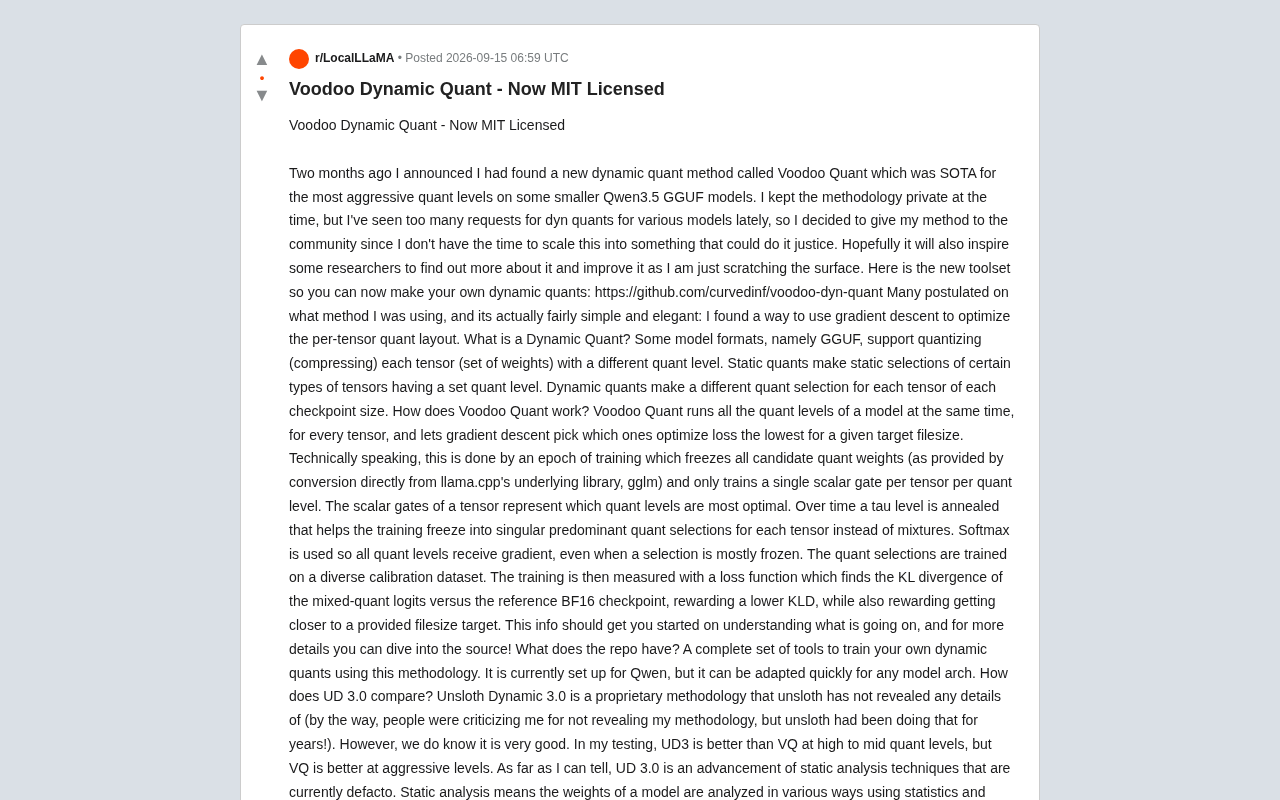
Voodoo Dynamic Quant Goes Open Source: Using Gradient Descent to Optimize Model Quantization
Voodoo Dynamic Quant (VQ) is now MIT-licensed open source. It uses gradient descent to optimize per-tensor GGUF quantization, outperforming Unsloth Dynamic 3.0 at aggressive low-bit levels.

Perplexity Reveals: The Embedding and Ranking Model Serving Infrastructure Behind AI Search
Perplexity reveals the serving infrastructure behind its AI search embedding and ranking models, showing how retrieval quality shapes answer accuracy and speed.