Quantifying Consonant Contributions to Word Intelligibility via Acoustic Masking
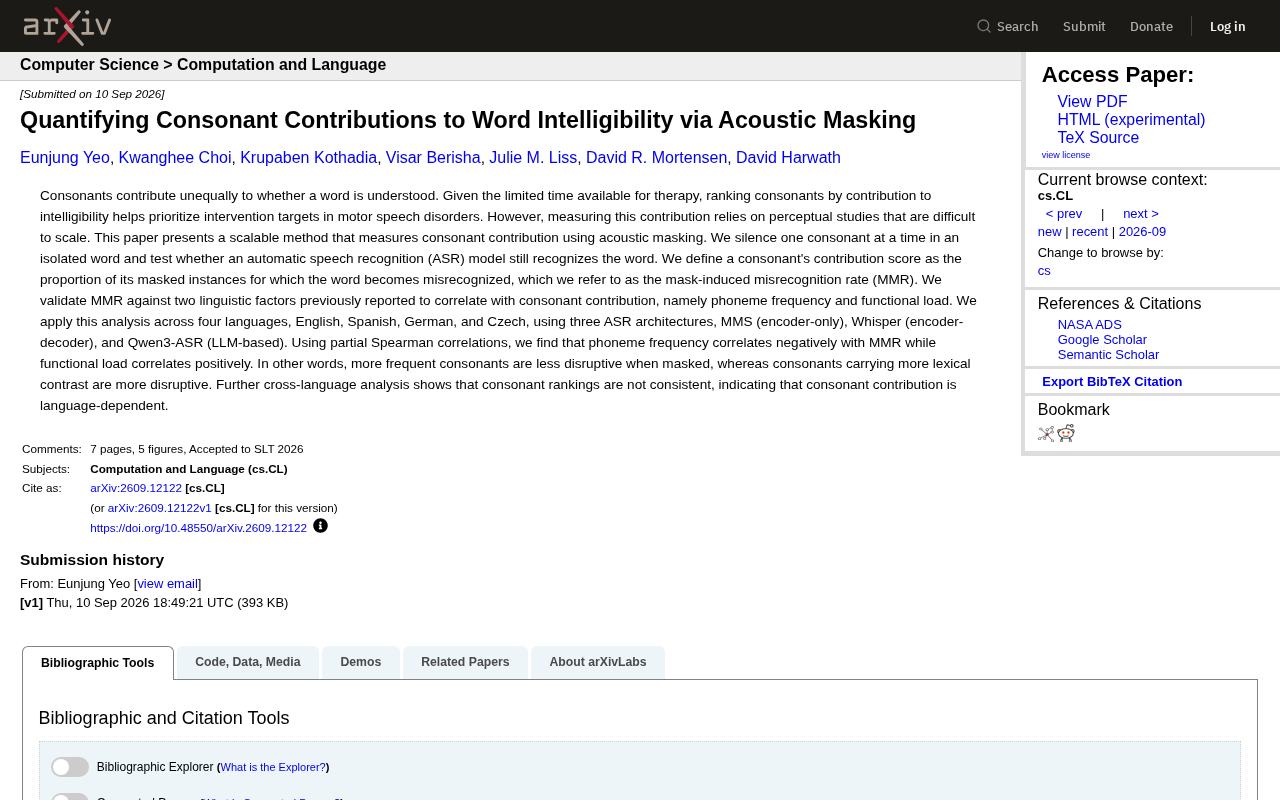
Acoustic masking + ASR automatically ranks consonants by intelligibility contribution across four languages.
This arXiv paper addresses the clinical question of which consonants to prioritize in motor speech disorder therapy. The approach silences individual consonants in isolated words and checks whether ASR models still recognize them, defining the Mask-Induced Misrecognition Rate (MMR) as a proxy for consonant contribution. Validated across English, Spanish, German, and Czech using MMS, Whisper, and Qwen3-ASR, MMR negatively correlates with phoneme frequency and positively with functional load. Crucially, consonant contribution rankings differ across languages, meaning no universal priority list exists. The method replaces costly perceptual experiments with scalable automation, though alignment with human perception remains an open question.
A Clinically Overlooked Question: Which Consonants Should Be Treated First?
In the rehabilitation of motor speech disorders, time is always scarce. Clinicians must decide within a limited number of sessions which sounds to prioritize — and not all consonants contribute equally to whether a word can be understood. Some consonants, when produced unclearly, render a word completely unrecognizable; others can be slurred without meaningfully affecting comprehension.
If consonants could be ranked by their "contribution to intelligibility," it would help clinicians direct limited resources toward the most critical intervention targets. The challenge is that traditional methods for measuring this contribution rely on human perceptual experiments — costly, difficult to scale, and ill-suited for multilingual or large-scale analysis.
A new paper posted to arXiv (arXiv:2609.12122) proposes a scalable alternative: using acoustic masking paired with automatic speech recognition (ASR) models to automatically quantify each consonant's contribution.
Core Method: Mask a Consonant, See If the Model Still Recognizes the Word
The approach is straightforward and elegant. The researchers take an isolated word, silence one consonant at a time, and test whether an ASR model can still correctly identify the word.
From this, they define a key metric — the Mask-Induced Misrecognition Rate (MMR): the proportion of instances in which masking a given consonant causes the word to be misrecognized. A higher MMR means that consonant contributes more to word intelligibility; if masking it barely affects recognition, its contribution is lower.
The greatest value of this approach lies in its scalability. It replaces perceptual experiments that would otherwise require many human participants with an automated, batch-capable machine recognition pipeline — making large-scale, cross-linguistic consonant contribution analysis feasible.
Validation Against Two Linguistic Metrics
To demonstrate that MMR actually captures the genuine linguistic quantity of "consonant contribution" rather than some model artifact, the researchers compared it against two previously reported linguistic factors associated with consonant contribution:
- Phoneme frequency: how often a given consonant appears in the language.
- Functional load: the degree to which a consonant carries contrastive meaning between words.
Using partial Spearman correlations, the results showed that phoneme frequency negatively correlates with MMR, while functional load positively correlates with MMR.
In other words, more common consonants cause less disruption when masked, while consonants that carry more lexical contrast information are more destructive when removed. This finding aligns well with linguistic intuition and provides supporting evidence for MMR's validity.
Cross-Linguistic and Cross-Model Robustness Testing
The study doesn't stop at a single language or model — it extends the analysis to four languages and three ASR architectures, which is a methodological highlight of this work.
Four Languages
The experiments cover English, Spanish, German, and Czech. These four languages differ substantially in their phonological systems, providing a meaningful test of the method's generalizability.
Three ASR Architectures
To avoid conclusions being tied to a specific model, the study employs three representative architectures:
- MMS: an encoder-only structure;
- Whisper: an encoder-decoder structure;
- Qwen3-ASR: an LLM-based recognition system.
This combination spans the major technical approaches in current speech recognition, ensuring that MMR findings are not bound to a single modeling paradigm.
Key Finding: Consonant Contributions Are Language-Dependent
The most noteworthy finding comes from the cross-linguistic analysis: the ranking of consonant contributions is not consistent across languages. That is, a consonant that is most critical in English is not necessarily equally important in Czech or Spanish.
This means consonant contributions to intelligibility are language-dependent — there is no universal "consonant priority list" that generalizes across languages. For clinical practice, this finding reminds therapists and researchers that intervention targets must be chosen with the phonological structure of the specific language in mind; simply borrowing guidelines from another language may not work.
Significance and Limitations
From an applied perspective, this work provides a viable path for repurposing ASR models as linguistic and clinical tools. Compared to costly perceptual experiments, an automated masking-based pipeline can quickly generate consonant contribution rankings for different languages, theoretically offering data-driven support for prioritizing treatment targets in motor speech disorder rehabilitation.
That said, MMR fundamentally measures whether a machine can still recognize a word — not whether a human listener can still understand it. There are systematic differences between ASR model behavior and human perception, and a model's reliance on certain acoustic cues may not align with the human auditory system. Before applying MMR directly to clinical decision-making, more thorough alignment validation against human perceptual results will be necessary.
Overall, this is a conceptually clear and methodologically scalable study that introduces a new automated perspective for quantifying speech intelligibility and opens up new experimental space for cross-linguistic speech pathology research.
Related articles
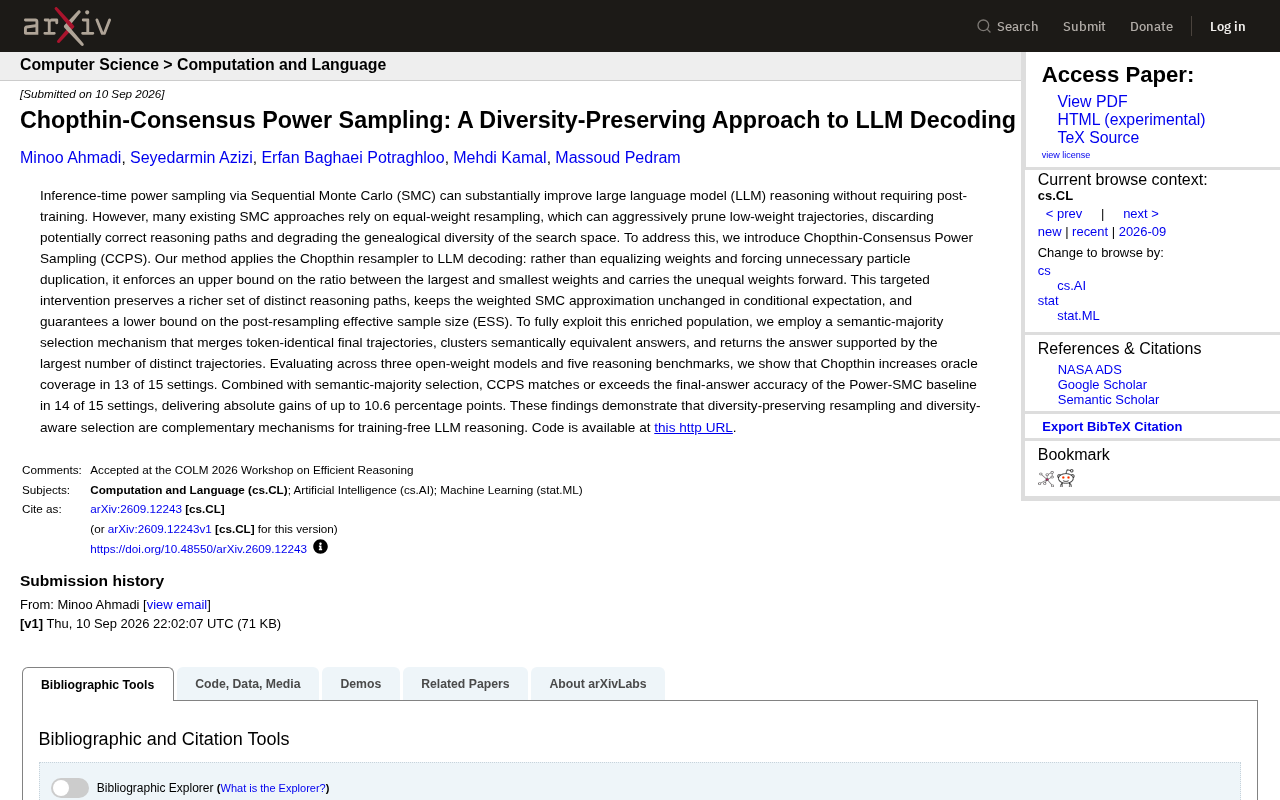
CCPS Sampling: Preserving Reasoning Diversity to Boost LLM Performance Without Fine-Tuning
A new arXiv paper proposes CCPS, which boosts LLM reasoning accuracy without any training by preserving reasoning diversity via Chopthin resampling and semantic majority selection — achieving up to 10.6pp absolute gains.

MIT Spinout Transforms Plastic Waste into High-Resilience Building Materials
MIT spinout Atlas Building Composites converts plastic waste into resilient structural components for buildings and infrastructure, pioneering a high-value recycling pathway.
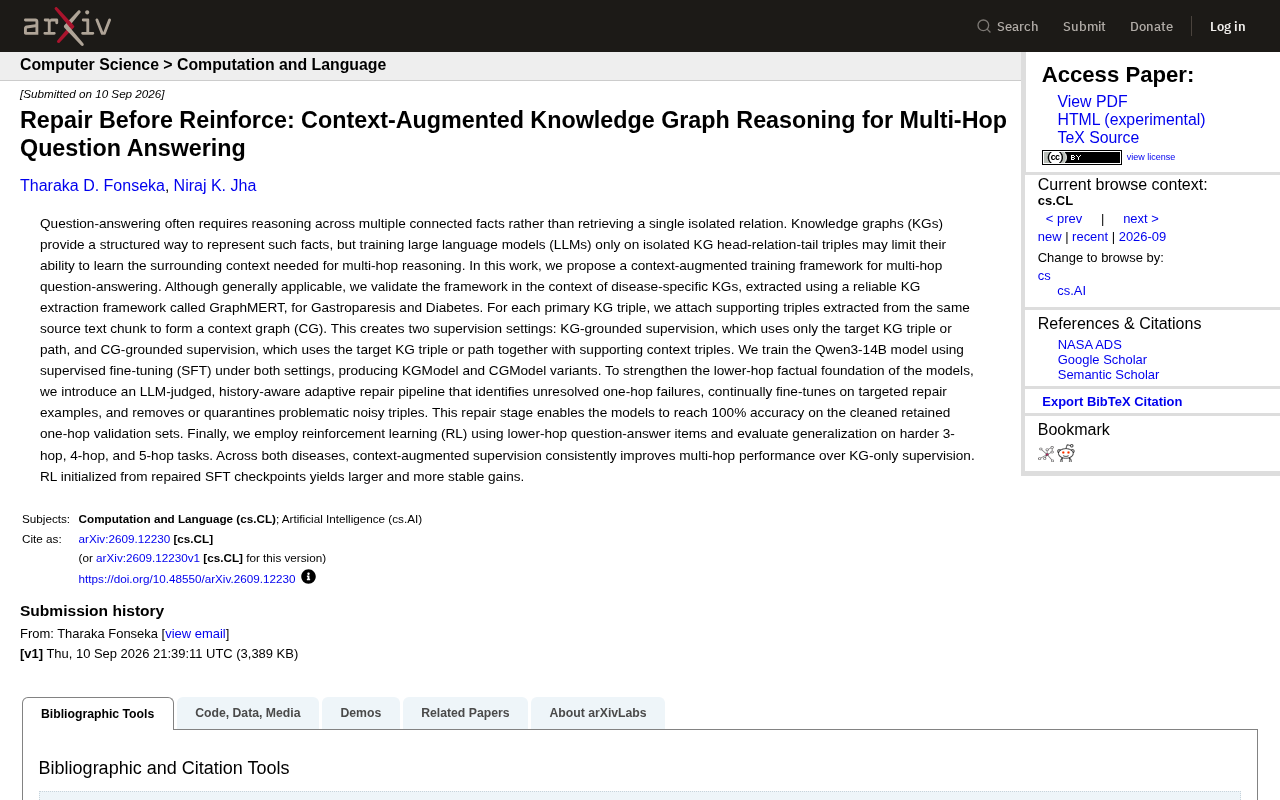
Repair Before Reinforce: Context-Augmented Knowledge Graph Reasoning Tackles Multi-Hop QA
New arXiv paper proposes a context-augmented KG reasoning framework using a "Repair Before Reinforce" strategy to improve LLM multi-hop QA. Validated on Gastroparesis and Diabetes KGs with Qwen3-14B, achieving 100% single-hop accuracy after repair.