R.L. Stine Google Talk: How the Master of Horror Ignites Kids' Passion for Reading

R.L. Stine discusses his shift from comedy to horror, safe-horror principles, and tech's impact on storytelling.
This article records R.L. Stine's conversation with Google product manager Prem Ramaswamy. Stine recalls starting writing at nine and turning to teen horror by accident after a Scholastic editor's commission; his first book, Blind Date, became a #1 bestseller. He believes horror and humor share a physiological response, but children's horror must be safe and avoid serious real-world issues. Phones have shrunk traditional horror narrative space, so he deliberately keeps them out. Stine outlines first to avoid writer's block and types with one finger to stay productive. He says Goosebumps is purely for reading motivation, not literary education, and is optimistic about kids' reading.
Title
R.L. Stine Google Talk: How the Master of Horror Ignites Kids' Passion for Reading
Meta Description
At a Google talk, R.L. Stine shares his accidental pivot from comedy to horror, his principles for children's horror, how phones impact storytelling, and how Goosebumps motivates kids to read.
Article Content
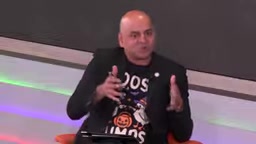
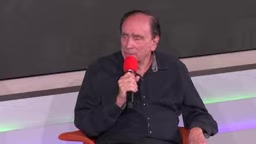
In a conversation at Google's New York office, renowned children's horror author R.L. Stine (nicknamed Bob by fans) sat down with Google product manager Prem Ramaswamy for a cross-generational dialogue. The author of more than 350 books, with over 350 million copies sold worldwide, shared his accidental pivot from comedy to horror, his unique views on children's reading, and how technology has influenced his writing.
From Comedy to Horror: One Commission Changed Direction
Stine's writing career began at age nine, and he first became known for the humor magazine Bananas and joke books. He admitted he never planned to become a writer who "scares" people; the turning point came from a Scholastic editorial director. After a dispute with teen horror author Christopher Pike, the editor angrily suggested Stine write a teen horror novel titled Blind Date.
"I had no idea what a teen horror novel was," Stine recalled. He went to a bookstore to study works by Christopher Pike, Lois Duncan, and others, then wrote Blind Date, which became a #1 bestseller. A year later, Twisted topped the charts again, and from then on he left humor behind and focused on horror.
This experience reveals an interesting fact: the genre switch was not a carefully considered strategy, but an accidental product of relationships in publishing. Stine's adaptability—quickly researching the market and producing work that met expectations—was the key to his sustained success.
Christopher Pike is one of the representative figures in American teen horror fiction. His real name is Kevin Christopher McFadden, and he debuted in 1985 with Slumber Party. He later became a pioneer of the 1990s teen horror trend with works such as Chain Letter and Remember Me. His novels often blend suspense, the supernatural, and teen coming-of-age issues, and together with R.L. Stine's Fear Street series, they shaped the landscape of teen genre reading in that era. The dispute between the editor and Pike mentioned in the article precisely shows that publishers at the time were actively looking for new authors who could compete with Pike, and Stine's transition thus received a crucial push.
Lois Duncan was also an important pioneer of teen suspense novels. Her representative works I Know What You Did Last Summer and Killing Mr. Griffin are set in realistic schools and carry a strong sense of psychological pressure. Stine's study of her work in bookstores shows that when he transitioned, what he referenced was not supernatural horror, but the teen suspense tradition that had already taken shape at the time; only afterward did he gradually add Goosebumps-style supernatural elements.
Horror and Humor Are a Fine Line Apart: Safety Comes First
Stine believes horror and humor share the same physiological response. "You jump out at someone from behind, they gasp first, then laugh. The screams and laughter on a roller coaster happen at the same time." When he writes Goosebumps, the end of every chapter is like the punchline of a joke.
But children's horror has its boundaries. Stine's principle is "no real world"—no divorce, drugs, or other serious issues. "They have to know this can't happen to them before I can push the horror further." He made it clear he does not want children to need therapy.
This idea of "safe horror" explains why Goosebumps appeals to readers aged 7 to 11: short chapters, short sentences, a cliffhanger at the end of each chapter, and supernatural settings—thrilling but with no real risk.
Goosebumps is a children's horror series published by Scholastic starting in 1992. It has sold more than 400 million copies worldwide and is one of the most successful children's book brands of the 1990s. The series is characterized by standalone stories, roughly 100-plus pages per book, short chapters, and a cliffhanger at the end of each chapter, aimed at readers aged 7 to 11. The series spawned TV shows, films, video games, and a large amount of merchandise, becoming an "introductory horror" read for a generation of children in the English-speaking world. Understanding the commercial scale of this series helps explain why Stine insists on the "safe horror" principle: it is aimed at children who have not yet developed a mature understanding of reality, so the horror must be controllable, escapable, and identifiable as fiction.
Have Phones Ruined Stories? Technology's Impact on Narrative
A recurring theme in the conversation was technology's challenge to horror storytelling. Stine said bluntly: "Cell phones ruined every story." In the past, when writing Fear Street, a girl would receive a terrifying phone call and readers would feel tense; now she glances at the screen and knows who it is, and the story ends immediately. Five teenagers are trapped in a cabin, one of them is the killer, and all they have to do is call for help and it's over.
So when he writes, he "tries hard to get cell phones out of the story." But he also acknowledged how fast technology changes: in one old book, a girl says, "I'm the only one in my class with a pager and a Palm Pilot," and now half the audience no longer knows what a pager is.
According to what was shown on site at the Google talk, Stine also mentioned the scene in the Goosebumps film where Jack Black uses a typewriter, which unexpectedly led parents to ask where they could buy a typewriter. He laughed and said he had "sold more typewriters to kids than anyone in the country," and advised parents not to buy one.
Fear Street is a teen horror series that Stine launched in 1989. It is set in the fictional town of Fear Street, and the characters are older (teens rather than children); the plots involve darker subject matter such as murder, stalking, and supernatural curses. It forms an age stratification with Goosebumps: the former is for teens, the latter for children. The mention in the article of "a girl receiving a terrifying phone call" is a typical device from the Fear Street era, and the spread of cell phones has made this kind of horror device, which depends on information asymmetry, ineffective. This detail shows that horror narrative relies heavily on the media environment of its time, and technological change can directly eliminate certain classic horror devices.
Writing Method: Outline First, Typing with One Finger
Stine's productivity is staggering: at his peak, he wrote one Goosebumps book and one Fear Street book each month. He never suffers from the "blank page problem," because he writes an outline for every book first. "I know the beginning, middle, twist, and ending. All the hard work is done in advance, and when I write I just enjoy the process."
His typing method is equally distinctive: after learning to type at age nine, he never corrected his finger placement and uses only the index finger of his right hand—and he is left-handed. "I wrote 300 books with this finger," he said with a smile, showing his bent index finger. He uses a Mac and Microsoft Word, and his browser is Google Chrome.
When asked for advice for tech workers, Stine waved it off: "I don't understand anything, I don't give advice to tech experts." But about writing itself, he emphasized always writing for a specific group of readers.
"Blank page problem" refers to the anxiety and procrastination writers experience when facing a blank document because they do not know where to start. It is a common concept in writing instruction and creative writing research. Stine's strategy is "outline first": complete the plot structure, turning points, and ending design before formal writing, putting the work that requires the most decisions up front. This method is especially common in genre fiction writing because it ensures a stable output rhythm and also explains Stine's high productivity of publishing two books a month at his peak.
Reading Promotion: No Moralizing, Only Reading Motivation
Goosebumps is often criticized for lacking literary depth. Stine does not defend it: "No morals, no difficult vocabulary, reading level around fourth or fifth grade. It is purely for reading motivation." He hopes children will discover that "books are as fun as Roblox."
He is optimistic about the future of children's reading. When he first entered the industry, the children's publishing department had only two people; now it is a $2 billion industry, publishing thousands of children's books each year. "Someone is reading these books. I am very optimistic about kids and reading."
He specifically mentioned that librarians and teachers supported Goosebumps from the early days because they saw children reading. According to a recollection during the audience Q&A, a reader who grew up in the Middle East said Goosebumps was their first window into Western culture. Stine said he was aware of this and felt gratified.
Cross-Media Adaptation: Luck and Trusting the Director
From the Goosebumps TV series to the film starring Jack Black, Stine has generally been satisfied with the adaptations. He admitted that when he was busy writing he had no time to participate in production, but "the people who made the TV series really understood it." The film version especially surprised him: "Jack did a great job. We're like twins—people always confuse us."
His insistence on the theme carried through in the adaptations. The TV series and film maintained a supernatural, non-realistic tone consistent with his creative principles. When asked whether he worried that adaptations would deviate from the original books, Stine seemed relaxed, apparently trusting his collaborators' judgment more.
The Roots of Fear: Childhood Shadows Turned into Creative Material
Stine revealed that he was very timid as a child: afraid of basements, things in closets, and hands grabbing his ankles from under the bed. This constant sense of fear became a resource for his writing. "I can recall that feeling of panic and bring it back into my writing."
He mentioned that his most terrifying personal experience was not a supernatural event, but losing his four- or five-year-old son at the New York Auto Show. "Less than a minute of panic, but it felt incredibly long." After his son was found, the boy asked, "Dad, where did you go? I was just about to call the manager." A typical New York kid reaction.
When asked whether he believes in ghosts, Stine answered simply: "No." He explained that he has never seen a ghost and does not understand why anyone believes in them. But that does not stop him from writing stories that have kept generations of children awake at night.
The Social Cycle of the Horror Genre
Stine noted that publishers have observed a revival of children's horror, with several horror novels bundled and promoted around Halloween. He believes this fits the pattern that "people turn to horror in difficult times," but stressed that he never writes real-world issues into Goosebumps.
His creative philosophy has remained consistent: the objects of fear change with the times, but fear itself—fear of darkness, of being lost, of being chased—does not change. "Those fears will never change, so horror stories do not need to change much either."
Conclusion: The Storyteller
At the end of the talk, the host asked Stine whether he would recommend that adults keep reading novels. He cited data saying that the proportion of adults reading for leisure has dropped by about 40%, but stressed that reading is a "wonderful escape." He himself rereads Ray Bradbury's Dandelion Wine every year to remind himself what good writing is.
This writer, who tapped out hundreds of horror stories with one finger, did not present the image of a gloomy weirdo on the Google stage, but rather a storyteller who is sharp, humorous, and full of enthusiasm for children's reading. His success may stem precisely from this contrast: creating tension in a relaxed way, and exploring fear in a safe way.
One-line Summary
In a Google talk, R.L. Stine discusses his shift from comedy to horror, his safe-horror principles, and technology's impact on storytelling.
Paragraph Summary
This article records R.L. Stine's conversation with Google product manager Prem Ramaswamy. Stine recalls that his writing career began at age nine and that a Scholastic editor's commission led him accidentally into teen horror; his first work, Blind Date, topped the bestseller list. He believes horror and humor share a physiological response, but children's horror must be built on a premise of "safety" and not involve serious real-world issues. Technology such as cell phones has compressed the space for traditional horror narrative, and he deliberately excludes phones when writing. Stine uses an outline-first method to avoid writer's block and maintains high productivity by typing with one finger. He says frankly that Goosebumps does not carry a literary or educational mission and is only meant to inspire reading motivation, and he is optimistic about the future of children's reading.
Related articles

The Touchscreen MacBook and Apple's Delightful Mess: A Deliberate Gamble
The Vergecast unpacks the touchscreen MacBook Pro's launch logic, the ProLed naming controversy, the iPad squeezed between iPhone and Mac, and how Apple stays competitive with premium hardware in the AI era.

Fifty Years Studying Power: Robert Caro's Writing and Insights on Power
Robert Caro reflects on 50 years studying power: Lyndon Johnson's persuasion and leverage, Robert Moses's transformation from idealist to ruthless builder, the dilemmas of large-scale construction, and his methods of compressing themes and solitary focus in biography writing.

Can a $20,000 Robot Do Your Chores? The Test Results Are Surprising
A YouTube test video shows how a $20,000 robot responds to commands like washing dishes, turning off lights, taking out trash, and feeding the dog. This article analyzes its real capability boundaries, the state of voice interaction technology, and how far household robots are from mainstream adoption.