Ra3-Copilot Open-Sourced: Control Red Alert 3 Globally with AI

Bilibili creator open-sources Ra3-Copilot, letting AI perceive and control Red Alert 3 via a brain interface.
Ra3-Copilot is a Red Alert 3 assistant tool open-sourced by a Bilibili creator, centered on a "brain interface" that lets AI perceive game state and control friendly/enemy units, resources, and protocols. It offers cheats like adding money, fast construction, and wireless power, plus debugging logs and a protocol system for summoning hidden units and buildings. The creator also found that the ZF flag bit controls tech locking. The tool aims to lower the barrier to RTS game AI development and provide a low-cost integration solution for mod developers and AI researchers.
A Bilibili content creator recently open-sourced Ra3-Copilot, a tool that uses a "brain interface" to let AI perceive and manipulate units, resources, and protocols in Red Alert 3, offering new ideas for AI debugging and gameplay expansion in RTS games.
Core Features: From Resource Modification to AI Control
Ra3-Copilot provides a set of conventional but practical cheat and debugging features, including resource operations like adding money, fast construction, free construction, wireless power, and restoring ore refineries, as well as miscellaneous features like wireless zoom and fog of war removal. These features can be triggered via hotkeys, lowering the barrier to debugging.
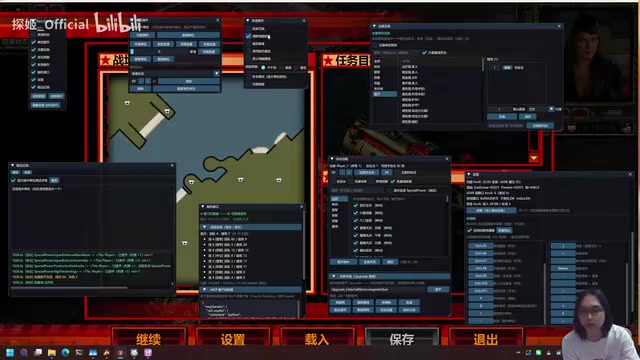
What truly distinguishes Ra3-Copilot from traditional trainers is the "brain interface." It allows AI to perceive game state and control things globally—not only can it control your own units, but also enemy units, add forces for both sides, and even invoke resource creation features. In the video, the creator demonstrated operations such as placing resources and summoning units through the interface, showcasing the potential for AI to intervene in game logic.
The "brain interface" is the core concept of this article; it is essentially a programming interface that the game exposes to external programs for accessing its memory and logic. It is similar to Modding APIs or memory hooking solutions in other games, allowing external AI processes to read game state such as unit attributes, resource amounts, and building status, and to write commands to control units, change resources, or trigger events. Unlike traditional fixed-function trainers, the brain interface is general-purpose and programmable—AI can make dynamic decisions based on real-time state, enabling global control. This design turns the game into an experimental platform for AI algorithms, providing a low-cost environment for research such as reinforcement learning.
Debugging and Protocols: Unlocking Hidden Content
The tool has built-in debugging features that let you select a unit to obtain its object information, facilitating targeted AI debugging. The logging system is also fairly complete and can output runtime status.
The protocol system is another highlight. In campaign mode, due to the lack of the Rising Sun resource pack, some protocols cannot be used, but the creator found that hidden units and buildings can still be summoned through protocols. For example, you can equip Rising Sun warships with railguns, summon Mengzhen's aircraft carrier, the special building "Waste Power Divine Art," the multi-headed aircraft, and even a ten-pull gacha of airdrop pods. These contents are otherwise difficult to invoke directly in normal gameplay.
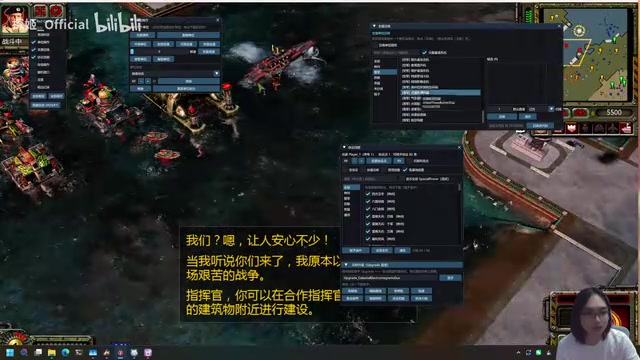
The creator also mentioned that the "deploy without base prerequisite" and "ignore tech tree" features in protocols can bypass some building restrictions, but not all unit production facilities work reliably; certain field modifications occasionally cause issues, and the cause has not yet been identified.
"Protocols" in Red Alert 3 usually refer to the special skill trees in campaign or skirmish modes, where players unlock units, buildings, or abilities by accumulating points. The protocol system mentioned in this article involves the game's internal data definitions, including unit templates and tech prerequisites. By modifying protocol-related fields, hidden content can be invoked directly, bypassing the normal unlock process. Campaign mode is restricted due to the lack of the Rising Sun resource pack, indicating that protocol data is bound to resource packs and some entries cannot be parsed in certain modes. This design is similar to a data-driven architecture, allowing content to be adjusted through configuration tables, but it is also prone to instability when fields are missing.
Technical Exploration and Open-Source Plans
While exploring game protocols, the creator discovered that the game uses jump instructions similar to the ZF flag bit to determine the lock status of sidebar skills and build bar tech. This finding provides a direction for subsequently unlocking locked tech, but the related feature has not yet been completed.
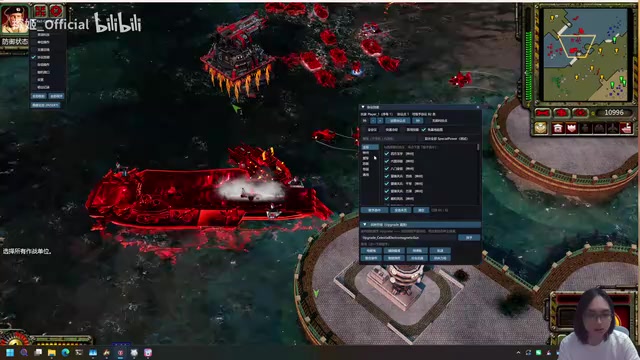
Currently, Ra3-Copilot has a fairly complete feature framework, and the creator plans to open-source it and welcomes community PRs. For Red Alert 3 mod developers and AI researchers, this tool offers a low-cost solution for connecting large models or scripted AI to a classic RTS game.
The "ZF flag bit" is the Zero Flag in x86 assembly language, used to record whether the result of the previous instruction is zero, and is often used as the basis for conditional jumps. In game reverse engineering, discovering jump instructions similar to the ZF flag bit means the game uses low-level conditional branches to control tech lock status. By locating these jump instructions and modifying the flag bit or jump conditions, it is theoretically possible to force-unlock all tech. This falls under binary patching or memory modification, requiring analysis of the game executable or runtime memory, and demands some reverse engineering capability. The creator has not yet completed this feature, indicating that such modifications must be handled carefully to avoid breaking game logic.
Cross-Validation from Multiple Sources
According to the Bilibili creator's video demonstration and screenshots, Ra3-Copilot's brain interface can indeed control enemy units and add forces, and the protocol summoning feature performs inconsistently in skirmish and campaign modes. Since there is currently only a single source, some details (such as the instability of tech tree bypassing) still need community verification.
The open-sourcing of Ra3-Copilot will lower the barrier to developing AI gameplay for Red Alert 3, and its "AI controls everything" design approach may also provide a reference for AI integration in other RTS games.
One-line Summary
A Bilibili creator open-sourced Ra3-Copilot, using a brain interface to let AI perceive and control Red Alert 3, with cheat, debugging, and protocol summoning features.
Paragraph Summary
Ra3-Copilot is a Red Alert 3 assistant tool recently open-sourced by a Bilibili creator. Its core is the "brain interface," which allows AI to perceive game state and control friendly and enemy units, resources, and protocols. The tool offers conventional cheats such as adding money, fast construction, and wireless power, plus debugging logs and a protocol system. The protocol system can summon hidden units and buildings, such as equipping Rising Sun warships with railguns and summoning Mengzhen's aircraft carrier, but campaign mode is partially restricted due to missing resource packs. The creator also discovered that the ZF flag bit controls tech locking, providing clues for unlocking features. The tool is planned to be open-sourced and accept community PRs, aiming to lower the barrier to RTS game AI development and provide a low-cost integration solution for mod developers and AI researchers.
Related articles

AgentCore in Practice: Connecting Custom Tools and MCP Servers to Agents
DebuggerCafe tutorial shows how to connect custom tools and MCP servers to Amazon Bedrock AgentCore agents, covering tool contract design, MCP reuse, and production concerns.

816B Parameters Scores Only 39? The Real Cost-Effectiveness of the Open-Source LLM Parameter Race
Meta's 816B Muse Spark Open scores just 39 on Artificial Analysis, while 180B Qwen3.8-Flash-Next scores 40. This article analyzes 11 open-weight models' parameters vs. scores, exploring the real impact of activated parameters, quantized size, and deployment cost.

Aerial Manipulators: The Next Step for Drones from 'Seeing' to 'Changing'
Starting from a Reddit discussion, this article analyzes the technical challenges, potential applications, and deployment bottlenecks of aerial manipulators, exploring the key challenges for drones moving from environmental perception to physical manipulation.