RAGFlow Local Deployment Guide: Complete Tutorial for Building an Enterprise-Grade RAG Knowledge Base with Docker

RAG enhances LLM generation by retrieving external knowledge, solving hallucination and timeliness issues
RAG (Retrieval Augmented Generation), introduced by Meta AI in 2020, combines external knowledge retrieval with LLM generation to address three major pain points: outdated knowledge, hallucinations, and data privacy concerns. Its core workflow consists of four steps—extract, index, retrieve, and generate: enterprise documents are converted into vectors stored in a database, relevant content is retrieved when users ask questions and injected into prompts, and the LLM generates answers based on real data, significantly improving response accuracy.
What is RAG Technology?
RAG (Retrieval Augmented Generation) is one of the most critical technologies in the large language model application space today. Although LLMs like GPT, Claude, Llama, Gemini, and Qwen are already remarkably powerful, enterprise use cases still face three core pain points: outdated knowledge, hallucinations, and lack of data privacy protection.
RAG technology was formally introduced in 2020 by Patrick Lewis and colleagues at Meta AI Research in the paper Retrieval-Augmented Generation for Knowledge-Intensive NLP Tasks. The paper's core insight is that parametric knowledge (stored in model weights) and non-parametric knowledge (stored in external retrieval databases) can be organically combined—the former provides language understanding and generation capabilities, while the latter provides updatable factual knowledge. This approach broke the single-path thinking of "bigger models = better results" and offered a more economical and flexible solution for knowledge-intensive tasks.
Since its introduction in 2020, RAG has evolved into three main branches: fine-tuning-based RAG, chain-of-operation-based RAG, and hybrid RAG combining both approaches. The core idea is straightforward—before the LLM generates an answer, relevant information is first retrieved from a vector database, injected into the prompt, and the LLM then summarizes based on this real data. This significantly reduces hallucinations and dramatically improves answer accuracy.
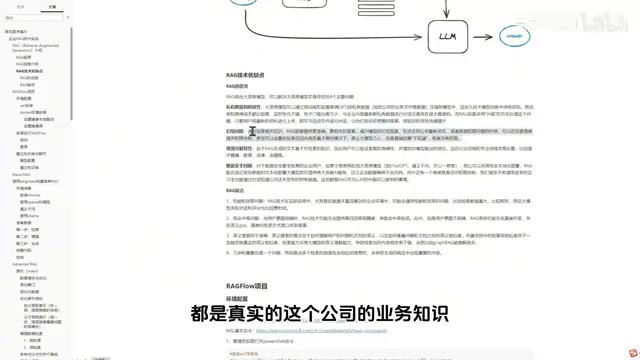
RAG Core Workflow Explained: Extract, Index, Retrieve, Generate
Step 1: Extract
Enterprise knowledge comes from diverse sources: PDF documents, images (requiring OCR), Excel spreadsheets, web content, and more. Whether structured or unstructured data, everything needs to be uniformly extracted into processable text. This step seems simple, but achieving comprehensive support for various formats requires significant effort.
Step 2: Index
Extracted text needs to undergo chunking—splitting by sentences or by fixed lengths (e.g., 128 or 1024 tokens). After chunking, an Embedding model converts the text into vectors, which are stored in a vector database (such as Chroma or Pinecone) or in Elasticsearch with vector storage support.
Embedding is the process of converting text into high-dimensional numerical vectors, where semantically similar texts are closer together in vector space. Common Embedding models include OpenAI's text-embedding-ada-002, the open-source BGE series (from Beijing Academy of Artificial Intelligence), and M3E models optimized specifically for Chinese. Vector databases are optimized for approximate nearest neighbor (ANN) searches on high-dimensional vectors, using indexing algorithms like HNSW and IVF to perform similarity searches across millions of vectors in milliseconds—this is the technical foundation for RAG systems' real-time responsiveness.
The indexing stage can also attach metadata such as filename, author, title, and file type, or even build tree or graph structures to improve retrieval efficiency.
Step 3: Retrieve
When a user asks a question, the question is also embedded into a vector and matched against the indexed data in the vector database for similarity. The system first identifies the top results with the highest similarity (e.g., Top 100), then uses a Rerank model to filter out the most relevant entries for the LLM to process. This two-stage retrieval strategy ensures both recall rate and controlled token consumption costs.
The Rerank model is a key component of this strategy. The first stage of vector retrieval uses a bi-encoder architecture—fast but with limited precision. The second-stage Rerank model uses a cross-encoder architecture, concatenating the query with each candidate document for more refined relevance scoring. Common Rerank models include Cohere Rerank and BGE-Reranker. This "rough ranking + fine ranking" two-stage strategy is well-established in information retrieval, and RAG brings it into LLM applications, achieving a good balance between recall and precision.
Step 4: Generate
The retrieved relevant knowledge is used as context, combined with the user's question, and fed into the LLM, which then summarizes and generates the final answer.
Advantages and Challenges of RAG Technology
Three Core Advantages
Strong Timeliness: Unlike pre-training or fine-tuning, RAG adopts an "external brain attachment" approach.
Related articles
 Tutorials
ChatGPT Plus Subscription Guide: Are GPT-5.5, image-2, and Codex Worth the Upgrade?
A detailed look at ChatGPT Plus features — GPT-5.5, image-2, and Codex — with a Plus vs Pro comparison and a complete step-by-step subscription guide for users outside the US.
 Tutorials
Harness AI Engineering in Practice: Using Claude Code to Master Enterprise-Level E-Commerce Development
Deep dive into Harness AI Engineering: master enterprise e-commerce development with Claude Code using the Rules, Skills, Wiki, and Changes framework.
 Tutorials
Cursor + Codex Dual-IDE Collaboration: A Practical Methodology for Open-Source Project Customization
A complete methodology for open-source project customization based on real-world experience, detailing the Cursor+Codex dual-IDE workflow, seven-stage process, MVP validation, and AI source code reading techniques.