Rails 8 Deep Dive: New Features and Upgrade Guide
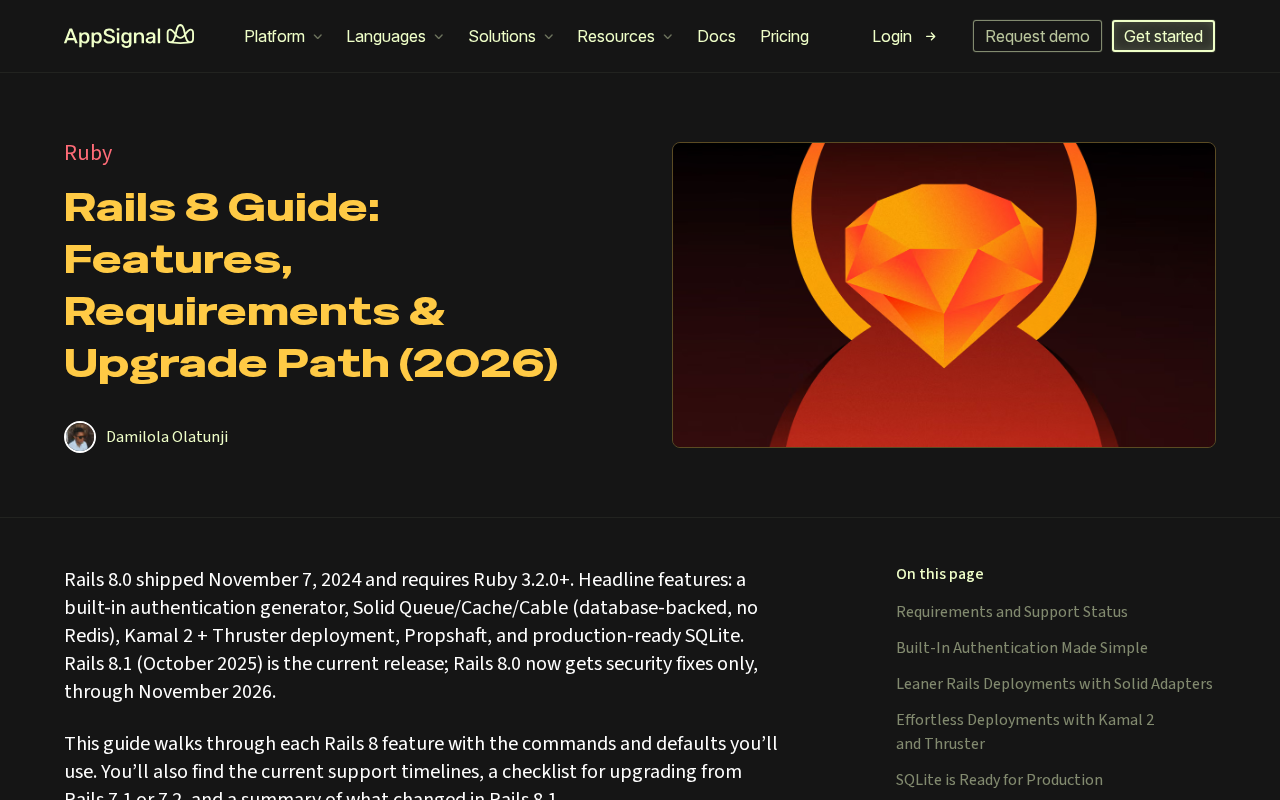
Rails 8 simplifies full-stack deployment with Kamal 2, Solid suite, and built-in authentication.
Rails 8 introduces major improvements including Kamal 2 for zero-downtime Docker deployment, the Solid Trifecta (Cache, Queue, Cable) that replaces Redis with database-backed alternatives, and a native authentication generator. Requiring Ruby 3.2+ and promoting SQLite to production-ready status, Rails 8 dramatically simplifies the tech stack, making it ideal for small teams and indie developers.
Rails 8: A Major Evolution of the Full-Stack Framework
Rails, the most influential web framework in the Ruby ecosystem, has stayed true to its core philosophy of "Convention over Configuration" throughout nearly two decades of development. The essence of "Convention over Configuration" is that the framework pre-defines a set of sensible default conventions—such as the mapping between database table names and model class names, directory structures, and URL routing rules—so developers only need to write explicit configuration when deviating from these conventions. This stood in stark contrast to the approach of Java ecosystem frameworks like Spring and Struts at the time, which required massive XML configuration files. It also profoundly influenced the design direction of nearly every major web framework that followed, including Python's Django, PHP's Laravel, and Node.js's NestJS. The release of Rails 8 marks yet another important iteration of this classic framework in the modern web development landscape.
It delivers not only significant improvements in performance and developer experience but also bold advances in deployment simplification and built-in tooling, enabling even a single developer to independently handle the entire workflow from development to production.
This article distills the key content from the official guide, covering Rails 8's major features, runtime requirements, and upgrade paths from older versions—helping developers decide whether upgrading is worthwhile and how to make a smooth transition.
Core New Features in Rails 8
Built-in Deployment Tool: Kamal 2
One of the most notable changes in Rails 8 is the deep integration of the Kamal 2 deployment tool. Kamal (formerly MRSK) is a zero-downtime deployment tool developed by the Basecamp team, built on Docker and SSHKit. It works by connecting to target servers via SSH, pulling pre-built Docker images, and using Traefik as a reverse proxy to achieve zero-downtime switching. Unlike Kubernetes, Kamal requires no cluster orchestration layer and no complex components like etcd or kube-apiserver—the entire deployment topology is remarkably simple.
Traditionally, deploying a Rails application to production often required relying on Heroku, Capistrano, or complex Kubernetes configurations. Kamal 2 lets developers deploy Dockerized applications directly to any cloud server or bare metal through simple configuration files.
This design continues the "de-cloud complexity" philosophy that DHH (the creator of Rails) has been advocating in recent years—reducing dependence on third-party PaaS platforms to help small and mid-sized teams dramatically lower operational costs. Behind this lies the industry's growing reflection on whether "Kubernetes is over-engineered"—for applications with fewer than several million daily visits, one or two VPS instances with Docker are often more economical and easier to maintain than a full K8s cluster. In 2023, DHH publicly announced the migration of Basecamp and the HEY email service from the cloud back to self-owned hardware, saving millions of dollars annually. Kamal is the technical backbone of this "Cloud Exit" strategy. For teams that want to maintain control over their own infrastructure, this is an extremely attractive direction.
The Solid Suite: Saying Goodbye to Redis Dependencies
Rails 8 introduces three major components—Solid Cache, Solid Queue, and Solid Cable—collectively known as the "Solid Trifecta." Their common characteristic is using a database (such as SQLite or PostgreSQL) as the backend store, replacing the previously required Redis or Memcached.
Before understanding the Solid suite, it's worth knowing the historical role Redis has played in the Rails ecosystem. Redis is an in-memory key-value store known for its extremely low latency (microsecond-level responses) and rich data structures. In the Rails ecosystem, Redis has long served multiple roles: as the pub/sub backend for Action Cable (WebSocket), as the cache store for Fragment Cache and Sessions, and as the message broker for background job frameworks like Sidekiq. However, introducing Redis means additional process management, memory planning, persistence configuration (RDB/AOF), and monitoring/alerting—adding significant operational overhead for small teams. The reason the Solid suite dares to replace Redis with databases is that modern NVMe SSDs have reduced random read latency to under 100 microseconds. Combined with database connection pooling and index optimization, performance is more than sufficient for most web application scenarios.
- Solid Cache: A database-backed caching solution that leverages the high-speed read/write capabilities of modern SSDs to deliver large-capacity persistent caching
- Solid Queue: A database-driven background job queue that eliminates the need to deploy additional middleware like Sidekiq. Solid Queue uses database-level row locking mechanisms such as
SELECT ... FOR UPDATE SKIP LOCKEDto achieve efficient job distribution, avoiding the performance bottlenecks of traditional database polling approaches. In PostgreSQL and MySQL 8.0+, the SKIP LOCKED syntax allows multiple worker processes to concurrently acquire jobs without lock contention, making database-driven queues perform comparably to Redis-based solutions in medium-throughput scenarios - Solid Cable: Provides database-backed pub/sub support for Action Cable
The significance of these changes is that a brand-new Rails application can now run with full functionality using just a single database, dramatically simplifying the technology stack and deployment architecture.
Native Authentication Generator
Rails 8 includes a native authentication system generator that allows developers to quickly scaffold login, registration, session management, and other foundational features via a single command—without immediately reaching for third-party gems like Devise.
It's worth noting that Devise is the most popular authentication solution in the Rails ecosystem. Since its release in 2009, it has been downloaded over 4 billion times and provides a complete set of feature modules including user registration, login, password reset, email confirmation, OAuth integration, and account locking. However, Devise's flexibility also brings complexity—it's built on top of the Warden middleware and uses extensive metaprogramming techniques internally. When developers need to deeply customize the authentication flow, they often need to understand its multi-layered abstraction architecture.
Rails 8's built-in authentication generator takes a fundamentally different approach: it generates readable, magic-free controller and model code directly into your project. Developers can modify the authentication logic just like any other business code. This "generate rather than abstract" approach is better suited for scenarios that require fine-grained control over authentication behavior, though its feature coverage is not as comprehensive as Devise's. This lowers the barrier for bootstrapping new projects and embodies Rails' longstanding commitment to being "batteries included."
Runtime Environment and System Requirements
Rails 8 raises the bar for underlying environment requirements. Before upgrading, make sure to verify the following:
- Ruby version: Rails 8 requires Ruby 3.2 or higher. Older Ruby 2.x versions are completely unsupported, so teams need to complete the Ruby-level upgrade first
- Database: SQLite has been elevated to "production-ready" status in Rails 8. Paired with the Solid suite, SQLite can support production applications of considerable scale. SQLite has long been viewed as an "embedded database" or "development/testing only," but this perception has been shifting in recent years. Its core advantages lie in zero deployment cost (no separate process needed), extremely low operational complexity, and excellent read performance. The technical underpinnings behind Rails 8's promotion of SQLite to a production-grade option include: concurrent read capabilities under WAL (Write-Ahead Logging) mode, PRAGMA tuning (such as journal_size_limit and synchronous=NORMAL), and the Solid suite's support for multiple database files—storing cache, queue, and Cable data in separate SQLite files to avoid write lock contention. 37signals is already using SQLite to power parts of their production services, demonstrating its viability in single-server architectures. Of course, PostgreSQL and MySQL remain mainstream choices—applications requiring horizontal scaling or strong-consistency multi-writer scenarios still need these solutions
- Node.js and bundlers: Thanks to the maturity of Import Maps and Propshaft, Rails 8 can run its frontend asset pipeline without a Node.js environment by default, further simplifying the toolchain. Import Maps is a web standard now supported by all major browsers that allows developers to import JavaScript modules directly in the browser via URL mapping, without the compilation step of bundlers like Webpack or esbuild. In the traditional Rails frontend workflow, developers needed to install Node.js, configure package.json, run yarn install, set up Webpacker, and go through a series of other steps—frontend toolchain configuration alone could take hours. Import Maps completely bypasses this workflow: JavaScript files are served directly to the browser as ES Modules, and the framework resolves package names to CDN or local paths through a JSON mapping table. Propshaft is a lightweight replacement for Sprockets that focuses on static asset fingerprinting and path resolution, no longer taking on JavaScript/CSS compilation responsibilities
These requirements reflect the Rails team's overarching philosophy of "simplify the complex": reduce external dependencies and let the framework itself take on more responsibilities.
Upgrade Path from Older Versions
Incremental Upgrades, Not Leapfrog Jumps
For projects still on Rails 6 or Rails 7, the official recommendation is to adopt an incremental upgrade strategy rather than jumping directly to 8.0. The recommended path is: first upgrade to the latest minor version of your current major version (e.g., 7.2), resolve all deprecation warnings, and then migrate to Rails 8.
During the upgrade process, the rails app:update command remains the core tool—it guides developers through confirming configuration file changes one by one. Also, pay close attention to the config.load_defaults version number setting—it must be set to 8.0 to enable all of Rails 8's default behaviors.
Watch for Deprecations and Breaking Changes
Every major version upgrade comes with some breaking changes. Before upgrading, it's recommended to:
- Run your full test suite and ensure adequate coverage
- Address all deprecation warnings in the logs
- Check whether the third-party gems you depend on have been updated for Rails 8 compatibility
For existing applications that depend on Redis, whether to migrate to the Solid suite can be treated as an independent decision—Rails 8 does not mandate abandoning Redis, and teams can adopt it incrementally as needed.
Is the Upgrade Worth It?
The upgrade value of Rails 8 is primarily reflected in operational simplification and dependency reduction. If your team is small and you want to reduce infrastructure complexity, the combination of Kamal 2 and the Solid Trifecta will deliver tangible benefits.
For large enterprise applications, however, a more cautious evaluation is needed. Systems already running smoothly within mature Redis/Kubernetes ecosystems may not need to immediately switch to database-driven solutions. In such cases, prioritizing Ruby version upgrades and framework security patches may be more valuable.
Overall, Rails 8 continues the framework's founding mission of being "designed for programmer happiness." By dramatically lowering the barrier to full-stack deployment, it brings the vision of "one person running a complete product" closer to reality. For indie developers and lean startup teams, this is undoubtedly an important update worth paying attention to.
Related articles

DuckFightClub: An AI Robot Duck Fighting Arena
DuckFightClub combines reinforcement learning with open-source robots. Teams train MicroDuck AI strategies, competing from simulator battles to real-world combat in a multi-agent adversarial arena.
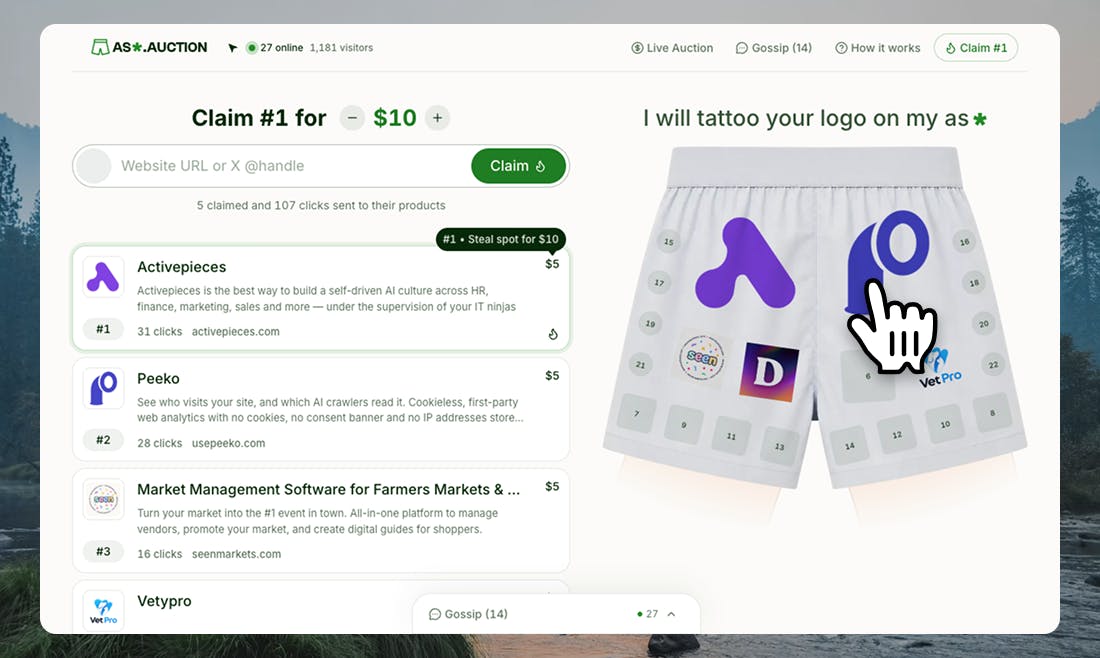
Ass Auction: The Marketing Logic Behind an Absurd Ad Bidding Experiment
Ass Auction earned 90 votes on Product Hunt: brands bid to print logos on underwear. A deep dive into the bidding mechanics, viral design, and attention economy behind this marketing experiment.
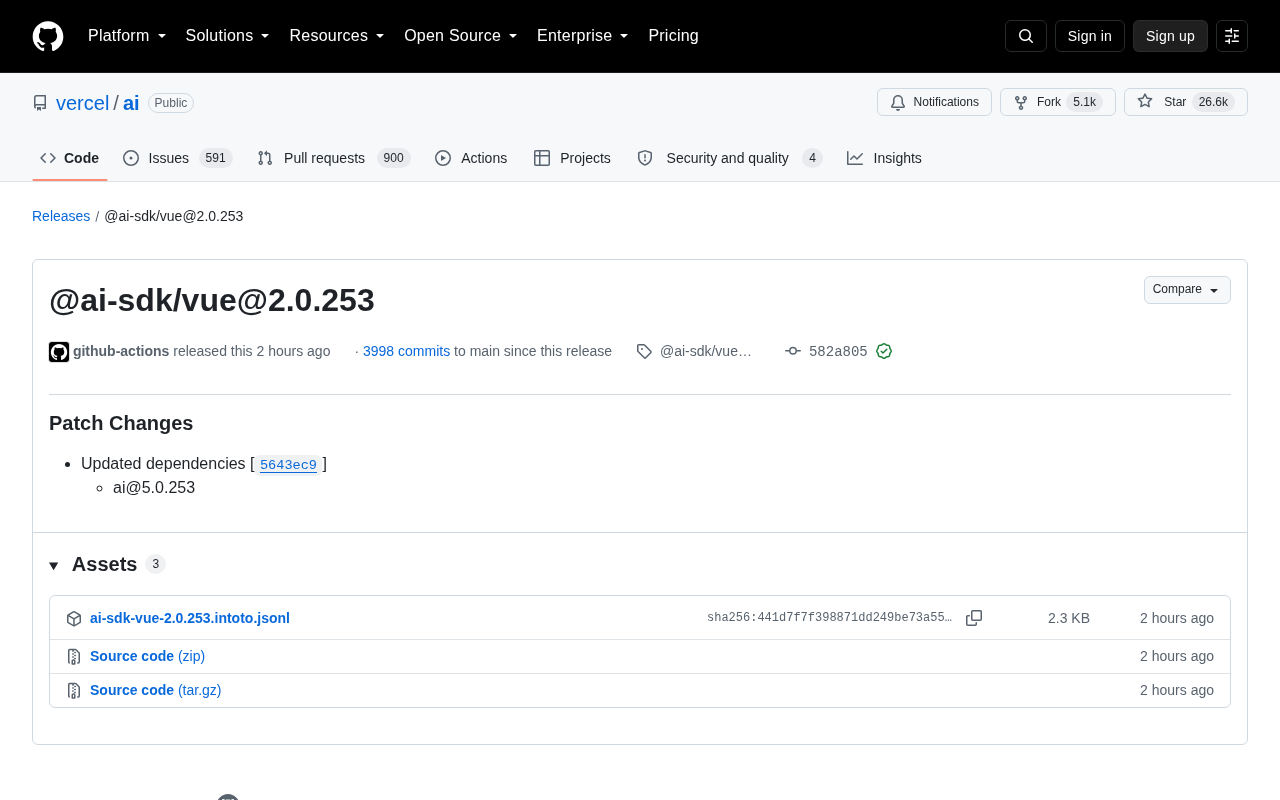
Vercel AI SDK Vue 2.0.253 Update Analysis: Multi-Framework Adaptation Strategy and Development Practices
In-depth analysis of Vercel AI SDK Vue 2.0.253 patch update, covering its multi-framework architecture, dependency sync mechanism, and practical value for Vue developers integrating AI capabilities.