REA Open-Source Tool: Letting AI Automatically Reverse Engineer Any App

REA connects AI to real reverse engineering engines, enabling evidence-based analysis of binary programs instead of fabrication.
REA is an open-source project that solves the problem of general-purpose AI being unable to reliably analyze closed-source software. It connects AI assistants to real reverse engineering engines, extracting evidence like function calls, algorithm fragments, and data structures through disassembly and control flow analysis, then lets AI help developers reconstruct functionality based on this solid data. The entire process runs locally without uploading files to the cloud. Launched with a single terminal command, REA represents a new paradigm of AI as a tool orchestration layer, valuable for learning competitor implementations, maintaining legacy systems, and security research.
When faced with a stunning closed-source application, many developers' first reaction is: how exactly is it implemented? Traditional reverse engineering requires weeks of digging through assembly code, while asking AI directly often yields answers that are simply made up. An open-source project called REA is changing this situation—it connects AI assistants to real reverse engineering engines, making "understanding someone else's software" unprecedentedly efficient.
Why Ordinary AI Can't Do Reverse Engineering
According to the YouTube channel Mundo NoCode, when you throw an executable file at a general-purpose AI model and ask about its implementation principles, the model usually "makes up an answer from its head." This isn't because the model isn't smart enough—it's because it has never been exposed to this binary file. No disassembly, no symbol information, no runtime behavior data—the AI can only guess based on similar patterns in its training corpus.
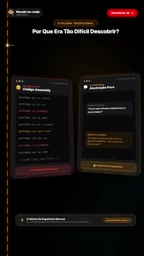
The core difficulty of reverse engineering lies in this: you need to reconstruct the program's logical structure from the machine code level. This process involves disassembly, control flow analysis, data structure recovery, and many other steps, each requiring specialized toolchain support. General-purpose large language models lack these underlying capabilities, so naturally they cannot provide reliable answers.
Disassembly is the process of translating machine code (the binary instructions the CPU actually executes) back into human-readable assembly code—it's the first step of reverse engineering. Because compilers perform instruction reordering, function inlining, and redundant code elimination during optimization, the resulting assembly is often more obscure than the original source code, with all variable names and comments lost. Control flow analysis then reconstructs the calling relationships and branching structures between functions on this basis, identifying loops, conditional jumps, and exception handling paths; data structure recovery infers the layout of structs, arrays, and linked lists based on memory access patterns. Together, these three form the foundational toolchain of reverse engineering, and they are also the reason why general-purpose large language models cannot complete this task independently—they neither receive the actual machine code as input nor have the ability to execute these analyses.
REA's Core Approach: Connecting to a Real Reverse Engineering Engine
REA (Reverse Engineering Assistant) takes a direct approach: instead of letting AI guess, it connects it to a real reverse engineering engine.
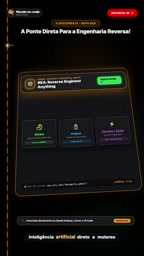
The workflow is roughly as follows: you specify a target executable file, and REA calls disassembly and analysis tools at the underlying level to break down the program's logical structure and extract real evidence data—including function call relationships, key algorithm fragments, data structure definitions, and more. These verified analysis results are then fed to the AI assistant, which uses this solid underlying information to help you reconstruct the corresponding functionality.
The key difference in this approach is that it's "evidence-driven." The AI is no longer fabricating based on gut feeling, but reasoning and generating code based on real analysis results. Mundo NoCode emphasized in the video that AI can reconstruct similar functionality for your project in minutes, rather than having you spend weeks groping through machine code in the dark.
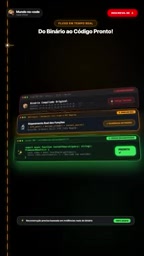
The orchestration layer is an important paradigm in current AI applications: the model itself doesn't directly solve problems, but is responsible for deciding which tool to call, how to parse the tool's output, and how to integrate the results into answers usable by the user. Representative examples of this approach include having models call search engines, code execution sandboxes, database query interfaces, and more. REA treats the reverse engineering engine as exactly such a callable tool, with the AI playing the role of "interpreting analysis results and generating code" rather than "inferring binary content from thin air." The advantage of this architecture is that professional tools provide precise underlying facts, while the model handles high-level semantic understanding and code reconstruction—each doing its part, significantly reducing the risk of hallucination.
Local Operation and Privacy Protection
Another noteworthy feature of REA is that it runs entirely locally. All analysis is completed on your own computer, with no need to upload executable files or analysis results to the cloud.
For developers who need to reverse engineer commercial software or handle sensitive projects, this is particularly important. Sending binary files to third-party cloud services not only poses privacy risks but also violates software license agreements in many scenarios. A localized solution has advantages in both compliance and security.
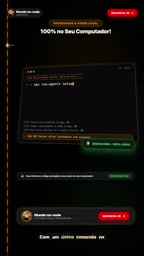
The barrier to installation and use is also low. According to the video, you only need to execute a single command in the terminal to turn the AI assistant into a "software detective."
Software license agreements typically explicitly prohibit reverse engineering of commercial software unless for interoperability, security research, or educational purposes, and specific regulations vary greatly across jurisdictions. Even if analysis can technically be completed locally, using analysis results to circumvent licensing protections, copy core algorithms, or bypass technical measures may still constitute infringement or even violate regulations such as the Digital Millennium Copyright Act. Therefore, while localized tools like REA reduce the risk of data leakage, they do not exempt users from the responsibility of judging the legality of their actions. Developers should confirm they have legitimate analysis permissions for the target software before use and keep reasonable records of their analysis purposes.
Practical Significance for Developers
REA represents a rising category of tool form: AI is no longer a standalone chatbot, but serves as an "orchestration layer" connecting professional tools and end users. In this model, AI's value lies not in how much it knows itself, but in how efficiently it can call and interpret the output of professional tools.
For daily development work, the changes such tools may bring include:
- Learning competitor implementations: Quickly understand the technical approach behind a feature, rather than staying at the level of guesswork
- Legacy system maintenance: When original code and documentation are missing, reconstruct understanding of the system through reverse analysis
- Security research: Assist in analyzing the runtime behavior of suspicious software
Of course, reverse engineering itself involves legal and ethical boundaries. Analyzing software you own, for learning and interoperability purposes, is usually fine, but cracking others' software or bypassing licensing protections may be illegal. The tool itself is neutral; how it's used depends on the user.
Summary
REA solves a specific yet common pain point: AI is very good at writing code, but not at "reading" already-compiled binary programs. By connecting AI to a real reverse engineering engine, REA transforms AI in this field from "making things up" to "having evidence to back it up." The design of running locally and launching with a single command also lowers the barrier to use. For developers who need to understand the implementation details of closed-source software, this is a new tool worth paying attention to.
According to Mundo NoCode's channel, the project's open-source nature means developers can review its analysis logic themselves and extend support for reverse engineering engines as needed.
One-line Summary
REA connects AI to real reverse engineering engines, transforming AI from making things up to analyzing binary programs with evidence.
Paragraph Summary
REA is an open-source project aimed at solving the problem that general-purpose AI cannot reliably analyze closed-source software. Instead of letting AI guess, it connects AI assistants to real reverse engineering engines, extracting evidence such as function call relationships, algorithm fragments, and data structures through disassembly, control flow analysis, and other underlying tools, then having AI help developers reconstruct functionality based on this solid data. The entire process runs locally without uploading files to the cloud, balancing privacy and compliance. It can be launched with just one terminal command, greatly lowering the barrier to reverse engineering. REA represents a new paradigm of AI as a "tool orchestration layer" connecting professional software, with practical value for learning competitor implementations, maintaining legacy systems, and security research—though the legal and ethical boundaries of reverse engineering still require users to navigate on their own.
Related articles

Structuring Data for AI Agents: Five Approaches and a Selection Guide
There's no single best way to structure data for AI Agents. This article compares semantic models, knowledge graphs, RAG, Markdown+grep, and open formats, drawing on research from dbt, Microsoft, and Chroma to help you pick the right data architecture based on question type.

Fish Audio Drama 3 Open-Source Launch Sparks Debate: The 35B Speech Model's Selling Points and Licensing Controversy
Fish Audio Drama 3 sparks debate with 35B parameters and open weights, ranking first on pronunciation benchmarks with director-style control and word-level inpainting, but its community license restricts commercial resale, API prices are rising, and local runs need ~39GB VRAM.

curl 8.23.0 Fixes 24 CVEs, AI-Assisted Research Contributed 20
curl 8.23.0 fixes 24 CVEs, 20 found by AI-assisted research, including a High-severity HTTP/2 use-after-free that could become RCE. Here's the source, fix details, and upgrade checklist.