Replicating Manus for $30: A Practical Guide to Low-Cost AI Agent Website Development
Exploring the perception gap and pragmatic strategies in replicating Manus for $30
Starting from a client's request to replicate the multi-billion dollar AI agent platform Manus for just $30, this article reveals the massive gap between client perception and technical reality. It analyzes the complex architecture behind AI agent products (task decomposition, agent orchestration, virtual environment execution) and proposes pragmatic low-budget development strategies: defining core feature boundaries, design-first communication, and phased delivery. The key insight: AI has lowered development barriers but hasn't eliminated professional expertise, and AI agent development is a technical direction worth betting on.
Introduction: A Multi-Billion Dollar AI Product — And a Client Wants to Replicate It for $30
Manus, an AI agent platform generating over $100 million in annual revenue, was recently acquired by Meta at a valuation of several billion dollars. Now, a client wants to replicate a similar product for just $30.
This sounds like a joke, but for anyone who's worked on AI agent development, it's an all-too-familiar scenario — the client sees "a simple input box," while the developer sees the complex agent orchestration logic, task scheduling systems, and visual interaction interfaces behind it.
The Massive Gap Between Client Perception and Technical Reality
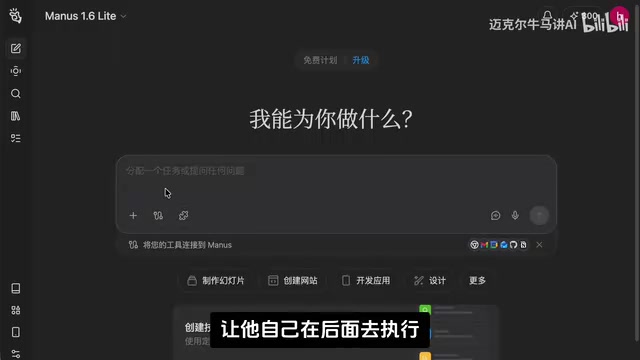
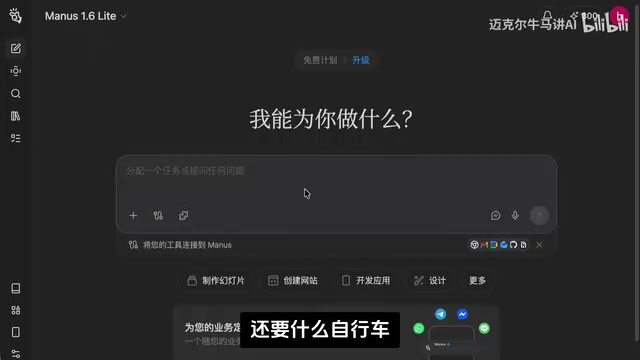
Manus's frontend interface does look "simple" — an input box where users submit a task, and AI automatically executes it in the background. Because of this, clients without technical knowledge assume $30 is more than enough budget for the project.
But in reality, products that "look simple" often have the highest technical barriers. The core value of an AI agent website isn't in how flashy the frontend is, but rather in:
- Task Understanding and Decomposition: The AI needs to understand natural language instructions and break them down into executable subtasks
- Agent Orchestration Logic: How multiple AI Agents collaborate and pass context information between each other
- Virtual Environment Execution: Actually operating browsers, file systems, etc. within a sandboxed environment
- Result Visualization: Presenting the execution process and results to users in an intuitive way
This is a question worth deep consideration for all developers in the AI era: How do you communicate technical complexity to non-technical clients? The answer isn't throwing a technical document at them — it's letting design mockups do the talking.
Pragmatic Development Strategies on a Tight Budget
Faced with a $30 budget, the developer made a very pragmatic judgment: it's impossible to replicate 100% of Manus's features, but you can replicate the agent orchestration logic behind it and build a basic functional version.
This approach offers valuable lessons for low-cost AI development projects. While AI tools have matured significantly and development efficiency has improved dramatically, "improved efficiency" doesn't equal "eliminated barriers." A reasonable approach is:
- Define core feature boundaries: List all features first, then distinguish between must-haves and nice-to-haves
- Use design mockups instead of technical documents for communication: Generate 30+ design mockups so clients can visually confirm requirements
- Leverage free tools to reduce costs: For example, using Google's free design tools to generate brand assets
- Deliver in phases: First build the basic version to validate the core workflow, then iterate and optimize
Architecture Breakdown of the Replicated AI Agent Product
Based on the design mockups, this replicated version has a fairly comprehensive feature plan, consisting of the following core modules:
Workspace Homepage
The project has its own brand name and logo (generated using free design tools). The homepage serves as the entry point for the entire agent system, handling basic functions like task creation and history records.

Task Execution Interface
This is the most critical part of the entire AI agent product, featuring a three-panel layout:
- Left/Center: Task Panel — Displays the currently running task, e.g., "Automated Sales Data Analysis"
- Right: Virtual Computer — Simulates the operating environment where the AI Agent executes tasks
- Bottom: Visualization Area — Displays data analysis results, charts, and other output content

This layout design is highly consistent with Manus's core experience — users can observe the AI's "thinking" and "operations" in real time. This is the key experiential difference between agent products and ordinary chatbots: users don't just get an answer; they watch the entire problem-solving process unfold.
Key Takeaways from the Manus Replication Case
AI Has Lowered the Development Barrier, But Hasn't Eliminated Professional Expertise
With AI-assisted programming tools, a developer can indeed accomplish more in less time. However, agent system architecture design, task orchestration logic, and system stability still require solid technical foundations. AI is an efficiency multiplier, not a substitute for professional expertise.
Design-First Is the Survival Rule for Low-Budget Projects
When budgets are extremely limited, aligning expectations with clients through design mockups first is far more efficient than jumping straight into code. The cost of 30+ design mockups is virtually zero (generated with AI tools), but they effectively prevent the catastrophic rework of "finished it but the client says that's not what they wanted."
AI Agent Development Is a Technical Direction Worth Betting On
Manus's high-value acquisition by Meta demonstrates that the AI agent space is on the verge of explosive growth. For independent developers and small teams, mastering agent orchestration logic and development capabilities may be one of the most valuable skill investments over the next few years.
Final Thoughts
$30 obviously can't build a real Manus, but the value of this challenge lies in this: it forces developers to think, under extremely limited resources, about what's core to the product, what can be sacrificed, and how to validate an idea at minimum cost. This ability to make tradeoffs is equally important whether the budget is $30 or $3 million.
According to the author, the next installment will share the architectural design details of the entire agent system, covering AI Agent scheduling mechanisms and technology stack choices — that's where real expertise gets put to the test.
Related articles
 Tutorials
ChatGPT Plus Subscription Guide: Are GPT-5.5, image-2, and Codex Worth the Upgrade?
A detailed look at ChatGPT Plus features — GPT-5.5, image-2, and Codex — with a Plus vs Pro comparison and a complete step-by-step subscription guide for users outside the US.
 Tutorials
Harness AI Engineering in Practice: Using Claude Code to Master Enterprise-Level E-Commerce Development
Deep dive into Harness AI Engineering: master enterprise e-commerce development with Claude Code using the Rules, Skills, Wiki, and Changes framework.
 Tutorials
Cursor + Codex Dual-IDE Collaboration: A Practical Methodology for Open-Source Project Customization
A complete methodology for open-source project customization based on real-world experience, detailing the Cursor+Codex dual-IDE workflow, seven-stage process, MVP validation, and AI source code reading techniques.