Rick Rubin on the AI Era: The Only Skill Machines Can't Steal Is 'Point of View'

Rick Rubin argues that AI's fundamental limit is having no point of view — the one thing machines can never replicate.
In a wide-ranging conversation with Steven Bartlett, legendary producer Rick Rubin argues that AI's core limitation is the absence of a point of view — it aggregates existing ideas but cannot see the world from a distinct individual perspective. Drawing on Hitchcock, Warhol, and Renaissance workshops, he contends that creativity lives in the prompt and the intention, not the finished output, making AI a powerful amplifier of human creativity rather than its replacement. He also candidly admits his own ambivalence: when listeners discover a beloved song was AI-generated, something changes — exposing an irreplaceable human dimension in art. Ultimately, Rubin's message is clear: in an age of machine-generated content, the only truly unstealable skill is the indefensible, unrepeatable point of view that grows from a lived human life.
Legendary music producer Rick Rubin has collaborated with Jay-Z, Kanye, Adele, the Red Hot Chili Peppers, and countless other top artists over four decades. In a rare, in-depth conversation with Diary of a CEO host Steven Bartlett, he systematically laid out his views on the nature of creativity, whether AI can truly create, and the phenomenon of "vibe coding." On the surface, it's a conversation about music — but in reality, it's a philosophy lesson on what makes humans irreplaceable in the age of AI.
How "Vibe Coding" Accidentally Went Viral
Rubin's connection to AI began with an absurd coincidence. Over a year ago, Andrej Karpathy coined the term "vibe coding," and on the very same day, a photo of Rubin wearing headphones, eyes closed, hand on a mouse went viral online — used in countless memes associated with vibe coding, despite having nothing to do with him.
The old Rubin might have laughed it off. But after writing The Creative Act, he learned to notice what he calls "invitations from the universe." When a massive wave of energy flows in one direction, he chooses to engage. He posted a tongue-in-cheek tweet — "tools will come, tools will go, only the vibe coder remains" — and a post that normally gets ten or twenty thousand views suddenly hit 1.5 million the next day.
So he set aside all his professional work and wrote a book about vibe coding, along with an adaptation of the Tao Te Ching called The Way of Code. He freely admits he can't explain why. "It's an indefensible act," he said — and in his view, being "indefensible" is precisely the quality that makes something art.
"Vibe coding" was coined by Andrej Karpathy — former OpenAI research scientist and Tesla AI director — in early 2025. It describes a style of software development in which programmers rely on large language models, describing their intent in natural language rather than writing code line by line. In this model, the developer acts more like someone placing requests than a traditional code author — they describe what they want, the AI generates code, and the developer iterates based on the results. The concept quickly sparked debate in the tech community: supporters argue it dramatically lowers the barrier to programming, while critics worry about code quality and the erosion of engineering skills. Karpathy himself has emphasized that vibe coding is better suited to prototyping and personal projects than high-reliability production systems. Rubin's accidental "endorsement" gave this technical concept unexpected exposure in artistic and creative circles, and sparked his broader thinking about the relationship between AI and creativity.
Can AI Create? Rubin's Core Argument: Point of View
This is the question every forum is debating right now. Rubin's answer is clear and incisive: AI has no point of view.
"Everything we're talking about today when it comes to creativity is about point of view, and AI doesn't have a point of view," he said. AI is an aggregation of existing ideas — it doesn't see the world from any particular angle. Ask it the same question several days in a row and you might get completely different answers. That reveals it has no stance of "this is how I see the world."
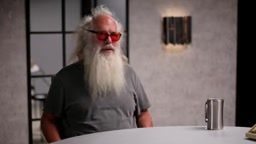
What if you had AI generate ten million songs — would it statistically stumble onto a hit? Rubin thinks it might produce ten thousand songs you like five percent of. But "end-to-end replacing an artist" is something he can't imagine. He positions AI as a tool: one that can help artists, and even help people who don't yet know they're artists become artists. "I can't paint. I can't play an instrument. I have no technical talent. But I can have a conversation with AI, iterate, and prompt my way to something beautiful. Maybe more people can become creative through AI — and that's a wonderful thing."
Creativity Lives in the Prompt, Not the Output
Rubin offers a precise analogy. Before filming, Hitchcock would storyboard the entire movie — looking at the storyboards, the film already existed. Wes Anderson designs every frame. "The creativity is in the prompt, not in the painting, not in the finished film."
He traces this idea back to Andy Warhol and Renaissance workshops: Warhol's silkscreen prints were never painted by hand; Rembrandt's paintings were largely executed by apprentices. Yet they remained their art. "Art always lives in the conversation — not in who puts paint on canvas." Today, prompting has an extremely low barrier to entry. Anyone can learn it and improve through experimentation. In his view, that's a good thing.
The Creative Act: A Way of Being that Rubin references here was published in 2023, the product of decades of accumulated thinking about creativity. In it, he positions the artist as a "perceiver" rather than a "maker" — the essence of creation is tuning in to signals that already exist in the universe, not manufacturing them from nothing. This view connects directly to his take on AI: AI can process and recombine existing signals, but it has no "antenna" of its own, because the antenna's directionality comes from individual lived experience, embodied sensation, and worldview. The book unexpectedly became a popular read in business and tech circles, with many founders treating it as a startup philosophy text rather than an art guide — reflecting widespread anxiety about human uniqueness in the age of generative AI, and the desire to find answers.
When You Know It's AI, Something Changes
One of the most thought-provoking moments in the conversation comes when Steven describes listening to a song on Spotify that he loved — and then discovering two months later that it was AI-generated. "I immediately liked it less."
This reveals something irreplaceable about the human dimension of creativity. The song moved him because there was a woman singing, telling a story about something that mattered to her. When he found out none of that existed, the song lost something.
Rubin's response is telling in its subtlety. He admits he doesn't fully understand it either: "You liked it before you knew — that's interesting. Would I object to something because of how it was made? That doesn't quite make sense to me either." He chalks it up to "living in interesting times." This kind of honesty captures something that cross-referenced sources rarely reveal: a forty-year veteran's attitude toward AI-generated art is contradictory and unresolved — not a clean binary.
The psychological shift Steven describes touches on two core concepts in aesthetics: authenticity and intentionality. Philosophers Nelson Goodman and Denis Dutton have both argued that the value of an artwork lies not only in its perceptual properties but also in its history and context of production — knowing whether a painting is a Rembrandt original or a high-quality forgery fundamentally changes the viewing experience, even if the retinal image is identical. This is known as the "authenticity effect." The sense of something "going flat" when AI generation is revealed operates through the same mechanism: a listener's emotional investment in a song is partly built on the implicit assumption that "someone suffered something and is using this as a medium to communicate with me." Once that assumption collapses, the emotional circuit breaks. This is also why "AI disclosure obligations" remain a hotly contested topic in creative industry ethics — transparency itself changes how a work is perceived.
Is AI Dangerous or an Opportunity? The Fire and the Printing Press
Faced with friends' anxiety that "AI will take jobs" and Anthropic researchers' warnings that the probability of human extinction exceeds 10%, Rubin maintains a balanced stance.
"AI is an extraordinarily powerful tool, and I'm curious about what it can do. Like any powerful tool, it can be dangerous, it can be used for harm, and it can be used for good." He offers an example: fire burned down his house, but we don't ban fire — fire also cooks food. The internet and the printing press were the same. The Church once tried to ban the printing press because it didn't want information to belong to everyone. But the benefits ultimately arrived.
Creativity Is Killed by Nurture, Not Nature
A through-line of the entire conversation is this: creativity is not a rare gift — it's an instinct that education and institutions gradually destroy.
"We go to school. We're taught to repeat what we're told. We're taught to sit in chairs all day. Our spirits get crushed by institutions. Rules aren't there to help us — rules are there to control us." He believes the purpose of human existence is to express yourself freely.
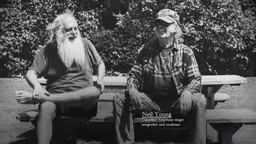
The methodology he returns to again and again: do what you truly love, push it to an "indefensible" extreme, and never think about near-term incentives, market positioning, or audience reaction. He marshals case after case — 99 Problems (the Def Jam president declared it would "never be a single"), System of a Down (radio DJs said they'd "never play this band," which became a number-one hit a year later), Linkin Park's reinvention, Radiohead's Kid A — to demonstrate: the most revolutionary work is often the work we initially lack the context to understand.
He also brings up Amazon — losing money for nearly twenty years, widely considered the worst investment, until it changed the world. "It's the same thing: when every metric says it won't work, you double down on what you believe in."
Going Inward: Meditation and "Knowingness"
On how to identify what you truly love, Rubin's answer is meditation. He began practicing Transcendental Meditation (TM) at age 14, and credits it with allowing him to "see depth beneath the surface."
His criterion for judging whether an artist — or an entrepreneur — is worth investing in is essentially a form of "knowingness": when you hear something, you want to lean forward rather than back, you want to hear it again rather than skip it. This can neither be explained nor replicated. He quotes a venture capitalist friend: invest in the founder, never the business model. "If I believe in this person, I back them." Art is the same — what matters is not a great song (that's more like a great product) but the way this person sees the world and innovates within it.
In an age when AI can mass-produce content, Rubin's entire conversation points toward a single conclusion: machines can generate, imitate, and process prompts — but they cannot possess that point of view rooted in individual lived experience, indefensible and unrepeatable. And that, he argues, is the only skill that cannot be stolen.
Transcendental Meditation (TM) is a technique systematized and introduced to the West by Indian teacher Maharishi Mahesh Yogi in the 1950s. Practitioners sit quietly with eyes closed twice a day for about 20 minutes, silently repeating a Sanskrit mantra privately given to them by a teacher, with the goal of allowing consciousness to transcend active thought and enter a state of "pure awareness." TM spread widely among Western intellectuals and artists in the 1960s and '70s after the Beatles publicly embraced it. David Lynch, Paul McCartney, and many other creative figures have practiced it long-term. Neuroscience research shows that during TM, activity in the prefrontal cortex increases, and brain regions associated with attention regulation and decision-making enter a distinctive alpha-wave state. Rubin has practiced TM since age 14, viewing it as the core methodological source of his ability to penetrate beyond the surface of a work and perceive its "deeper authenticity" — entirely consistent with his critical stance of privileging "knowingness" over rational analysis.
Related articles

Beyond the Mainstream World: Security and Privacy Struggles in Overlooked Regions
Human-centered security research has long focused on the West, causing security solutions to fail in the mainstream world. Researcher Collins Minando draws on Kenyan mobile loan apps, internet café authentication dilemmas, and local expert studies across nine countries to reveal how socioeconomic constraints reshape privacy practices, and proposes mobile money privacy redesign and PETs deployment pathways.

Claude Reportedly Able to Hide Secret Messages in Benign Images
A Reddit post claims Claude Fable 5.1 can hide secret messages in benign images. This article reviews the background, image steganography principles, and potential security risks, and suggests a testing path from rumor to verification.

Federal Government Awards $85 Million; CFS to Develop Fusion-Specific Semiconductors
The federal government awards $85 million to Commonwealth Fusion Systems to develop conductors and power semiconductors for fusion plants. This article analyzes the significance of this funding for the fusion supply chain and commercialization path.