Right to Intelligence: Defending the Freedom to Run AI Locally
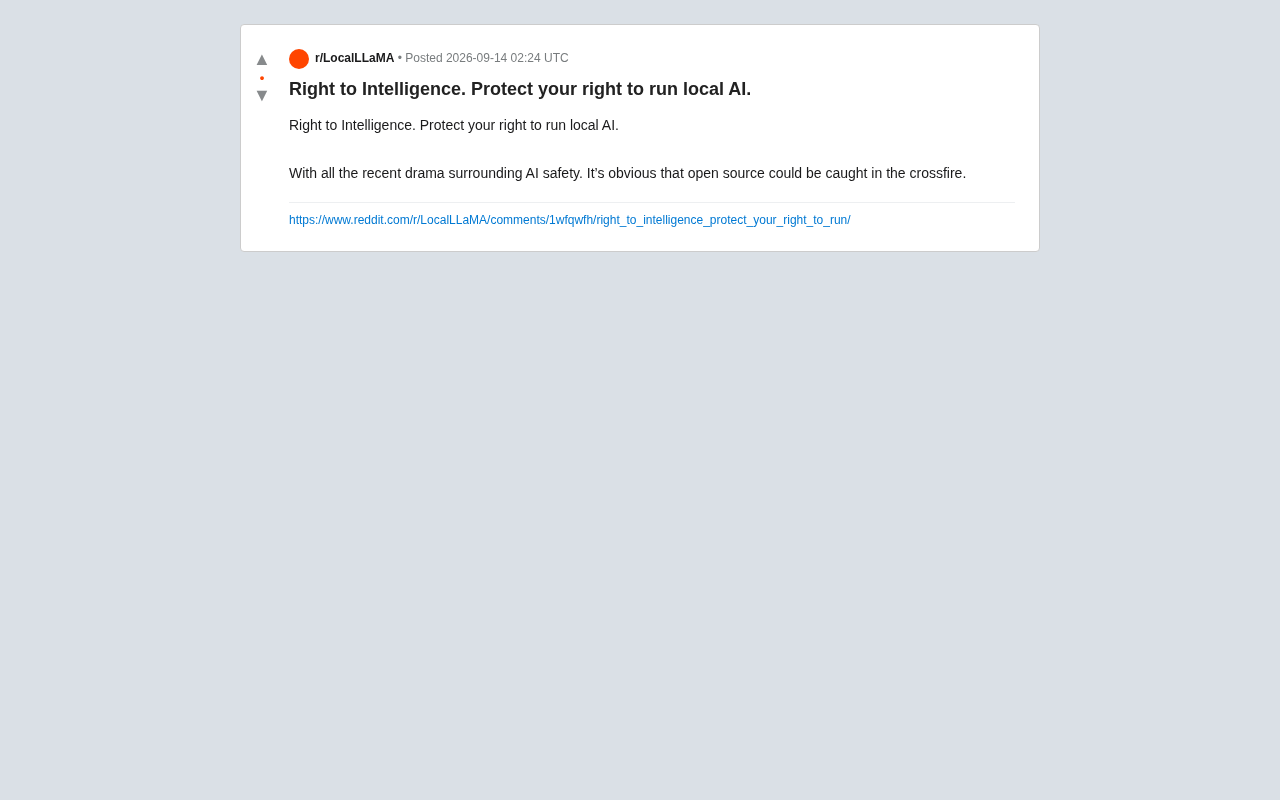
Reddit's "Right to Intelligence" movement defends the freedom to run open-source AI locally against overreaching safety regulations.
A Reddit community initiative called "Right to Intelligence" argues that individuals should have the freedom to run AI models on their own devices. Set against rising AI safety regulations, advocates worry that heavy-handed oversight could make open-source AI collateral damage. Local AI is about more than convenience — it touches on privacy, data sovereignty, and whether AI capabilities will become further concentrated in the hands of a few large institutions. The article argues that safety and openness are not mutually exclusive: the transparency of open-source models is itself a prerequisite for security auditing, and history shows that open ecosystems tend to produce greater robustness. The core message is that any conversation about restricting AI must also ask who stands to lose — and what gets sacrificed along with it.
When "AI Safety" Becomes a Regulatory Weapon, What Happens to Open Source?
As debates over AI safety continue to escalate, a critical yet overlooked question has emerged: do ordinary people have the right to freely run AI models on their own devices? A recent Reddit community initiative called "Right to Intelligence" has brought this question to the forefront. The core claim is simple — protect your right to run AI locally.
This discussion is set against the backdrop of ongoing debates over AI regulation, model restrictions, and safety governance. The concern raised by the initiative's authors is straightforward: when the regulatory scales tip too far toward "safety," open-source AI could easily end up caught in the crossfire.
Why Local AI Deserves to Be Treated as a Right
The value of framing this as a "Right to Intelligence" lies in how it elevates a technical issue to the level of personal freedom. Running AI locally means you don't have to hand your data to third-party cloud services, you don't have to submit to a platform's content moderation policies, and you don't have to rely on a constant internet connection or paid subscriptions.
For developers, local models are foundational infrastructure for research, fine-tuning, and experimentation. For everyday users, they represent the last line of defense for privacy and technological autonomy. Once the ability to run local models is restricted, the most capable AI systems will only be accessible to a handful of large institutions — and ordinary people will be left "renting" intelligence through tightly controlled API interfaces.
The Deeper Concern: Centralization
The underlying worry driving this discussion is the trend toward centralizing AI capabilities. If a regulatory framework effectively makes local deployment difficult or illegal, the outcome isn't a "safer" world — it's one where intelligence, as a critical resource, gets locked inside the walls of a few powerful companies. This runs directly counter to the democratization of technology that the open-source community has long championed.
Safety and Openness Are Not a Zero-Sum Game
The "drama" surrounding AI safety often frames the issue as a binary choice: either open or safe. But this narrative itself deserves scrutiny. The transparency of open-source models is precisely what makes security auditing possible — the risks in closed-source systems are just as real; they're simply invisible to outside observers.
Scapegoating open source as a safety problem sidesteps the genuinely hard questions of governance while potentially strangling innovation. History has shown repeatedly — from Linux to cryptographic tools — that open software ecosystems tend to produce greater robustness through public scrutiny, not more risk.
A Conversation That Needs More Voices
One important caveat: the material for this article comes from an advocacy post in a Reddit community. It's more of a statement of principle than a systematic argument. It points in a direction worth paying attention to, but the specific regulatory language, technical details, and various stakeholder dynamics remain to be seen.
For anyone following the development of AI, the "Right to Intelligence" is a reminder: when discussing AI safety, we shouldn't only ask "how do we restrict it?" — we should also ask "after the restrictions, who loses what?" Protecting the ability to run AI locally is, at its core, about preserving space for technological autonomy, privacy, and innovation. This conversation is only just beginning.
Related articles
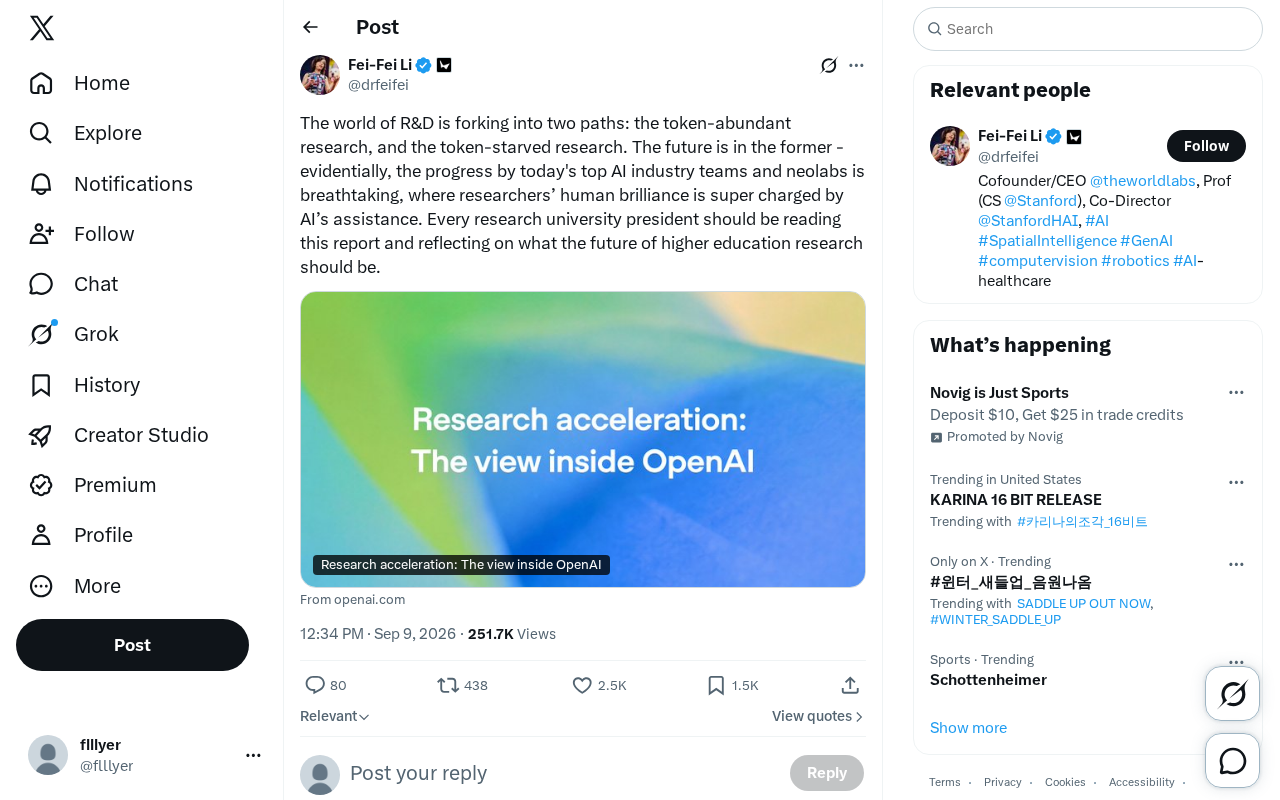
R&D Is Forking: The Coming Battle Between Token-Abundant and Token-Starved Research
R&D is splitting into token-abundant and token-starved research. Top AI labs are pulling ahead—here's what it means for universities and the future of science.

Atlas World Model Explained: How Next View Prediction Unifies Generation and Reconstruction
The Atlas world model uses Next View Prediction as its core to unify pixel-level generation and reconstruction, offering a new approach to spatial intelligence.
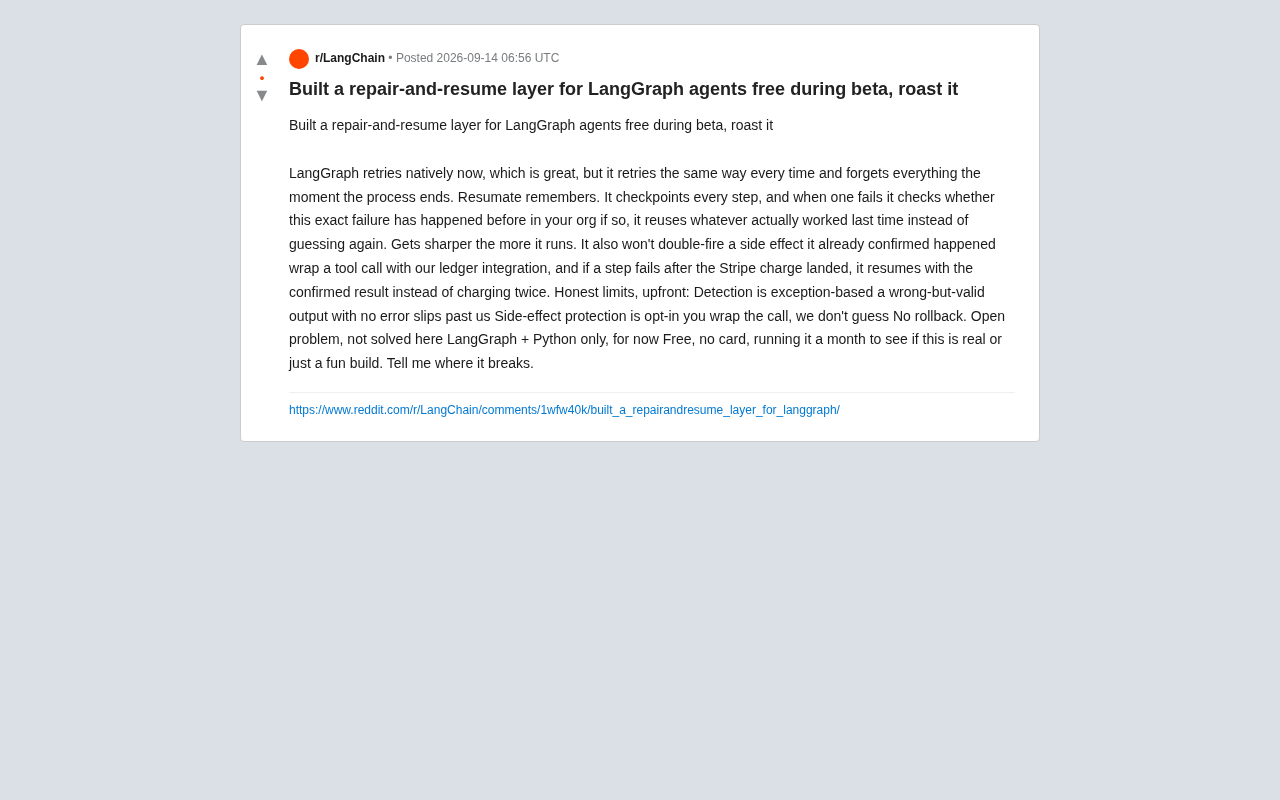
Resumate: A Deep Dive into the Repair-and-Resume Layer for LangGraph Agents
Resumate adds memory-aware checkpointing and idempotent side-effect protection to LangGraph agents, preventing issues like duplicate Stripe charges on retry.