Rising RAM Prices Push Up Gaming Laptop Costs? A Value-Focused Buying Guide

Why RAM and storage price hikes are inflating gaming laptop costs—and how to buy smart.
Rising RAM and storage prices, driven by AI's structural demand for HBM, have eroded gaming laptop value. This guide explains the Silicon Cycle, cost pass-through, and dual-channel and PCIe considerations, offering practical buying advice and professionally validated value picks like MSI for those who must buy now.
The Gaming Laptop Market Dilemma: Buying Challenges Amid the Price Surge
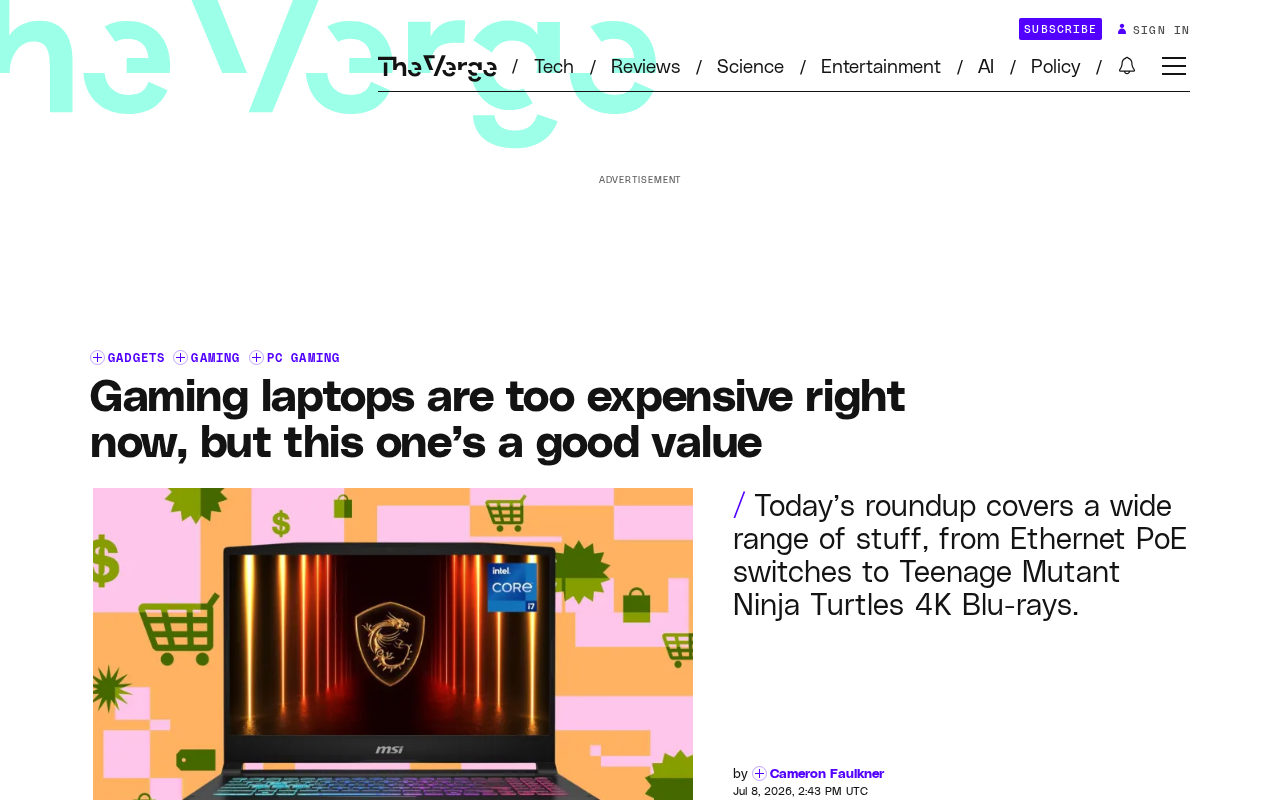
Now is not a great time to buy a gaming laptop. The recent sharp rise in prices for RAM and storage devices has severely inflated the prices of what were originally mid-to-low-end gaming laptops. For budget-conscious consumers, this is frustrating—paying more money for products with less-than-impressive specs.
The root of this price surge lies in a supply-demand imbalance in the memory chip market. The memory chip market (DRAM and NAND flash) has long exhibited distinctly cyclical characteristics, which the industry calls the "Silicon Cycle." The Silicon Cycle is driven by the lag effect of capital expenditure: when prices soar, manufacturers ramp up production; once that capacity comes online, oversupply causes prices to collapse; manufacturers then cut investment, supply contracts, and prices rebound again.
The fundamental cause of the Silicon Cycle lies in the contradiction between the high fixed costs and long construction timelines of semiconductor manufacturing. Building an advanced DRAM fab typically costs over $20 billion and takes 2–3 years, which means manufacturers must base their capacity decisions on forecasts of future demand rather than current market signals—this structural lag creates the alternating cycles of surplus and shortage. Historically, the DRAM industry once featured a competitive landscape with dozens of coexisting companies, but after multiple rounds of price wars and industry consolidation in the 1990s and 2000s, Japanese manufacturers (Hitachi, NEC, Mitsubishi, etc.) successively withdrew or merged, while Korean manufacturers, backed by government subsidies and vertical integration advantages, reshuffled the industry, ultimately forming today's landscape of three giants. Notably, one of the starting points of this industry reshuffle was the collective retreat of American manufacturers in the 1980s—Intel completely abandoned its DRAM business in 1985 under pressure from cheap Japanese DRAM, pivoting to the CPU market; Samsung, meanwhile, relied on a "counter-cyclical investment" strategy, trading losses for market share during industry downturns, ultimately securing its position as the global leader—a textbook example of state-driven strategic industrial support.
To understand this cycle, one must first recognize the oligopolistic structure of the DRAM market. Currently, the global DRAM market is dominated by Samsung (about 45% market share), SK Hynix (about 30%), and Micron (about 25%), with a combined market share exceeding 95%. This highly concentrated market structure means that any single manufacturer's capacity decisions can have a systemic impact on global prices. Similar to OPEC, the three major manufacturers tacitly control the pace of capital expenditure during upcycles and coordinate capacity cuts during downcycles, effectively forming a price-coordination mechanism—though this has long drawn regulatory attention on antitrust grounds. This highly concentrated oligopoly grants market participants significant pricing power, causing the Silicon Cycle's price swings to far exceed those of other commodity markets. Demand, on the other hand, comes from multiple downstream markets including consumer electronics, servers, and automotive electronics. This asymmetric structure—highly concentrated supply and diverse, fragmented demand—is the institutional root of the dramatic price volatility.
The core driver of this price surge is the explosive demand for HBM (High Bandwidth Memory). HBM's technical lineage traces back to the HBM1 standard jointly developed by AMD and SK Hynix in 2013. Its key breakthrough was introducing TSV (Through-Silicon Via) technology into memory packaging—by etching micron-scale vias vertically through the chip and filling them with conductive metal, it achieved three-dimensional interconnection between chips, breaking through the physical limits of traditional wire bonding packaging in terms of signal density and transmission rate. HBM's evolution progressed from HBM1 (128GB/s) through HBM2 (256GB/s), HBM2e (460GB/s), to the current mainstream HBM3e (1.2TB/s per stack), boosting bandwidth density by more than 9x, specifically designed for AI accelerators (such as NVIDIA H100/H200).
The extreme sensitivity of large AI model training to memory bandwidth stems from the attention mechanism of the Transformer architecture—its computational pattern exhibits typical memory-bandwidth-intensive characteristics. Understanding this deeply requires grasping the memory-access pattern of Self-Attention: during inference, every time the model generates a token, it must read the key-value matrices of all previous tokens from the KV Cache. The data read volume of this operation grows linearly with sequence length. Taking GPT-3 (175 billion parameters) as an example, the KV Cache read volume for a single inference can reach tens of gigabytes, far exceeding the GPU's on-chip SRAM capacity, requiring frequent access to HBM. This memory-access pattern of "little computation, lots of data movement" is called the Memory-Bound scenario in the academic Roofline model, which directly explains why boosting compute (FLOPS) yields diminishing marginal returns for large-model inference speed, while boosting memory bandwidth is the key bottleneck. In matrix multiplication operations, the repeated reading and writing of data demands far more bandwidth than the computation itself, which is precisely why NVIDIA's H100/H200 and other AI accelerators integrate HBM despite its extremely high cost.
Worth noting is HBM's manufacturing complexity: each HBM3e package requires stacking 8–12 layers of DRAM dies vertically interconnected through thousands of through-silicon vias, then packaging them onto the same substrate as the base logic die (Base Die), with extremely stringent yield control. According to industry estimates, producing one HBM3e stack consumes DRAM wafer area equivalent to producing about 5–6 standard DDR5 memory modules, yet sells for tens of times more per unit. For this reason, amid the explosion of AI compute demand, Samsung and SK Hynix have prioritized allocating large amounts of advanced-process capacity (especially at the 1a nm and 1b nm nodes) to HBM orders, tightening the supply of ordinary DDR5 memory. The surge in AI servers' demand for high-bandwidth memory and large-capacity storage has directly squeezed the supply of memory and SSDs in the consumer market, driving prices upward. Gaming laptops inherently have high memory and storage capacity requirements, so cost pressures are further amplified, ultimately reflected in end-product prices.
Behind the Price Surge: How Memory and Storage Costs Get Passed On
Why Do Rising Memory Prices Hit Gaming Laptops Hardest?
Modern gaming laptops require far more memory than ordinary office laptops, because game engines, background processes, and the operating system simultaneously occupy large amounts of memory bandwidth and capacity. 16GB of DDR5 memory has become the entry threshold, while 32GB is the mainstream configuration for handling AAA games and multitasking scenarios.
As the memory standard adopted by current mainstream gaming laptops, DDR5 represents a generational leap over DDR4 across multiple dimensions. DDR5 doubles the number of Bank Groups within a single memory module, introduces an on-die ECC (Error Correction Code) mechanism, lowers the operating voltage from DDR4's 1.2V to 1.1V, and raises the starting frequency from 3200MHz to 4800MHz, with mainstream gaming laptops now commonly reaching 5600–6400MHz. Notably, the On-Die ECC introduced in DDR5 may cause a slight latency penalty in certain ultra-low-latency scenarios, but its impact on actual game frame rates is negligible—far less significant than whether or not a dual-channel configuration is used.
Particularly worth attention is the dual-channel memory configuration. Its underlying principle lies in the physical architecture of the CPU's memory controller (IMC, Integrated Memory Controller)—modern x86 processors all incorporate a dual-channel IMC, with each channel having an independent 64-bit data bus, and dual channels together forming a 128-bit data path, theoretically doubling bandwidth. In single-channel mode, even with a single 16GB module installed, the IMC only operates in 64-bit mode, halving peak bandwidth.
The performance gains of dual-channel memory technology are not limited to raw bandwidth; its impact on latency characteristics is also worth noting. Modern CPUs' Last-Level Cache (LLC) capacity typically ranges from 16–64MB, while a mainstream AAA game's active dataset often exceeds 8GB, meaning large amounts of data must be fetched from main memory (RAM) in real time, making memory bandwidth an important constraint on frame-rate stability. On ultrabooks or entry-level gaming laptops with integrated graphics, the performance loss from single-channel is especially severe—AMD's RDNA-architecture integrated graphics can gain up to 40%–50% in performance under a dual-channel configuration, a figure that in some lightweight gaming scenarios can even push a game from unplayable to smoothly running. For mid-to-low-end gaming laptops using integrated graphics or a shared-VRAM architecture, the GPU and CPU share the same memory pool, and the bottleneck effect of memory bandwidth directly manifests as dropped frame rates—this is precisely why the performance loss from single-channel is far more significant in gaming than in office scenarios. Even for models equipped with discrete graphics, dual-channel memory can significantly reduce the CPU-GPU data transfer bottleneck, showing clear advantages in gaming scenarios like open-world titles that require heavy streaming of assets. At equal capacity, a single-channel configuration can drop performance by 15%–30%, making it a hidden trap that cannot be overlooked when purchasing. When buying, you should proactively ask the retailer to confirm memory slot occupancy: two identical modules form a dual-channel setup, whereas a single high-capacity module operates in single-channel mode regardless of how large its nominal capacity is.
On the storage front, PCIe 4.0 NVMe SSDs, with sequential read speeds of 4000–7000MB/s, significantly shorten game loading times, and 512GB to 1TB is now standard. The NVMe (Non-Volatile Memory Express) protocol is a storage interface standard designed specifically for the characteristics of NAND flash. Compared to the still-used SATA standard, NVMe has been fundamentally optimized at the protocol level: SATA's AHCI interface has a command queue depth of only 32, and its single-queue design forces multithreaded I/O requests to wait in line; NVMe supports up to 65,535 command queues, each with 65,535 commands, boosting parallelism by several orders of magnitude. In gaming scenarios, this difference mainly manifests in random 4K read/write performance—an NVMe SSD's random 4K read speed is typically more than 10x that of a SATA SSD, directly affecting the responsiveness of asset streaming in open-world games. This speed boost is also reflected in: games supporting DirectStorage can bypass the CPU decompression bottleneck, greatly reducing stuttering during scene transitions; and in console-to-PC ports, dynamic asset streaming systems optimized for high-speed SSDs have hard requirements for storage bandwidth.
DirectStorage is a storage-access API that Microsoft officially launched in 2022 alongside Windows 11. Its design inspiration came directly from successful practices on console platforms—Sony's PS5 and Microsoft's Xbox Series X both introduced in 2020 a combination of high-speed custom SSDs and dedicated decompression hardware, achieving sustained read speeds approaching 5.5GB/s (PS5), with built-in hardware decompression engines for algorithms like Kraken. DirectStorage's core innovation is establishing a data path directly from the NVMe SSD to GPU video memory (VRAM), bypassing the CPU-involved decompression step in traditional I/O flows. In the traditional architecture, the loading path for game assets is: SSD → system memory (RAM) → CPU decompression → GPU VRAM, with the CPU becoming the bandwidth bottleneck. DirectStorage introduces native GPU decompression capability (relying on compute shaders in Shader Model 6.0 and above), offloading the decompression task to the GPU, theoretically boosting scene loading speeds by several times. Games currently supporting DirectStorage 1.2 (with GPU decompression) include Warhammer 40,000: Space Marine 2 and Cyberpunk 2077, but achieving the best results requires pairing with a PCIe 4.0 SSD and a DirectX 12 Ultimate-compatible GPU. However, note that in everyday use and most games, the perceptible difference between PCIe 4.0 and 3.0 is far smaller than the theoretical data suggests, so there's no need to pay an excessive premium for it when purchasing.
Mainstream gaming laptops need at least 16GB of memory, while high-end models commonly aim for 32GB, paired with a 512GB or even 1TB high-speed SSD. When the unit prices of memory and storage rise, the cost increments of these two core components are directly reflected in the overall machine price.
One detail to note: the price increase for memory has been notably larger than that for storage, meaning models emphasizing large memory configurations are more directly impacted. Mid-range gaming laptops that were once reasonably priced now often carry premiums of several hundred yuan, greatly diminishing their value.
Why Are Promotions Increasingly "Lacking Sincerity"?
In such a market environment, recent gaming laptop promotions mostly seem underwhelming. Under the pressure of rising costs, manufacturers struggle to offer truly attractive discounts. Consumers often find that so-called "price cuts" merely bring inflated prices back to relatively normal levels, rather than offering genuine savings.
A Value-Focused Model Worth Watching: MSI's Pragmatic Choice
Amid a sea of lackluster promotions, one MSI model stands out, becoming a rare "high-value" choice in the eyes of professional reviewers.
Micro-Star International (MSI), founded in 1986, is a veteran Taiwanese motherboard and graphics card manufacturer. After entering the gaming laptop market in the early 2000s, it gradually became a well-recognized brand among serious gamers thanks to its strong cooling designs and relatively aggressive pricing strategy. MSI's gaming laptop lineup spans multiple tiers from entry-level to flagship, with its Katana, Cyborg, Raider, and Titan series corresponding to different budget ranges.
In terms of cooling design, MSI's Cooler Boost technology is essentially a fan-speed dynamic control scheme that, when activated, ramps fan speed to maximum (typically 5000–6000RPM), trading noise control for maximum cooling headroom. MSI's early-adopted "dual-zone cooling" design physically separates the heat pipe paths of the CPU and GPU, avoiding mutual thermal interference (the "thermal crosstalk" problem), and can maintain more stable power-limit performance under sustained high loads—this is the technical reason for its relatively consistent cooling scores in professional reviews, and it holds a certain competitive edge in its price bracket. For this reason, when the overall market's value proposition declines, some MSI models—having raised prices relatively modestly—actually stand out with relative advantages in cross-comparisons.
Being singled out for recommendation against a backdrop of generally inflated prices shows that this product truly excels among its price peers in balancing configuration and price. For consumers who must buy now, such professionally screened models offer a pragmatic choice. Rather than blindly ordering in a market with widespread premiums, it's better to focus on products that genuinely offer good value.
Buying Advice: How to Make Rational Decisions During the Price Surge
Step One: Determine Whether It's a Genuine Necessity
If there's no urgent need to upgrade, it's advisable to hold off during the current price peak. The Silicon Cycle for memory chips typically lasts 3–5 years, and history has seen several significant rounds of price rises and falls. During the DRAM super-upcycle of 2016–2018—when the smartphone upgrade wave and data center expansion erupted simultaneously, and the three oligopolists coordinated to control output—DRAM spot prices rose more than threefold within two years. Memory prices once climbed to historic peaks, then plummeted in 2019 due to oversupply, with 8GB DDR4 modules falling from a peak of about $80 to under $30, a drop of over 50%.
However, the current cycle differs structurally from history in a key way. From the perspective of industrial economics, the AI compute investment wave has fundamentally different demand structures compared to the historical PC adoption wave (1990s) and smartphone upgrade wave (2010s). The upgrade demand for PCs and smartphones follows a natural saturation curve—once penetration approaches 100%, the replacement cycle becomes the main demand driver, and demand growth naturally levels off. The demand-driving logic of AI compute, by contrast, follows the "Scaling Law"—systematically articulated by OpenAI researchers Kaplan et al. in 2020, whose core finding is that there is a power-law relationship between large models' capability improvements and their training compute consumption, and this relationship holds stable across several orders of magnitude. This means the growth of compute demand has no obvious intrinsic ceiling, depending entirely on the capital expenditure willingness of leading tech companies and the direction of regulatory policy. It should be noted that whether the Scaling Law will break down at some future scale is a matter of academic debate, and this is one of the biggest sources of uncertainty in long-term forecasts of AI compute demand. Furthermore, a single DGX H100 system with 8 H100 GPUs requires 320GB of HBM3 memory, equivalent to 40GB per GPU, whereas traditional server CPUs typically only need 64–512GB of DRAM to handle most workloads—this order-of-magnitude difference in demand density is the core logic behind HBM's long-term occupation of advanced DRAM capacity. The cycle driven by AI compute differs from previous cycles driven purely by consumer electronics—HBM's structural demand causes ordinary DRAM capacity to be squeezed for the long term, making the window for price declines potentially harder to predict than before, and the waiting period for consumers hoping for price drops may be longer than historical experience suggests. As supply chains adjust and capacity is released, the possibility of future price declines still exists, but consumers need to weigh their actual needs flexibly—whether waiting is worthwhile varies from person to person.
Step Two: Assess the Match Between Configuration and Price
When buying, don't be swayed by "promotion" labels; carefully assess whether the memory capacity, storage specs, discrete GPU performance, and price are commensurate. Pay particular attention to verifying whether the memory is a dual-channel configuration (rather than a single high-capacity module in single-channel mode) and whether the SSD is a PCIe 4.0 spec.
Additionally, the GPU's power version is another key indicator that's easily overlooked. The evolution of NVIDIA's Max-Q framework naming strategy itself reflects transparency issues in the laptop GPU market—when Max-Q first debuted in 2017, it was marketed as a dedicated reduced-power version designed for ultrabooks, and consumers could still distinguish product positioning through the suffix label. However, NVIDIA's 2021 decision to drop the model suffix drew widespread criticism from the industry review community, as it essentially delegated the definition of power versions entirely to OEM manufacturers, breeding serious information asymmetry in the absence of regulation. Max-Q is a power management framework NVIDIA introduced in 2017, allowing laptop manufacturers to customize TGP (Total Graphics Power) within the rated power range (35W–115W) of the same GPU chip (such as the RTX 4060). Since NVIDIA has removed the "Max-Q" suffix from GPU model names, consumers cannot distinguish full-power versions from cut-down versions based on the product name alone. Take the RTX 4060 as an example: the 115W version can deliver 40%–60% higher gaming performance than the 35W version, yet both list exactly the same GPU model on the spec sheet, and their corresponding 3DMark Time Spy Extreme scores can differ by over 50%—almost equivalent to a full generational gap in performance tiers. Identification methods include: consulting hands-on reports from professional media like Notebookcheck and Tom's Hardware (focusing on metrics such as "GPU TGP" and "Sustained Performance"), checking the "TGP" value listed on the manufacturer's official spec page, or referencing measured readings from tools like GPU-Z. At the same budget, prioritize models that don't cut corners on key specs and are reasonably priced overall, rather than being fooled by fake discounts.
Step Three: Reference Cross-Comparisons from Professional Reviews
In a market with information asymmetry, recommendations from professional media and reviewers carry important reference value. Products like MSI's that are explicitly singled out as "high value" are usually conclusions drawn after cross-comparing multiple models, effectively helping consumers avoid "pseudo-deals" that are all show and no substance.
Conclusion
The current gaming laptop market, impacted by rising memory and storage prices, is at a low point in overall value. The deeper driver of this price surge—AI compute's structural demand for HBM—is fundamentally different from previous consumer electronics cycles, making the timeline for price corrections harder to predict. The rational response strategy is: if it's not a genuine necessity, wait and watch; if it is a necessity, choose carefully. In an environment of widespread premiums, being able to find a professionally validated high-value model like MSI's is already quite rare. Continuing to monitor market dynamics and waiting for prices to return to reasonable ranges may be the wisest choice in responding to this price surge.
Key Takeaways
Related articles

Gemini 4 Argon Hands-On: AI Builds Board Games, Constructs Temples, and Trains Robots Autonomously
Gemini 4 Argon hands-on roundup: AI autonomously builds a desk racetrack and temple in Blender, writes a ray tracing engine, trains a humanoid robot to sink 7 shots, plus API pricing and developer access.

The Magic Octagonal Coin: Why Only 9% of People Can Predict Its Flip?
Only 9% of people can correctly predict the Magic Octagon coin flip. This article explains its spatial rotation mechanism, common cognitive pitfalls, and a new hypothesis based on Relevance Theory, exploring the limits of human spatial reasoning.

Sam Altman: AI Is Entering the Era of Scientific Discovery — Math Breakthroughs Will Replicate in Biology and Energy
Sam Altman says AI is entering the era of scientific discovery — math breakthroughs will replicate in biology, materials science, and energy to help develop new drugs and energy sources.