Rivian-Volkswagen Joint Venture Expands: AI Assistant Enters the Fray

Rivian and Volkswagen's joint venture expands to AI assistants; whether the $5.8 billion valuation will be adjusted is undisclosed.
Rivian and Volkswagen's joint venture has expanded its cooperation from foundational technologies such as software and electrical architecture into AI assistants. Rivian has not disclosed whether this will change the joint venture's $5.8 billion valuation, a gap that relates to capital contribution ratios and influence distribution. The article argues this points to a broader trend: technology cooperation between traditional automakers and EV startups is extending from platform sharing toward software and AI capability sharing. AI assistants are becoming a core selling point of smart cockpits, and the joint venture offers a path between full-stack in-house development and external procurement. Points to watch include the AI assistant's technology roadmap and timeline, whether the valuation will be adjusted, and whether the capability will be licensed externally.
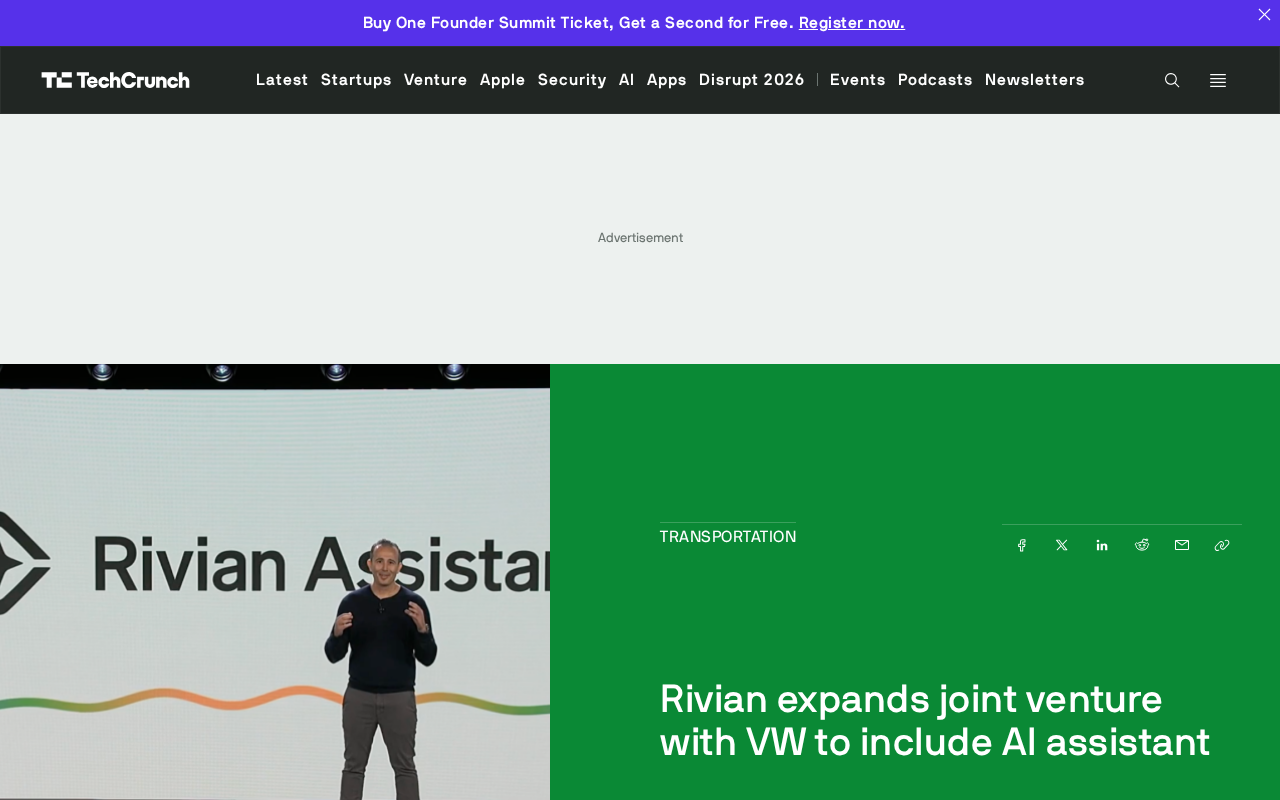
Rivian and Volkswagen's joint venture has taken a new step forward. According to an RSS source, the two companies will expand their collaboration into the AI assistant space. Rivian has not disclosed whether this will affect the joint venture's $5.8 billion valuation. The news itself carries limited information, but it points to a more noteworthy trend: technology cooperation between traditional automakers and EV startups is extending from platforms and supply chains into software and AI capabilities.
A New Direction for the Joint Venture: AI Assistants
The Rivian-Volkswagen joint venture originally focused on foundational technologies such as software and electrical architecture. Bringing AI assistants into the scope of cooperation means both parties hope to share capabilities at the in-vehicle intelligent interaction layer. For Volkswagen, this is a step toward shoring up its software weaknesses beyond its electrification transition; for Rivian, it represents a way to turn its software capabilities into an asset it can export externally, given its limited scale.
From an industry perspective, AI assistants are becoming one of the core selling points of smart cockpits. If automakers develop them in-house, the investment is large and the timeline long; if they rely entirely on external suppliers, they risk losing differentiation. The joint venture structure offers a path somewhere in between: sharing R&D costs while retaining room for customization.
The technology stack of in-vehicle AI assistants typically includes speech recognition and synthesis, natural language understanding, dialogue management, and multimodal interaction capabilities combined with large models. Unlike smartphone AI assistants, in-vehicle scenarios have higher requirements for real-time performance, offline availability, and functional safety, and require deep integration with vehicle control domains (such as air conditioning, navigation, and seat adjustment). Currently, there are three main approaches in the industry: full-stack in-house development by automakers, adopting third-party general-purpose large models with a customization layer, and forming joint ventures with tech companies for co-development. The joint venture model seeks a balance among data ownership, model fine-tuning, and brand differentiation, but it also faces risks such as long decision-making chains and mismatches with vehicle iteration cycles.
Whether the $5.8 Billion Valuation Will Change, Rivian Declines to Say
A key gap in the report is that Rivian did not clarify whether the joint venture's $5.8 billion valuation will expand due to the addition of AI assistants. This detail matters because it relates to the two parties' investment proportions and the distribution of influence in the partnership.
If the valuation remains unchanged, it suggests AI assistants are viewed as a capability extension within the original cooperation framework rather than a new incremental asset; if the valuation expands, it means both parties need to renegotiate capital contributions and equity rights. Rivian's choice not to disclose may be because negotiations are not yet complete, or because the market impact of this information needs to be handled carefully. In either case, investors should note that this news still lacks financial-level confirmation.
Joint venture valuation in such transactions is not just a financial figure but directly determines equity ratios and governance structure. If one party contributes technology assets (such as AI assistant-related intellectual property) as capital, a valuation adjustment is essentially a value confirmation of that asset; if both parties add cash contributions at the original ratio, an expanded valuation means synchronized capital increases. Rivian is currently in a phase of production ramp-up with tight cash flow, while Volkswagen has more ample funds, so whether and how the valuation is adjusted will directly affect the distribution of control and future profit sharing in the joint venture. Non-disclosure is not uncommon in M&A and joint venture transactions and is usually related to negotiation progress or regulatory communication.
Deeper Changes in Automaker Cooperation Models
Placing this news in a broader context, it reflects a shift in the logic of cooperation among automakers. In the past, automaker cooperation was mostly concentrated on platform sharing, capacity utilization, and parts procurement; now, software and AI are becoming new topics of cooperation.
This shift has practical reasons. R&D costs for smart cockpits and advanced driver assistance continue to rise, and it is difficult for a single automaker to maintain leadership across all technology stacks. Sharing costs and outcomes through joint ventures is a pragmatic approach. But it also raises new questions: Will the sharing of software capabilities weaken differentiation between brands? Can decision-making efficiency within the joint venture keep up with the iteration speed of in-vehicle AI? These questions currently have no clear answers.
Software-defined vehicles (SDV) are the key backdrop for understanding this shift in cooperation logic. Traditional automotive electronic architectures are mainly based on distributed ECUs, with software deeply bound to hardware, making upgrades difficult; SDV, through centralized electrical/electronic architectures and OTA updates, makes software a carrier that continuously creates value. This transformation requires automakers to have full-stack capabilities across operating systems, middleware, application layers, and the cloud, yet most traditional automakers have weak accumulation in these areas. As an EV startup, Rivian has certain first-mover advantages in electrical/electronic architecture and software iteration, while Volkswagen provides scale and market channels. The essence of their joint venture is to exchange capital and organizational arrangements for complementary software capabilities, which is also a typical motivation for the recent shift in automaker alliances from hardware sharing to software sharing.
Industry Impact and Points to Watch
For the industry, Rivian and Volkswagen bringing AI assistants into the joint venture's scope may serve as a signal: more automakers will choose to form alliances at the AI level in the future rather than going it alone. This is especially true for small and medium-sized automakers, for whom the cost-effectiveness of independent investment in AI R&D will increasingly decline.
There are three points worth watching next. First, whether the joint venture will announce the specific technology roadmap and implementation timeline for AI assistants. Second, whether the $5.8 billion valuation will be adjusted, and the equity arrangements behind any adjustment. Third, whether this AI assistant capability will be applied to brands beyond the two parties, thereby becoming an externally licensed business.
Before official disclosure of more details, interpretation of this news should remain cautious. The expansion of the scope of cooperation is a confirmed fact, but the financial impact and technical details remain unclear.
One-line Summary
Rivian and Volkswagen's joint venture expands its scope to AI assistants; whether the $5.8 billion valuation will be adjusted remains undisclosed.
Paragraph Summary
Rivian and Volkswagen's joint venture has taken a new step forward, with the two parties expanding their cooperation from foundational technologies such as software and electrical architecture into the AI assistant space. Rivian has not disclosed whether this will change the joint venture's $5.8 billion valuation, a gap in information that relates to the two parties' capital contribution ratios and distribution of influence. The article argues that this news points to a more noteworthy trend: technology cooperation between traditional automakers and EV startups is extending from platform sharing, capacity utilization, and parts procurement toward sharing software and AI capabilities. AI assistants are becoming a core selling point of smart cockpits, and the joint venture offers a path between full-stack in-house development and external procurement. Follow-up points to watch include the AI assistant's technology roadmap and implementation timeline, whether the valuation will be adjusted, and whether the capability will be licensed externally.
Related articles

Cursor AI in Practice: Weighing Efficiency Gains Against Costs in an AI IDE
An in-depth look at Cursor AI IDE's interface layout, four modes (Agent/Plan/Debug/Ask), model selection, and Git context integration, with hands-on demos weighing subscription costs against going direct to Claude.
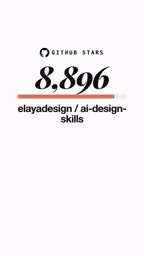
Free Landing Page Design Rules Library: A Practical Guide for Claude Code and Cursor
A free landing page design skill for Claude Code and Cursor: MIT licensed, nearly 9,000 stars, asks about offer/audience/action before planning 12 sections with hard font and spacing constraints.

Cursor Keeps Writing Wrong Code? The Problem May Be Context, Not Prompts
Cursor keeps writing wrong code? The problem may be context, not prompts. Learn how to supply relevant files, full error messages, and expected results, plus a plan-first, small-step, test-driven workflow to reduce AI coding errors—while remembering code review remains the developer's job.