RL3: A Zero-Code Reinforcement Learning Platform Where You Train Agents by Dragging and Dropping

RL3 lets you train RL agents in the browser with drag-and-drop tools and zero code.
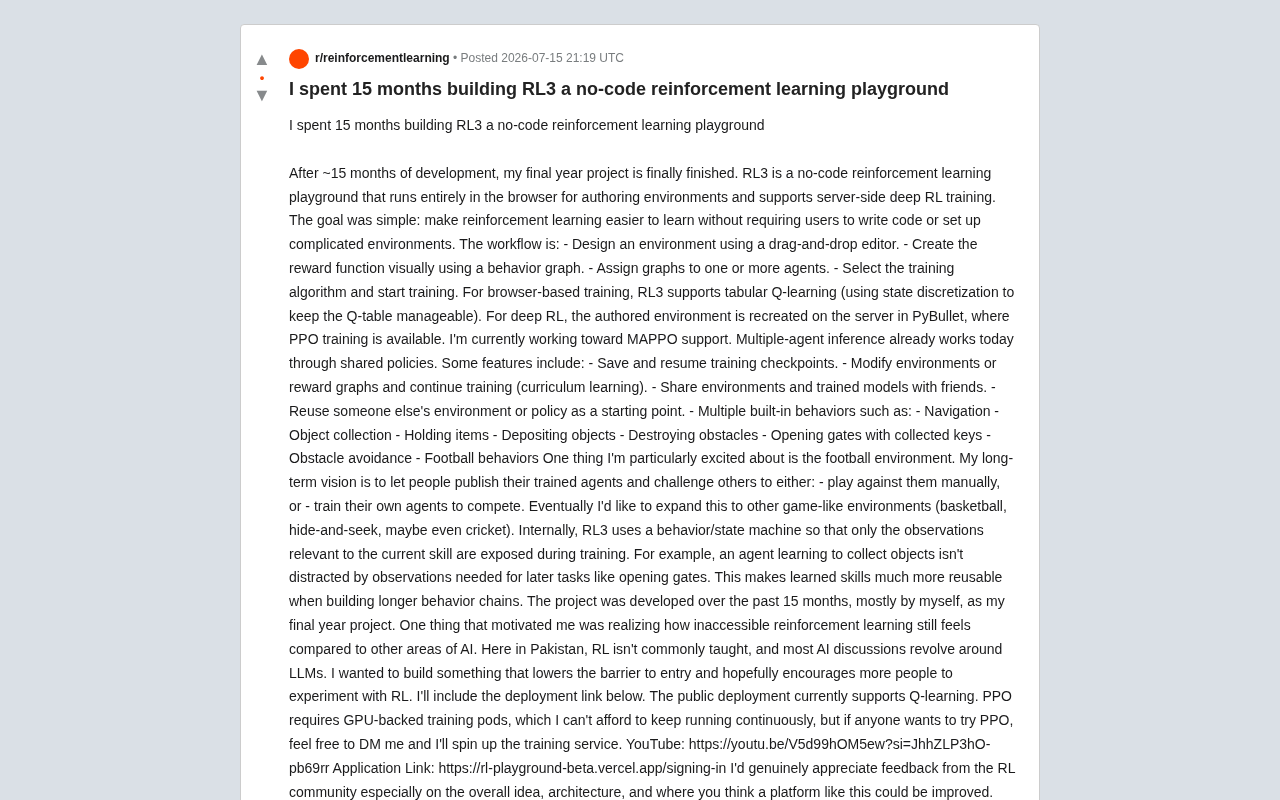
RL3 is a browser-based, zero-code reinforcement learning platform built by a solo developer over 15 months. It features a drag-and-drop environment editor, visual behavior graphs for reward design, and supports both tabular Q-learning in-browser and PPO server-side training. Designed to lower the barrier to RL for beginners and educators alike.
When Reinforcement Learning Meets Zero-Code
In an era where large language models (LLMs) dominate nearly every AI conversation, reinforcement learning (RL) remains one of the most daunting fields for newcomers — a discipline notorious for turning away beginners before they even get started.
Reinforcement learning is one of the three core paradigms of machine learning. Its foundational idea draws from behavioral psychology's concept of "operant conditioning" — an agent continuously interacts with its environment and adjusts its behavior based on reward or punishment signals. Unlike supervised learning, RL doesn't rely on labeled data. Instead, it learns optimal strategies through trial and error. This mechanism gave rise to landmark achievements like AlphaGo and OpenAI Five — but it also comes with enormous engineering complexity. Developers need to simultaneously master the mathematical modeling of Markov Decision Processes (MDPs), environment frameworks like OpenAI Gym, implementations of policy gradient or value function methods, and hyperparameter tuning. A gap in any of these areas can cause training to fail entirely. This is precisely why RL has a reputation for demanding "solid mathematical foundations, complex environment setups, and extensive code debugging."
Now, a developer from Pakistan has spent 15 months crafting his own answer to this problem: RL3, a fully zero-code reinforcement learning experimentation platform that runs entirely in the browser.
This project was his graduation thesis, built almost entirely by himself. His motivation came from a simple observation: compared to other areas of AI, reinforcement learning still feels uniquely inaccessible. In Pakistan, RL is rarely taught systematically, and most AI discussions revolve around LLMs. So he decided to build a tool that lowers the barrier to entry and encourages more people to experiment with reinforcement learning.
RL3's Core Workflow
A Complete Loop from Drag-and-Drop to Training
RL3's biggest highlight is how it compresses the traditionally tedious RL development process into an intuitive set of visual operations. The entire workflow can be summarized in four steps:
- Design the environment: Build the agent's environment using a drag-and-drop editor;
- Define the reward function: Design reward mechanisms visually using a "behavior graph" — no coding required;
- Assign a policy graph: Attach the behavior graph to one or more agents;
- Choose an algorithm and train: Select a training algorithm and launch.
The real value of this workflow lies in making RL's two most intimidating steps — environment setup and reward function design — fully visual. Reward function design is especially critical, as it largely determines whether an agent will learn the intended behavior. In traditional development, this requires constant code iteration. RL3's behavior graph approach turns this into something as intuitive as snapping building blocks together.
Dual-Track Design: Browser Training and Server-Side Deep Training
On the algorithm side, RL3 adopts a dual-track approach. For lightweight in-browser training, the platform supports tabular Q-learning.
Q-learning is one of the most classic value-function methods in reinforcement learning, introduced by Watkins in 1989. Its core mechanism involves maintaining a "Q-table" that records the expected cumulative reward for taking each action in each state, updated iteratively via the Bellman Equation. RL3 controls the Q-table's size through state discretization — bucketing continuous state spaces into intervals and mapping them to finite discrete sets, compressing what could be an infinitely large state space into an enumerable finite collection that runs smoothly in the browser. This is the key technical choice that makes RL3's "zero-compute onboarding" possible.
For more complex deep reinforcement learning scenarios, the platform reconstructs the user's browser-designed environment on the server side using the PyBullet physics engine. PyBullet is an open-source physics simulation engine capable of simulating collision detection, rigid body dynamics, and other real-world physical properties — providing high-quality environment interaction samples for training. The platform then offers PPO (Proximal Policy Optimization) for training.
PPO was introduced by OpenAI in 2017 and is now one of the most widely used deep RL algorithms in both industry and academia. It constrains the magnitude of each policy update through a "clipped objective function," ensuring training stability while significantly simplifying implementation. However, it requires a neural network as a policy function approximator, making GPU acceleration essentially necessary. This "design in the frontend, train in the backend" architecture balances usability with computational demands.
The developer is also working on adding support for MAPPO (Multi-Agent PPO). MAPPO extends PPO to multi-agent settings, typically using the Centralized Training with Decentralized Execution (CTDE) paradigm: during training, all agents share global information, while during execution, each agent makes decisions based only on its own local observations. This design has proven highly effective in environments like StarCraft and multi-robot cooperation tasks. Support for multi-agent inference based on shared policies is already available.
Engineering Details Worth Noting
Skill Isolation via State Machines
One particularly clever internal design choice in RL3 is its use of behavior/state machines to ensure that when training a specific skill, only the observations relevant to that skill are exposed.
For example, when an agent is learning to "collect objects," it won't be distracted by observations needed for a later task like "open a door." This skill isolation brings an important benefit: learned skills are more reusable.
This design closely aligns with Curriculum Learning, a frontier research direction in RL. The core idea of curriculum learning mirrors how humans are educated — starting simple and gradually increasing difficulty — which accelerates convergence and improves generalization. In the RL domain, this translates naturally into skill-layered training: by masking irrelevant observations, each skill module stays "pure," making it more transferable when later composed into longer behavior chains. This approach also resonates deeply with the Options Framework in Hierarchical Reinforcement Learning.
Community-Oriented Collaboration Features
RL3 is not content to be just an isolated training tool. It includes a rich set of collaboration and sharing features:
- Save and restore training checkpoints;
- Continue training after modifying environments or reward graphs, enabling curriculum learning;
- Share environments and trained models with friends;
- Reuse others' environments or policies as starting points.
The platform also comes preloaded with a variety of out-of-the-box behaviors, including navigation, object collection, item holding, object placement, obstacle destruction, unlocking doors with keys, obstacle avoidance, and even soccer behavior. These built-in behaviors significantly reduce the cost of starting from scratch.
The Soccer Environment and the "Agent vs. Agent" Vision
Among all the features, the developer is most excited about the soccer environment. His long-term vision is imaginative: let users publish their trained agents and challenge others — you can manually play against someone else's AI, or train your own agent to compete against it.
This "agent vs. agent" concept essentially turns reinforcement learning into a participatory, competitive community game. It echoes the spirit of the self-play training paradigm explored in DeepMind's AlphaStar and OpenAI Five — competitive pressure itself becomes the strongest reward signal driving agents to keep evolving. The developer also plans to extend this model to more game-like environments, such as basketball, hide-and-seek, or even cricket. If realized, RL3 could become an open platform akin to a "reinforcement learning arena," using fun and competition to draw more people into learning and experimenting with RL.
Real-World Constraints and Reflections
RL3 also faces the unavoidable constraints of an independent developer — compute costs. The current public deployment only supports Q-learning, because PPO training requires GPU-backed training pods that the developer cannot afford to keep running continuously. Users who want to try PPO must contact the developer directly to temporarily spin up the training service.
This detail points to a broader challenge: deep reinforcement learning requires neural networks to approximate policy or value functions, demanding massive matrix operations during training that make GPU acceleration nearly indispensable — which is one of the core reasons RL remains hard to democratize. RL3's browser-based Q-learning approach offers a "zero-cost onramp," a pragmatic and clever compromise: it trades the expressive power of deep learning for true zero-barrier accessibility.
Closing Thoughts: Lowering the Barrier Has Value in Itself
RL3 may not yet be mature — as a graduation project built by one person over 15 months, it reads more like a heartfelt prototype than a polished product. But the direction it points toward — using visualization and zero-code tooling to lower the barrier to reinforcement learning — is genuinely valuable.
At a time when the entire AI community's attention has been captured by LLMs, someone still chose to spend more than a year wrestling with the "hard problem" of reinforcement learning, and to try making it accessible to more people. That effort deserves recognition. For educational institutions, RL beginners, and researchers looking to quickly validate ideas, the emergence of tools like this is a welcome development. The developer also sincerely invites community feedback — especially thoughts on the overall concept, architectural design, and directions for improvement.
Key Takeaways
Related articles
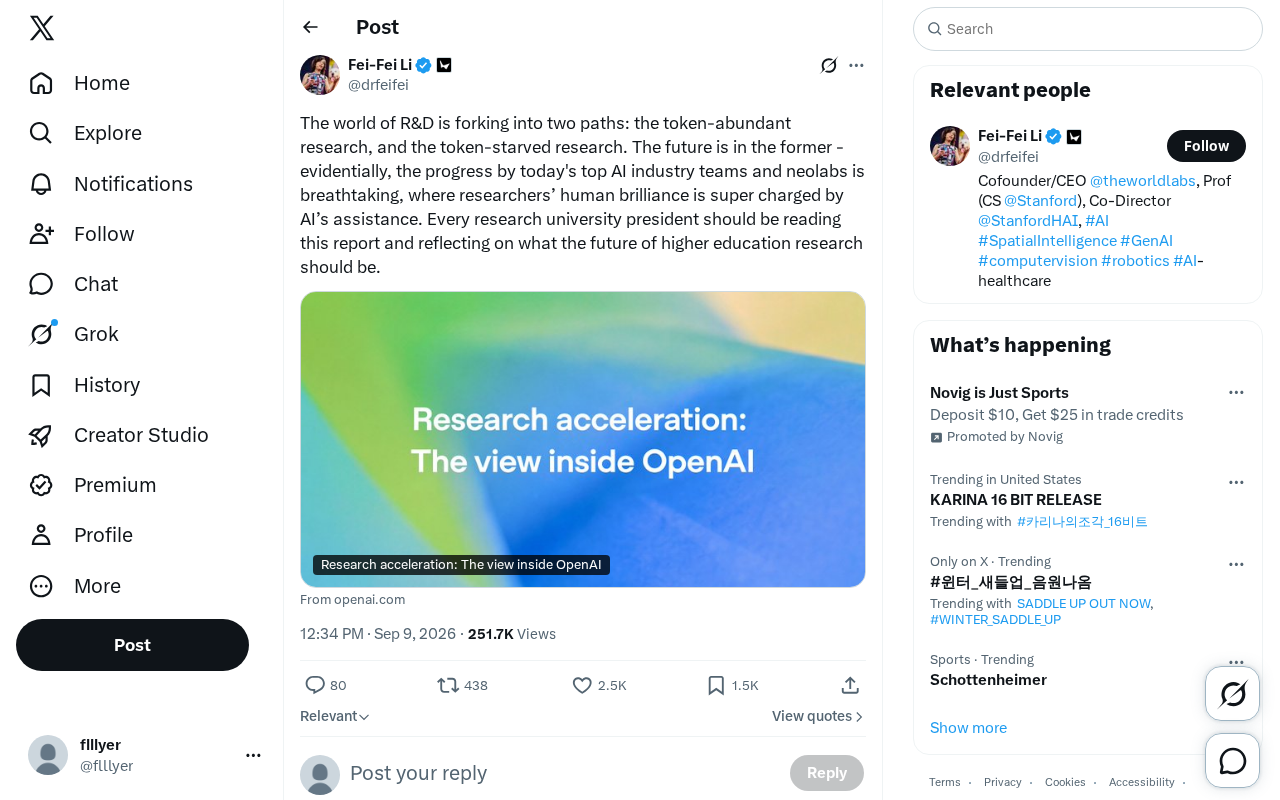
R&D Is Forking: The Coming Battle Between Token-Abundant and Token-Starved Research
R&D is splitting into token-abundant and token-starved research. Top AI labs are pulling ahead—here's what it means for universities and the future of science.
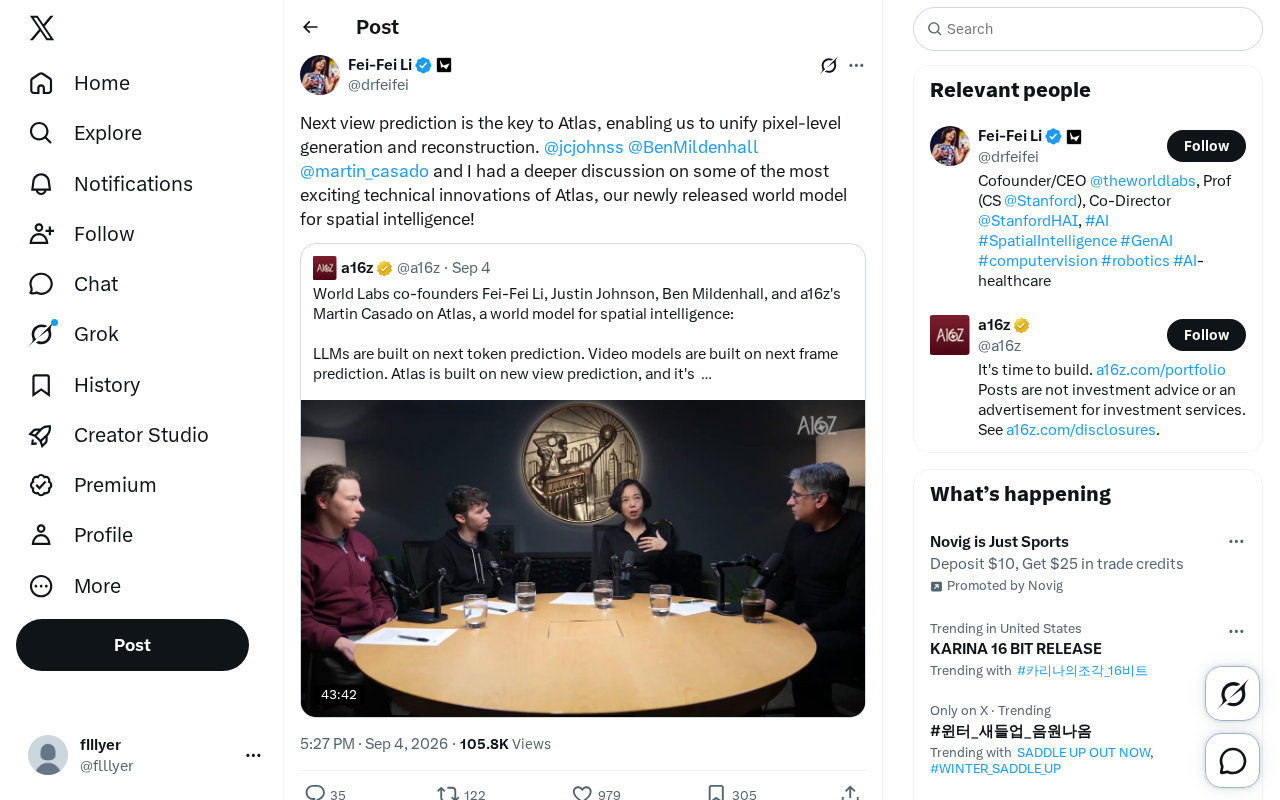
Atlas World Model Explained: How Next View Prediction Unifies Generation and Reconstruction
The Atlas world model uses Next View Prediction as its core to unify pixel-level generation and reconstruction, offering a new approach to spatial intelligence.
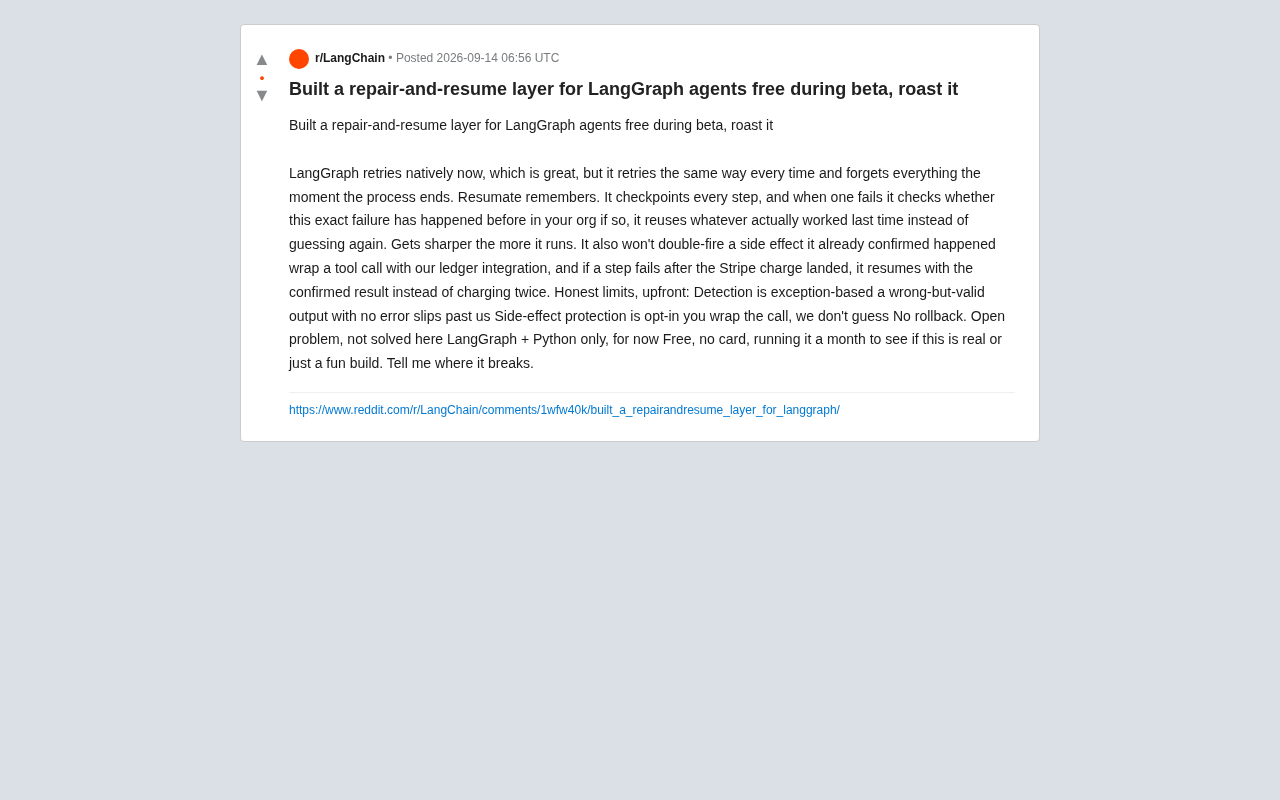
Resumate: A Deep Dive into the Repair-and-Resume Layer for LangGraph Agents
Resumate adds memory-aware checkpointing and idempotent side-effect protection to LangGraph agents, preventing issues like duplicate Stripe charges on retry.