Sam Altman and Jony Ive Merge IO into OpenAI: A New Era of AI-Native Hardware

OpenAI merges with Jony Ive's IO company to build AI-native hardware devices.
OpenAI CEO Sam Altman and former Apple Chief Design Officer Jony Ive announced the merger of IO into OpenAI, aiming to fundamentally redefine human-AI interaction. They believe current hardware forms can no longer match AI capabilities and that AI-native devices are needed to eliminate cumbersome interaction chains and achieve AI democratization. Altman called IO's first prototype "the coolest tech product ever," and the merger marks the AI industry's entry into a new era of hardware-defined experiences.
A Merger That Could Change the Future of Computing
OpenAI CEO Sam Altman and former Apple Chief Design Officer Jony Ive have officially announced that Ive's company IO will merge with OpenAI. This isn't a simple business acquisition — it's a bold attempt by two of the most influential figures in tech to fundamentally redefine how humans interact with AI.
Two years ago, Altman and Ive began discussing the future form of AI and new computing devices. A year ago, Ive co-founded IO with Scott Cannon, Evans Hankey, and Tang Tan, with the mission of building a series of hardware products that enable people to harness AI to create wonderful things. Now, the company is officially joining OpenAI.

Why Current Devices Can't Match AI's Capabilities
In the video, Altman described a compelling scenario: if he wanted to ask ChatGPT about a topic they'd previously discussed, he'd need to pull out his laptop, open it, launch a browser, start typing, explain the context, hit enter, and wait for a response — and that's already the limit of what a laptop can do.
"The products that we use to connect to and use these incredible technologies are decades old," Altman said. "So at least we should think about whether there's something better beyond these legacy products."
This point hits the mark. We have "magical intelligence in the cloud," but the hardware forms carrying it — keyboards, screens, mice — are fundamentally design paradigms from decades ago. AI's capabilities have far surpassed what current interaction methods can unlock.
Notably, the "new hardware" being discussed here isn't simply adding AI features to existing devices. It refers to AI-native hardware — an entirely new device category designed from the ground up for AI inference and interaction. These devices typically integrate dedicated Neural Processing Units (NPUs), edge computing capabilities, and multimodal sensors, enabling low-latency local AI inference while collaborating with cloud-based large models. Compared to running AI applications on traditional PCs or phones, AI-native hardware can fundamentally eliminate the cumbersome interaction chain of "open app → type text → wait for response," allowing AI perception to truly integrate into users' physical environments and daily behaviors.
Altman's Verdict: The Coolest Tech Product Ever
Altman revealed that he recently received the first prototype of IO's AI device and has been using it in his daily life. He gave it an extraordinarily high praise: "I think this is the coolest tech product ever made in the world."
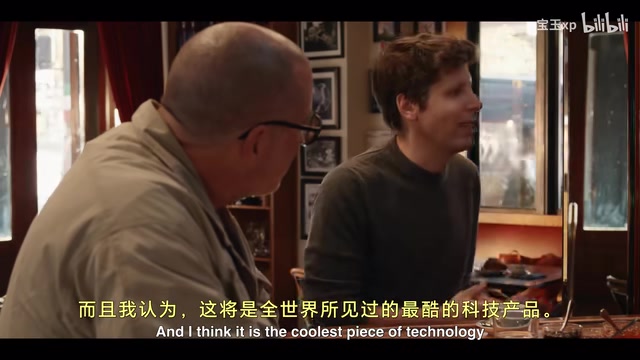
To understand the weight of this statement, you need to know Jony Ive's design track record. Ive spent nearly 30 years at Apple, leading the design of era-defining products like the iMac G3, iPod, iPhone, iPad, and MacBook Pro. His design philosophy, deeply influenced by the Bauhaus tradition and industrial design master Dieter Rams, consistently emphasizes form following function, material honesty, and minimalist aesthetics. After leaving Apple in 2019, he founded the independent design firm LoveFrom, and IO was incubated from that foundation as a hardware startup. Ive himself also stated, "This is the best work our team has ever done." Coming from the man who designed the iPhone, the significance is clear to everyone.
While the video didn't reveal the specific product form factor, several key details can be inferred from the conversation:
- It's a hardware device, not a pure software product
- Its interaction method is fundamentally different from traditional computers and phones
- The goal is to make AI usage extremely natural and seamless
- The team includes hardware engineers, physicists, researchers, and manufacturing experts
The Deep Resonance Between Altman and Ive
The most moving part of the video is the genuine chemistry between Altman and Ive. Ive's son Charlie was the first in the family to use ChatGPT, and he told his father, "You have to meet Sam." The two quickly discovered a deep resonance between them.

Altman described Ive as "the deepest thinker I've ever met," while Ive said Altman "carries responsibilities beyond my comprehension" — but what he sees is that when Altman works late at night, his worries aren't about himself or the company, but about users, society, and culture.
"Despite having traveled very different journeys, our motivations and values are completely aligned," Ive said. This alignment of values is embodied in one core belief: technology should be democratized.
AI Democratization: Making AI Accessible to Everyone
Altman clearly expressed his vision: "I want this to be democratized. I want everyone to have it. I don't want it to only be available to that small subset of people who can figure out how to use bad tools. I want anyone to be able to say 'hey, I have this idea, make it happen.'"

This stands in stark contrast to the current state of AI products. Using tools like ChatGPT today still requires a certain level of Prompt Engineering skill — the ability to carefully design input text to guide large language models toward desired outputs. The very existence of this skill demonstrates the immaturity of current AI interaction interfaces: users need to learn how to "speak" so AI can accurately understand their intent. True democratization means AI should be able to understand natural, ambiguous, and even incomplete human expressions, which requires hardware-level multimodal perception — speech recognition, visual understanding, contextual awareness — to compensate for the fundamental limitations of text-only interaction. What IO aims to solve is precisely this "last mile" problem: through entirely new hardware form factors, making AI readily accessible and lowering the technology barrier from "learning to use tools" to simply "expressing your ideas."
San Francisco: Fertile Ground for Innovation
The video devoted considerable time to discussing San Francisco as a city. Ive moved from England to America, attracted by Silicon Valley's optimism. Altman considers San Francisco a "mythological place" in world history, and believes it's no accident that all this innovation happens in the Bay Area rather than anywhere else on Earth.
"You can't pick and choose freedom," Altman said. "Either you let creative freedom express itself in all of its weird ways, or you don't have freedom." This respect for creative freedom is the foundational logic behind IO's product philosophy.
IO's Impact on the AI Hardware Industry and Future Outlook
The significance of this merger goes far beyond a business transaction. It marks the AI industry's official entry into a new phase of "hardware-defined experiences." Previous attempts like the Humane AI Pin and Rabbit R1 weren't particularly successful, but their experiences provided valuable industry lessons.
The Humane AI Pin, priced at $699, featured laser projection and voice interaction but was met with market indifference due to high response latency, poor battery life, and unstable functionality. The Rabbit R1, based on a so-called "Large Action Model" (LAM), similarly suffered a reputation collapse due to massive gaps between actual experience and marketing claims. The failure of these products revealed the core challenge of AI hardware: AI capability, hardware engineering, and user experience design must all simultaneously reach extremely high standards — any weakness in one area will cause the entire experience to collapse. They validated that market demand for AI-native devices genuinely exists, but also proved that conceptual innovation alone is far from sufficient.
What sets IO apart are three advantages no other company can match:
- The strongest AI capabilities: Direct access to OpenAI's most advanced models
- Top-tier design DNA: Jony Ive and his team's 30 years of product design experience
- Ample resources: OpenAI's financial and technical support
From a broader strategic perspective, this acquisition is also an important signal of OpenAI moving toward Apple's "hardware-software integration" model. Previously, OpenAI embedded GPT-series models into software ecosystems like Office and Windows through its deep partnership with Microsoft, but software-level integration has always been constrained by the interaction paradigms of underlying hardware. By controlling the complete technology stack from model to interface, OpenAI can provide the most optimized runtime environment for its own models while building a moat that competitors find difficult to replicate — logic identical to Apple's deep optimization of the macOS experience through its custom M-series chips.
Altman cited user feedback saying the latest model has reached "genius level" in every domain, with scientists seeing 2-3x productivity improvements and finding cancer treatments 2-3x faster. When such capabilities are packaged in a device designed by Jony Ive that's truly built for AI, the potential is exciting.
As Ive said: "I increasingly feel that everything I've learned over the past 30 years has been leading me to this place, this moment."
Related articles
 Tech Frontiers
A Rare Quiet Day in AI: Recursive Self-Improvement Stirs Beneath the Surface
A rare quiet day in AI sees multiple sources go silent simultaneously. Behind the calm, Recursive Self-Improvement (RSI) research continues. What this means for the industry.
 Tech Frontiers
Reve 2 vs. Ideogram 4: A Deep Dive into Layout Control in AI Image Generation
A deep comparison of Reve 2 and Ideogram 4's layout control capabilities, covering technical approaches, real-world use cases, and industry trends for designers and creators.
 Tech Frontiers
In the Weights: Check Your Influence Score in the AI World
In the Weights is an AI influence search engine that quantifies your presence in the AI world with a score. Explore how it evaluates practitioners and what it means for digital identity.