Same Face, Side by Side: Why AI Still Can't Replace Human Acting

Same-face comparisons reveal AI can copy faces but can't replicate the soul of human acting.
A viral comparison video uses the same face for both AI-generated and human performances, revealing fundamental gaps in AI acting. While AI excels at static realism, it struggles with emotional continuity, micro-expression nuance, and comedic timing. The uncanny valley effect persists in dynamic scenes, and current AI models generate expressions through pattern matching rather than emotional understanding. The real future lies in AI-human collaboration, not replacement.
A Straightforward Comparison Experiment
Recently, a comparison video circulating on Bilibili sparked a heated debate about whether AI can replace human actors. The video's core design is remarkably clever: using the same face, it presents AI-generated performance clips alongside a real actor's actual performance, allowing viewers to directly perceive the differences in acting under virtually identical visual conditions.
This "controlled variable" style comparison is valuable precisely because it strips away distracting factors like appearance, styling, and lighting, focusing the evaluation squarely on the core of performance—emotional delivery and character believability. When the face is the same, viewers can more clearly discern what truly moves them: the face itself, or the living, breathing craft behind it.
The "Uncanny Valley" Effect in AI Performance Persists
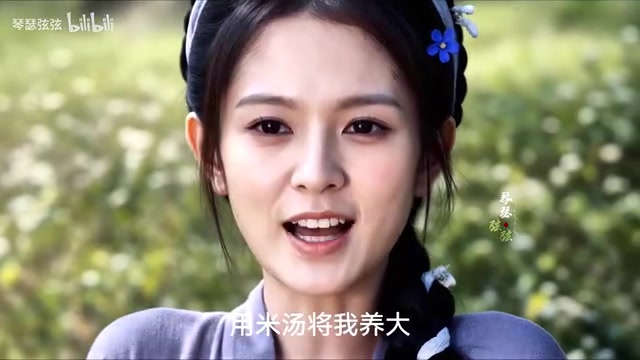
Based on the video's results, AI-generated faces are already remarkably realistic in static shots or simple expressions—nearly indistinguishable from real ones. But the moment the scene demands continuous emotional transitions—shifting from suspicion to anger, from tentative probing to a heartfelt confession—AI's shortcomings become glaringly apparent.
In a scene with dialogue like "She's very likely been using you all along," the character needs to convey complex layers of suspicion, concern, and emotional tension. The nuanced gradations of micro-expressions, the fluidity of the gaze, the subtle twitching of facial muscles—these are precisely the elements that current AI generation technology struggles most to reproduce accurately. Viewers instinctively sense that "something's off"—this is the classic uncanny valley effect.
The Uncanny Valley was proposed by Japanese roboticist Masahiro Mori in 1970. The theory reveals a counterintuitive pattern: as the realism of a human-like figure gradually increases, human affinity does not grow linearly. Instead, it plunges sharply in the zone where the likeness is close to—but hasn't quite achieved—full realism, triggering intense discomfort. There's a deep neuroscientific basis for this—the fusiform face area (FFA) in the human brain is extraordinarily sensitive to facial information and can detect micro-expression inconsistencies within milliseconds. AI-generated faces sit right at the bottom of this "valley": static images are convincing enough, but during dynamic performance, even slight deviations in eye movement frequency, pupil micro-adjustments, or the coordinated timing among the face's 43 muscles trigger a subconscious alarm in viewers. This is why many viewers can't pinpoint exactly what's wrong yet clearly feel an instinctive rejection.
Technical Bottlenecks in AI Video Generation
Understanding why AI performance feels like it's "missing something" requires a look at the underlying logic of current AI video generation technology. There are two mainstream technical approaches: one is DeepFake-style solutions based on GANs (Generative Adversarial Networks), which use encoder-decoder architectures to learn facial feature mapping; the other is the diffusion model approach that has gained momentum in recent years, such as Stable Diffusion and Sora, which generate high-fidelity video frames through progressive denoising. These models are trained on massive facial motion datasets (such as DFDC, FaceForensics++, etc.), learning pixel-level facial movement patterns. But fundamentally, they're searching for the "most probable next frame" within statistical distributions rather than understanding the causal logic of emotion—which explains why individual frame quality can be very high, but emotional transitions between consecutive frames tend to exhibit unnatural discontinuities.
Performance Is "Subtraction," Not "Texture Mapping"
Real actors' performances often rely on precisely controlling the restraint and release of emotion. A perfectly timed pause, an unconscious breath—these are the sources of character believability. AI, by contrast, is mostly "fitting" a preset emotional template without truly understanding the context, resulting in performances that feel formulaic and soulless.
This philosophy is deeply rooted in modern acting theory. The Stanislavski system emphasizes that actors enter a character's inner world through "emotional memory" and "what if" hypotheticals, producing genuine emotional responses rather than deliberately performing external expression symbols. Method Acting took this even further, requiring actors to continuously inhabit the character's psychological state throughout filming. This inside-out logic of performance stands in fundamental opposition to AI's outside-in "texture mapping" logic: actors feel the emotion first and then the expression follows; AI directly generates the pixel arrangement of an expression, skipping the intermediate process of "understanding" and "feeling." This is precisely why moments of "restraint" in human performance—a silence where words almost escape, tears deliberately held back—are often more powerful than any exaggerated expression, and this is exactly what AI cannot learn through pattern matching.
Emotional Continuity Is the Key Dividing Line Between AI and Human Acting
The video also includes numerous scenes with dramatic tension, such as a character announcing her title: "Nine Heavens Mystic Lady, Merciful World-Savior, Blessing-Bestower, Sin-Pardoner, Great Compassionate One." This kind of dialogue—slightly playful yet requiring the actor to maintain the character's commanding presence—demands highly coordinated alignment of tone, rhythm, and facial expression.
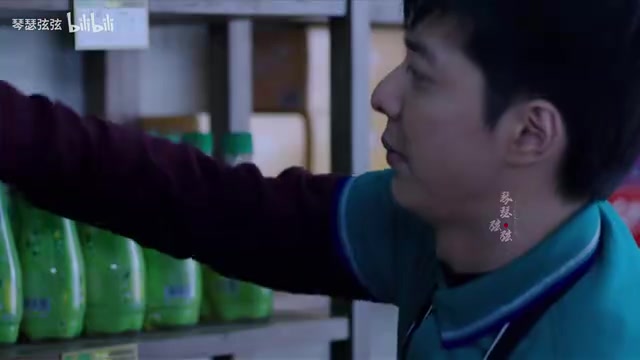
Human actors can sustain emotional continuity and logical consistency throughout an entire performance, making the audience believe this is a single character with coherent internal motivations. AI, in long takes and scenes with multiple emotional shifts, tends to produce expression breakdowns and emotional discontinuities that shatter the character's overall unity.
From the perspective of micro-expression science, this gap has a precise quantitative basis. Psychologist Paul Ekman's pioneering micro-expression research in the 1960s identified universal expression patterns corresponding to 7 basic emotions, but the true art of performance is far more complex than these 7 templates. The Facial Action Coding System (FACS) used by professional actors encompasses over 46 independent Action Units (AUs), and the possible combinations are virtually infinite. When a skilled actor performs "suspicion," they might simultaneously activate AU1 (inner brow raise), AU4 (brow lowerer), and AU7 (lid tightener), while completing a subtle transition from AU12 (lip corner puller) to AU15 (lip corner depressor) within 0.2 seconds. This precision muscle choreography is the product of years of training combined with instinctive reaction—something current AI models cannot yet understand at a semantic level or precisely orchestrate in terms of temporal coordination among these action units.
Comedy and Romantic Ambiguity Put Acting Nuance to the Ultimate Test
The "confession" scene in the latter half of the video—"If you confess to me right now, I'll seriously consider it"—is a classic example of romantic comedy ambiguity. The nuance required for such scenes is extremely difficult to calibrate: a touch too much feels cloying, a touch too little feels bland. The actor needs to create that subtle chemistry through averted glances, a slight upturn of the lips, and a tone of voice that says "I want to say it but I won't."
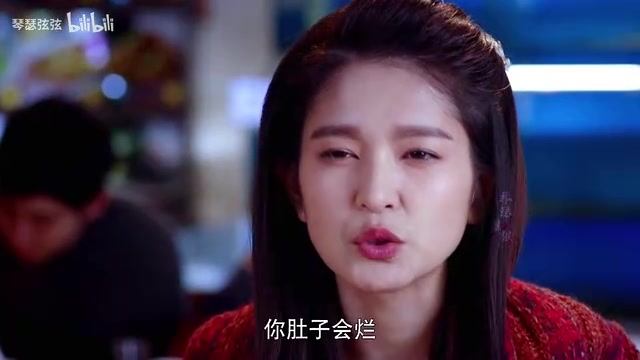
This is precisely the domain most beyond AI's reach. The magic of such performances lies not in meeting a "standard" but in the actor's unique personal qualities and spontaneous reactions—aspects that data training can neither quantify nor replicate.
The Real Relationship Between AI and Human Actors: Collaborative Tools, Not Replacements
The viral popularity of this comparison video reflects a rational public understanding of AI generation technology that is beginning to take shape. AI has already demonstrated powerful productivity value in face replacement, digital restoration, VFX assistance, and other areas, significantly reducing production costs and expanding creative possibilities.
In fact, AI is already playing a substantive role at multiple stages of the current film and television production pipeline. Disney's ILM used AI-assisted facial capture technology for the digitally de-aged young Luke Skywalker in The Mandalorian; Marvel has employed AI-driven facial aging and de-aging technology across multiple productions; and the advertising industries in South Korea and Japan are already extensively using AI-generated virtual spokespersons to reduce licensing costs. Notably, however, virtually all of these successful cases involve the combination of AI with human performance—real actors first complete the motion capture and emotional performance, and then AI handles the face replacement or enhancement. Purely AI-generated standalone performances have no successful precedent in commercial film and television productions, which confirms from an industry practice perspective the technological boundaries demonstrated in the comparison video.
But based on the current state of technology, AI still cannot replace flesh-and-blood human actors in the core artistic element of "performance." Technology can replicate a face, but it can hardly replicate a soul. The aspects of performing arts that spring from lived experience, accumulated emotion, and spontaneous creativity remain uniquely human value.
Looking Ahead: Collaboration Over Competition Between AI and Actors
The more realistic picture is likely one of collaboration: AI handles the repetitive, high-cost, or dangerous production tasks, while human actors continue to focus on the irreplaceable creative work of emotional expression and character building. Rather than worrying about "AI replacing actors," it's more productive to consider how technology can better serve the art of performance itself.
This simple, intuitive comparison provides a vivid footnote to the entire discussion: when we place two identical faces side by side, the answer speaks for itself.
Related articles

How Short-Form Video Creators Are Using AI Video Generation Tools
Exploring the real-world application of AI video generation tools in short-form video creation. From Seedance to Runway, how do creators integrate AI assets? Revealing the gap between demos and production use.

Home Data Center Setup Guide: A Complete Self-Hosted Private Cloud Implementation
Deep dive into building a home data center: hardware selection, software architecture, cost analysis, and operational challenges. From data sovereignty to technical implementation, build your private cloud infrastructure and control your digital assets.

Engrim: A Local Memory Engine Solution for AI CLI Tools
Engrim is an open-source, local-first SQLite memory engine built for AI CLI tools like Claude Code and Aider, solving context loss while keeping data private.