Sandwich Simulator: The Technical Charm and Creativity of stulle.app

The Sandwich Simulator got 266 points on HN, showcasing the tech and community charm of creative tools.
This article introduces a web application called the "Sandwich Simulator," hosted at stulle.app, which gained 266 points and 89 comments on Hacker News. It analyzes the project from three angles: technical implementation, product creativity, and community feedback. The project uses everyday sandwich-making as an entry point, combining front-end rendering technology for an intuitive and fun interactive experience. The tech community discussed Canvas/SVG/WebGL choices, rendering performance, product positioning, and expansion possibilities. It concludes with three insights for creative tool development: choosing a small entry point for big resonance, letting technology hide behind experience, and actively using community feedback to drive iteration.
In an era where creative tools emerge endlessly, a web application called the "Sandwich Simulator" has sparked heated discussion in the tech community. This seemingly simple project garnered 266 upvotes and 89 comments on HN—what exactly makes a tool for making virtual sandwiches so compelling? This article explores this interesting project from three angles: technical implementation, product creativity, and community feedback.
Project Overview: A Sandwich Lab in the Browser
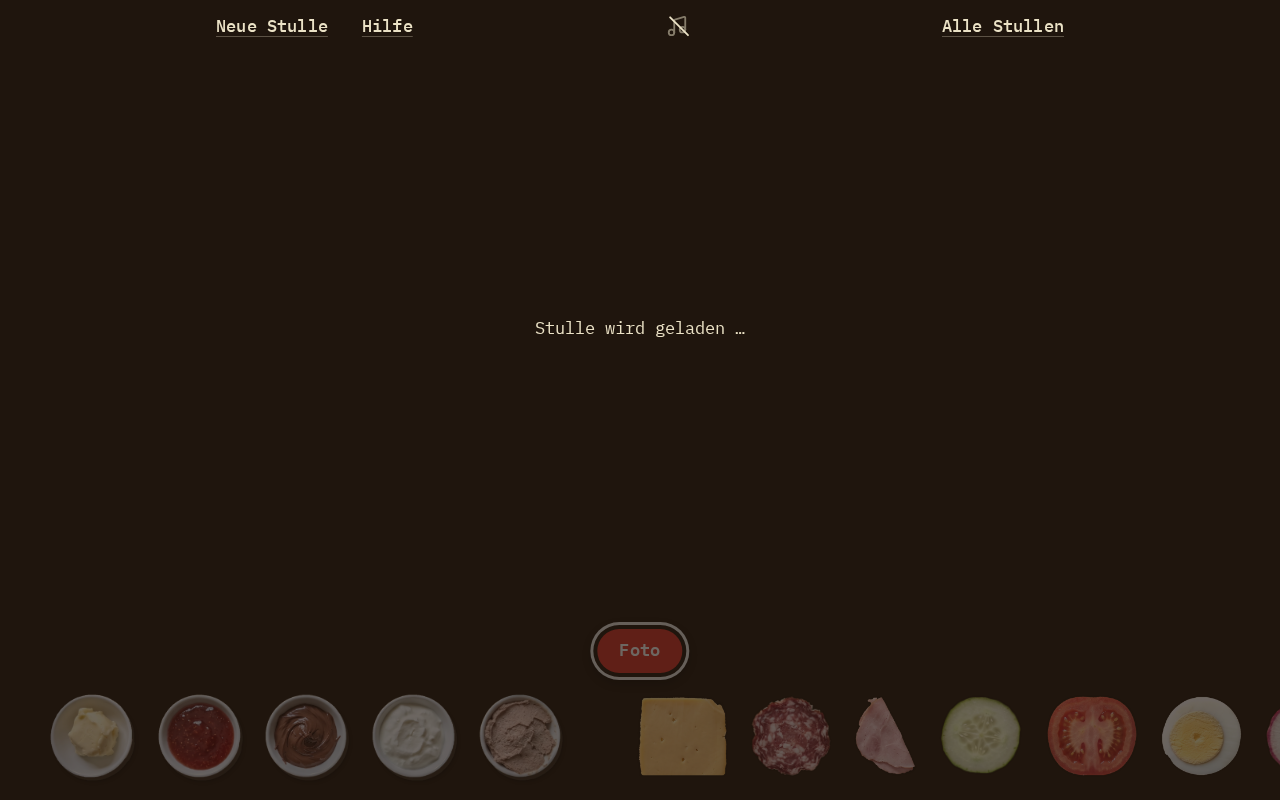
The Sandwich Simulator is hosted under the stulle.app domain, and judging from its name and functionality, it allows users to interactively combine ingredients like bread, vegetables, and meat in the browser to generate visualized sandwich images in real time. Projects like this typically combine front-end rendering, physics simulation, or parametric modeling to deliver an engaging and intuitive experience within a lightweight web environment.
Although the original material does not provide detailed feature descriptions, the enthusiastic discussion in the HN community suggests that the project strikes a good balance between usability and fun. The tech community tends to pay close attention to these "small but beautiful" projects because they showcase the possibilities of modern web technology in a low-barrier way.
Canvas, SVG, and WebGL are three common browser graphics technologies, and the choice among them directly affects interaction experience and performance. Canvas provides a 2D drawing API, suitable for pixel-level operations and rendering large numbers of primitives, but lacks event support for DOM elements; SVG describes vector graphics based on XML, naturally supporting CSS styling and event binding, suitable for scenarios with clear layers and fewer elements, but performance degrades when there are too many nodes; WebGL achieves 3D rendering through GPU acceleration, suitable for applications requiring lighting, textures, and complex geometry. For projects like the Sandwich Simulator that require dragging ingredients, dynamic stacking, and real-time preview, Canvas is a common choice if pursuing 2D simplicity; if a 3D sense of depth is needed, WebGL with libraries like Three.js is more appropriate. Technology selection requires balancing development complexity, performance overhead, and visual effects.
Why Can a Sandwich Simulator Attract the Tech Community?
Ultimate vertical fun. Making a sandwich is an everyday life scenario, and digitally simulating it not only lowers the understanding barrier but also carries inherent humor. Compared to serious productivity tools, such projects are more likely to resonate and inspire sharing.
A showcase window for front-end technology. To achieve smooth ingredient dragging, layer stacking, and real-time preview, developers need to employ technologies like Canvas, SVG, or WebGL. Community members are often eager to discuss implementation details, such as how to handle the stacking order of different ingredients and how to optimize rendering performance.
Open source and reproducibility. Although it is currently unclear whether the project is open source, the high engagement on HN suggests strong interest among developers in its tech stack and implementation approach. Similar projects often become excellent case studies for learning front-end interaction design.
Hacker News (HN) is a highly influential news aggregation platform in the tech community, incubated by Y Combinator, with users primarily consisting of developers, entrepreneurs, and tech enthusiasts. Its content is centered on link submissions and vote-based ranking, with high-quality comments and in-depth discussions. 266 points is above average for HN, typically meaning the project has struck a chord with the community in terms of fun, technical novelty, or practicality. HN discussions often go beyond the project itself to cover tech stacks, business models, and engineering practices, so high engagement is often seen as an initial signal of recognition within the tech circle. Understanding HN's community culture and scoring mechanism helps grasp why a seemingly simple sandwich tool can generate such a scale of discussion.
Community Response: The Discussion Focus Behind 266 Points
The 89 comments on HN provide rich perspectives for observation. Although the comment contents cannot be accessed one by one, based on discussion patterns of similar projects, it can be inferred that the topics centered on several aspects:
- Technical implementation details: How to render realistic ingredient textures? Was a 3D engine used? How to achieve responsive layout?
- Product positioning and business model: How can such fun tools sustain operations? Are there ads or value-added services?
- Expansion possibilities: Users suggested adding more ingredients, saving recipes, community sharing, and other features.
- Performance and accessibility: How does it perform on mobile? Does it support keyboard operation?
These discussions reflect the typical concerns of the tech community about creative projects: appreciating the fun while also valuing engineering quality and long-term value.
Responsive layout refers to a webpage's ability to automatically adjust interface structure and element sizes based on device screen size, orientation, and resolution to provide consistent usability. For interactive applications like the Sandwich Simulator, responsive design faces additional challenges: drag operations have different event models on touchscreen and mouse devices, ingredient layers may overlap or overflow on narrow screens, and real-time preview needs to balance mobile performance. Common implementation approaches include using CSS media queries to adjust layout, unifying input handling through Pointer Events, and leveraging viewport units or flexbox for adaptive scaling. The community's attention to mobile performance reflects the universal requirement for modern web applications to cover multi-device scenarios.
Development Insights from the Sandwich Simulator for Creative Tools
For developers and product managers, the success of stulle.app offers several insights:
- Small entry point, big resonance: Choosing a specific and life-oriented scenario makes it easier to quickly attract users than grand general-purpose tools.
- Technology serves experience: Cutting-edge technology should be invisible; what users ultimately perceive is smooth and fun interaction.
- Community-driven iteration: Feedback from platforms like HN is a valuable source of improvement, and actively responding to community suggestions can enhance a project's vitality.
The Sandwich Simulator may not become a world-changing product, but it proves the power of combining creativity and technology. In an era dominated by AI and complex systems, such lighthearted works remind us that the joy of technology also deserves to be taken seriously.
This article is based on project information from Hacker News. For more details, visit stulle.app or check out the HN discussion thread.
Related articles

Nothing CMF Buds 2A Drops to $17.89 on Black Friday: A New Low for ANC Earbuds
Nothing CMF Buds 2A wireless earbuds Black Friday deal: just $17.89 on Amazon, about $11 off retail and a record low. ANC earbuds at an entry-level price.

When AI Creation Gets Accused of "Spitting": Hacker News Heats Up Over the Glaude Controversy
A Hacker News post, "Spitting in the Face of Glaude," sparks debate on AI creation transparency and attribution ethics. This analysis examines the blurred creator identity behind the controversy and offers practical advice for AI content production.

Akai Embraces Custom Firmware: MPC Sample 1.4 Lets Users AI-Program Their Sampler
Akai embraces the modding community with MPC Sample 1.4 firmware, supporting vibe-coded custom firmware and effects. We analyze the impact of this open strategy on music hardware and AI-assisted programming.