Secure Temporary File Sharing for AI Agents: Design Principles and Practical Solutions
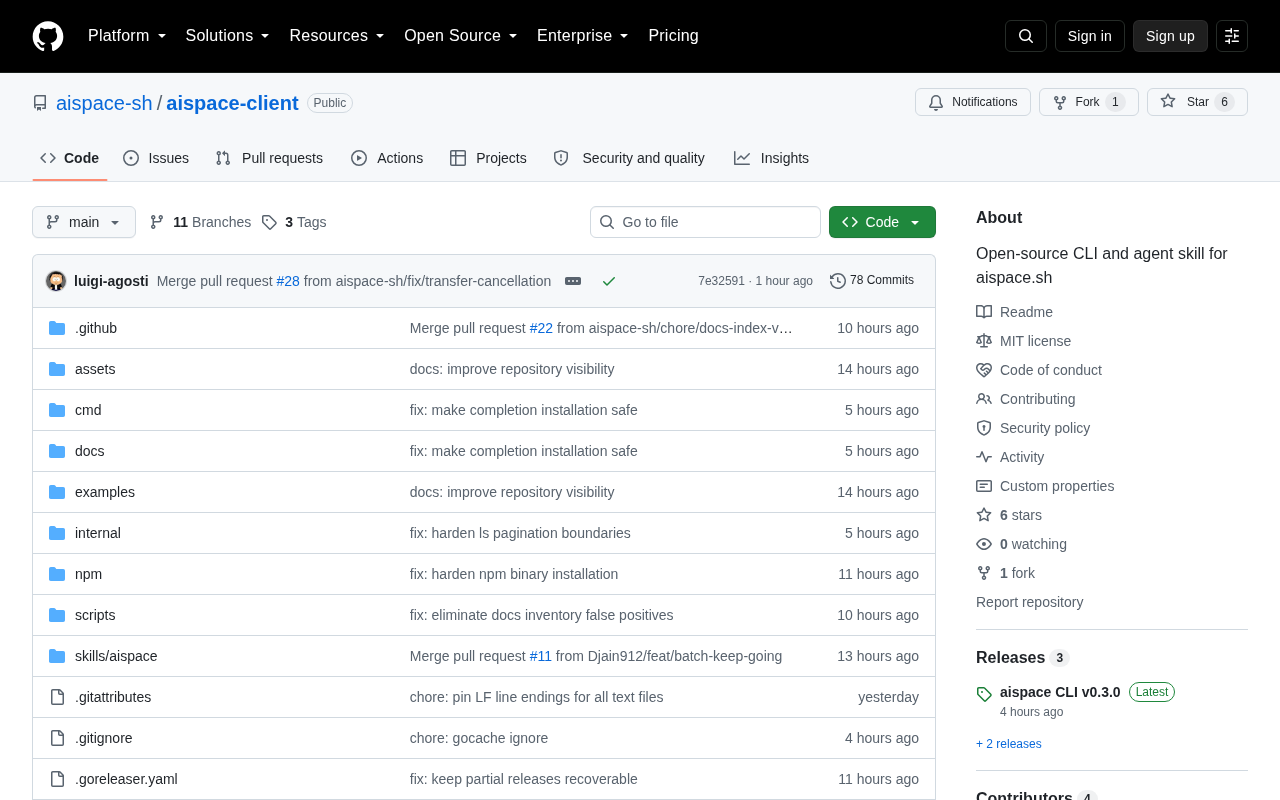
The rise of AI agents is driving urgent demand for secure, temporary, and auditable file sharing infrastructure.
As AI agents become deeply embedded in development workflows, traditional human-oriented file sharing tools can no longer meet the demands of high-frequency, transient, cross-entity file exchange between agents. This article analyzes the three defining characteristics of agent file exchange — high transience, high frequency, and cross-entity circulation — along with resulting security challenges around access permissions, lifecycle management, and auditability. The core design philosophy treats transience itself as a security mechanism, building layered defenses through TTL expiration, one-time links, end-to-end encryption, and access auditing. The discussion is framed within the broader trend of AI-native infrastructure, with security and efficiency as the guiding principles.
New File Sharing Challenges in the Age of AI Agents
As AI agents become increasingly embedded in development workflows, a long-overlooked problem is coming to the surface: how do you securely share temporary files between humans and AI agents, or between multiple agents?
A recent Hacker News discussion on "secure temporary file sharing for AI agents and humans" caught the community's attention. While the thread is still in its early stages, it touches on a technical pain point that is evolving rapidly.
Traditional file sharing tools — whether cloud storage, instant messaging attachments, or email — all assume the operator is a human with sound judgment. But when automated AI agents become both producers and consumers of files, existing security models face entirely new challenges.

Why AI Agents Need Dedicated File Sharing Mechanisms
Agent Behavior Is Fundamentally Different from Human Behavior
When executing tasks, AI agents frequently generate, read, and pass along intermediate artifacts — code files, logs, dataset fragments, generated images, and more. These files typically share three key characteristics:
- Highly transient: Most are intermediate products of task execution and don't need to be stored long-term
- High-frequency generation: A complex task may involve dozens or even hundreds of file exchanges
- Cross-entity circulation: Files may pass back and forth between humans, multiple agents, and external APIs
Relying on human-oriented persistent storage solutions not only wastes storage resources but also introduces serious security risks. Intermediate files containing sensitive information can become a liability if they linger — the consequences of a leak could be severe.
AI agents are a class of program systems capable of autonomously perceiving their environment, forming plans, and executing actions. Unlike traditional scripts or API calls, modern AI agents are typically driven by large language models (LLMs) and can dynamically decompose tasks, invoke tools (such as search, code execution, and file I/O), and adjust strategies based on intermediate results. Typical frameworks include LangChain, AutoGPT, and CrewAI. In multi-agent systems, multiple specialized agents collaborate through message or file exchange to complete complex tasks beyond the capability of any single agent. The strength of this architecture lies in parallelism and specialized division of labor — but it also introduces new communication security concerns: data exchange between agents often bypasses real-time human oversight, and if an intermediate file is maliciously intercepted or leaked, an attacker may complete data exfiltration before any human notices.
Security Boundaries Need to Be Redefined
In human-agent collaboration scenarios, the question of "who is authorized to access this file" becomes especially complex:
- Should an AI agent have the same file access permissions as the user who invoked it?
- Who is responsible for managing the lifecycle of temporary files?
- How can file transfers between agents be made auditable?
All of these questions require us to rethink the file sharing security model from the ground up.
"Temporary" and "Secure": Unpacking the Core Design Philosophy
Looking at the design thinking behind this category of tools, "temporary" and "secure" are two complementary key elements.
Transience Is the First Line of Defense
The temporary nature of a file is itself an effective security mechanism. By setting automatic expiration times (TTL), the system ensures that sensitive files don't persist indefinitely. This "burn after reading" design fundamentally narrows the time window for potential data leaks.
For the large volume of intermediate files generated by AI agents, automatic cleanup saves storage resources while dramatically reducing the long-term attack surface.
TTL (Time To Live) is a universal mechanism in networking and storage systems used to assign a validity period to data or resources, after which they automatically expire or are purged. In a file sharing context, TTL can be set at second-level precision, ensuring files are only accessible within the task execution window. The concept is borrowed from DNS records and HTTP cache control, but in AI agent scenarios it takes on stronger security semantics: it's not just a resource management tool, but a core mechanism for controlling threat exposure. Paired with "one-time URL" technology — which tracks access state server-side to ensure a link can only be successfully used once — even if a link is logged or forwarded to others, it cannot be accessed again. Together, these two mechanisms represent a concrete implementation of the "least privilege, shortest validity" security principle at the file sharing layer.
End-to-End Fine-Grained Access Control
Secure temporary file sharing should provide the following access control capabilities:
- One-time links: File access links expire after use, preventing link abuse or forwarding
- Authentication: Both human users and AI agents must prove their access credentials
- Transport encryption: Files remain encrypted during transmission and at rest, rendering them unreadable even if intercepted
- Access auditing: Every file access event — who, when, and what action — is logged to support post-hoc traceability
Typical Use Cases: From Development to Automated Workflows
File Passing in Multi-Agent Collaboration
In multi-agent systems, different agents collaborate on complex tasks. For example, an agent responsible for data scraping needs to pass its results to an analysis agent, which then passes its report to a summarization agent.
A secure temporary file channel ensures data flows reliably and safely between agents without relying on heavyweight persistent databases.
Human-Agent Handoff Scenarios
Once an AI agent completes a task, it typically needs to deliver its output to a human for review or further processing. Secure temporary file sharing provides a standardized channel for this "handoff" — humans can quickly retrieve the agent's output via a temporary link without worrying about permission confusion or file residue.
Isolated Handling of Sensitive Data
When dealing with data containing personal privacy or trade secrets, the auto-expiration feature of temporary file sharing is especially critical. It ensures sensitive data is only accessible within the necessary time window and is fully purged once the task ends, helping meet data compliance requirements.
The Rise of AI-Native Infrastructure: Trends and Outlook
The emergence of this category of tools reflects a broader trend: AI-native infrastructure is on the rise.
The developer toolchains we've long relied on — version control, CI/CD, file storage — were all designed for human engineers. As AI agents increasingly take on roles with greater autonomous execution, the entire tool ecosystem needs to be redesigned around "agents as first-class citizens."
File sharing is just one piece of this larger shift. We can expect to see more agent-specific infrastructure emerge, covering identity authentication, permission management, audit logging, resource scheduling, and more. Teams that establish "agent-friendly" and "security-reliable" infrastructure standards early will have a head start when it comes to scaling AI applications.
"AI-native" infrastructure refers to tools and platforms designed from the ground up with AI agents — rather than human engineers — as the primary users. Similar to the evolution of "cloud-native" concepts, the core characteristics of AI-native infrastructure include: support for programmatic authentication (e.g., API keys, short-lived tokens) rather than human login credentials; machine-readable operation interfaces and audit logs; the ability to handle high-frequency, short-lived, automated access patterns; and built-in permission isolation models oriented toward agents. Currently, companies like OpenAI and Anthropic have begun promoting standard protocols such as MCP (Model Context Protocol), aiming to establish unified specifications for agent interactions with external tools. How file sharing — as a foundational capability for agent collaboration — fits into this standardization effort is a direction worth watching closely.
Conclusion: New Infrastructure That Balances Security and Efficiency
"Secure temporary file sharing for AI agents and humans" remains a relatively niche topic today, but it precisely captures a real need in the AI agent era. As agents become increasingly autonomous and multi-agent collaboration becomes more prevalent, secure, temporary, and efficient file sharing will shift from a "nice to have" to a genuine requirement.
For developers and enterprises, now is an excellent time to pay attention to and invest in AI-native infrastructure. While embracing the productivity gains that AI agents bring, it's equally essential to incorporate the reconstruction of security boundaries into your overall planning — automated efficiency and controllable security should always go hand in hand.
Related articles

Invalid Source Material Notice
The source material provided lacks substantive information and is unrelated to AI/tech topics, making it impossible to produce a complete professional article.

Invalid Source Material: Unable to Generate a Valid AI/Tech Article
This Twitter source material is an irrelevant marketing tweet with no AI or tech content, making it impossible to generate a valid professional article.
Insufficient Source Material: Unable to Generate a Valid Article
The source material was limited to a single broken tweet with no usable content, making it impossible to produce a complete, high-quality article.