Senator Slotkin Speaks Out: Security Threats and Authoritarian Tactics Under Trump's Attacks

Senator Slotkin describes how Trump's tweet attacks escalated into real threats against her family, calling it an authoritarian playbook.
U.S. Senator Elissa Slotkin recounted how President Trump's repeated calls on Twitter for her investigation, arrest, or hanging for sedition escalated into real threats: a bomb threat at her farm, a suspicious package at her door, her father swatted late at night, and police cars outside her brother's home. She also described the psychological pressure of potential indictment and her identity dislocation as a former CIA officer labeled a "traitor," calling Trump's actions a textbook authoritarian playbook.
U.S. Senator Elissa Slotkin recently described in an interview the security threats to her family triggered by President Trump's public attacks, characterizing these actions as textbook moves from the "authoritarian playbook." Her account not only reveals the real risks faced by individual political figures but also sparks discussion about the boundaries of political rhetoric and the resilience of democratic institutions.
How Presidential Tweets Ignited Nationwide Threats
Slotkin said that when the president repeatedly called on Twitter for her to be investigated, arrested, or even hanged for sedition, the impact cannot be underestimated. She described the attacks as "intentional," capable of "unleashing crazy behavior across the country," including threats from neighbors.
"Our farm received a bomb threat, and a suspicious package was left at my front door."
According to Slotkin, the threats did not stop with her. Any family member sharing her last name became a target: her father was "swatted" late at night—police pounded on his door due to a false threat; her brother had to have a police car parked outside his home.

Swatting is a form of harassment that exploits emergency reporting systems: the perpetrator falsely reports to police that a serious violent crime—such as an armed hostage situation or bomb threat—is occurring at the target address, tricking a heavily armed SWAT team into raiding the location. Originating in early hacker circles as pranks against online gaming opponents, it has since been used by extremists to intimidate public figures, journalists, and minority communities. Because SWAT deployments prioritize force, targets may be injured or even killed in the chaos; consequently, many U.S. states have explicitly criminalized swatting and increased penalties. For political figures, swatting is both a physical threat and a low-cost, high-media-impact intimidation tactic.
The Psychological Toll of Legal Proceedings
Beyond physical security threats, Slotkin also faces uncertainty from legal proceedings. She recalled a conversation with her lawyer on the day she testified before a grand jury:
"I said, what happens? They said, Senator, if they come back and pursue criminal charges, you will have to surrender to the Department of Justice."
That conversation made her seriously contemplate the complete upheaval of her personal life.

A grand jury is a screening mechanism in U.S. federal and some state criminal procedures, typically composed of 16 to 23 citizens. Its role is not to determine guilt but to review whether prosecutors have sufficient evidence to support a formal indictment. Unlike trial juries, grand jury proceedings are not public; witnesses called to testify have the right to consult with counsel outside the courtroom, but attorneys are generally not permitted inside the grand jury room. Witnesses who refuse to testify may be held in contempt of court. For political figures testifying before a grand jury, this stage often signals that an investigation has entered a substantive phase, prosecutors may subsequently file charges, and the witness's status may shift to defendant after indictment.
Identity Dislocation: From CIA Officer to "Traitor" Accusations
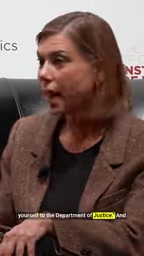
Slotkin emphasized that she was trained as a CIA officer and has worked alongside the military and law enforcement throughout her career. Now being accused of being a "traitor," this identity dislocation has given her a completely new understanding of the current political environment in the United States.
"I am a trained CIA officer who has worked alongside the military and law enforcement my entire life. Now I am accused of being a traitor. It changes the whole view of what is happening to our country."
The Authoritarian Logic Behind Escalating Threats
Despite the dramatic escalation of threats, Slotkin believes this actually clarifies one fact: Trump's actions directly follow the "authoritarian playbook." She pointed out that this playbook is "long-standing" and that she has witnessed it unfold in multiple countries around the world.
"Yes, the threats have escalated sharply, but it also clarifies that this person is doing exactly what is in the authoritarian playbook. A long-standing authoritarian playbook that I have seen in countries around the world."
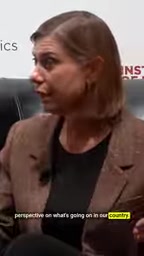
Slotkin's account provides a rare insider perspective on how political attacks can escalate from rhetoric to tangible threats against personal and family safety, and how those targeted place such experiences within a broader framework of democratic institutional debate.
The authoritarian playbook is an analytical framework used in political science and comparative politics to describe common tactics authoritarian leaders employ to consolidate power. Common elements include: sustained attacks on independent media and judicial institutions, stigmatizing political opponents as "traitors" or "enemies of the state," mobilizing supporters to pressure individuals, and testing institutional red lines to see whether checks and balances yield. The concept emphasizes that these operations are not isolated incidents but an identifiable, replicable combination of strategies, and thus is used for cross-national comparison. Scholars caution that the playbook framework is meant to diagnose trends rather than predict outcomes; institutional resilience, civil society, and elite choices still influence how far it advances.
One-line Summary
Senator Slotkin recounts how Trump's tweet attacks escalated into tangible threats against her entire family, characterizing them as an authoritarian playbook.
Paragraph Summary
U.S. Senator Elissa Slotkin detailed in an interview how, after President Trump repeatedly called on Twitter for her investigation, arrest, or even hanging for sedition, threats escalated from rhetoric to reality: a bomb threat at her farm, a suspicious package at her door, family members sharing her last name targeted, her father swatted late at night, and police cars parked outside her brother's home. She also recalled being told on the day of her grand jury testimony that if criminally charged, she would have to surrender to the Department of Justice—legal uncertainty bringing immense psychological pressure. As a trained former CIA officer, she feels deep identity dislocation at being labeled a "traitor," and believes Trump's actions directly follow the "authoritarian playbook" she has seen in multiple countries, with the escalation of threats ironically confirming that judgment.
Related articles

iPhone Duo Battery Life Tested: One Charge a Day Is Unavoidable, and the Large Screen Is the Culprit
iPhone Duo battery test: heavy use needs at least one charge a day, and about 30% remains after 6.5 hours of screen-on time. How often the large screen is unfolded is key; a MagSafe battery pack helps, and long-term degradation is also worth watching.

Kimi K3.1 Pro Open-Sourced: 2.8 Trillion Parameters Close In on Opus
Moonshot releases the open-source MoE model Kimi K3.1 Pro, with 2.8T total parameters and 104B activated, trailing Opus 5.5 by under 1 point on Terminal Bench 4.0.

Costco Tech Price Guessing: Are Monitors, Keyboards, Mice, and Bose Speakers Worth It?
A YouTube blogger guesses prices of Costco tech products: 2K 180Hz monitor, Logitech keyboard and mouse, Bose speaker, and CyberPower UPS, revealing warehouse-store selection and brand premium.