Shift at Midnight Hands-On: When "ID Verification" Becomes Alien Hunting

Shift at Midnight fuses convenience-store night shifts with ID verification and horror survival.
Shift at Midnight is a low-poly four-player co-op horror game where players work the night shift at a gas station, comparing customer ID cards against their appearance and statements to identify doppelgangers, aliens, or the undead. Misjudgments trigger entity invasions requiring barricades, traps, and weapons. Absurd humor alternates with jump scares, and multiplayer coordination quickly descends into chaos.
Key Highlights: A low-poly multiplayer game that stitches together Papers, Please-style document checking with horror survival, using absurd humor and high-pressure judgments to create a uniquely chaotic social experience.
At a time when horror games are chasing cinematic storytelling and photorealistic visuals, Shift at Midnight goes the opposite direction: low-poly art, four-player co-op, and ID verification plus gun-toting survival. According to gameplay footage from multiple YouTube streamers, the core loop isn't complicated, but the high-pressure binding between "judgment" and "consequence" generates tremendous dramatic tension.
1. Core Gameplay: The ID Inspector at a Convenience Store
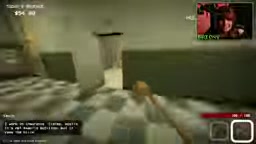
Players take on the role of a night-shift clerk at a midnight gas station. The job splits into two tracks: routine tasks like stocking shelves, mopping floors, and taking out trash; and verifying the identities of customers who walk in. Each customer has an ID card, and players must check whether the information on it matches the customer's appearance and statements.
The problem is, not all customers are human. The game's setting mixes in "doppelgangers," alien entities, and even the undead. Selling the wrong item to a non-human, or letting an impostor through, triggers an entity invasion that night. Streamers' actual experience: one minute they're discussing mops and candy bars, the next they're chasing a faceless customer through the aisles with a gun drawn.
According to records from multiple hands-on channels on Bilibili and YouTube, the early pacing is quite relaxed, even a bit absurd—like collecting scattered "limbs" in trash bags, or dragging meat chunks out of ventilation ducts. But once the verification phase begins, the atmosphere tightens abruptly.
"Doppelganger" is a concept from German folklore referring to a ghost or double that looks exactly like a living person, usually regarded as an ill omen or a sign of death. In modern pop culture, this figure has been widely adapted: from Dostoevsky's novel The Double to the film Us, the doppelganger often carries the anxiety of "the self being copied, identity being usurped." In game contexts, doppelganger mechanics are often combined with identity-recognition gameplay—players must rely on subtle differences (behavior, memory, physical traits) to distinguish real from fake, which naturally lends itself to tension built on information asymmetry. Shift at Midnight sets doppelgangers as non-human entities mixed in among customers, precisely leveraging this cultural symbol's recognizability to give players an extra layer of paranoid expectation during verification—that "the person next to you might not be human."
2. ID Verification: Details Mean Life or Death
This is the part of the game closest to Papers, Please, and also where streamers fail most often.
2.1 Verification Dimensions
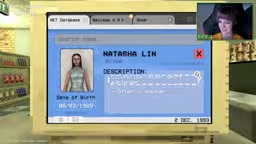
Players can scan ID cards through a computer terminal and check fields like name, occupation, and date of birth. They can also click on objects on the customer (glasses, teeth, clothing) to trigger dialogue and look for cracks in the answers. For example, someone claiming to be a sheriff who gets evasive when asked about their birth date immediately raises suspicion.
2.2 Database Search
The game also offers a personnel database query function. If a customer mentions a relative or colleague, players can search that name to verify whether they actually exist. One streamer let an obvious doppelganger go because they didn't check a customer's claim about a "deceased sister"—and subsequently suffered retaliation from an entity.
The cleverness of this design: clues never come to you; players must actively suspect. And suspicion itself has a cost—killing a human by mistake also affects the results, and can even lower that night's rating.
Papers, Please is an indie game developed by Lucas Pope in 2013, in which players act as a border inspector in a fictional country, approving or denying entry by comparing passports, visas, and immigration rules. Its core design philosophy is "documents as narrative": within a mechanical verification process, players are forced to face moral dilemmas (such as letting a smuggled relative through or reporting a colleague), generating strong emotional investment. The game is regarded as the pioneer of the "inspection simulation" genre, and many later indie games borrowed its "information comparison + consequence-bearing" framework. Shift at Midnight's ID verification clearly inherits this lineage, but replaces static desk inspection with a dynamic 3D first-person scene and introduces real-time action and multiplayer co-op, turning "checking IDs" from a solitary moral test into a social chaotic experience.
3. Balancing the Absurd and the Horrific
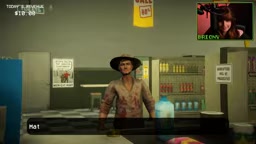
Shift at Midnight's humor comes from its exaggerated treatment of everyday retail scenarios. Customer requests are all over the place: someone buys two bottles of bleach and a can of "pee," someone with a featureless face comes shopping, and someone sets up a lemonade stand outside the store trying to steal business. Streamers' reactions—from confusion to laughter to terror—precisely form the emotional curve the game aims for.
Horror elements rely on suddenness and information asymmetry. When players misjudge, the system triggers an "entity invasion"—doors and windows need boarding up, traps need setting, weapons need distributing. According to a full playthrough on the YouTube channel Yogscast, later stages also feature "blood moon" events, where the margin for error is compressed to extremely low levels.
"Blood moon" in game culture usually refers to a special event state, manifested as a red sky, strengthened enemies, changed rules, or a sharply reduced margin for error. This imagery can be traced back at least to the blood moon mechanic in The Legend of Zelda: Breath of the Wild (monsters reviving), and is especially common in survival horror games, such as the Moon Presence scenes in Bloodborne. Shift at Midnight borrows the blood moon as a late-game high-pressure event, essentially leveraging players' existing understanding of "extreme states" to quickly signal that "tonight will be tough." From a design perspective, blood moon events are often tied to resource scarcity, enemy respawns, or harsh judgments, forcing players to allocate additional effort to survival pressure beyond the already tense identity verification—pushing the game's emotional curve to its peak.
4. The Chaotic Aesthetics of Multiplayer Co-op
The four-player division of labor is the social core of this game. Someone handles checkout and verification, someone handles cleaning and restocking, someone handles patrol and armament. But in actual play, the division of labor often collapses quickly—streamers' footage is full of chaotic dialogue like "you check the ID, I'll mop," "who took the gun," and "don't stand in front of my flamethrower."
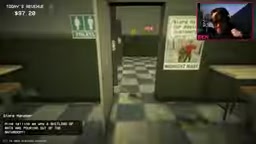
The game also randomly inserts events like rat infestations, generator failures, and vehicle inspections. Cars outside the gas station need their license plates and descriptions checked, and suspicious items may be hidden inside. These side tasks extend gameplay from inside the store to outside, avoiding the repetitiveness of a single scene.
5. An Indie Gem Worth Watching
From the hands-on content, Shift at Midnight isn't large in scope, the visuals are rough, and system depth is limited. But it grasps a proven design formula: use information verification to create tension, use multiplayer co-op to amplify chaos. For players who love the inspection anxiety of Papers, Please but also want to scream and shoot with friends, this game offers a thoroughly fitting night.
A caveat: the content shown so far is mainly streamer hands-on footage, and the full game's content volume, difficulty curve, and long-term replayability remain to be verified. But at least judging from these few hours of footage, it has successfully turned the small matter of "checking IDs" into a dark comedy about trust and paranoia.
Related articles

Why Does the Tesla Roadster Need to Fly? A Deep Dive into Musk's Wild Demo
Tesla's Roadster launch showed wall-climbing, upside-down driving, and flying stunts—but The Vergecast notes the demo car may lack a battery, the Rocket version is invite-only and not street-legal, and the website terms don't guarantee delivery. After nine years of delays, why does this car still need to exist?

AI Is Not a Replacement: Human-AI Collaboration Through the Lens of Factory Root Cause Analysis
Starting from factory root cause analysis, this article explains how AI accelerates evidence chain construction rather than replacing human experts, exploring the pragmatic implementation logic and business value of 'AI supporting people rather than replacing them.'

AI Agent Decision Auditing: Building an Evidence Chain in Regulated Workflows
Starting from a Reddit discussion, this article analyzes three core issues in AI agent decision auditing within regulated workflows: what fields audit records should contain, how to handle feedback latency for erroneous decisions, and how to continuously calibrate LLM judge consistency with human judgment.