Shimano Bicycle Museum: A Field Visit to a Component Giant

A Shimano museum visit report goes viral on Hacker News, revealing engineers' love of precision manufacturing history.
A visit report on the Shimano Bicycle Museum published by cycling site inrng.com earned 235 points and 45 comments on Hacker News, a platform dominated by software engineers and tech professionals. Shimano, the dominant global manufacturer of bicycle drivetrains and shifting systems, has a century-long story stretching from single-speed freewheels to the modern Di2 electronic shifting system. The article's strong engagement reflects engineers' natural affinity for precision mechanics and industrial history — bicycle drivetrains sit in a sweet spot that is both physically tangible and technically substantial. Note that this summary is based on publicly available background knowledge rather than the full original article; readers are encouraged to visit inrng.com and the Hacker News thread for complete details.
A Museum Visit That Sparked Online Discussion
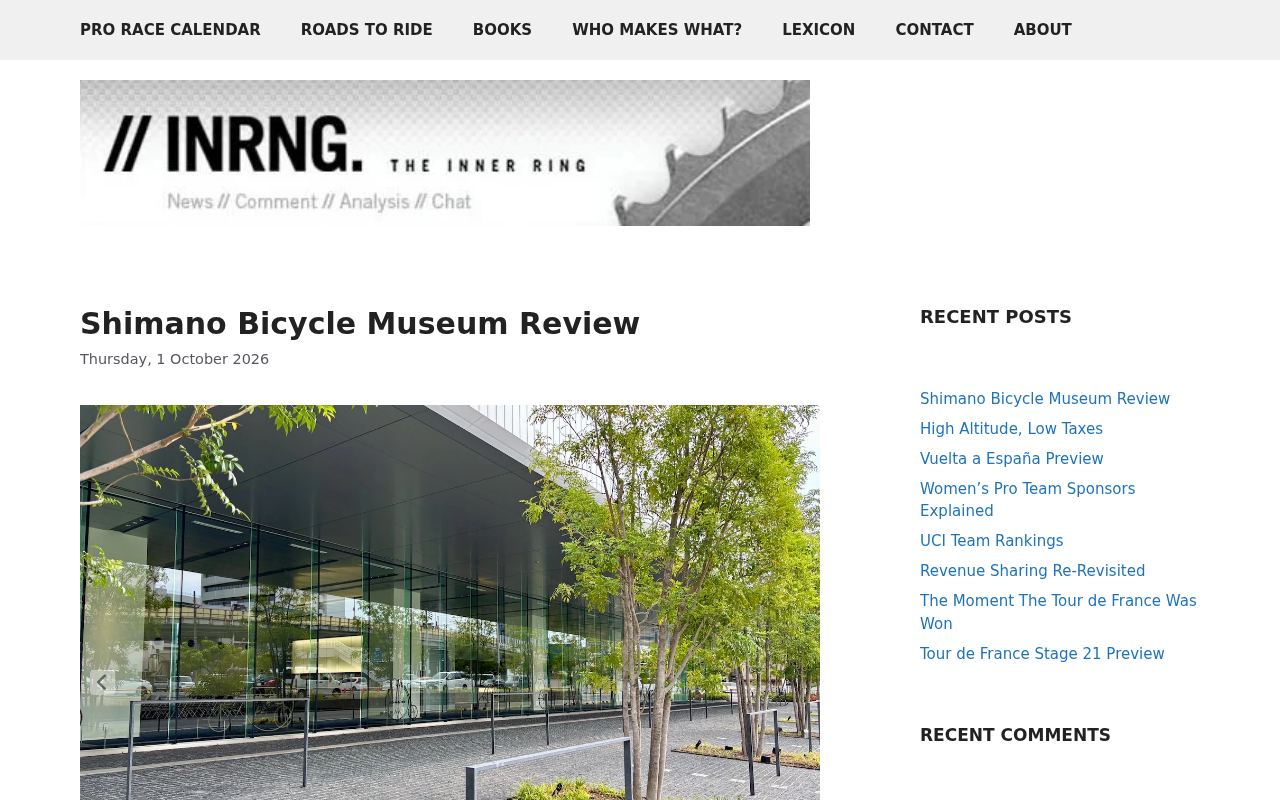
A piece published by renowned cycling site inrng.com on the Shimano Bicycle Museum earned 235 points and 45 comments on Hacker News — a clear sign that the tech community has genuine interest in the history of this Japanese component giant.
A quick note on transparency: the source material available for this article includes only the link, the comment thread URL, and engagement metrics — not the full text of the original piece. What follows draws on publicly available background knowledge to outline the value and highlights of this type of visit report. Readers are encouraged to check the original article for the full details.
Why a Parts Manufacturer's Museum Is Worth Your Attention
Shimano dominates the global market for bicycle drivetrains, brakes, and shifting systems. Whether you're riding a budget commuter or a Tour de France race bike, the components are more likely than not made by this company. For many cycling enthusiasts, Shimano's product lineup is essentially a timeline of bicycle mechanical engineering.
A corporate museum like this typically serves to trace the arc of technological development. From early single-speed freewheels to modern electronic shifting (Di2), each iteration of drivetrain technology represents a meaningful improvement in the riding experience. The value of such an exhibit lies not just in nostalgia, but in its ability to present — through physical artifacts — the cumulative progress of industrial design and mechanical engineering.
Shimano was founded in 1921 and is headquartered in Sakai, Osaka Prefecture, Japan. The company started out manufacturing single-speed freewheels and over the course of a century established near-dominant market share in bicycle drivetrain systems, consistently holding over 70% of the global market. Its product line runs from entry-level Tourney and Altus, through mid-range Deore and 105, all the way up to the flagship Dura-Ace — a clearly tiered product matrix.
The Di2 (Digital Integrated Intelligence) electronic shifting system is one of Shimano's most significant recent innovations, first introduced in 2009. It replaces traditional cable tension with electronic signals to actuate the derailleur, delivering precise and rapid gear changes while supporting intelligent features like automatic synchro shifting. Di2 marked the transition of bicycle drivetrain technology from purely mechanical to electromechanical — making it one of the most exhibit-worthy technological milestones in any corporate museum.
What High Engagement on Hacker News Tells Us
The fact that a bicycle museum visit article earned 235 points on Hacker News — a platform dominated by software engineers and tech professionals — is itself worth noting. It reflects engineers' innate interest in precision mechanics, manufacturing craftsmanship, and the technical legacy of long-established manufacturers.
The bicycle occupies a sweet spot as a subject: it's a highly mature yet still-evolving piece of machinery that is accessible, tangible, and technically deep. Compared to pure software topics, content about hardware and industrial history tends to resonate across disciplines. The ratchet mechanisms in a derailleur, the interplay of chain pitch and gear ratios — these are real-world examples of engineering elegance.
Hacker News is a community platform run by startup incubator Y Combinator, with an audience made up primarily of software engineers, founders, and tech workers. A post scoring above 200 typically means it reached the top of the front page for the day, putting it in front of tens of thousands of active users. The community has an interesting pattern: content about pure mechanical engineering, manufacturing processes, or "how things work" consistently performs well, because it satisfies programmers' curiosity about system design and underlying principles. The pawls, springs, and cam interactions in a bicycle shifting system bear a structural resemblance to software state machines — the kind of cross-disciplinary intellectual connection that this community enjoys.
The Value of First-Hand Visit Reports
A high-quality museum visit piece typically does several things well: it restores the historical context behind the exhibits, explains the significance of key technological breakthroughs, and layers in the author's firsthand observations. inrng.com, as a site with deep expertise in road cycling, generally delivers content that balances technical depth with readability.
For readers interested in the history of bicycle mechanics or the culture of Japanese manufacturing companies, this kind of firsthand account offers a far more vivid entry point than any product manual.
Closing Note
Given the limitations of the available source material, this article cannot dive into the specific exhibits or details covered in the original piece. Readers interested in Shimano's technical history or the bicycle industry are encouraged to read the full article on inrng.com directly, and to browse the Hacker News discussion — the 45 comments there often surface additional perspectives from people inside the industry.
Related articles

Should U.S. College Fraternities Be Banned? A Researcher's Incisive Observations
Why not just ban U.S. college fraternities? A researcher finds the key resistance comes from decision-makers' own fraternity identities and schools' "willful ignorance."

Microsoft Discovery: Accelerating Scientific Discovery with AI Agents
Microsoft's Discovery platform runs specialized AI agents to help researchers screen and prioritize the most promising compounds and experimental paths, reducing experiments and accelerating scientific discovery.

Cambridge Heavy Industries Secretly Develops Desktop-Scale Nuclear Fusion Device
Cambridge Heavy Industries is secretly developing a desktop-scale laser-driven nuclear fusion device, targeting the equipment supply market for fusion power plants. This article analyzes its miniaturization technology path, commercialization logic, and unique positioning in the fusion startup wave.