Show HN: Having Fun with Bicycle Trainers and Web APIs
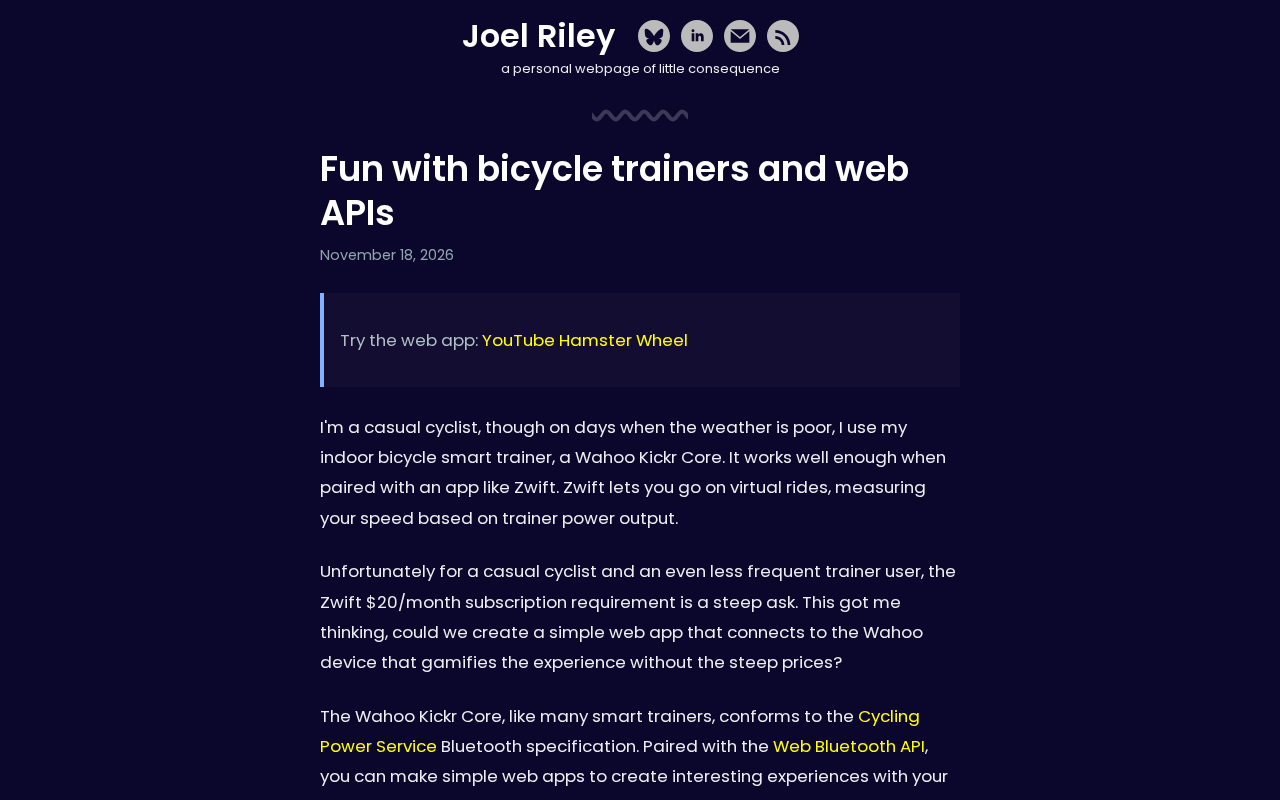
A Show HN project explores connecting bicycle trainers with Web APIs for data reading and interactive experiments.
This article introduces a Show HN project on Hacker News called “Fun with bicycle trainers and web APIs,” which attempts to combine bicycle trainers with Web APIs. The article speculates that its technical approach may involve Web Bluetooth or Web Serial, allowing browsers to directly read trainer data such as power and cadence, and even control resistance; interaction directions include data visualization and using power to control games or lighting. The author notes that such projects are small experiments driven by developers' curiosity, reflecting the trend of Web technology connecting to the physical world, but the original material contains only the title and metadata, so a deep analysis of the specific implementation is not possible.
When Cycling Gear Meets Web APIs
An interesting Show HN project recently appeared on Hacker News: Fun with bicycle trainers and web APIs. Although the post itself has only 4 upvotes and no comments yet, the title already makes the core clear—combining bicycle trainers with Web APIs for experimentation.
A bicycle trainer is a device commonly used by cycling enthusiasts for indoor training. It can simulate resistance and record data such as power and cadence. Web APIs, meanwhile, provide a standardized way to read from and control these devices. This project is clearly exploring the possibilities of interaction between the two.
What This Project Might Involve
Since the original post does not provide a detailed description, we can only infer from the title and common tech stacks.
Connecting Hardware and Data
Bicycle trainers usually communicate with phones and computers via Bluetooth or the ANT+ protocol. Web APIs (most likely Web Bluetooth or Web Serial) can let browsers access these devices directly without installing a native app. This means developers can use pure front-end technology to read real-time trainer data such as power, speed, and cadence—and even control resistance.
Web Bluetooth API is a W3C draft specification that allows web pages, with user authorization, to communicate with low-power Bluetooth devices via GATT (Generic Attribute Profile). For bicycle trainers, this means the browser can subscribe to standard services such as FTMS (Fitness Machine Service), read characteristic values such as power, cadence, and speed, and write to control points to adjust resistance. In practice, it requires an HTTPS environment, a user gesture to trigger the permission popup, and browser support varies—Chrome/Edge are relatively complete, while Safari and Firefox have limited support.
Web Serial API is a browser interface for serial devices, often used for older trainers connected via USB or ANT+ to USB receivers. It complements Web Bluetooth: the former is suitable for wired connections and custom protocols, while the latter is suitable for wireless low-power devices.
ANT+ is another low-power wireless protocol led by Garmin and is very common in cycling sensors, but browsers do not have a native API for it. It usually requires a USB receiver combined with Web Serial to forward data.
Possibilities for Interactive Experiments
The phrase “Fun with” suggests the project may be experimental and playful. For example:
- Visualizing cycling data in real time on a web page;
- Using cycling power to control a game or lighting;
- Turning the trainer into an input device for Web APIs to trigger certain network requests.
These directions are not uncommon in the tech community, but every time someone tries a new combination, it can bring some inspiration.
FTMS (Fitness Machine Service) is a standard GATT service defined by the Bluetooth SIG that specifies how fitness devices expose data and control interfaces. It includes multiple characteristics: Indoor Bike Data provides instantaneous speed, cadence, power, and more; Fitness Machine Control Point supports commands such as setting target power and simulating resistance. The advantage of programming based on FTMS is cross-brand compatibility—as long as a trainer declares support for this service, the same Web code can work. However, different manufacturers vary greatly in their implementation of optional fields, so in actual development it is often necessary to perform capability detection and fallback handling.
Why It Is Worth Noting
Although this Show HN post is not very popular, it represents a type of small but elegant developer experiment: using Web technology to connect to the physical world. Such projects often have no commercial goal and are purely driven by curiosity and fun, yet they may lead to unexpected applications.
For AI and tech content creators, this kind of experiment reminds us that APIs are not only bridges between software, but can also become links between hardware and the Web.
Limitations and Unknowns
It should be noted that the original material contains only the title and minimal metadata, with no code, documentation, or author explanation. Therefore, this article cannot deeply analyze the specific implementation, performance data, or actual effects. If you are interested in this project, it is recommended to check the original Hacker News post directly (if the link is available), or search for similar projects.
This article is more of a reasonable inference based on the title rather than a comprehensive interpretation of the project itself.
Related articles

Inside Honey Trap Training: Emotional Dissociation and Anchoring Techniques
How are spies trained for honey trap missions? A trainee reveals emotional dissociation, perfume and keyword anchoring, and target photo binding—psychological techniques that condition reflexes for intelligence work.

Frontier AI Risk Management: Full-Pipeline Practices from Training to Deployment
OpenAI outlines a frontier AI risk management framework: from training-stage model alignment to deployment-stage sandboxing and blocking safeguards, plus post-deployment monitoring—a layered risk control system across the model lifecycle.
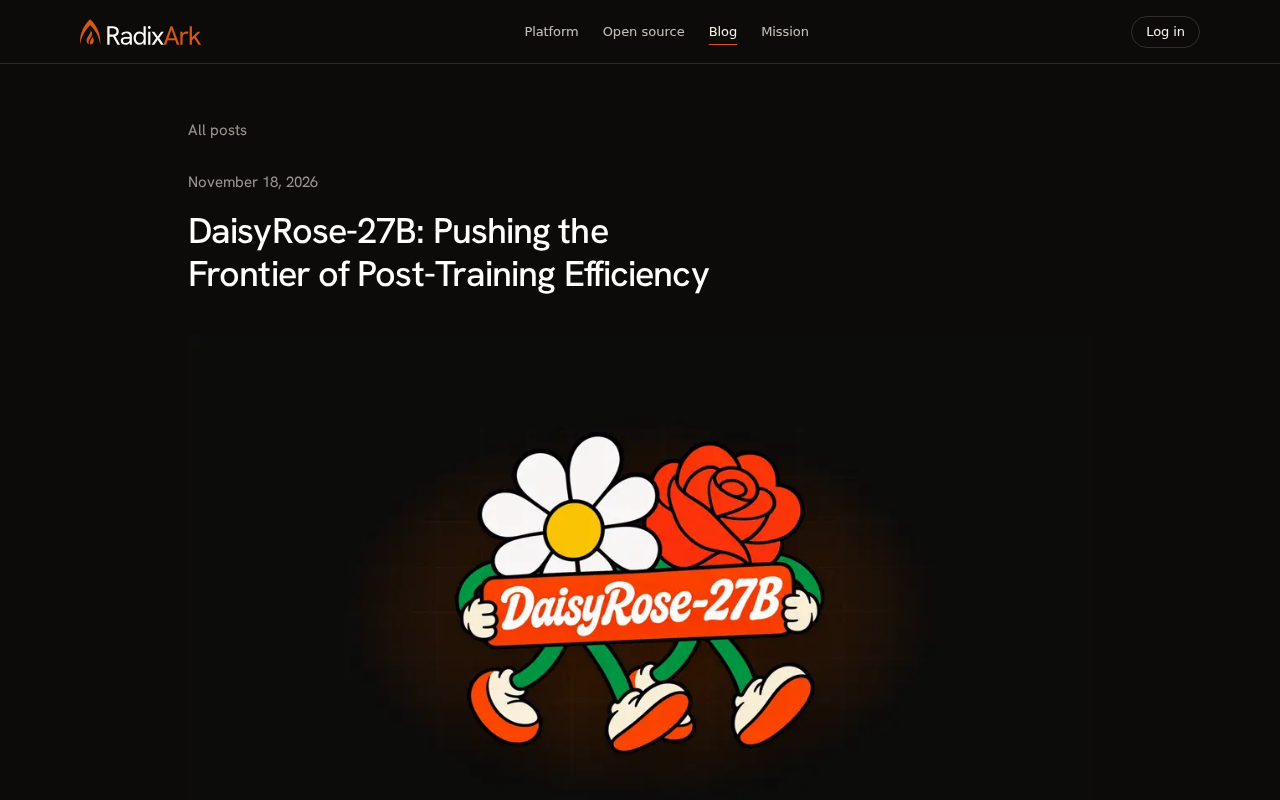
DaisyRose-27B: 1,200-Task RL Boosts Qwen3.8 from 5.6% to 12% on Terminal-Bench 4.1
DaisyRose-27B uses RL training on 1,200 tasks to boost Qwen3.8's Terminal-Bench 4.1 score from 5.6% to 12%, showing lightweight RL can more than double terminal task performance.