Skykea Showdown: A Hilarious Variety Show Experience of a Minecraft Airship Building Competition
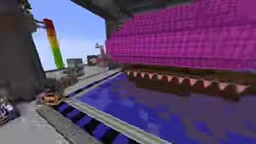
Minecraft airship building variety show Skykea Showdown: timed building, hole racing, secret missions, and sabotage—Yellow Team wins 4:3.
This article breaks down the gameplay design of the YouTube variety show Skykea Showdown. The show divides players into Blue and Yellow teams, each with an engineer captain, who must build drivable airships using a Minecraft airship mod within a time limit and then score by flying through Kallax bookshelf holes. The mod provides visualized lift, gravity, and drag values, giving building an engineering feel; multiplayer division of labor (burners, propulsion, weapons) generates plenty of cooperative humor. Secret missions and rule gray areas (balloon poking, pushing) form the main variety-show conflict. Ultimately, the Yellow Team's Jolly Blumpet narrowly wins 4:3. The article argues that stacking time limits, division of labor, secret missions, and physics feedback is the core appeal of this gamified variety content.
When Minecraft Meets Variety Shows: A Chaotic and Joyful Airship Showdown
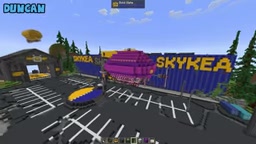
If you thought Minecraft's Creative Mode was just about quietly placing blocks, Skykea Showdown will completely overturn that impression. This YouTube variety show, hosted by Lewis and Ozz, mashes together team building, flight racing, and reality-show-style secret missions, challenging contestants to build flyable airships within a time limit and then fly them through IKEA-style Kallax bookshelf holes. Based on the show's video content, this article breaks down the gameplay design, mod mechanics, and variety-show appeal of this competition.
1. Competition Design: A Two-Phase Build + Race Structure
Blue and Yellow Teams with Engineer Captains
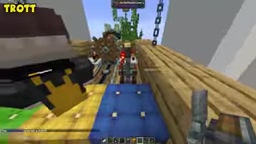
The show divides players into the Blue Team (Sibs and Duncan) and the Yellow Team (Wass and Owl Smaffy), each with a captain/engineer—Harry for Blue and Trot for Yellow. This setup is crucial: the players themselves know almost nothing about aerodynamics, so the captains must both teach and command within a limited time. The show opens by quipping that "none of these guys know what they're doing," establishing the chaotic comedy tone.
Phase 1: Timed Airship Building
Both teams must construct drivable airships using in-game blocks before the countdown ends. The rules include a banned block list (e.g., the "plunger" is banned), require installing hot air balloon burners to generate lift, and demand consideration of propulsion and steering. The show doesn't allow generous time—hosts constantly interrupt with distractions and interviews during the build, creating pressure.
A note on the "plunger" mentioned in the article: it's a block added by the mod, shaped like a toilet plunger, typically serving as decoration or a fun prop. The show likely banned it because it has no structural or functional value—placing it on an airship would only waste limited block quota and weight budget. Banning such blocks forces players to focus on genuinely useful components while preventing anyone from using comedic decorations to stall the build.
Phase 2: Kallax Slalom Hole Race
Once the airships are built, teams must pilot them through designated holes in the bookshelves. Each team has one navigator and two pilots, earning a point for each hole of their corresponding color they pass through. The map highlights the current target hole in color, and the next one automatically lights up after passing through one. Points don't come with prizes—they only determine advantages in the final challenge.
2. Mod Mechanics: Visible Physics and Adjustable Lift
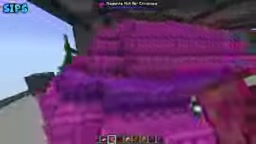
The airship mod used in the show makes flying no longer a simple "click to take off" but involves actual physics parameters. During debugging, the Yellow Team opened the "contraption diagram," which displays values for balloon lift, gravity, drag, and other forces. According to the readings shown, the balloon lift was 1,763 while gravity was 2,189—insufficient lift, requiring more burners or reduced weight. This visual feedback gives building an engineering feel and helps viewers understand "why it won't fly."
On the control side, airships require division of labor: someone handles burner control for altitude, someone handles propulsion and steering, and someone operates the front-mounted launcher weapons (like shooting slime balls or wind charges). The Blue Team even built a rotatable "gun" seat at the front, using a controller to adjust angle and spacebar to fire. This multiplayer cooperative piloting design is a major source of the show's humor—airships frequently tilt, spin, or even collide with each other's balloons due to coordination failures.
The "contraption diagram" is a debugging interface provided by the airship mod. It abstracts the entire airship into a force system, listing total lift, total gravity, drag, and other values in real time, viewable directly in build mode without repeated test flights. This design borrows from the visualization approach of engineering simulation software, turning hidden physics calculations into a dashboard for reference and adjustment, greatly lowering the barrier for viewers to understand "why it won't fly."
The "wind charge" mentioned is an item added in Minecraft 1.21. When used, it produces a burst of airflow that pushes entities and projectiles. In vanilla, it's mainly used for jump assistance or blowing away mobs. In the airship mod environment, wind charges loaded into dispensers serve as a non-lethal pushing weapon—disrupting opponents' heading without directly destroying their airship structure, perfectly fitting the show's rule tone of "allowing confrontation but not encouraging destruction."
3. Variety Show Appeal: Secret Missions and Sabotage
Secret Missions Create Internal Conflict
Midway through building, the show calls players into the "diary room" to privately assign secret missions. Yellow Team captain Trot is tasked with hiding an animal on his own airship without his teammates noticing, earning a strange "minus one point" reward for the next mission if successful. Blue Team's Sips is also called in—the host pretends to give him a sabotage mission, but it's actually just testing his reaction. This real-and-fake mission design creates suspicion among players and adds narrative tension.
Confrontation at the Edge of Rules
The hole race allows using airships to push obstacles but doesn't encourage destruction. In the actual match, both sides crossed the line: the Yellow Team was accused of poking holes in the Blue Team's balloons, and the Blue Team retaliated by interfering with the opponents. The host commented on the spot that "this is a very illegal move" but didn't stop it—this gray area became the most entertaining part of the show. Ultimately, the Yellow Team's "Jolly Blumpet" narrowly defeated the Blue Team's "Suck and Blow" four to three.
4. Why This Kind of Content Is Compelling
The core of Skykea Showdown isn't Minecraft skill—it's turning the building process into a social game. Time limits, division of labor, secret missions, and the realistic feedback of physics mods—these four elements stack together, making every flight full of uncertainty. For creators wanting to make similar content, the show's lessons are: mod mechanics should be visualized (let viewers understand the numbers), rules should leave room for confrontation (don't ban pushing), and hosts' commentary should participate in the narrative rather than just announcing.
From an SEO perspective, this hybrid "Minecraft + variety show" content has stable search demand in gaming communities, with keywords centered on airship building, mod gameplay, and multiplayer co-op challenges. The show hasn't publicly released specific viewership data, but the comment section is lively, indicating high audience acceptance of "fail" and "sabotage" segments.
Conclusion
Skykea Showdown demonstrates a viable Minecraft content format: not pursuing perfect builds, but using rules and interpersonal relationships to create stories. Whether the airship can fly or fly stably isn't the point—the point is how teams cooperate and sabotage each other under pressure. This may be the simplest and most effective path to gamifying variety content.
Related articles

Did the US Midterms Vote No to AI Data Centers? A Map Reveals the Truth
After the US midterms, media claimed voters rejected AI data centers, but a map shows restrictive votes are concentrated in a few Ohio townships, affecting less than 1% of US towns—the national anti-AI wave is exaggerated.

ApexW Optimizer Benchmark: Matches 8-bit AdamW in Unsloth with Lower Memory Usage
Developer shares benchmark of ApexW optimizer in Unsloth: ApexW 8bit has lower optimizer state memory (47.101 MB) and slightly better final loss than 8-bit AdamW, but similar speed. Needs independent reproduction.

US Computer Science Enrollment Drops 12.4% — Is CS Still Worth Studying?
CS enrollment fell 12.4% while health majors grew 6.2%. A CS master's grad explains why the degree's real value isn't coding but systems thinking.