Small-Model Grammar Control: SMC Makes Language-Learning Dialogue More Precise
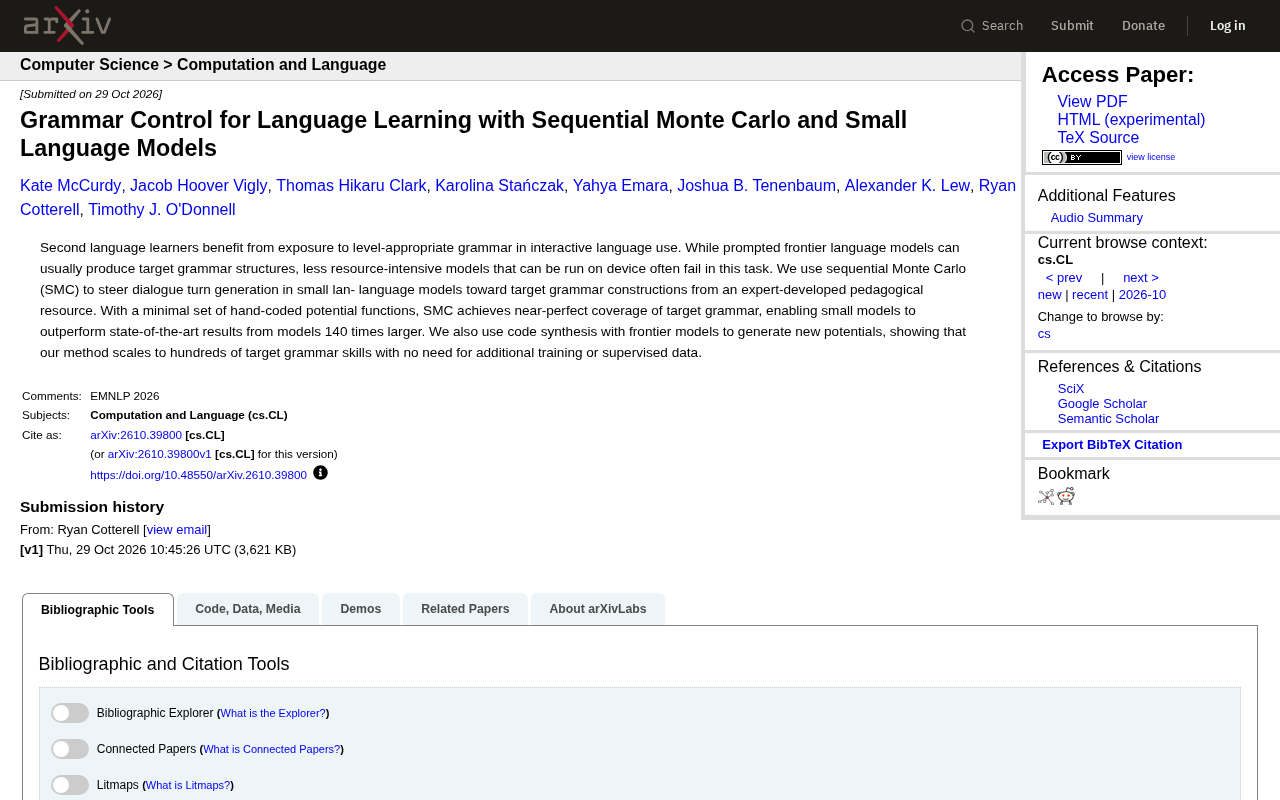
Using SMC and lightweight potential functions to guide small models toward target grammar, outperforming models 140× larger.
The article presents research on grammar-controllable dialogue generation for language-learning apps. Since on-device small models struggle to reliably produce target grammar and large frontier models are costly, the team uses Sequential Monte Carlo (SMC) with a few handcrafted potential functions to reweight candidate sequences and steer dialogue toward expert-defined grammar targets. The method achieves near-perfect grammar coverage and surpasses models 140× larger, and code synthesis extends it to hundreds of grammar skills without extra training or supervision data.
Introduction
In language-learning applications, providing learners with interactive dialogue that matches their grammar level is essential. However, small language models running on-device often struggle to reliably generate target grammatical structures, while large frontier models can achieve this through prompting but at enormous resource cost. A recent study proposes using Sequential Monte Carlo (SMC) to steer small-model dialogue generation toward expert-defined grammar targets. With only a handful of handcrafted potential functions, the method achieves near-perfect grammar coverage and even lets small models outperform advanced models 140× their size.
Background: The Difficulty of Grammar Control in Small Models
Second-language learners need exposure to grammatical structures matched to their level, but small models frequently drift away from the target during interaction. Frontier models can generate specific grammar through prompting, but they are difficult to deploy on resource-constrained devices. The research team extracts target grammatical constructions from expert teaching resources and attempts to use SMC to guide dialogue-turn generation.
The SMC Method: Lightweight Potential Functions Guide Generation
SMC is a sequential importance sampling technique that reweights candidate sequences by introducing potential functions during generation. In this study, only a small number of handcrafted potential functions are used, yet they significantly improve small models' coverage of target grammar. Experiments show that the method brings small models' grammar coverage to near-perfect levels and surpasses the performance of advanced models with 140× more parameters.
Sequential Monte Carlo (SMC) is a class of inference algorithms based on Sequential Importance Sampling. Originally used for Bayesian filtering and state-space models, it was later introduced into natural language generation. Its core idea is: during step-by-step generation of tokens or dialogue turns, maintain a set of weighted candidate sequences (particles); at each step, reweight the particles according to potential functions and resample, so that high-weight particles (sequences that better satisfy the target constraints) get more chances to continue. Unlike one-shot sampling or beam search, SMC can dynamically correct course mid-generation, making it particularly suitable for hard-constraint scenarios such as "certain structures must appear."
A potential function is a scoring function in SMC that defines "how close the current partial sequence is to the target." It can take any form—for example, counting whether a target grammatical construction has appeared, its frequency, or structural match. The higher the potential function value, the greater the corresponding particle weight. Because potential functions need neither be differentiable nor trained—only computable in code—the handcrafted potential functions in this study are extremely cheap to implement, which is also the key to the method's lightweight on-device deployment.
Scalability: Code Synthesis Generates New Potential Functions
To verify the method's scalability, the team used frontier models for code synthesis to automatically generate new potential functions, thereby covering hundreds of target grammar skills without additional training or supervision data. This opens up possibilities for large-scale personalized grammar instruction.
Code synthesis refers to having a large language model automatically write executable programs from natural language descriptions—here, "generating the corresponding potential function code for a given target grammar skill." Compared with designing potential functions one by one manually, code synthesis transforms "defining constraints" into "describing constraints," greatly reducing the human cost of scaling to hundreds of grammar skills. The generated potential functions only need to pass simple tests to be plugged into the SMC pipeline; the entire process involves no retraining of the small model or additional labeled data, thus preserving the method's lightweight and pluggable nature.
Significance and Outlook
This research opens a new path for grammar-controllable generation in resource-constrained environments. By combining SMC with small models, it is expected to enable precise grammar training in offline learning tools and advance the development of adaptive language learning.
Related articles
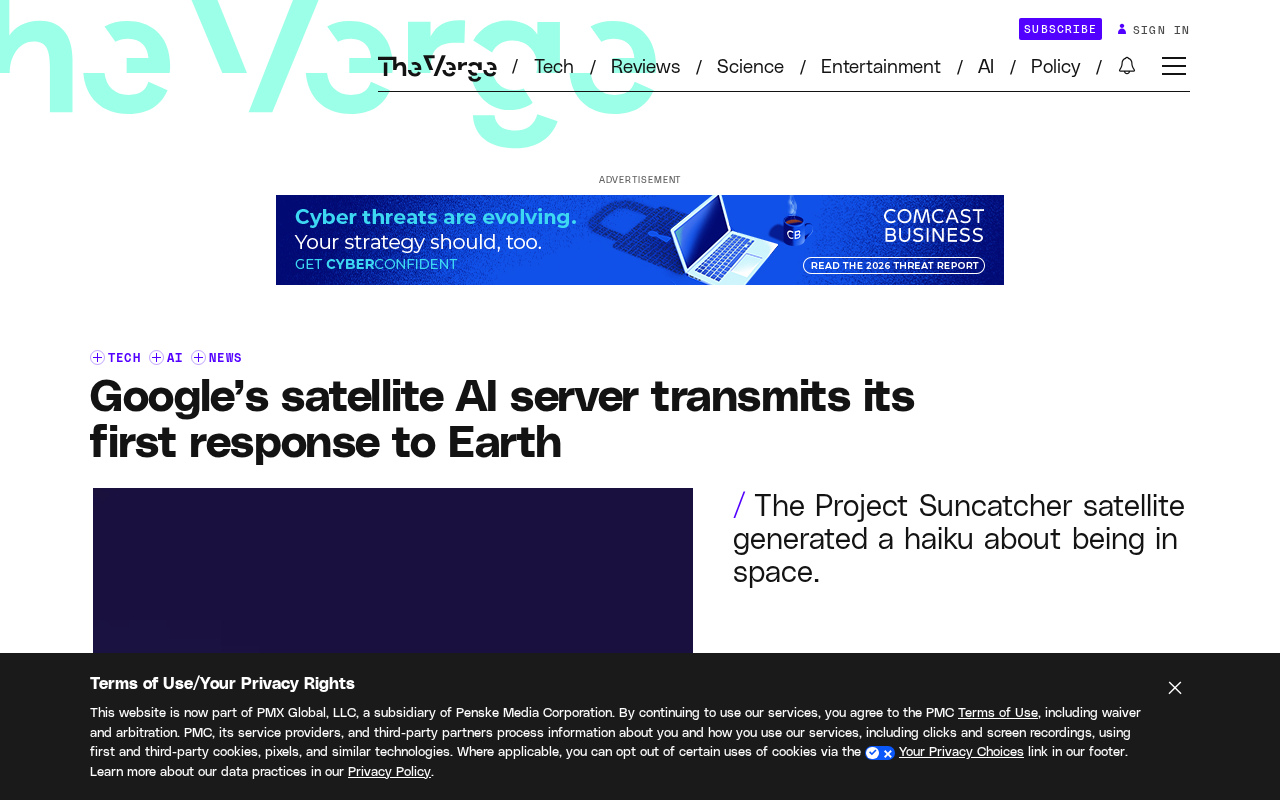
Google's Satellite AI Server Reaches Orbit: Gemma Model Generates First Reply in Space
Google's TPU-equipped satellite powers up in orbit, with the onboard Gemma 4 model generating the first reply from space. This article analyzes the technical path, real-world constraints, and implications for edge computing and satellite remote sensing.

AI Agents for Flight Booking Customer Support: Real Needs and Implementation Challenges
Starting from a real Reddit question, this article breaks down four needs for introducing AI Agents into flight booking call centers: basic Q&A, agent assist, call summarization, and quality inspection, and analyzes accuracy concerns and handoff boundary design.
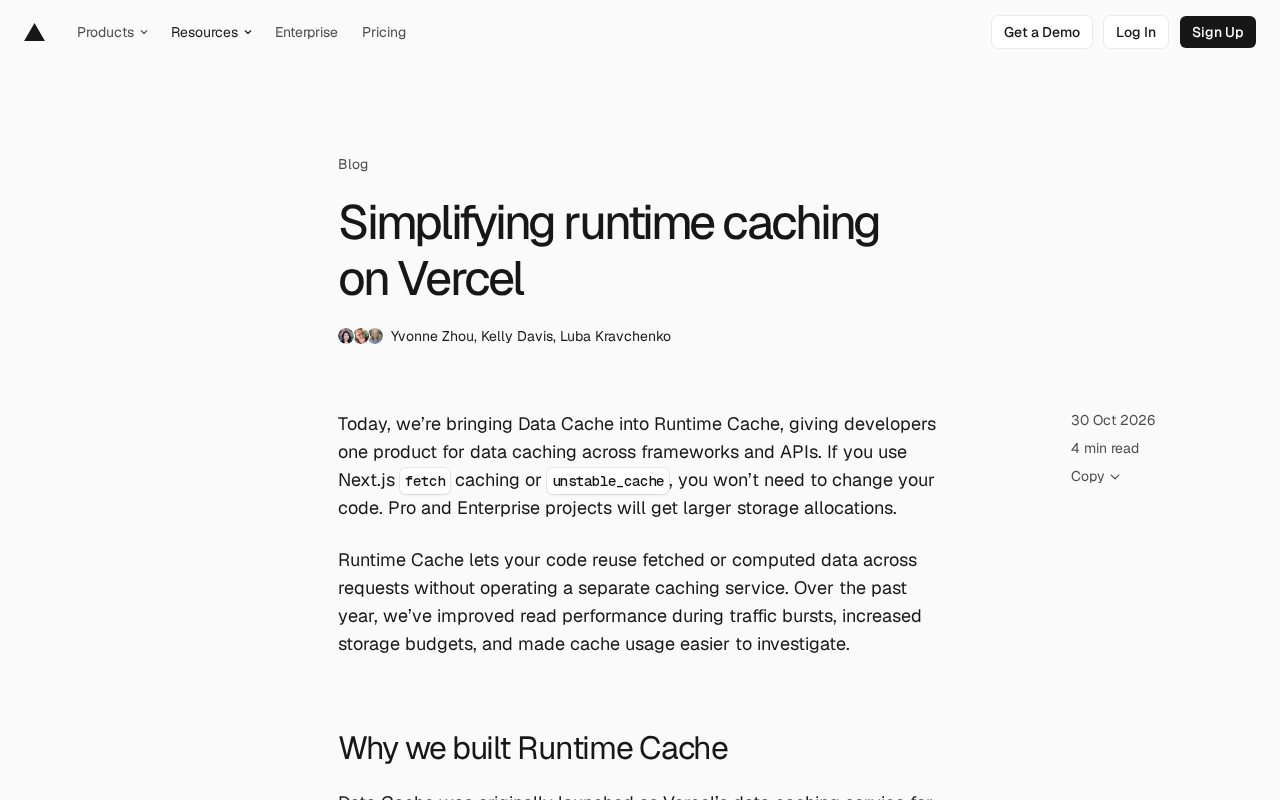
Vercel Unifies Runtime Cache: Data Cache Merges into Runtime Cache
Vercel merges Data Cache into Runtime Cache, unifying storage quotas and billing for Next.js fetch cache, unstable_cache, getCache, and use cache: remote. Pro and Enterprise projects get more storage, and cache reads/writes are now billed at Runtime Cache pricing.