Spark AI: Using Agents to Crack the Data Center Permitting Challenge
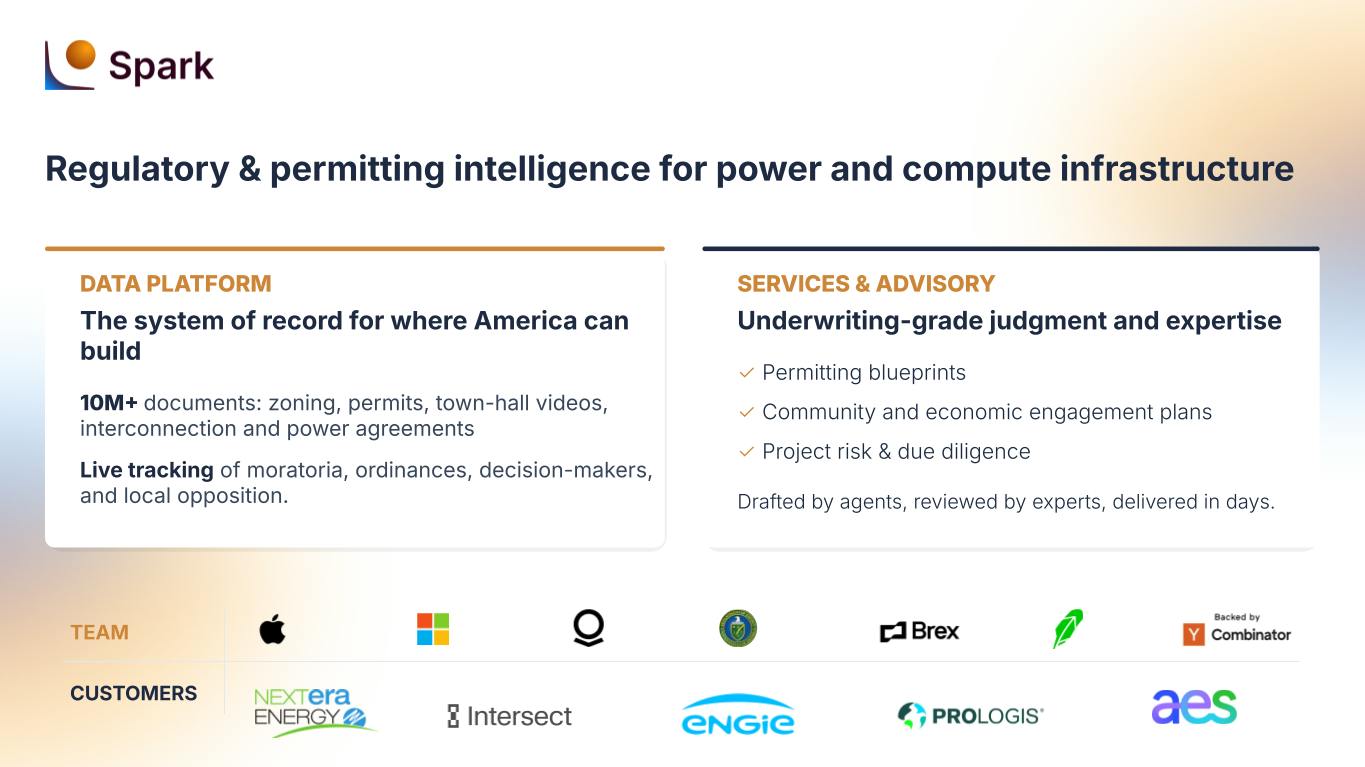
Spark AI pairs AI agents with expert review to speed up data center permitting and diligence.
Amid the data center boom, permitting and due diligence are an underestimated bottleneck. Spark AI's Product Hunt launch offers AI-native permitting and diligence: agents research 20,000+ jurisdictions, with every deliverable expert-reviewed. Three services cover stakeholder intelligence, permit matrices, and project diligence. Clients like NextEra, Prologis, and Intersect (Google) cover 200 GW of pipeline. The hybrid model balances efficiency and reliability, but scaling expert review and proving agent accuracy remain the real tests.
Title
Spark AI: Using Agents to Crack the Data Center Permitting Challenge
Meta Description
Spark AI launches AI-native permitting and diligence services for data center projects on Product Hunt. The platform uses agents to research over 20,000 jurisdictions, offering three services: stakeholder intelligence, permit matrices, and project diligence, with every deliverable reviewed by experts. Companies like NextEra and Prologis have already adopted it.
Article Content
Behind the data center construction boom, an often-overlooked bottleneck is slowing projects down: permitting and due diligence. From land permits to grid interconnection, from community hearings to regulatory compliance, every step involves a large number of fragmented jurisdictions and complex stakeholders. The product Spark AI launched on Product Hunt targets exactly this pain point—using AI-native services to accelerate the permitting and due diligence process for data centers. According to its page, the platform has been adopted by companies such as NextEra, Prologis, and Intersect (Google), collectively covering 200 GW of pipeline capacity.
Data Center Permitting: An Underestimated Scalability Bottleneck
Siting and building a data center is not just an engineering and capital problem. Whether a project can get off the ground often depends on non-technical factors such as local zoning regulations, power interconnection queues, environmental permits, and community sentiment. Spark AI positions itself as providing AI-native permitting & diligence services—that is, delivering permitting and due diligence services in an AI-native way, rather than simply moving traditional consulting processes online.
According to its official description, the core of the platform is a permitting intelligence platform, backed by agents that research more than 20,000 jurisdictions, with every deliverable reviewed by experts. This "AI agents + expert review" model attempts to strike a balance between efficiency and reliability. For data center developers, uncertainty in the permitting cycle directly affects financing节奏 and launch timelines, so the value of such services lies in compressing the time needed for information gathering and judgment.
Zoning is the core institution of local land-use regulation in the United States, under which municipal or county governments designate permitted uses, building density, height, and more for different parcels through zoning ordinances. Data centers are usually not directly covered by existing zoning categories, so developers often need to apply for a conditional use permit or rezoning, and go through planning commission hearings and public comment. Because there are tens of thousands of local governments across the U.S. each setting their own rules, the permitting path for the same project can differ drastically across jurisdictions—this is precisely the root cause of why permitting is hard to standardize.
The interconnection queue refers to the process that generation or large-load users must go through when applying to connect to the transmission grid, managed by regional transmission organizations (such as PJM, MISO, and ERCOT). As hyperscale loads, data centers must go through power flow analysis, reliability assessment, and other steps for their interconnection applications. In recent years, queue times have often reached several years, making this one of the main factors behind project delays.
Three Core Services: From Decision-Maker Profiles to Project Risk
Spark AI splits its services into three modules, covering different stages of permitting and due diligence.
Stakeholder Intelligence: Who Decides, and How They Vote
The first service focuses on stakeholder intelligence, answering questions like "who makes the decisions and how have they voted in the past." In data center projects, the attitudes of local planning commissions, utilities, community organizations, and other players often determine the direction of permitting. Spark AI uses agents to research public records across jurisdictions, helping clients identify key decision-makers and their historical positions in advance.
Permit Matrices: Which Permits Are Needed, Whom to Apply To, and How Long Approval Takes
The second service is permit matrices, mapping out which permits a specific project needs, which agency to apply to, and what the expected timeline looks like. Because markets such as the U.S. have tens of thousands of local jurisdictions with vastly different permit requirements, manual compilation is extremely costly. Spark AI claims its agents cover more than 20,000 jurisdictions—a scale that underpins its platform capabilities.
Project Diligence: Regulatory, Power, and Competitive Risks
The third service is project due diligence, focusing on risks from regulation, utilities and power, competition, and other areas. Data centers have enormous power demand, and grid interconnection and power supply contract terms can be critical to a project's success. Spark AI's diligence service attempts to present these risk points systematically.
What the Hybrid Model of AI Agents and Expert Review Means
What is noteworthy about Spark AI's model is that it does not claim to be fully automated. The platform explicitly states that "every deliverable is reviewed by experts." In high-stakes scenarios such as permitting and due diligence, the credibility of purely AI-generated output remains an obstacle, and expert review can be seen as a quality backstop.
This hybrid model also reflects a reality: jurisdictional rules are fragmented and frequently updated, so AI agents are well suited for large-scale information gathering and preliminary judgment, but final decisions still require human professional expertise. For clients, this means they are buying both the efficiency of AI and the reliability of expert services. According to its page information, clients such as NextEra, Prologis, and Intersect (Google) collectively have 200 GW of pipeline capacity—a figure that can serve as a reference for the scale of its services, though specific project outcomes have not yet been disclosed in detail in public information.
Who Needs These Services
From its product positioning, Spark AI's target customers are data center developers, energy companies, and infrastructure investors. These players need a large amount of permitting and due diligence information in the early stages of a project to support investment decisions. Traditional consulting firms also offer similar services, but Spark AI's differentiation lies in using AI agents to expand research coverage and delivering through a platform-based approach.
On Product Hunt, the product received 70 votes and 2 comments, ranking 17th. This level of engagement is normal for vertical B2B tools, and it also shows that its audience is relatively specialized. For those interested in how AI is being applied in climate tech and infrastructure, Spark AI offers a sample for observing how AI-native services can切入 traditional permitting processes. Its real test lies in whether expert review can scale and whether the accuracy of agent research can withstand the scrutiny of actual projects.
One-line Summary
Spark AI uses AI agents plus expert review to accelerate data center permitting and due diligence.
Paragraph Summary
Amid the data center construction boom, permitting and due diligence have become an underestimated scalability bottleneck. Spark AI launched AI-native permitting and due diligence services on Product Hunt, with a core built on agents researching more than 20,000 jurisdictions and every deliverable reviewed by experts. The platform includes three services: Stakeholder Intelligence identifies key decision-makers and their historical positions; Permit Matrices maps out permit lists, application agencies, and timelines; Project Diligence assesses regulatory, power, and competitive risks. Clients include NextEra, Prologis, and Intersect (Google), collectively covering 200 GW of pipeline capacity. Its hybrid "AI agents + expert review" model attempts to balance efficiency and reliability, but whether expert review can scale and whether agent accuracy can withstand scrutiny remain the real tests.
Related articles
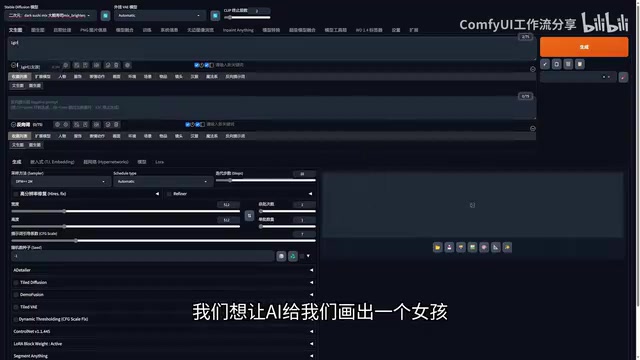
Akio SD Bundle 2026 Edition: One-Click Install & Zero-Basics Image Generation Tutorial
Akio Stable Diffusion bundle 2026 one-click install tutorial: text-to-image prompts, checkpoint and VAE selection, sampling parameters, seed reproduction, and ControlNet line-art repainting—generate images from zero basics.
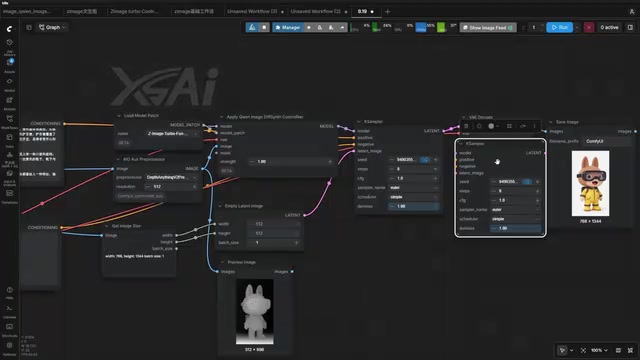
ComfyUI Two-Stage Sampling in Practice: A Guide to Choosing ControlNet Preprocessors
ComfyUI two-stage sampling tutorial: ControlNet controls structure in stage one; stage two drops ControlNet to boost quality with Denoise at 0.75. Covers OpenPose, Canny, Soft Edge, and Depth preprocessors.

2026's Most Mind-Bending Animated Series 'Infinite Flow': The Ultimate Fusion of Mystery, Deduction, and Survival Challenges
An in-depth analysis of Bilibili's animated series *Infinite Flow*: its infinite-flow worldview, mystery-deduction and survival challenges, Lin Qian's growth, ensemble portrayal, and narrative ambition.