SQLite STRICT Tables Explained: The Type Enforcement Debate and Best Practices

SQLite STRICT tables explained: the type enforcement debate, the author's defense, and why defaults matter.
SQLite's flexible typing has long divided developers. This article explores the STRICT table feature introduced in SQLite 3.37.0, the official defense of flexible typing, the community's counterarguments conflating validation with types, SQLite creator D. Richard Hipp's direct response, and the Turso/libSQL alternative — concluding that using STRICT tables by default is the safest choice for new projects.
SQLite's Type Flexibility: Feature or Flaw?
SQLite has long carried a controversial design decision: by default, any type of data can be written to any column. The project officially calls this "flexible typing," but many developers consider it an unacceptable "misfeature."
It's worth noting that SQLite's flexible typing isn't simply "no types" — it's built on a mechanism called Type Affinity. SQLite defines five affinities: TEXT, NUMERIC, INTEGER, REAL, and BLOB. When data is written, SQLite attempts to convert the value to the column's affinity type, but if the conversion isn't appropriate, it stores the original value as-is. This stands in sharp contrast to databases like MySQL and PostgreSQL, which strictly reject incompatible types. The historical roots of this design trace back to SQLite's origins in 2000, when it was first built for shipboard missile systems in the U.S. Navy, with goals of extreme lightness and fault tolerance — in embedded contexts, overly strict type checking could cause unexpected data loss.
Recently, a Reddit thread sparked heated discussion around the premise that "SQLite STRICT tables should be preferred by default." The original poster was blunt: "SQLite allowing any data into any column by default has always struck me as incredible. I'm glad there's now a way to turn off this misfeature."
STRICT tables were introduced in SQLite 3.37.0 (released November 2021). Adding the STRICT keyword at table creation causes SQLite to strictly enforce column data type constraints, rejecting data that doesn't match the declared type — aligning its behavior with most traditional relational databases. In STRICT mode, columns may only use one of six data types: INT, INTEGER, REAL, TEXT, BLOB, and ANY. ANY is a special type that explicitly declares a column accepts any type, contrasting with the default implicit flexibility — the former is a deliberate developer choice, the latter a passive default. Notably, STRICT is a table-level attribute, not database-level, meaning a single database file can contain both STRICT and non-STRICT tables, balancing backward compatibility with type safety for new projects.
The Official Position: Type Enforcement Isn't a Silver Bullet
The debate centers on an official SQLite documentation page (sqlite.org/flextypegood.html). The core official argument is: type enforcement cannot truly prevent bad data from entering a database.
The original text states:
"Some people think that imposing strict constraints on a schema, and in particular enforcing strict column datatypes, will help prevent bad data from entering the database. This is not true. Type enforcement might prevent obviously wrong data from entering the system, but it does nothing to stop subtly wrong data."
However, this statement drew sharp criticism from the community. One commenter noted a logical contradiction: "The docs say 'strict types can't help avoid entering invalid data,' then the very next sentence explains how types helped avoid writing invalid data."
Critics argue that most of the page amounts to examples of "why a column might need to accept multiple types," while dodging the real core question: why should this flexibility apply by default to every column?
The Data Validation vs. Data Types Debate
Another repeatedly raised criticism is that SQLite's defense conflates two distinct concepts: "data validation" and "data types."
One developer commented: "Same old arguments against types, conflating data validation with data types. The examples they give at the bottom of their page actually illustrate that they're doing validation wrong."
This criticism hits the mark. Type systems address the question "is this value a number?" Data validation addresses "is this number within a reasonable range and does it follow business rules?" The official documentation uses "types can't prevent subtle errors" to dismiss the value of types — which is essentially using the limitations of validation to negate the role of type constraints. The logic doesn't hold up. Type enforcement may not guarantee data is fully correct, but it is the first line of defense in building a reliable data layer.
The SQLite Author Responds Directly
The most authoritative voice in the discussion came from SQLite's creator, D. Richard Hipp himself. Drawing on 35 years of C development experience, he defended SQLite's design from a counterintuitive angle:
"I've written C code for 35 years, including SQLite itself. I find C's type system very helpful in finding and preventing problems… But no SQL bugs have ever been caught by type enforcement."
He went on to make a refined argument:
"Based on decades of experience, I reject the proposition that 'strict type enforcement helps prevent application bugs.' But I accept a modified version: strict type enforcement helps prevent application bugs in languages that lack a unified top-level 'Value' superclass. SQLite does have a unified
sqlite3_valuesuperclass, so the adage doesn't apply."
sqlite3_value is a core data structure in SQLite's C API — an opaque type capable of holding any SQLite value (integer, float, text, BLOB, or NULL). From a type theory perspective, this is analogous to an algebraic data type or tagged union: each value carries its own type tag at runtime. Hipp's argument is that SQLite values are always typed internally; they just aren't required to match the column declaration at storage time. This is similar to dynamic languages like Python or Ruby — variables themselves have no type, but values do.
This defense is clever — it frames SQLite's dynamic typing as analogous to systems with a unified Value type. But critics fired back immediately: "What about void*? Imagine writing Java using only Object everywhere, or just writing JavaScript." This retort exposes the real issue: an unconstrained top-level type in large systems pushes type errors from write-time to runtime, dramatically increasing debugging costs. Universal top-level types are precisely where many type-related bugs breed.
Turso: A New Option from a Rust Rewrite
Turso emerged repeatedly in the discussion as an alternative. At its core is libSQL, an open-source fork of SQLite developed and maintained by Turso. Unlike SQLite, libSQL implements key components in Rust and introduces a WAL2 (Write-Ahead Logging v2) mechanism for more efficient replication and concurrency. Fuzz testing is a key part of libSQL's quality assurance — by feeding the database engine large volumes of random, malformed, or edge-case data, it automatically discovers potential crashes and security vulnerabilities, which is especially important for infrastructure requiring extreme reliability.
One user shared their experience: "Turso as a drop-in has worked quite well for my use cases." Its core appeal: maintaining SQLite compatibility while significantly enhancing type strictness. Turso also offers encryption, async operations, journaled transactions, and the ability to replicate a remote database locally for local-speed access. libSQL implements a SQLite protocol compatibility layer allowing existing SQLite applications to switch without code changes, though its extended features require additional client library support.
However, some developers questioned whether "drop-in replacement that also transcends SQLite" is achievable: "If the behavior is identical (required for drop-in), it doesn't solve the core problem of this thread, does it?" Turso is still navigating the balance between compatibility and evolution.
Should Databases Even Manage Types?
On the other side of the debate, some developers took a different stance: "This is a database. If needed, let the application developer handle type conversion — who knows where the data is coming from?"
And someone half-jokingly summed it up: "Probably saving that layer of validation is part of why it's called 'lite.'"
This quip actually captures the essence of SQLite's design philosophy — it was built from the start for extreme lightness, embedded use, and zero configuration. A relaxed type system reduces implementation complexity and runtime overhead, fitting the "lite" product positioning.
Conclusion: Defaults Define Most Users' Experience
The heart of this debate isn't whether STRICT tables should exist — they already do. The real disagreement is about what the default behavior should be.
Software design has a simple principle: defaults determine what the vast majority of users actually experience. The behavioral economics concept of the "Default Effect" demonstrates that most users stick with system defaults regardless of whether those settings fit their actual needs. PostgreSQL chose strict typing as the default; SQLite chose flexible typing — these two divergent defaults have shaped completely different mental models in their respective user communities. The designers of Rust took this philosophy to an extreme: immutable by default, safe by default, with dangerous operations explicitly marked as mut or unsafe. By comparison, SQLite's STRICT keyword effectively requires "explicitly declaring safety" rather than "explicitly declaring danger" — and the Rust community's experience suggests the former tends to cultivate a more robust code ecosystem.
When loose typing is the default, countless developers unknowingly take on data consistency risks. For new projects, the community's recommendation is clear: proactively add the STRICT keyword when creating tables and take type safety into your own hands. At the same time, the SQLite author's position deserves to be remembered: type enforcement is not a silver bullet — it cannot replace real data validation and rigorous application logic.
The ideal approach may be this: use STRICT tables to hold the line on types, then use application-layer validation to ensure business correctness. Neither alone is sufficient.
Key Takeaways
Related articles
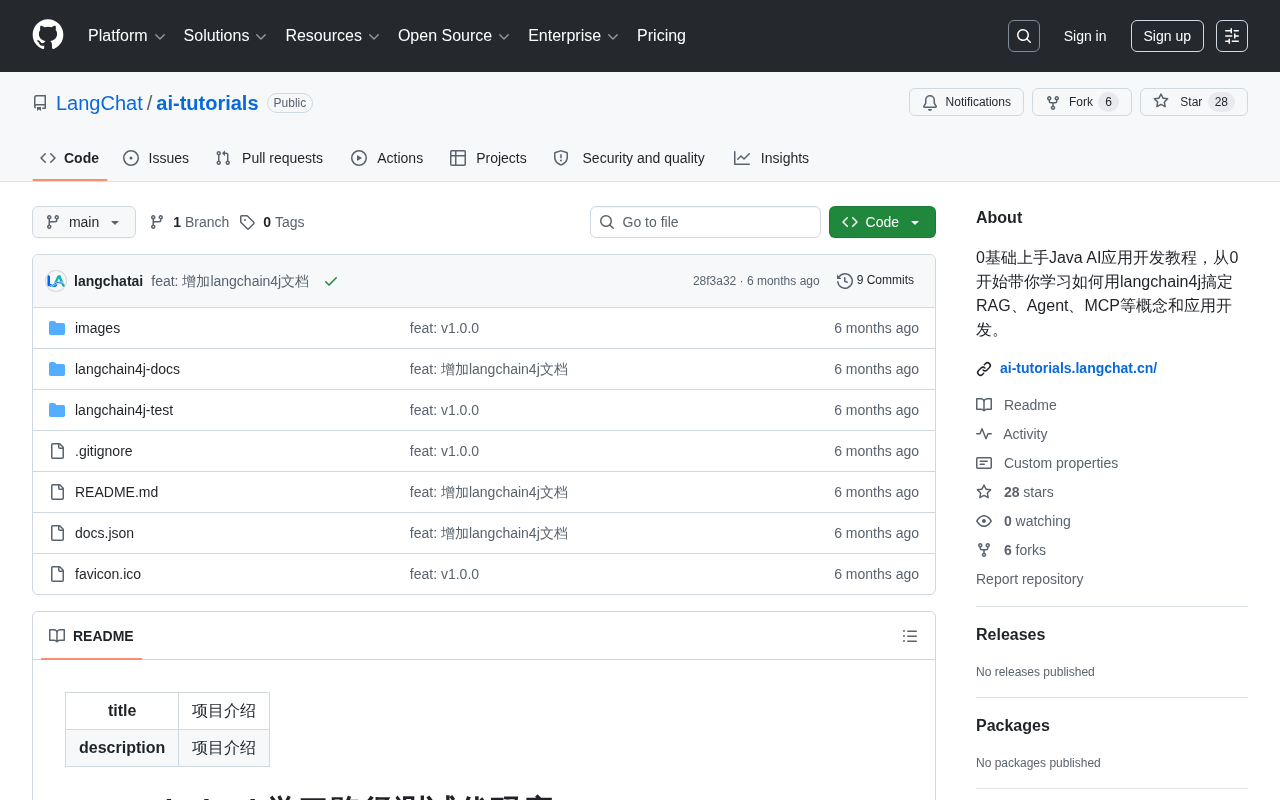
LangChat ai-tutorials: A Beginner's Guide to AI App Development for Java Developers
LangChat ai-tutorials is a beginner-friendly Java AI tutorial series built on langchain4j, covering RAG, Agent, and MCP for Java developers entering AI development.
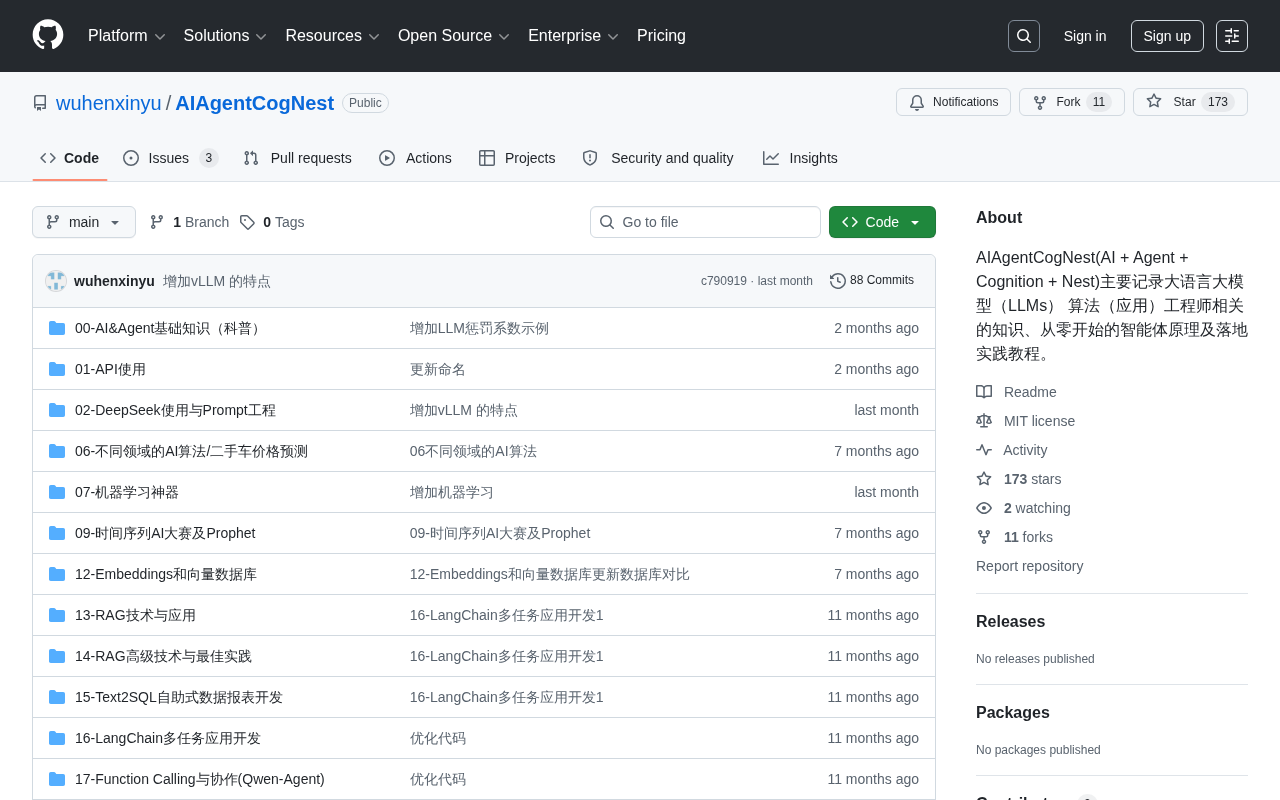
AIAgentCogNest: An Open-Source AI Agent Knowledge Incubation & Development Tutorial Project
AIAgentCogNest is an open-source AI Agent knowledge incubation project offering structured LLM application development tutorials for developers, engineers, and teams transitioning to AI.
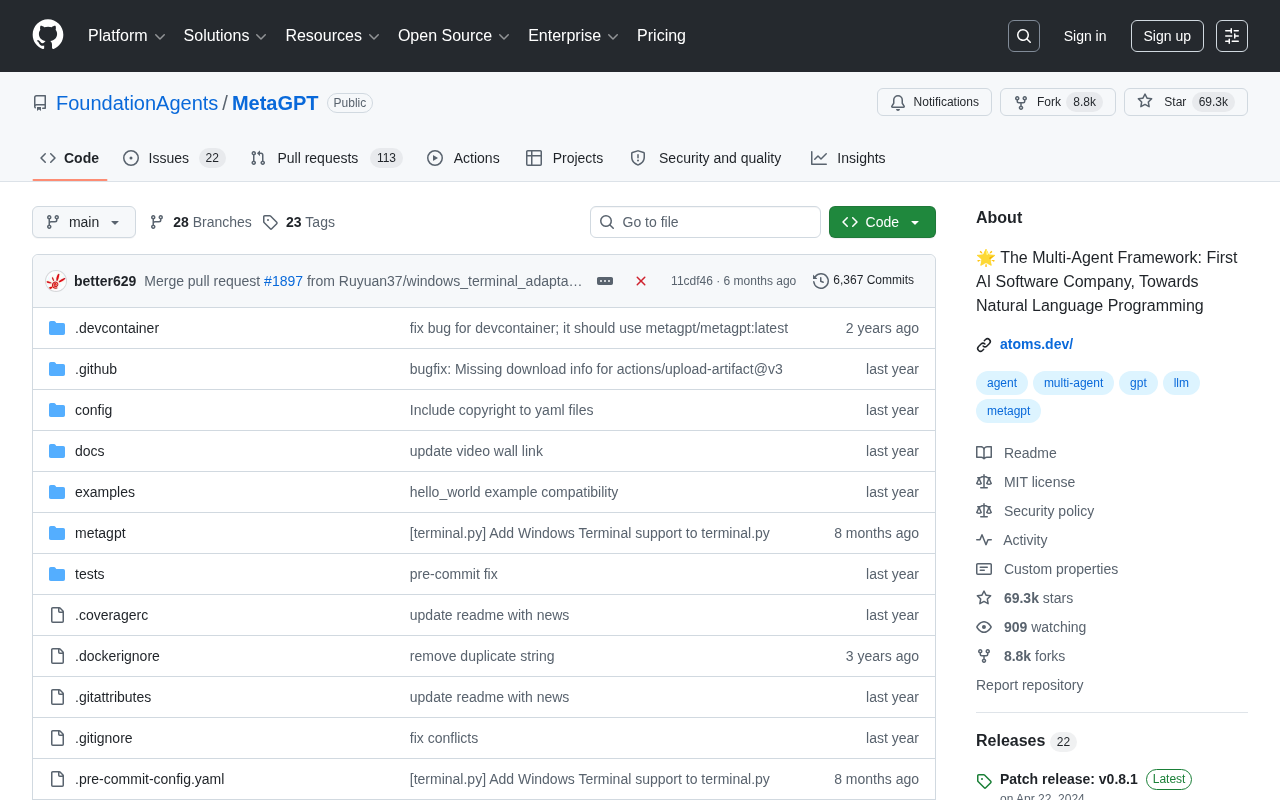
MetaGPT Explained: Building the First AI Software Company with a Multi-Agent Framework
MetaGPT is an open-source multi-agent framework with 67K+ GitHub stars that simulates a full AI software company — with PM, architect, and engineer agents — to enable natural language programming.