Sqlsure: A Guardrail Tool Adding Deterministic Semantic Validation to AI-Generated SQL
Sqlsure: A Guardrail Tool Adding Deter…
Sqlsure adds deterministic semantic validation to catch logical errors in AI-generated SQL before execution.
Sqlsure is a guardrail tool for AI-generated SQL that provides deterministic semantic validation. It catches logical errors—like wrong JOINs or flawed aggregation—that pass syntax checks but corrupt data. Ideal for Text-to-SQL products, AI Agent database operations, and CI/CD pipelines.
When AI Writing SQL Becomes the Norm, Who Ensures Correctness?
As large language models (LLMs) find widespread application in data analysis and database operations, more and more developers are letting AI directly generate SQL queries. Whether through natural language-to-SQL (Text-to-SQL) tools or by generating database queries directly within code assistants, AI is gradually taking on the core work of data retrieval.
Text-to-SQL technology traces its origins back to the LUNAR system of the 1970s, but it only became truly practical after the rise of large language models. Current mainstream approaches rely on models fine-tuned on standard benchmark datasets such as WikiSQL and Spider. General-purpose LLMs like GPT-4 and Claude have exceeded 85% accuracy on the Spider benchmark, but they still show clear weaknesses in complex scenarios involving multi-table joins and nested subqueries—which happen to be the most common query forms in production environments.
Yet there is a risk hiding behind all this that cannot be ignored: AI-generated SQL is often syntactically correct, but not necessarily semantically aligned with the true intent. A SQL statement that executes smoothly without any errors may return completely wrong data—joining the wrong fields, containing biased aggregation logic, or missing edge cases in filter conditions. The "hallucination" phenomenon of LLMs is especially insidious in SQL generation: a model might confuse similar field names (such as user_id and account_id), choose the wrong JOIN type (the semantic difference between INNER JOIN and LEFT JOIN can produce entirely different result sets), omit necessary fields in GROUP BY, or ignore boundary conditions in time-range filtering. These issues are extremely dangerous in production environments, because they don't trigger exceptions yet silently corrupt business decisions—potentially causing serious mistakes in scenarios like financial reporting and user statistics.
It is against this backdrop that Sqlsure, which recently appeared on Hacker News in the form of a "Show HN" post, has drawn attention. Its positioning is very clear: to provide deterministic semantic checks for AI-generated SQL.
What Core Problem Does Sqlsure Solve
Syntactically Correct ≠ Semantically Correct
Traditional SQL validation tools mostly stay at the syntax level—checking keyword spelling, bracket matching, whether table names exist, and so on. SQL linters are typical representatives of this category, such as SQLFluff and sqlcheck. They detect potential issues by parsing SQL's abstract syntax tree (AST), primarily covering syntax conventions, naming standards, and performance anti-patterns (such as SELECT * or missing index hints). While such checks are necessary, they are far from sufficient. Semantic validation, by contrast, needs to incorporate database schema information—understanding table relationships, field type constraints, business rules, and other context. This is precisely the weakest link in existing toolchains.
Sqlsure's core idea is to introduce deterministic validation at the semantic level. So-called "determinism," in computer science, specifically refers to a system where the same input always produces the same output—fundamentally different from neural network models that rely on probabilistic sampling. This means Sqlsure does not rely on another AI model to judge right from wrong (which would introduce new uncertainty), but instead verifies whether the SQL's semantics are reasonable through rule-based, predictable methods. This point is especially critical: if you use a potentially error-prone model to validate another potentially error-prone model, the problem is only compounded rather than solved.
A Validation Layer Designed Specifically for AI Workflows
As the name and positioning suggest, Sqlsure is not a general-purpose SQL linter, but is specifically targeted at the validation stage of AI-generated SQL. It aims to become a "safety gate" between AI and databases—vetting the semantic soundness of AI-generated queries before they actually get executed.
This "validation layer" design philosophy is in line with the increasingly popular "guardrails" approach in current AI engineering. Frameworks such as Guardrails AI and NVIDIA NeMo Guardrails have already been widely adopted in the field of LLM content moderation, and their core value lies in converting "uncertain AI outputs" into "auditable deterministic decisions." For enterprise applications that need to meet regulatory requirements such as SOX compliance and GDPR data governance, this auditability is especially important. Whether it's moderating LLM-generated content or constraining Agent behavior, an industry consensus is gradually forming: AI-generated artifacts need deterministic, auditable validation mechanisms as a backstop.
Why "Deterministic" Is the Keyword
Across the entire wave of AI application engineering, "determinism" is becoming an increasingly valued attribute. Generative AI is inherently random and unpredictable—the same input may produce different outputs. This may be an advantage in creative writing, but it is a fatal flaw in scenarios like database operations that demand extremely high accuracy.
Sqlsure's emphasis on deterministic validation is, in effect, about establishing reliable boundaries for uncertain AI outputs. Developers can know for certain that as long as SQL passes Sqlsure's checks, its semantics satisfy the predefined rule constraints—and that this judgment process is reproducible and explainable.
For teams that need to integrate AI into serious business systems, this predictability matters far more than "intelligence." A deterministic tool that can reliably intercept most errors often has greater engineering value than an AI validator that occasionally dazzles but is uncontrollable.
Three Typical Use Cases
A Safety Guardrail for Text-to-SQL Products
For teams building natural language query products, Sqlsure can serve as an intermediate layer between generated results and execution. When a user asks a question in natural language and the AI generates SQL, Sqlsure validates it first, preventing erroneous queries from directly hitting the production database. This is especially critical for BI tools and data Q&A products aimed at non-technical users—such users often cannot identify logical errors in returned results and rely entirely on the system's self-validation capabilities.
An Audit Node for AI Agent Database Operations
As autonomous AI Agents become increasingly widespread, the demand for letting Agents operate databases directly is growing, but the accompanying risks are not to be underestimated. According to the principle of least privilege, AI Agents should only be able to execute validated operations. Tools like Sqlsure can act as an audit node in the Agent's execution chain, ensuring every SQL statement undergoes semantic validation before execution, while retaining complete validation logs for later auditing.
Automated Semantic Checks in the CI/CD Pipeline
Incorporating database-related checks into the CI/CD pipeline is an important part of DataOps practice. Existing database change management tools such as Flyway and Liquibase support versioned schema migrations, and with the popularization of AI-assisted programming, how to apply automated quality gating to AI-generated SQL has become a new challenge. A complete database CI/CD pipeline typically includes multiple stages such as syntax checking, schema compatibility verification, performance impact assessment (execution plan analysis), and semantic correctness validation. For teams that incorporate AI-assisted programming into daily development, Sqlsure has the potential to be integrated into the CI/CD pipeline, filling the critical gap of semantic validation and serving as an effective complement to the code review process.
Observations and Open Questions for an Early-Stage Project
Based on the data from Hacker News, the project is still at an early stage. This means it has not yet been fully validated by the community, and key details—such as its actual effectiveness, the database types it supports, and the coverage of its semantic rules—remain to be disclosed.
As a "Show HN" project, the problem direction that Sqlsure raises is highly valuable—the reliability problem of AI-generated SQL is real, and it will become increasingly prominent as AI adoption rises. But the success or failure of a tool ultimately depends on how many real-world scenarios its semantic checks can cover, whether its false positive rate is controllable, and whether it can be smoothly integrated into existing workflows.
Several questions worth continued attention include: How are Sqlsure's semantic rules defined and maintained? Does it require users to provide database schema or business context? In the absence of business semantics, how deep can "deterministic checks" actually verify? The answers to these questions will determine whether it becomes a genuinely practical engineering tool or merely an attempt that stays at the conceptual level.
Conclusion: "Trust but Verify" in the AI Era
The emergence of Sqlsure reflects a general trend in the process of AI engineering: we are no longer satisfied with AI being "able to generate"—we demand that it be "trustworthy." In a domain like databases where errors are unacceptable, adding a deterministic validation layer to AI outputs is a rational and necessary choice.
As the well-known adage goes—"trust but verify." While embracing AI productivity, establishing reliable validation mechanisms may be the correct posture for AI to truly move into serious production environments. Whether Sqlsure can become the benchmark in this field remains to be tested by time, but the direction it represents deserves serious consideration from every developer bringing AI into their data workflows.
Related articles
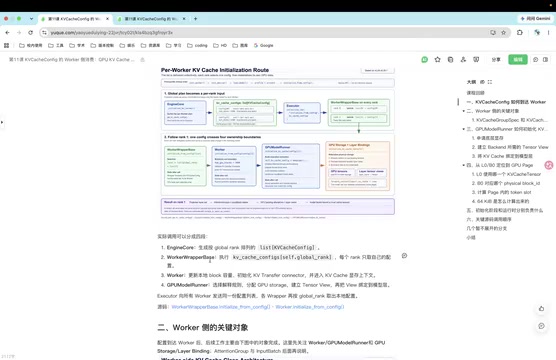
Deep Dive into vLLM Worker-Side GPU KV Cache Initialization
Deep dive into vLLM's Worker-side KV Cache GPU memory allocation, covering the full pipeline from KVCacheConfig generation to physical memory binding via ModelRunner.
Zepto Builds AI Customer Service with MLflow: An Evaluation-Driven Practice Guide
Deep dive into how Zepto built an evaluation-driven AI customer service system using MLflow and Databricks, achieving 60% faster responses and 40% less manual handling. From technical architecture to practical insights.
Iran Captures U.S. Underwater Drone in Strait of Hormuz: A Comprehensive Analysis
Iran announces capture of U.S. Navy underwater drone in Strait of Hormuz. In-depth analysis of the incident, strategic value of UUVs, U.S.-Iran geopolitical competition, and implications for global energy security and military dynamics.