Squeezing the Apple Neural Engine: How to Reclaim 50 GB/s of Bandwidth
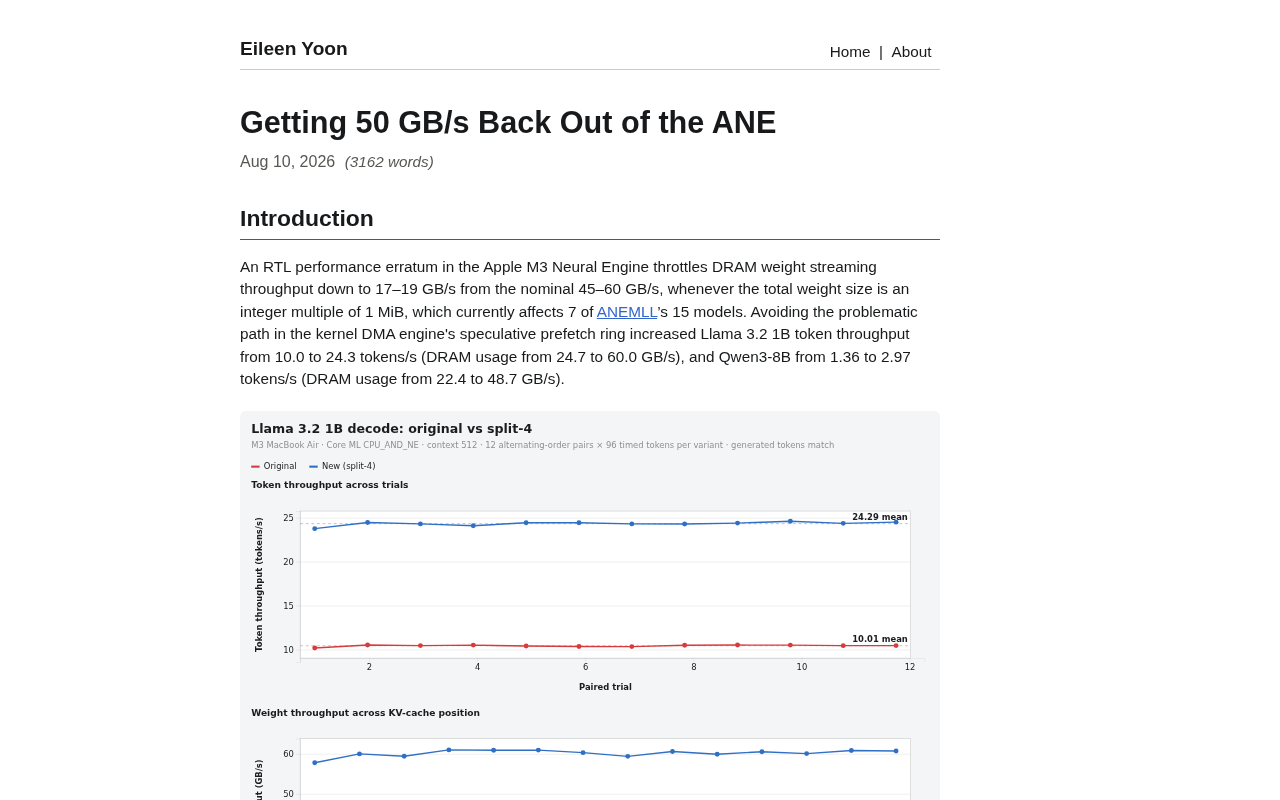
Reclaim wasted ANE bandwidth via data layout alignment and operator fusion for faster on-device AI inference.
The Apple Neural Engine (ANE) is a powerful but opaque ML accelerator in Apple silicon. This article examines why memory bandwidth gets wasted on ANE: inference is memory-bound, and when model data layouts or operator types don't match ANE's hardware preferences, implicit conversions and silent CPU/GPU fallbacks drain effective bandwidth. Aligning data layouts, choosing ANE-native operators, and minimizing memory round-trips can recover that lost headroom. The piece also highlights how ANE's closed nature forces developers to rely on reverse engineering, and argues that memory bandwidth — not FLOPS — should be the primary optimization focus for on-device AI on Apple platforms.
The Hidden Potential of the Apple Neural Engine
The Apple Neural Engine (ANE) — the dedicated machine learning accelerator inside Apple's custom silicon — has long been a black box for developers. It handles neural network inference with impressive efficiency, but Apple's tight grip on implementation details has made it difficult to fully exploit its capabilities. A recent technical discussion (originally titled Getting 50 GB/S Back from the Apple Neural Engine) sparked significant interest on Hacker News, centering on how to recover wasted memory bandwidth from the ANE.
The phrase "reclaiming 50 GB/s" refers to restoring meaningful effective bandwidth to inference workloads that are bottlenecked by memory access — achieved through careful model architecture design and data layout optimization. For developers deploying local AI models on Apple devices, this translates directly into measurable performance gains.
Why Bandwidth Gets Wasted
Neural network inference performance is often not compute-bound — it's memory-bound. When model operators fail to effectively utilize the ANE's compute units, or when data is repeatedly shuffled between memory and compute, precious memory bandwidth gets burned unnecessarily.
For specialized accelerators like the ANE, the hardware is optimized for specific data formats, tensor dimensions, and operator types. When a model's data isn't organized the way the hardware expects, it triggers implicit format conversions, memory read-backs, or fallbacks to CPU/GPU execution. The result is a massive gap between theoretical peak bandwidth and actual usable bandwidth. The "50 GB/s" in the title represents exactly that gap — the performance headroom that can be recovered once the root causes are addressed.
Understanding this problem requires some familiarity with the ANE's fundamental architecture. The ANE is a fixed-function accelerator designed primarily for matrix multiplications and convolution operations. Its internal compute units operate on specific tile sizes and memory alignment requirements. Apple has never publicly documented the full ANE specification, but through reverse engineering efforts from the community — including the Asahi Linux team and researchers like @dougallj — it's known that the ANE prefers tensor dimensions that are multiples of certain values (e.g., channel counts that are multiples of 16 or 64), as well as specific memory layouts like NHWC. When a model contains operators that don't satisfy these constraints, the Core ML runtime silently falls back to GPU or CPU execution. The data movement involved in these cross-unit fallbacks consumes substantial memory bandwidth and introduces synchronization latency — and this is the fundamental reason for the gap between peak theoretical bandwidth and measured effective bandwidth.
The Core Optimization Strategy
Based on the technical discussion, reclaiming this bandwidth comes down to making computation conform as closely as possible to the ANE's hardware characteristics:
- Align data layouts: Ensure tensor dimensions and memory arrangements match the formats ANE expects, reducing implicit conversion overhead.
- Operator fusion and selection: Prioritize operators that ANE natively supports and handles efficiently, avoiding frequent fallbacks to other compute units.
- Minimize memory round-trips: Use graph-level optimizations to keep intermediate results in memory tiers that the accelerator can access efficiently, avoiding repeated data movement.
The essence of this approach is treating the right disease — optimizing for memory bottlenecks rather than compute bottlenecks. For local inference on iPhone, iPad, and Mac, these optimizations translate directly into lower latency and higher throughput.
Implications for On-Device AI Deployment
As on-device AI gains momentum, more applications are moving model inference to local hardware to balance privacy, latency, and offline availability. Apple's massive installed base makes the ANE an extremely valuable target platform for edge AI. Yet the ANE's closed nature has long been a pain point for the developer community — the lack of transparent performance profiling tools and documentation means performance tuning relies heavily on reverse engineering and accumulated tribal knowledge.
Practical deep-dives like this one fill the gaps left by official documentation. They remind developers that when deploying models on Apple platforms, raw floating-point throughput (FLOPS) is not the whole story — memory bandwidth, often overlooked, is frequently the true performance-limiting factor.
Core ML is Apple's official model deployment framework. Developers typically use it to convert PyTorch or TensorFlow models into formats that can run on the ANE. Core ML automatically decides whether each operator runs on the ANE, GPU, or CPU — but this scheduling process is opaque to developers. Apple's MLComputeUnits option only allows coarse-grained selection of a preferred compute backend; it cannot force individual operators onto the ANE. As a result, even when a model is marked as "ANE-preferred," incompatible operators will silently fall back to other units, causing performance degradation that's hard to detect. The Core ML Instrument in Instruments can show per-layer execution, but the granularity remains limited. This toolchain opacity is precisely why the developer community has long relied on community reverse engineering rather than official documentation for ANE tuning.
Practical Directions Worth Exploring
For teams pursuing peak inference performance on Apple devices, a few directions are worth validating: using tools like Instruments to profile memory access patterns during inference; comparing execution distribution across ANE, GPU, and CPU to identify unexpected operator fallbacks; and considering ANE hardware constraints during the model conversion stage (e.g., via Core ML).
A note on sourcing: this article is based on a technical discussion thread from Hacker News, and the original material provides limited detail. Specific implementation details and full benchmark data should be sought from the original post and related technical references. Low-level ANE optimization remains a highly empirical domain — always let measured data guide your conclusions in practice.
Related articles
Insufficient Material: GPT-5.4 vs Claude Opus Comparison Repository Lacks Substantive Content
A GitHub repo named GPT-5.4-vs-Claude-Opus-4.6 has 0 stars, no code, and no evaluation data — not enough to support a meaningful model comparison article.
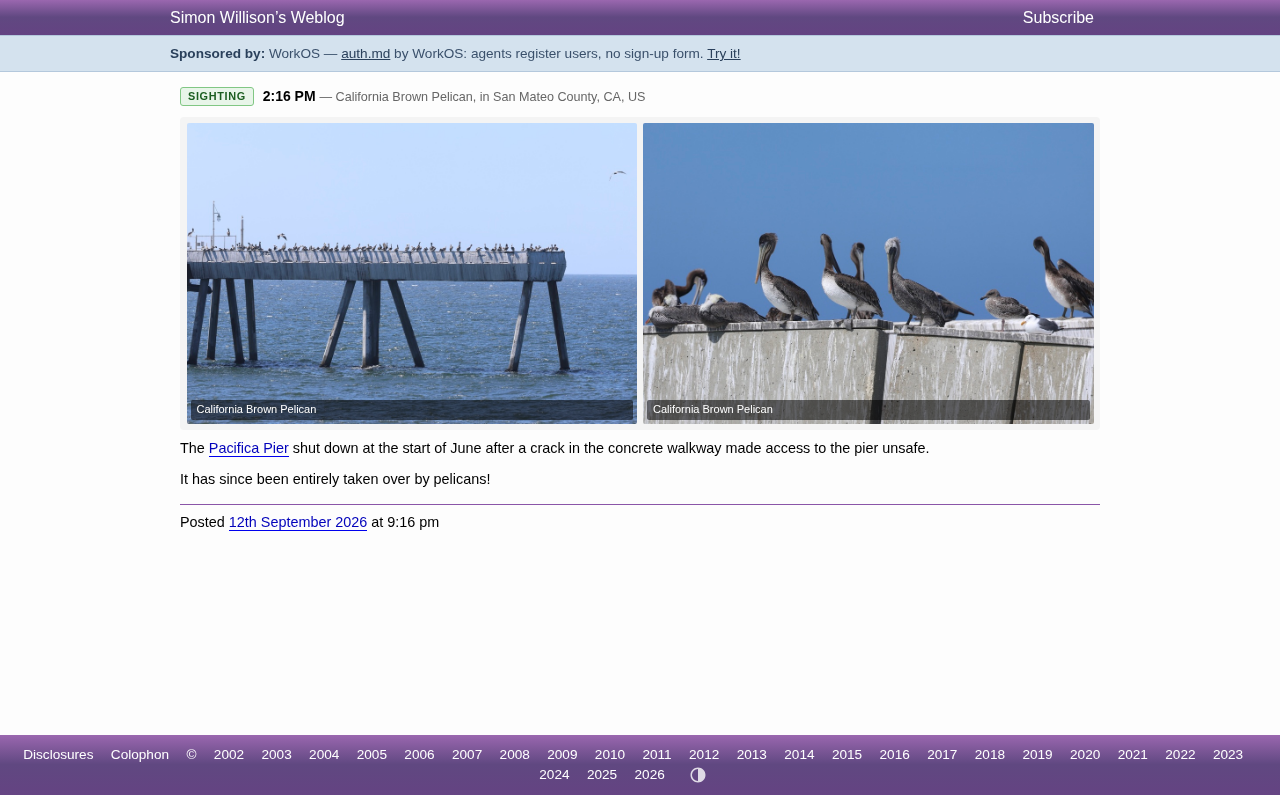
Insufficient Material: California Brown Pelican Observation Cannot Support a Tech Article
This source material is a nature observation of California Brown Pelicans at Pacifica Pier. It has no connection to AI or tech topics and cannot support a tech article.
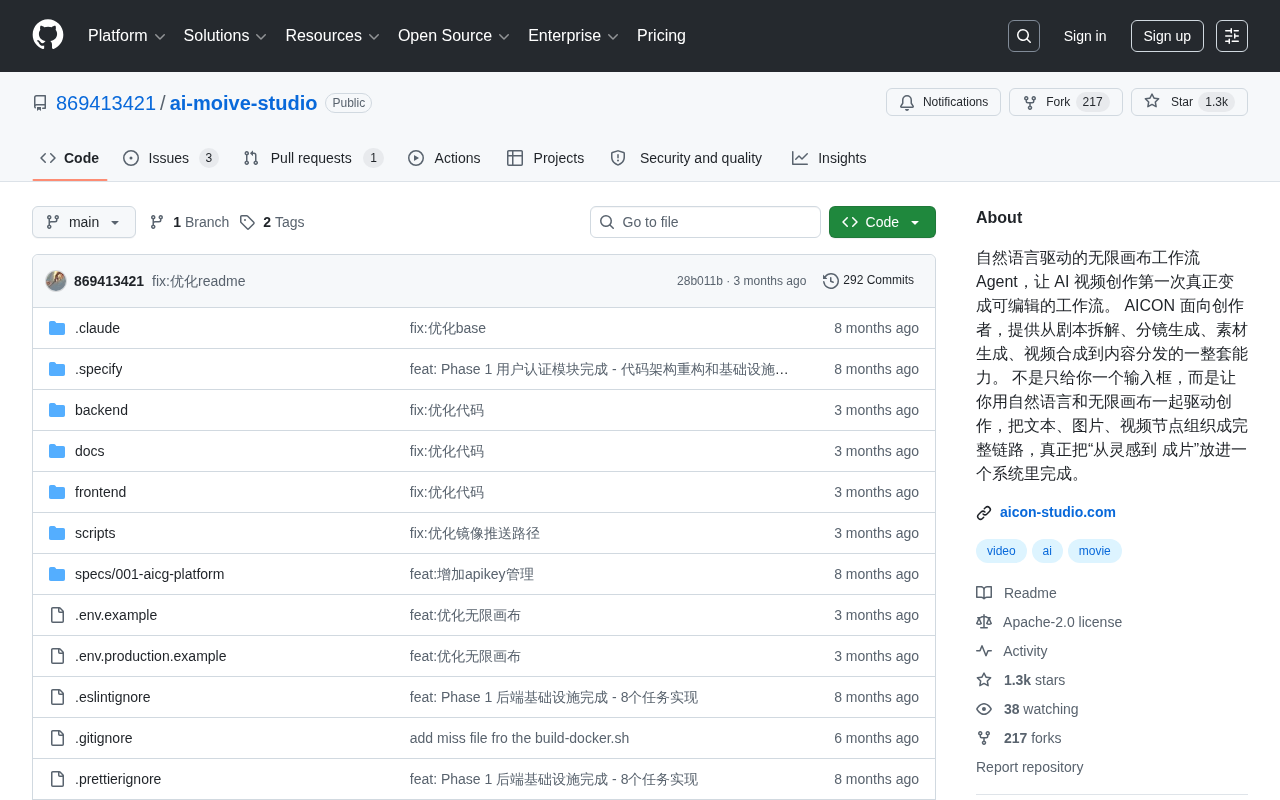
AICON: Natural Language-Powered Infinite Canvas That Turns AI Video Creation into an Editable Workflow
AICON (ai-moive-studio) is an open-source AI video creation tool using natural language and an infinite canvas to turn the full production pipeline into an editable, node-based workflow.