Streaming Is Still Copying TikTok: The Battle for Attention in Video Platforms Through the Skydance Merger

Streaming platforms repeatedly imitate TikTok's short-video feeds, but DNA conflicts and algorithmic gaps make it hard to succeed.
Using new CEO David Ellison's remarks after Skydance's acquisition of Warner Bros. Discovery as an entry point, the article notes that streaming platforms are redefining competitors as tech companies like YouTube and TikTok and trying to capture attention with TikTok-style short-video feeds. Yet from Netflix's Fast Laughs to HBO Max's short-content attempts, such transplants have never truly succeeded. The article explains the failure through product DNA conflict (UGC vs. PGC), algorithmic gaps, and content supply mismatch, and argues that streaming's more viable path lies in social viewing, live events, and personalized long-form recommendations rather than copying TikTok.
Streaming Platforms' TikTok-ification Anxiety
When Skydance completed its acquisition of Warner Bros. Discovery in October, new CEO David Ellison delivered a clear message to employees at his first all-hands meeting: the merged company (which owns Paramount Plus and HBO Max) is competing with the world's largest tech companies for user attention. Months earlier, he had already made it clear that getting viewers to spend more time on the platform would require borrowing a specific product format—though the original text didn't elaborate, in industry context this almost certainly points to a TikTok-style short-video feed.
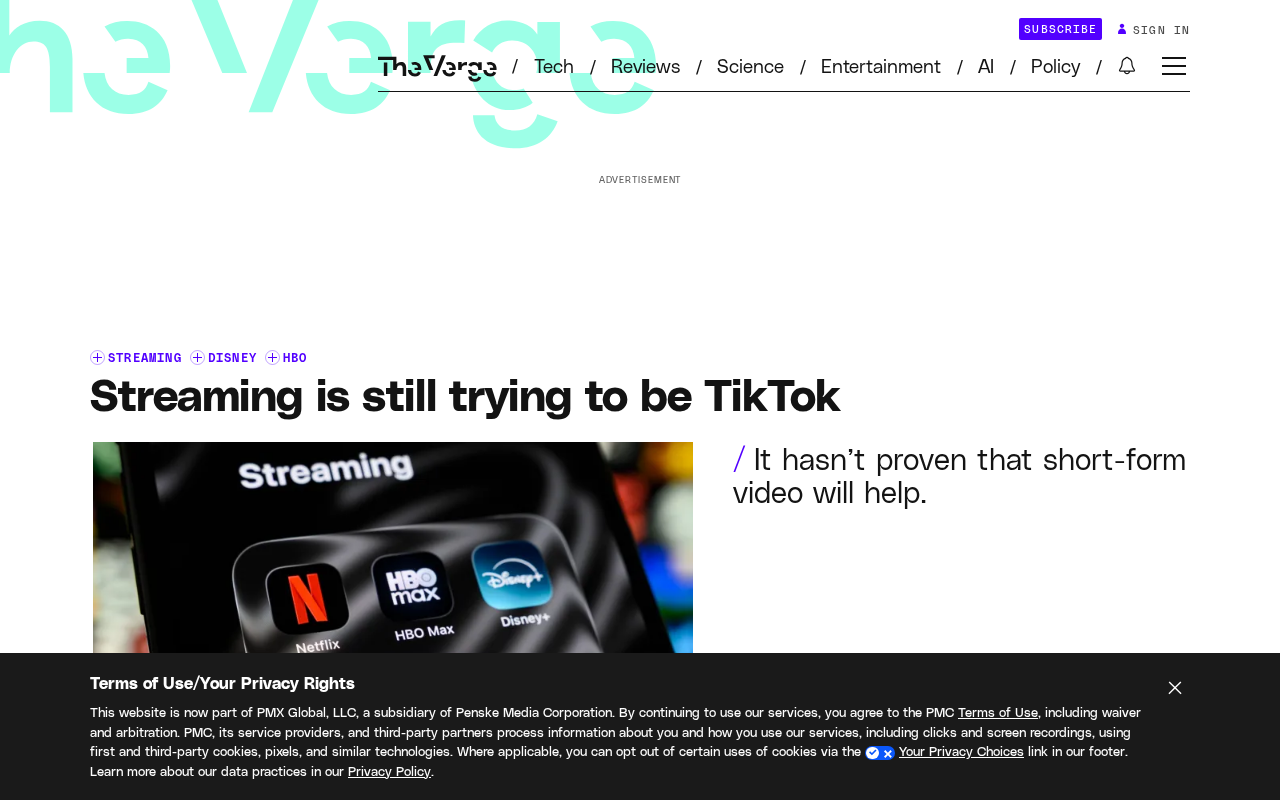
This is not an isolated case. From Netflix's Fast Laughs to Disney+'s short-video recommendations to Max's attempts to embed short content on its homepage, mainstream streaming platforms have repeatedly tried over the past few years to transplant TikTok's interaction model into their own products. The problem is that this transplant has never truly succeeded.
Why Streaming Always Wants to Be TikTok
Survival Pressure in the Attention Economy
Ellison's statement reveals a harsh reality: streaming's competitors are no longer each other, but tech platforms like YouTube, TikTok, and Instagram that occupy users' fragmented time. When the entertainment time available to users each day tends to be fixed, every minute spent on short videos means one less minute spent on long-form content. Streaming platforms must extend user dwell time to maintain subscription value and advertising revenue.
TikTok's algorithmic recommendations and infinite scroll mechanism have proven to be the most effective attention-capture tools to date. Streaming platforms naturally want to replicate this logic: use short videos to attract users to open the app, then use recommendation algorithms to guide them toward long-form content.
Infinite Scroll is an interface design pattern where users can continuously load new content without clicking "next page." First proposed by Aza Raskin in 2006, it reduces the cost of active navigation and, combined with algorithmic recommendations, creates an experience of "perpetual content supply." Short-video platforms like TikTok and Instagram Reels view it as a core mechanism for boosting dwell time. Its side effect is that it easily leads to overuse and attention fragmentation, which is why some platforms have begun introducing usage-time reminders. For streaming, transplanting infinite scroll means shifting the decision burden of "what to watch" from users to algorithms—but the decision cost for long-form content is far higher than for 15-second clips, and a simple application may backfire.
Strategic Synergy Needs After the Merger
After Skydance's acquisition of Warner Bros. Discovery, the content libraries of Paramount Plus and HBO Max need more efficient traffic distribution. Ellison's emphasis on competing with tech companies for attention is effectively about finding a growth engine for the merged platform. If the barrier to content discovery can be lowered through short-video formats, in theory this could boost subscription conversion and advertising inventory value.
The Dilemma of Imitation: Why the TikTok Model Is Hard to Replicate
Conflict of Product DNA
TikTok's core is UGC (user-generated content) and algorithm-driven instant gratification, while streaming platforms' core is carefully produced PGC (professionally generated content) and branded viewing experiences. Embedding short-video feeds into streaming apps often results in bloated interfaces and confused users. Users open HBO Max to watch Succession or House of the Dragon, not to scroll through 15-second clips.
UGC (user-generated content) and PGC (professionally generated content) are two basic supply models in the content industry. UGC is created and uploaded by ordinary users, with platforms mainly handling distribution and moderation; content volume is large, iteration is fast, and the long-tail effect is significant—TikTok and YouTube are typical examples. PGC is produced by professional organizations or teams, with high costs, stable quality, and strong brand attributes—Netflix and HBO Max's original series fall into this category. Their business models differ significantly: UGC platforms rely on advertising and creator ecosystems, while PGC platforms rely on subscriptions and copyright operations. Transplanting the interaction formats of UGC platforms onto PGC platforms faces multiple mismatches in content supply cadence, moderation costs, and user experience expectations.
The Algorithm Capability Gap
TikTok's recommendation system is built on massive user behavior data and real-time feedback loops. Although streaming platforms also have viewing data, their data density and iteration speed are far inferior to short-video platforms. Training short-video recommendation models on long-video viewing behavior often yields unsatisfactory results.
Real-time feedback loops in recommendation systems refer to the ability to rapidly update user profiles and content rankings after each user interaction (viewing, liking, swiping away, dwell time). TikTok's recommendation system captures behavioral signals within second-level or even shorter time windows and quickly re-ranks massive candidate content, forming a positive feedback loop that "understands you better the more you use it." Viewing behavior on streaming platforms is sparse and each session is long, so feedback signal density is low and model iteration cycles often run in days or weeks. In addition, the goal of short-video recommendation is "the next 15 seconds," while the goal of long-video recommendation is "the next series"—their optimization objectives and evaluation metrics are not aligned, so direct application has limited effect.
Mismatch in Content Supply
Most short-video content on streaming platforms consists of marketing clips cut from long-form content rather than content natively designed for the short-video format. This creates a fragmented user experience: short videos look like ads, while long videos are the main feature, and the conversion path between them is not smooth.
Where Streaming's Real Path Forward Lies
Ellison's remarks are more of a strategic declaration than a concrete product roadmap. But overall, if streaming platforms want to avoid falling behind in the battle for attention, they may need to abandon the obsession with "becoming TikTok" and instead find a path more suited to their own DNA.
One approach is to strengthen social viewing and real-time interaction, combining live sports and event-based content with community discussion—an advantage short-video platforms find hard to replicate. Another approach is to deepen personalized recommendations, but not for short videos—rather, to more precisely help users find the next series they want to watch among vast amounts of long-form content.
Interestingly, at the all-hands meeting Ellison defined the competition as tech companies rather than other streaming platforms. This positioning itself may be the key: what streaming needs to learn is not TikTok's product format, but tech companies' deep understanding of user behavior and ability to iterate quickly. As for whether short-video feeds are the way to achieve this, the answer may not be so straightforward.
One-line Summary
Streaming platforms repeatedly imitate TikTok's short-video feeds, but DNA conflicts and algorithmic gaps make it hard to succeed.
Paragraph Summary
Using new CEO David Ellison's remarks after Skydance's acquisition of Warner Bros. Discovery as an entry point, the article notes that streaming platforms are redefining their competitors as tech companies like YouTube and TikTok and trying to capture user attention by introducing TikTok-style short-video feeds. However, from Netflix's Fast Laughs to HBO Max's short-content attempts, such transplants have never truly succeeded. The article explains the failure from three dimensions—product DNA conflict (UGC vs. PGC), algorithmic capability gaps, and content supply mismatch—and proposes that a more viable path for streaming lies in strengthening social viewing, live events, and personalized long-form content recommendations rather than simply copying TikTok's product format.
Related articles

Gemini 4 Neon Leak: A Potential Strong Contender Against Opus 5.5
A Hacker News thread suggests Gemini 4 Neon looks like an Opus 5.5 competitor. This article unpacks the product positioning behind this community signal, shifts in the top-model competitive landscape, and what it means for developers' model selection strategy.

Claude Fable 5.2's Self-Authored Short Film 'Fable' Sparks Discussion
A short film 'Fable,' credited to Claude Fable 5.2 for script, visuals, and directing, appears on Hacker News. This article analyzes the significance of full-pipeline AI creation, community reactions, and what it means for content creators.

Anthropic IPO Pricing: A Signal of AI Giants Going Public
Anthropic's IPO pricing draws attention. This article analyzes its potential impact on AI industry valuation, commercialization paths, and the competitive landscape, and highlights public-market expectations and challenges for AI companies.