Switching to AI Agent Development in Three Months: Is the ByteDance Expert's Learning Path Reliable?

Breakdown of the Bilibili three-month AI Agent crash-course path, affirming its framework value while warning about marketing exaggeration.
Based on the viral Bilibili video "from zero to employment in three months" on AI Agent learning, this article provides an objective analysis combined with industry practice. The path has three stages: first week on large model principles, prompts, and function calling; weeks 2-3 writing the first Agent; second month adding RAG and memory; third month challenging multi-agent projects. The article finds the path offers a clear action framework and emphasizes hands-on practice, suitable as an introductory map for those with programming backgrounds. But claims like "90% get stuck at just watching" and "qualify for 90% of positions" lack data support and are marketing-oriented. A three-month crash course does not equal employment level; RAG, memory, and multi-agent content have high engineering demands, and real competitiveness requires project depth.
In the context of rapidly iterating AI technology, AI Agent development engineer has become a hot job. A learning path called "from zero to employment in three months" has been circulating on Bilibili, claimed to be taught by a ByteDance expert, and has attracted many career changers. This path breaks the learning process into three stages, emphasizing hands-on practice and quick onboarding. But is a three-month crash course realistic? Who is this path suitable for? This article provides an objective analysis and breakdown based on the video content and common industry practices.
The Three-Stage Design of the Learning Path
The video creator claims that as long as you are under 46 years old and consistently invest effort, three months is enough to become an AI talent sought after by companies. The path is divided into three calendar months, each with clear goals and outputs.
According to the Bilibili uploader's plan, the first week requires understanding three things: the basic principles of large models, how to write prompts, and how to invoke Function Calling. These three form the foundation of Agent development. The author uses "foundation" to describe this week's task, meaning all subsequent development builds on understanding these three.

From a technical perspective, this week's arrangement indeed captures the core entry points of Agent development. Large models are the inference engine, prompts are the control mechanism, and function calling is the bridge between the Agent and the external world. For people with programming backgrounds, mastering these concepts and making simple calls in a week is feasible. But for complete beginners with no programming foundation, digesting all three areas within a week and reaching a level of "understanding" is quite demanding.
Weeks 2-3: Write Your First Agent
The path emphasizes that in weeks two and three, you must write your first Agent, making it help look up information, organize spreadsheets, and automatically send weekly reports. The author specifically notes that "90% of people get stuck at just watching without doing," while those following the path are already running code.
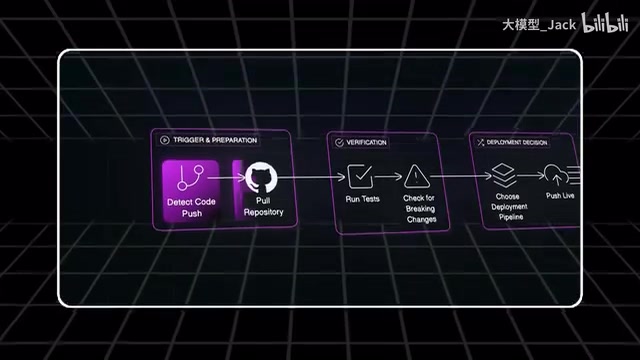
The design logic of this stage is commendable: through a specific small project, the prompts and function calls learned in the first week are connected to form a closed loop. Tasks like looking up information, organizing spreadsheets, and sending weekly reports have clear boundaries and are suitable as beginner projects. However, the claim that "90% of people get stuck at just watching without doing" is an empirical judgment lacking data support, and readers should view it rationally. The real difficulty lies in understanding the limitations of the first Agent after it runs—such as hallucination issues, stability of tool calls, and exception handling—which are often simplified in crash-course paths.
Second Month: Use RAG and Memory to Make the Agent Smarter
Entering the second month, the path requires adding RAG (Retrieval-Augmented Generation) and memory capabilities to the Agent, enabling it to read documents and remember context, transforming it from a "toy" into a "usable tool."

RAG and memory are indeed key to moving an Agent from demonstration to practical use. RAG solves the problems of outdated knowledge and hallucination in large models, while memory gives the Agent coherence in multi-turn conversations. These two technologies are almost standard in enterprise-level Agents. However, from a learning curve perspective, RAG involves vector databases, document chunking, retrieval strategies, and other components, while memory involves session management, long-term memory storage, and other designs. Mastering and integrating them into a project within a month requires a certain level of engineering capability. The video does not elaborate on specific technology choices and implementation details, which is a common shortcoming of crash-course paths.
RAG (Retrieval-Augmented Generation) is a technical architecture that combines external knowledge bases with large language models. Its core process is: split documents into chunks and convert them into vectors stored in a vector database; when a user asks a question, the system retrieves the most relevant chunks from the database, injects them as context into the prompt, and then lets the large model generate an answer. RAG can effectively alleviate the problems of outdated knowledge and hallucination in large models because it lets the model answer based on real-time, private materials rather than relying solely on training-time memory. Implementing RAG requires mastering engineering details such as embedding models, similarity retrieval algorithms (e.g., cosine similarity), and document chunking strategies—these are common tech stacks for enterprise-level Agents.
Agent memory mechanisms are generally divided into short-term memory and long-term memory. Short-term memory refers to maintaining the context window of the current conversation to ensure coherence in multi-turn interactions; long-term memory persists key information through external storage (such as databases or vector stores) for use in subsequent sessions. When designing a memory system, information extraction, storage structure, retrieval triggers, and forgetting strategies must be considered to avoid excessive context length degrading model performance. Memory capability upgrades an Agent from a single-turn Q&A tool to an assistant that can continuously track task status, which is an important step toward practicality.
Third Month: Multi-Agent and Project Practice
The task for the third month is to challenge a small multi-agent project, run through the complete process, and then complete two to three small projects, such as an Agent intelligent customer service or automated workflows. The author claims that following this through is enough to qualify for 90% of Agent development positions.
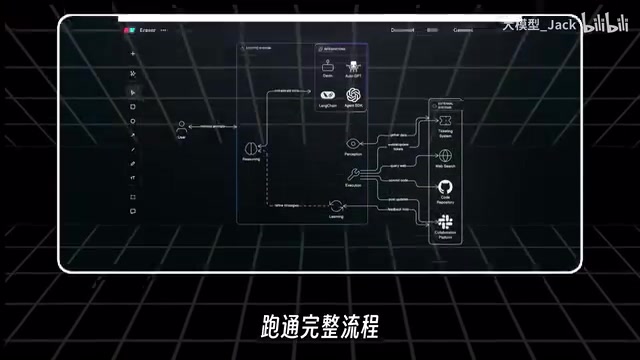
Multi-agent systems involve complex issues such as role division, communication coordination, and task orchestration, and are advanced content in Agent development. Using one month to "challenge" a small multi-agent project, a more realistic goal is to understand its basic architecture rather than master it. As for the claim of "qualifying for 90% of Agent development positions," this is a marketing statement lacking support from job demand data. Different companies have very different requirements for Agent development positions—some focus on application-layer integration, while others require底层 framework development—and three months of project experience can hardly cover everything.
Multi-agent systems refer to architectures in which multiple Agents with specific roles and capabilities collaborate to complete complex tasks. Common patterns include: a coordinator Agent responsible for decomposing tasks and assigning them to specialized Agents (such as retrieval Agents, coding Agents, and review Agents), with Agents communicating through message passing or a shared blackboard. This architecture can handle cross-domain work that a single Agent cannot, but it also introduces new challenges such as role design, communication protocols, task orchestration, and conflict resolution. When learning multi-agent systems, the focus should be on understanding the basic paradigms of division and collaboration (such as debate, pipelines, and hierarchical control) rather than pursuing a fully functional system. In actual projects, multi-agent systems are often used in automated workflows and intelligent customer service ticket handling, but stability and debugging complexity are relatively high, requiring some accumulation of engineering experience.
Who Is This Path Suitable For?
Overall, the greatest value of this learning path is that it provides a clear action framework: from basic concepts to a single Agent, then to RAG and memory, and finally to multi-agent and project practice. The stage goals are clear and hands-on practice is emphasized. For developers with programming backgrounds who want to quickly understand the full picture of Agent development, it can serve as an introductory map.
But it is important to recognize clearly that a three-month crash course does not equal employment-level competence. Statements in the video such as "companies are fighting to hire" and "qualifying for 90% of positions" are clearly marketing-oriented. AI Agent development involves multiple capabilities including large model principles, engineering architecture, data processing, and system integration. True competitiveness comes from project depth and experience solving real problems. Learners are advised to treat this path as a starting point and dig deeper into one direction at each stage, rather than pursuing a crash-course label.
In addition, the video guides viewers to leave comments to receive materials, which is a common traffic-driving method. Learning materials can be obtained, but learning outcomes depend on sustained investment and deliberate practice, not on the materials themselves.
One-line Summary
Breakdown of the three-month AI Agent crash-course path on Bilibili, affirming its framework value while warning about marketing exaggeration.
Paragraph Summary
Based on the widely circulated Bilibili video "from zero to employment in three months" on AI Agent learning, this article provides an objective analysis combined with industry practice. The path is divided into three stages: in the first week, master large model principles, prompts, and function calling; in weeks two to three, write the first Agent; in the second month, add RAG and memory; in the third month, challenge multi-agent projects. The article argues that the path provides a clear action framework and emphasizes hands-on practice, making it suitable as an introductory map for those with programming foundations. However, claims such as "90% of people get stuck at just watching without doing" and "qualifying for 90% of positions" lack data support and have marketing overtones. A three-month crash course does not equal employment-level competence, and content such as RAG, memory, and multi-agent systems has high engineering requirements; actual competitiveness needs to be supported by project depth.
Related articles

VERS: Editing Activation Explanations to Halve Reasoning Model Tokens
VERS guides reasoning models by editing activation explanations, cutting 45.8% of tokens on GSM8K with only a 0.82 pp accuracy drop and transferring to larger models, but losing accuracy on competition problems.

Finding Errors Is Not Enough: Selective Model Escalation for Entity-Targeted Sentiment Analysis
This study explores selective model escalation for entity-targeted sentiment analysis, comparing data collection ordering, uncertainty-driven re-examination, and model routing—finding that minority-class priority only helps at very small data volumes, the oracle upper bound far exceeds actual gains, and escalation must be tailored to each dataset.

WAS-PO: Using Whitened Advantages to Solve the Correlation Trap in Multi-Reward Reinforcement Learning
WAS-PO paper proposes whitening advantages to correct correlation bias in multi-reward RL: when rewards are correlated, naive weighted summation effectively applies Σ^{1/2}w instead of w. Experiments show training reward improves steadily, but held-out accuracy does not improve in sync, and under two rewards it actually falls behind.