T-Mobile Launches T-Mix Plans: Swappable Subscription Perks as the New Selling Point

T-Mobile launches T-Mix plans starting at $55 per month, bundling swappable streaming or gaming subscription perks.
T-Mobile has launched a new plan lineup called T-Mix, starting at $55 per month (with autopay), including one wireless line and a swappable "Pick" perk users can choose and change among Netflix, Apple TV, YouTube Premium, Xbox Game Pass Ultimate, and more. It also integrates device promotion perks, continuing T-Mobile's value bundling strategy with added flexibility. This reflects carriers shifting competition from network quality to content perks and user experience. However, specific switching rules, device promotion terms, and long-term costs are not fully disclosed, so users should check carefully.
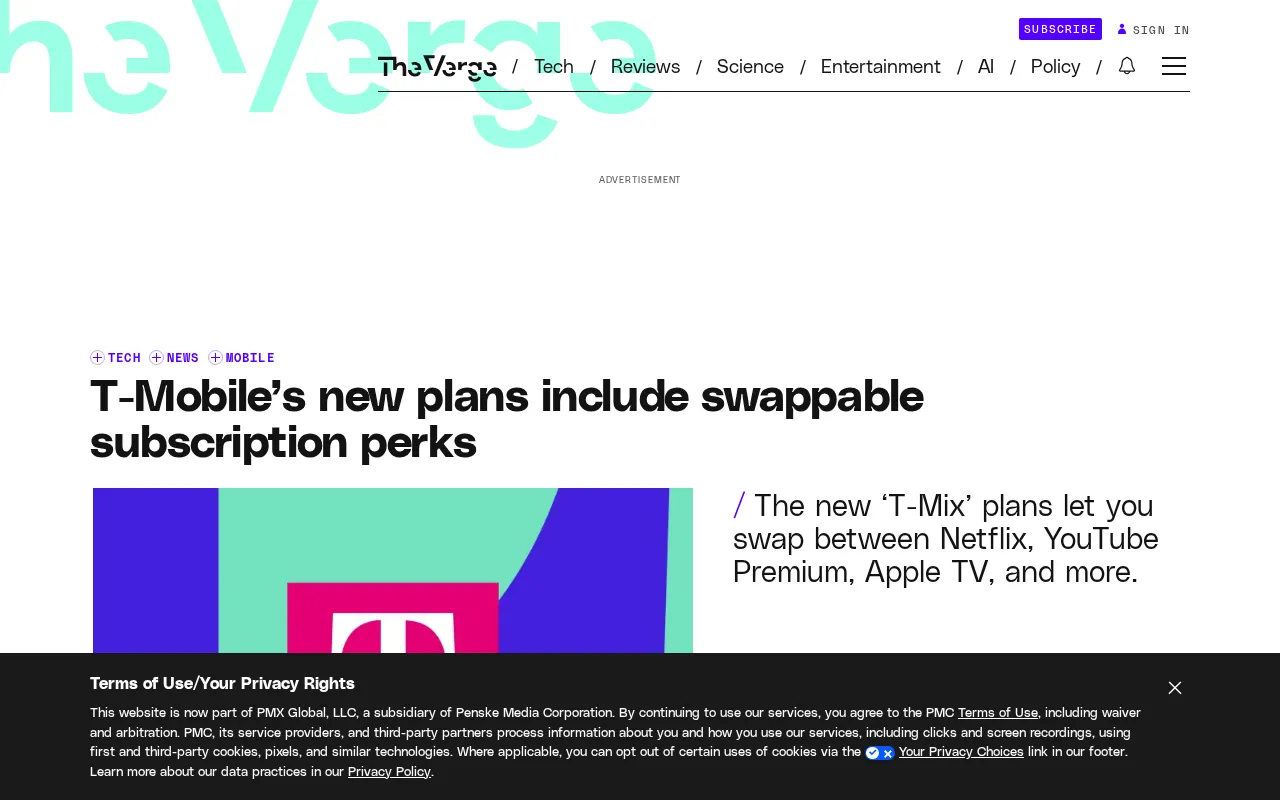
T-Mobile is breaking away from the fixed model of traditional wireless plans with a new lineup called "T-Mix." Its core innovation lies in bundling wireless service with subscription perks such as streaming and gaming, while allowing users to swap their chosen subscription on a monthly basis—an uncommon approach in carrier plan design. According to an initial report by Fierce Network, the plans start at $55 per month (with autopay), including one line and one swappable "Pick" perk.
Plan Structure: Base Service + Swappable Subscription
T-Mobile's T-Mix plans bundle wireless service with subscription perks, letting users choose one service—such as Netflix, Apple TV, YouTube Premium, or Xbox Game Pass Ultimate—as their "Pick." Unlike past carrier practices that locked specific services into plans for the long term, T-Mix allows users to change this perk. That means users can switch to a different service from month to month based on their viewing or gaming habits, without changing the entire plan.
This design responds to the widespread sense of subscription fatigue: when users pay for multiple streaming services at once, they often want to keep only the one they need most right now. T-Mobile hands the choice to users and lets the perk flow with the plan on a monthly basis—essentially shifting the hassle of "subscription management" from the user to the carrier.
Subscription Fatigue is a consumer psychology phenomenon that has emerged in recent years as subscription models for streaming and digital services have become widespread. When users pay monthly fees for multiple platforms (such as Netflix, Disney+, Spotify, etc.) simultaneously, the cumulative expense and cumbersome management burden create a sense of exhaustion, leading users to actively trim subscriptions, rotate between services, or even return to free or low-cost alternatives. For carriers, subscription fatigue is both a challenge and an opportunity: the challenge is that users may resist bundled plans; the opportunity is that if a plan offers flexible choices and switching mechanisms, it can actually lower the psychological barrier for users by shifting the management burden of multiple subscriptions to the carrier, thereby improving the plan's appeal and retention rate.
Pricing and Synergy with Device Promotions
The standard plan starts at $55 per month (with autopay), including one line and one "Pick" perk. In addition to subscription services, T-Mix also integrates device promotion perks, allowing users to enjoy corresponding discounts when purchasing devices. This approach of bundling wireless service, content subscriptions, and hardware subsidies continues T-Mobile's recent "value bundling" strategy, but adds flexibility through swappable perks.
From a pricing structure perspective, the $55 starting price is at the lower-middle level among major carriers, and if the bundled subscription services were purchased separately, the monthly cost could approach or even exceed the price difference of the plan itself. For users who need both wireless service and streaming subscriptions, this bundling approach may be attractive. However, exactly how much you save depends on which services you actually use and whether you fully take advantage of device promotions.
Equipment Promotions in wireless plans typically refer to carriers selling phones and other devices through installment payments (such as 24 or 36 months) and offering discounts or cash back in the form of bill credits. Users must commit to staying on the network for a certain period; if they terminate early or change plans, unredeemed credits may be forfeited. This model lowers the barrier to device purchases but increases long-term lock-in. T-Mix integrates device promotions with swappable subscription perks, meaning users must consider both the device commitment period and the flexibility of perk switching when choosing a plan, so they don't miss out on the plan's flexible features due to device contract restrictions.
A New Direction for Carrier Competition
T-Mobile's move reflects a shift in the focus of wireless carrier competition: from pure network coverage and data pricing to differentiation through content perks and user experience. As network quality gaps gradually narrow, bundled subscription services become a means to boost user loyalty and reduce churn. And allowing users to swap perks adds a layer of "personalization" on top of the bundle.
Whether this model works depends on execution details: whether the switching process for swappable perks is smooth, whether the pool of available services is rich enough, and whether the terms of device promotions are sufficiently transparent. If users find that switching perks requires cumbersome steps, or that available services are limited, the appeal of this selling point will diminish.
Value Bundling is a strategy in which carriers combine core communication services (such as wireless data and calling) with third-party digital perks (such as streaming and gaming memberships) or hardware subsidies for sale. The logic is to increase the plan's perceived value to boost user loyalty, reduce churn, and use the scale effect of bundling to obtain wholesale discounts from content providers. Unlike traditional "free giveaways," modern value bundling emphasizes flexibility and personalization—for example, allowing users to choose their own perks or change them periodically—to address subscription fatigue and the diversity of user needs. T-Mobile's T-Mix is a reflection of this trend, attempting to strike a balance between the stability of bundling and the freedom of choice.
What It Means for Users
For consumers, T-Mix plans offer a more flexible bundling option. If you're already paying for Netflix or YouTube Premium and need a new wireless line, this type of plan may help simplify your bill. But note that the plan's long-term cost, the commitment period of device promotions, and the specific rules for swapping perks all need to be carefully checked before signing up.
T-Mobile has not yet disclosed all the details, including the specific perk combinations for plans at different price points and the complete list of available services. Only as more information is revealed will users be able to more accurately judge whether T-Mix suits their usage habits.
Against the backdrop of an increasingly complex subscription economy, T-Mobile's attempt at least points in one direction: let plans follow changes in users' needs, rather than making users adapt to fixed plans.
One-line Summary
T-Mobile launches T-Mix plans starting at $55 per month, bundling swappable streaming or gaming subscription perks.
Paragraph Summary
T-Mobile has launched a new plan lineup called T-Mix, starting at $55 per month (with autopay), including one wireless line and a swappable "Pick" perk that users can choose and change among services such as Netflix, Apple TV, YouTube Premium, and Xbox Game Pass Ultimate. The plans also integrate device promotion perks, continuing T-Mobile's value bundling strategy while adding flexibility through swappable perks. This reflects a shift in carrier competition from network quality to differentiation through content perks and user experience. However, the specific switching rules, device promotion terms, and long-term costs have not been fully disclosed, and users need to check carefully to determine whether the plans suit them.
Related articles

Will GitHub Die? Open Source Maintainer Burnout and the Collaboration Crisis in the AI Era
Lex Fridman podcast discussion on open source maintainer burnout and GitHub's predicament: massive pull requests overwhelm core maintainers, and AI worsens code bloat. Using math journal peer review and Poincaré conjecture verification as analogies, the article analyzes why verification in knowledge production must be deliberately slow, and how open source communities can avoid the failure mode of maintainers exiting.

Stop Building Cookie-Cutter AI Websites: 3 Tools That Transform Your Coding Agent
Three tools that boost AI coding agents: FFmpeg skill for local video editing in Claude Code and Cursor, Hallmark's 50 design themes to fix cookie-cutter AI sites, and Jailbreaks' 25+ model prompts.

How America's Gerontocracy Squeezes the Younger Generation
Americans over 55 hold nearly three-quarters of national wealth, alongside an 80-year-old president and elderly congressional leaders. The Atlantic's Idrees Kahloon explains how gerontocracy drives up housing costs, squeezes opportunities for the young, and explores zoning reform and child poverty reduction as practical fixes.