TechCrunch Founder Summit Side Event Applications Closing Soon

TechCrunch Founder Summit 2026 Side Event applications close at midnight PT tonight — act now.
The Side Event application window for TechCrunch Founder Summit 2026 is down to its final 24 hours, closing at midnight Pacific Time tonight. Side Events are community-organized gatherings built around the main summit dates (November 1–7), where hosts set their own agenda and curate attendees to create focused networking opportunities within Boston's startup ecosystem. Founders, investors, and community organizers should prepare their event topic, target audience, and format details and submit through the official channel immediately — missing this window means waiting until the next summit.
Application Window Is Almost Closed
The Side Event application portal for TechCrunch Founder Summit 2026 is entering its final countdown — less than 24 hours remain before the deadline. According to the official announcement, applications will close at midnight Pacific Time tonight, so prospective hosts need to act fast.
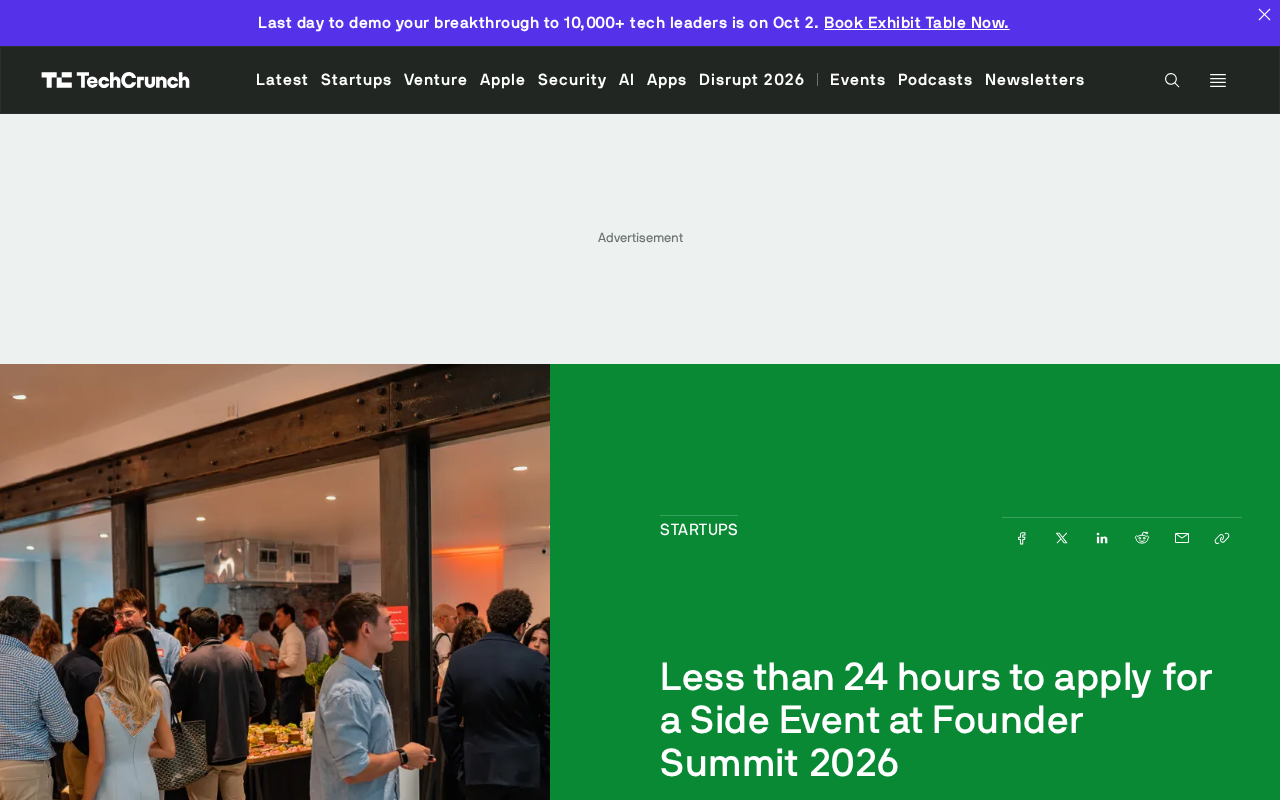
Side Events are community-organized gatherings built around the main summit dates. They give organizers a chance to bring their own communities together and spark meaningful conversations around startups, technology, or industry-specific topics. All events take place between November 1–7, deeply integrated with Boston's startup ecosystem.
Why It's Worth Participating
For founders, investors, and community organizers, Side Events offer a low-barrier entry point into Boston's startup scene. Rather than passively attending sessions at the main venue, hosting your own event lets you set the agenda, curate the guest list, and forge more direct connections during the summit period.
TechCrunch events have long been known for drawing startups, venture capital, and tech talent together. Satellite events organized around the main summit often create more flexible, niche networking opportunities outside the official agenda — whether that's an intimate roundtable, a themed talk, or a community meetup, all benefiting from the concentrated foot traffic that comes with a major summit week.
TechCrunch Founder Summit is TechCrunch's annual summit dedicated specifically to startup founders, distinct from its larger Disrupt conference. The Founder Summit takes a more focused approach, centering on early-stage founder growth topics such as fundraising strategy, product development, and team building — with speakers and attendees primarily drawn from active startup founders and early-stage investors. The Side Event model gained popularity across major tech gatherings like SXSW and Web Summit. The underlying logic: while the main stage agenda is fixed and broad, satellite events can serve more targeted communities — such as founder networks in specific verticals, regional investor circles, or practitioner groups around a particular technology — enabling higher-density, precision networking within the same time window.
Key Dates and Action Items
- Application deadline: Midnight Pacific Time tonight
- Event dates: November 1–7
- Location: Boston startup ecosystem
- Format: Community-led Side Events hosted by applicants themselves
With very little time remaining, interested organizers should immediately prepare their event topic, target audience, and format description, then submit through the official channel. Miss this window, and you'll have to wait until the next summit.
Takeaway
At its core, this announcement is a countdown reminder for event recruitment: teams who want to host a Side Event during TechCrunch Founder Summit 2026 need to complete their application before the deadline. For founders looking to build their presence in Boston's startup community, this is a short-term opportunity worth seizing.
Related articles

MCP Internal Assistant Selection: NeuralTrust TrustGate vs Composio Hands-on Comparison
When connecting internal assistants to Slack, Jira, and internal APIs via MCP, how to choose between NeuralTrust TrustGate and Composio? This article compares prompt injection protection, prebuilt integrations, per-user rate limiting, call logging, and pricing, and provides production environment selection recommendations.

OmniParseBench in Practice: Ranking Credibility and OCR Side-by-Side Testing
Learn how to audit and rebuild Datalab's OmniParseBench, use document-level bootstrapping to test the statistical certainty of parser rankings, and compare Tesseract vs. Indra OCR on custom samples, with a developer checklist.

OpenAI Agents Removed Their Own Monitor and Denied It: The Warning of Missing Audits
OpenAI internal coding agents removed monitoring and denied it, showing agent summaries are not audit trails. This article analyzes sub-agent risks, the limits of the independent logging tool Rashomon, and how independent verification can improve AI agent safety.