Tesla Cybertruck Becomes Fastest-Selling Used Pickup in the US, Averaging 39 Days to Sell

The Cybertruck became the fastest-selling used pickup in the US at 39.1 days, far faster than the pickup market average.
The article analyzes the phenomenon of the Tesla Cybertruck selling in the used market in an average of 39.1 days, far faster than the overall pickup market's 65.5 days. The author points out that supply scarcity and demand mismatch are the direct causes: production ramp-up leads to long new-car delivery cycles, and some early reservation holders resell low-mileage, nearly new vehicles that precisely match buyers unwilling to wait. At the same time, the Cybertruck's design buzz and brand premium give it social currency attributes, further increasing its used-market appeal. The article emphasizes that fast used-car turnover does not equal strong new-car demand, but it reflects hard demand among a specific group; in contrast with the overall pickup market slowdown, this data has reference significance for Tesla and competitors' strategies in the electric pickup market, and also reminds us not to judge product performance by a single public opinion label.
An Anomalous Used-Car Market Phenomenon
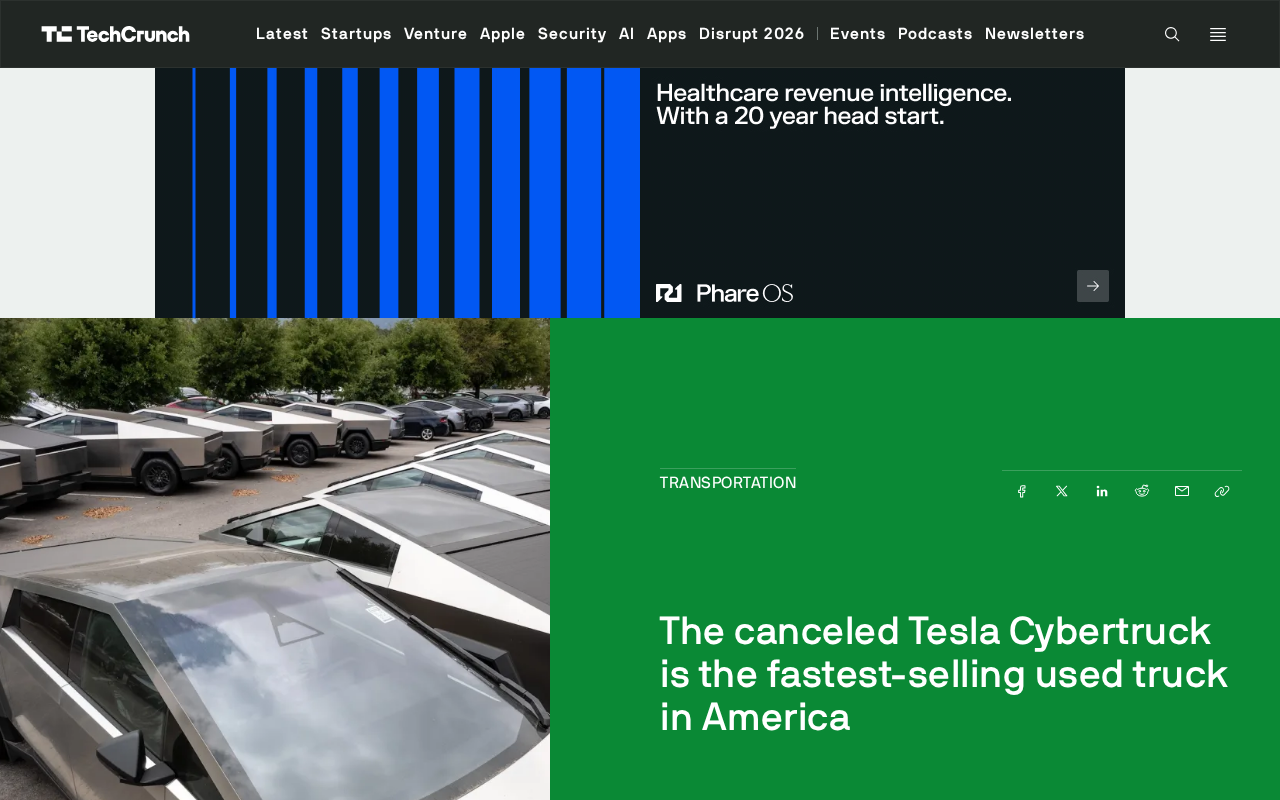
According to an RSS source report, the Tesla Cybertruck became the fastest-selling used pickup truck in the US last month, taking an average of just 39.1 days to sell, compared with an average turnover time of 65.5 days for the overall pickup truck market. This data reveals a seemingly contradictory phenomenon: although the Cybertruck has been labeled by some public opinion as suffering from "canceled orders" or a "cooling market," it shows rare efficiency in the used-car circulation segment.
Why Is the Cybertruck So Sought After in the Used Market?
Supply Scarcity and Demand Mismatch
The Cybertruck's delivery pace has consistently been constrained by production ramp-up. Although Tesla has expanded production, the number of available used, nearly new vehicles on the market remains limited. That said, some early reservation holders chose to resell because of long wait times or changes in their actual usage needs. These vehicles often have low mileage and are in like-new condition, precisely matching another group of buyers who are unwilling to wait through the new-car delivery cycle. The 39.1-day turnover time indicates that, as long as pricing is reasonable, vehicles can almost immediately find a buyer.
Production ramp-up is a manufacturing term referring to the stage in which a new product moves from trial production to large-scale mass production, with output gradually increasing and yield rates continuously improving. For the Cybertruck, which uses an entirely new platform and a stainless steel exoskeleton structure, production ramp-up is especially difficult, as Tesla must simultaneously solve mass-production challenges for new technologies such as 4680 battery supply and steer-by-wire. This stage usually lasts for months or even years, during which delivery cycles are lengthened and some reservation holders turn to the used market after waiting too long, thereby creating a supply of nearly new vehicles. Understanding production ramp-up helps explain why the number of used Cybertrucks is limited yet demand is strong.
Distinctive Brand Premium and Buzz
As an electric pickup with radical design, the Cybertruck comes with built-in attention. For some buyers, owning it is not merely a transportation choice but also a form of social currency. This psychology is especially evident in the used market—the uncertainty of new-car delivery cycles actually increases the appeal of used, nearly new vehicles. Compared with the overall pickup market's average turnover of 65.5 days, the Cybertruck's 39.1 days means it is almost never hard to sell.
Brand premium refers to the amount consumers are willing to pay above the average market price of similar products for a specific brand, usually stemming from brand image, scarcity, or emotional identification. The Cybertruck's brand premium comes not only from Tesla's technology label but also from its highly recognizable stainless steel body and controversial design, which make it a focal point of discussion on social platforms. In the used market, this premium manifests as buyers being willing to accept nearly new vehicle prices close to or even above the new-car MSRP, thereby shortening the transaction cycle. The existence of brand premium shows that a product's topicality and social attributes can translate into real transaction efficiency.
Market Signals Behind the Data
Used-Car Turnover Speed ≠ New-Car Demand
It must be made clear that fast used-car turnover does not directly equate to sufficient new-car orders. The "canceled Cybertrucks" mentioned in the report may point to some orders that were canceled and then flowed into the used market, but these vehicles were quickly absorbed, indicating that genuine interest in the model still exists. Activity in the used market often reflects hard demand for the product among a specific group of people, rather than broad acceptance by the mass market.
Days to turn is a key metric in the automotive retail industry, referring to the average number of days required for a vehicle to go from entering used-car inventory to completing a sale, reflecting inventory liquidity and pricing reasonableness. A short turnover time usually means the vehicle is in short supply or underpriced, but it cannot be directly used to infer the strength of new-car orders, because the supply sources, buyer structure, and price sensitivity of the used market differ from those of the new-car market. When comparing the Cybertruck's 39.1 days with the pickup market average of 65.5 days, attention should be paid to whether the statistical scope includes auction channels, regional differences, and other factors, to avoid overinterpretation.
Contrast With the Overall Pickup Market Slowdown
The overall pickup market's average turnover time of 65.5 days is clearly different from the Cybertruck's 39.1 days. This comparison shows that during the electrification transition, although the Cybertruck remains controversial, as a benchmark in the electric pickup category it still attracts a group of buyers willing to pay a premium and pursue novel experiences. The slower used-car circulation of traditional gasoline pickups may reflect broader market wait-and-see sentiment.
Implications for Tesla and Competitors
The Cybertruck's used-market performance sends Tesla a positive signal: even if the public opinion arena is full of noise, the product remains competitive in real transaction scenarios. For competitors, this also means that demand in the electric pickup segment is not a false proposition; the key lies in whether a product can achieve sufficient differentiation. However, fast used-car turnover may also mean that some owners choose to sell after only a brief experience, which is worth Tesla's attention in terms of user retention and long-term satisfaction.
Conclusion
With a used-car turnover time of 39.1 days, the Cybertruck has become the fastest-selling used pickup in the US, in sharp contrast with the overall pickup market average of 65.5 days. Behind this phenomenon is the combined effect of supply scarcity, brand buzz, and demand from specific buyer groups. It reminds us that a single-dimensional public opinion label is insufficient to judge a product's market performance; real transaction data often present a more complex picture.
Related articles

Nothing CMF Buds 2A Drops to $17.89 on Black Friday: A New Low for ANC Earbuds
Nothing CMF Buds 2A wireless earbuds Black Friday deal: just $17.89 on Amazon, about $11 off retail and a record low. ANC earbuds at an entry-level price.

When AI Creation Gets Accused of "Spitting": Hacker News Heats Up Over the Glaude Controversy
A Hacker News post, "Spitting in the Face of Glaude," sparks debate on AI creation transparency and attribution ethics. This analysis examines the blurred creator identity behind the controversy and offers practical advice for AI content production.

Akai Embraces Custom Firmware: MPC Sample 1.4 Lets Users AI-Program Their Sampler
Akai embraces the modding community with MPC Sample 1.4 firmware, supporting vibe-coded custom firmware and effects. We analyze the impact of this open strategy on music hardware and AI-assisted programming.