Tesla FSD V15 Hands-On: 3D Real-Time Visualization Turns Autonomous Driving into GTA

Tesla FSD V15 launches with Tesla Reality View, a 3D real-time visualization of FSD perception and planning, claiming a 25x safety improvement.
Tesla FSD V15 has started rolling out, headlined by Tesla Reality View—a system that renders FSD's perception and planning as a near-GTA-quality 3D scene in real time, letting drivers see the car's live understanding of nearby vehicles, pedestrians, potholes, and standing water. The creator marvels at the six-year leap from dots on a black screen to full 3D. FSD V15 claims a 25x (not 25%) safety improvement via a fully upgraded end-to-end network. The creator speculates it's pure vision plus map data, ruling out LiDAR. The stream also covers job displacement for Uber and truck drivers and the marketing angle behind Musk's singularity claim.
Tesla FSD (Full Self-Driving) V15 has started rolling out, and the most striking feature in this update isn't the driving capability itself—it's a 3D real-time visualization system called Tesla Reality View, which renders the world as perceived by the vehicle onto the screen in something close to a video game. A YouTube creator spent an entire livestream marveling at it, saying he felt like he was playing GTA 7—and all of this evolved from "dots and lines on a black screen" in just six years.
What Exactly Does Tesla Reality View Show?
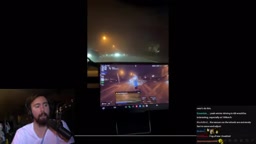
Simply put, Tesla Reality View turns FSD's planning output into a 3D scene you can "see." Every surrounding car, pedestrian, cyclist—even potholes and standing water on the road—is rendered in real time on screen. The creator lost his composure multiple times during the livestream, shouting: "How is this even possible?"
From the footage, the system can precisely display the decisions the vehicle is about to execute—steering around branches on the road, avoiding flooded sections, completing U-turns in tight spaces. This isn't after-the-fact replay; it lets the driver see in real time what FSD is "thinking."
Technically, the creator speculated that the system may combine map data (such as metadata from Google Maps or satellite imagery) with real-time camera input, synthesizing and rendering through a prediction model. He briefly suspected Tesla was using LiDAR, then immediately dismissed the thought—Musk has explicitly stated Tesla will not go the LiDAR route. His final conclusion: this is a pure vision-based prediction model that works with existing map data to "fill in" vehicles and pedestrians in real time.
Interestingly, some viewers questioned whether extra cameras were needed. The creator responded that Tesla doesn't have 360-degree surround-view cameras—FSD accomplishes all of this with its existing camera array.
The end-to-end driving network is the key background for understanding the logic behind the FSD V15 upgrade. Traditional autonomous driving architectures typically split perception, prediction, and planning into multiple independent modules, with information passed between them through manually defined interfaces—prone to error accumulation and rule conflicts. End-to-end networks attempt to map camera input directly to driving decision output using a single neural network, with intermediate representations learned by the model itself. The advantage of this architecture is reduced hand-crafted rules and improved generalization to long-tail scenarios, but the cost is decreased interpretability—engineers have difficulty intuitively knowing why the model made a particular decision. Tesla Reality View is, in a sense, precisely a compensation for this deficiency: it externalizes the model's internal perception and planning results into a visualized scene, allowing drivers to glimpse part of the logic inside the black box.
What Does a 25x Safety Improvement Mean?
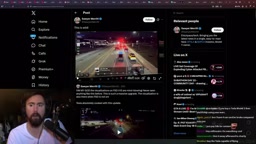
According to information cited in the video, FSD V15 upgraded every stage of the end-to-end driving network, achieving a 25x improvement in safety performance—not 25%, but 25 times, i.e., a 2500% improvement. Someone in the video specifically clarified this easily misread number: "Some people think we're saying a 25% improvement. No, we're saying 25 times."
If this figure is accurate, it means FSD's ability to handle safety-critical scenarios has made an order-of-magnitude leap. From the actual demonstration, the system did showcase several noteworthy capabilities:
- Pothole avoidance: Identifying road potholes in advance and adjusting the route
- Flooded section bypass: Smoothly changing lanes in front of dynamically appearing standing water
- Obstacle handling: When encountering branches or fallen trees on the road, first attempting to go around, then reversing to re-plan if that fails, and ultimately choosing a wider turning path to pass through
- Fog penetration: Continuing to drive in dense fog where a human driver can barely see the road
The creator's reaction to the last point was telling: "Human skills aren't enough—the machine wins hands down."
The pure vision approach is the core divergence between Tesla and most autonomous driving companies. Companies like Waymo use multi-sensor fusion of LiDAR plus cameras. LiDAR measures distance by emitting laser pulses and can directly generate high-precision 3D point clouds, offering advantages in ranging accuracy and under adverse lighting conditions. Musk has long maintained that since humans can drive with just their eyes, cameras plus neural networks should theoretically be able to do the same—at far lower cost than LiDAR. The challenge of pure vision is that depth estimation relies entirely on algorithms inferring from 2D images, placing extremely high demands on model capability. The creator's hesitation in suspecting and then dismissing LiDAR in the video precisely reflects the controversial nature of this approach in public perception: when the visualization is realistic enough, people instinctively don't believe it can be achieved with cameras alone.
From Dots and Lines to GTA: What Happened in Six Years
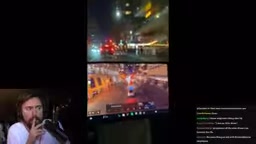
The most persuasive comparison in the video came from a recollection by the creator: six years ago, Tesla FSD's interface was just a few dots and lines on a black screen; today, the same system makes you feel like you're playing an open-world game.
He drew an analogy: the graphical evolution from Atari to Super Nintendo took over twenty years, while FSD went from "dots and lines" to "GTA-level visualization" in just six years. This rate of progress led him to declare it "defies science," even joking that Tesla must be "sacrificing engineers in exchange for black magic."
What makes this comparison powerful is that it reveals not just improvements in rendering technology, but a qualitative transformation in underlying perception and prediction capabilities. Every accurately tracked vehicle and pedestrian on screen represents the model's real-time understanding of the physical world.
The Employment Impact of Widespread Autonomous Driving
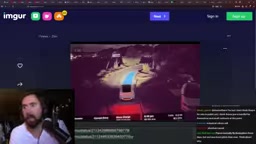
At one point the livestream drifted from the technology itself to a weightier social issue: when FSD-level autonomous driving is deployed at scale, what happens to jobs that consist of "getting from point A to point B"?
The creator introduced the concept of "bot jobs"—work that requires no critical thinking, no creative problem-solving. Uber drivers, truck drivers, food delivery—in his view, all fall into this category: "You're just moving things from point A to point B. That doesn't require you to creatively solve problems."
His view is direct: if a robot can perform the same actions, efficiency will be orders of magnitude higher. But the problem is that the people being replaced won't automatically become engineers. When someone in the video asked "What happens to these people?" the answer was a half-joking "We need a system reset."
This discussion offered no answers, but it pointed to a real contradiction: there's a massive gap between the speed of technological progress and the speed of social structural adjustment—and autonomous driving sits right at the center of that gap.
Two Voices on the "Singularity"
The video cited Musk's claim that "we've already entered the singularity." The creator's attitude was cautious—he believes there's a certain marketing element to it, but the directional judgment is correct: the pace of change is indeed approaching some kind of "escape velocity."
He mentioned that Grok's logo is a visual metaphor for the singularity: a halo of light around a black hole, with matter and light falling into it. "It's hard to know what happens inside a singularity, but it's bound to be interesting."
As for whether FSD itself can support the claim that "the singularity is here," the creator's view is: FSD alone isn't enough, but when these technologies—autonomous driving, world models, superintelligence—emerge simultaneously, the trend becomes clear.
The technological singularity concept was first proposed by mathematician Vernor Vinge in 1993, referring to a critical point at which technological development becomes so fast that it exceeds human understanding and predictive capability, after which changes become irreversible and unimaginable. Ray Kurzweil, in The Singularity Is Near, tied it to the moment when artificial intelligence surpasses human intelligence, predicting it would occur around 2045. Musk has repeatedly claimed in recent years that the singularity has already arrived, based on the exponential leaps in AI capability. Critics argue that the singularity concept lacks falsifiability and can easily be used as marketing rhetoric. The video creator's stance falls somewhere between the two: acknowledging the direction is correct while remaining skeptical about the timeline. This caution is reasonable—there is often a decades-long lag between breakthroughs in individual technologies and synchronized transformation of entire social structures.
Editorial Take
The significance of Tesla Reality View may be underestimated. On the surface it's a flashy visualization feature, but in reality it addresses one of the most vexing problems in autonomous driving deployment: trust. When drivers can see in real time what the vehicle "sees" and "plans" to do, the psychological barrier to human-machine co-driving drops significantly.
As for the 25x safety improvement figure, more independent verification is needed. The scenarios shown in the video—steering around branches, avoiding standing water, penetrating dense fog—are indeed impressive, but livestream demonstrations and statistically meaningful safety data are two different things. The true measure of FSD V15 will come from real-world feedback from a large number of vehicle owners over the coming months.
What's certain is that the visual interaction of autonomous driving is evolving from "icons on a dashboard" to "a window into understanding machine intent." That direction is more worthy of attention than any single performance metric.
One-line Summary
Tesla FSD V15 rolls out with Tesla Reality View, a 3D real-time visualization of FSD perception and decision-making, claiming a 25x safety improvement.
Paragraph Summary
Tesla FSD V15 has started rolling out, with the most talked-about feature being Tesla Reality View—a visualization system that renders FSD's perception and planning results as a near-game-quality 3D scene in real time, letting drivers see the vehicle's live understanding of surrounding cars, pedestrians, potholes, and standing water, along with its decision intent. The video creator marveled that the effect rivals GTA and traced the six-year leap of FSD's interface from dots and lines on a black screen to 3D rendering. FSD V15 claims a comprehensive upgrade to the end-to-end driving network with a 25x—not 25%—safety improvement. Technically, the creator speculates it's a pure vision prediction model combined with map data for synthetic rendering, ruling out LiDAR. The livestream also discussed the impact of autonomous driving on repetitive jobs like Uber and truck drivers, as well as the marketing element behind Musk's "singularity is here" claim.
Related articles

Nothing CMF Buds 2A Drops to $17.89 on Black Friday: A New Low for ANC Earbuds
Nothing CMF Buds 2A wireless earbuds Black Friday deal: just $17.89 on Amazon, about $11 off retail and a record low. ANC earbuds at an entry-level price.

When AI Creation Gets Accused of "Spitting": Hacker News Heats Up Over the Glaude Controversy
A Hacker News post, "Spitting in the Face of Glaude," sparks debate on AI creation transparency and attribution ethics. This analysis examines the blurred creator identity behind the controversy and offers practical advice for AI content production.

Akai Embraces Custom Firmware: MPC Sample 1.4 Lets Users AI-Program Their Sampler
Akai embraces the modding community with MPC Sample 1.4 firmware, supporting vibe-coded custom firmware and effects. We analyze the impact of this open strategy on music hardware and AI-assisted programming.