The AI Failure Ledger: A $2 Billion Bill and Who Actually Pays

The AI Failure Ledger tracks over $2 billion in losses, revealing that algorithmic errors are paid for by taxpayers, tenants, and law firms—while developers go almost scot-free.
Based on the "AI Failure Ledger" compiled by ainvasion.com, the article reviews global AI-related legal disputes and compensation cases totaling over $2 billion. Three landmark cases: Australia's Robodebt algorithmic debt-collection system failure, with costs recalculated at A$548.5 million borne by public finances; RealPage's rent-pricing algorithm antitrust settlement of $359.9 million awaiting court approval; and AI-generated fake legal citations leading to sanctions of over $110,000 in a single case, with rules tightened in 2026. The core finding: no court has yet made a final liability determination, and the payers for AI failures are mainly taxpayers, tenants, and law-firm clients—while AI system developers almost never appear directly in the defendant's seat. The risk-transfer path is developer → deployer → end user/public, and the longer the chain, the blurrier the responsibility. In 2026, the legal system is shifting from "innovation first" toward fragmented "clarity of liability."
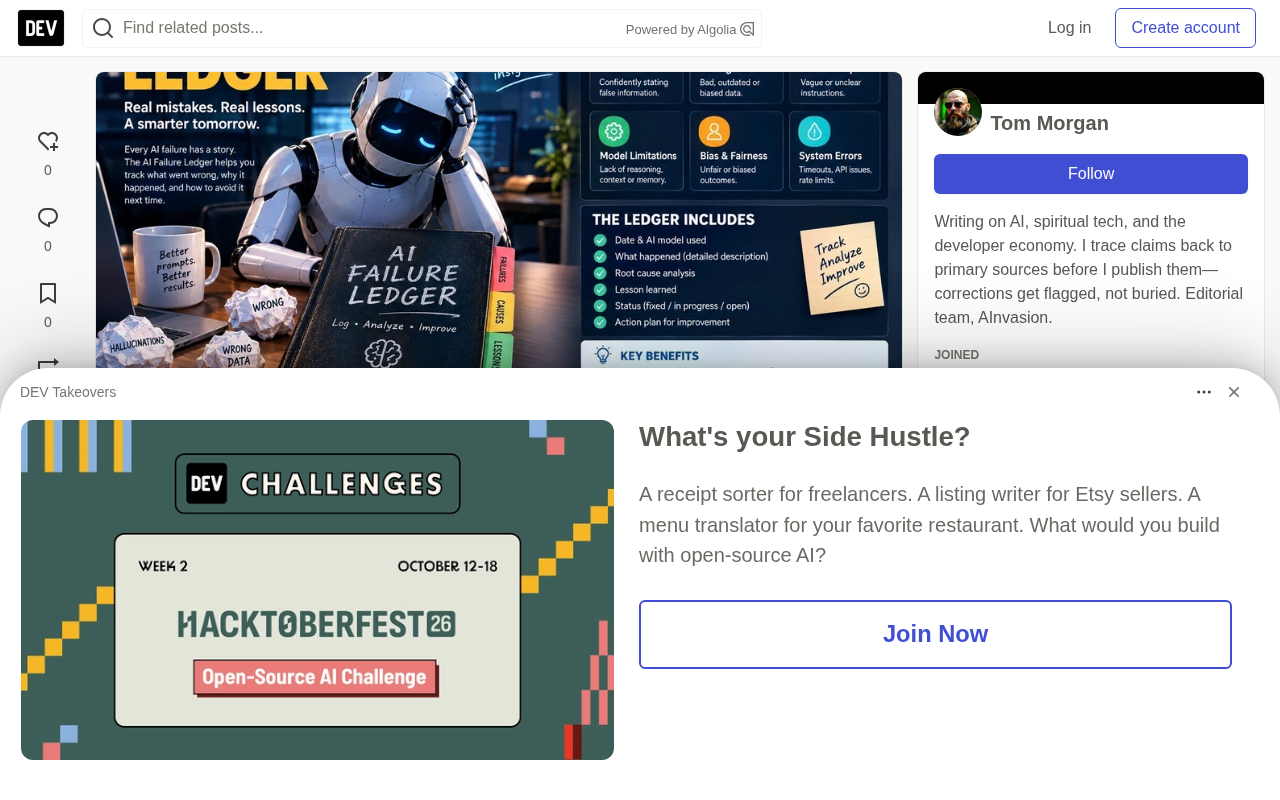
When AI systems fail, the bill doesn't disappear—it just shifts to a specific person. The "AI Failure Ledger" compiled by ainvasion.com tracks a series of AI-related legal disputes and compensation cases worldwide, with the total already exceeding $2 billion. The core value of this ledger isn't in the sensational numbers, but in the overlooked question it exposes: who bears the cost of automated decision-making?
The Heaviest Entries in the Ledger
Robodebt: The A$548 Million Algorithmic Debt-Collection Nightmare
Robodebt was an automated debt-recovery system run by Australia's welfare department between 2015 and 2019. The system used an algorithm to estimate how much welfare recipients might owe the government and issued debt notices directly. The problem was that the estimation logic itself was flawed—it reverse-calculated individual actual income using averaged income figures, leading to a flood of erroneous debt notices.
In June 2026, Robodebt's failure cost was recalculated at A$548.5 million. The government has said compensation payments will begin before the end of 2026. The case is notable because it is one of the few instances where a government department directly operated an AI/automation system and caused systemic harm—and the victims were mostly vulnerable populations.
Robodebt (full name: the Robodebt scheme) was an automated debt-recovery program run by Australia's Department of Human Services (Centrelink) between 2015 and 2019, formally known as "Income Averaging and Employment Income Confirmation." Its core mechanism was to take a taxpayer's declared annual income, divide it by the number of pay cycles in the year to derive an "average weekly income," and compare it against income support records during the welfare-receipt period. If the former exceeded the latter, the system automatically generated a debt notice and required the individual to prove their innocence. The problem was that many welfare recipients' incomes were not evenly distributed—seasonality, temporary work, and multiple part-time jobs alternating meant some weeks' income far exceeded the average, and Robodebt simply ignored that volatility. The system also inverted the burden of proof: the government was supposed to prove the debt existed, but instead beneficiaries had to provide evidence that they "didn't owe money." This directly violated Australian administrative law principles. In 2019, the Federal Court ruled the scheme unlawful in a representative case. In 2020, the government agreed to pay roughly A$1.8 billion in settlement. Subsequent administrative reviews and recalculation of the compensation scheme ultimately pushed the failure cost to A$548.5 million.
RealPage: A $359.9 Million Antitrust Settlement
The core dispute in the RealPage case is whether its rent-pricing algorithm constitutes price manipulation. The U.S. Department of Justice and the California Attorney General separately sued RealPage, citing the antitrust provisions of the Sherman Act. RealPage's proposed class settlement is $359.9 million, now awaiting court approval.
The California Attorney General's ruling date for RealPage is October 2, 2026. The key issue in this case is: should algorithmic pricing tools be treated as instruments of price collusion? If landlords all use the same algorithm to set rents, does that count as "coordinated pricing"? The answer to this legal question will have far-reaching effects on the entire pricing-algorithm industry.
RealPage is a real estate software company headquartered in Texas, whose core products include the algorithm-based rent-pricing system YieldStar (later upgraded to AIRM). The system collects rental data and market information input by landlords, and uses an algorithm to suggest optimal rents. In lawsuits brought by the U.S. Department of Justice and multiple state attorneys general, plaintiffs argued that when a large number of landlords (especially large property management companies in the same city) all adopt the same algorithmic tool, the algorithm effectively functions as a "price-coordination hub"—it reduces the market competition that would exist if landlords priced independently, creating de facto price collusion. This touches the core issue of Section 1 of the Sherman Act: explicit collusion (such as meeting to agree on prices) is generally illegal, but whether algorithmic tools constitute "concerted action" is still unclear in case law. That is precisely the key legal controversy in the RealPage case: if landlords never directly communicated about prices but simply each input data into the same algorithmic system and accepted its recommendations, can the algorithm itself be recognized as the medium of "collusion"? The answer will determine the compliance boundary for the entire pricing-algorithm industry and may push antitrust law toward substantive expansion in the digital age.
Fake Citation Sanctions: $110,000 in a Single Case
Court sanctions for AI-generated fake legal citations have reached $110,204.38 in a single case. In 2026, related rules were adjusted, tightening the boundaries of lawyers' responsibility when using AI tools. Although the amounts in these cases are smaller than the previous two, the number is growing rapidly, reflecting a widespread problem: lawyers using AI-assisted research fail to verify the authenticity of AI output.
A Key Fact: No Court Has Yet Found Liability
One easily overlooked but extremely important piece of information in the ledger is this: so far, no court has made a final liability determination in any case.
The RealPage settlement is still awaiting approval, Robodebt's compensation scheme was proposed by the government rather than ordered by a court, and the fake-citation sanctions, though already in effect, are procedural penalties. This means the legal boundary of liability for AI failures remains blurry. When companies deploy AI systems, they face not a clear answer to "whether it's compliant," but a legal gray zone.
Who Is Actually Paying?
The distribution of payers revealed by the ledger is far from even:
Taxpayers bore the cost of Robodebt. The government compensation is funded by public finances, not by the system developer or the personal liability of decision-makers.
Tenants may be the actual victims in the RealPage case. If the settlement is approved, compensation will flow to renters affected by excessive rents, but the amount may be a drop in the bucket relative to the systemic harm.
Law firms and clients bore the cost of fake citations. AI-generated erroneous citations lead to sanctions, and ultimately the firm or client pays the fine, while also consuming judicial resources.
Interestingly, the developers of AI systems barely appear directly in the defendant's seat in this ledger. The path of risk transfer is: developer → deployer → end user/public. The longer the chain, the blurrier the responsibility.
The Shift in Legal Rules
2026 is a year of dense regulatory adjustment. The update of fake-citation sanction rules, the advancement of the RealPage ruling, and the finalized timeline for Robodebt compensation—these events together point to a trend: the legal system is shifting from a default position of "AI innovation first" toward "clarity of liability."
But this shift remains fragmented. Different jurisdictions and different legal fields (antitrust, consumer protection, procedural law) respond to AI failures differently. For companies operating AI systems across borders, compliance will become a highly complex task.
The concentrated emergence of AI fake citation sanctions is closely related to stricter application of Rule 11 of the Federal Rules of Civil Procedure by U.S. federal and state courts. Rule 11 requires lawyers, before submitting any filing, to conduct a "reasonable inquiry" to ensure their legal claims have a basis in current law and their factual claims have evidentiary support. Traditionally, courts have been restrained with Rule 11 sanctions, usually substituting warnings or training for fines. But since 2023, multiple cases in which lawyers submitted AI-generated fake case citations have been exposed by courts on their own initiative and sanctioned, and some judges began explicitly requiring lawyers to disclose whether they used generative AI in research. The 2026 rule adjustments further tightened the "reasonable inquiry" standard: lawyers cannot use "the AI output was wrong" as an excuse for exemption and must independently verify every citation. The significance of this shift is that it anchors responsibility for the use of AI tools firmly on human professionals rather than the tool itself. For law firms, this means establishing internal processes for verifying AI output; for AI service providers, product liability is still not directly touched—consistent with the pattern in the Robodebt and RealPage cases where developers remain invisible from the defendant's seat.
The Real Meaning of the Ledger
The value of the "AI Failure Ledger" is not in predicting the future, but in recording what has already happened. This ledger reminds us: the failure of AI systems is not an abstract technical problem—it produces concrete, quantifiable costs borne by specific groups of people. And the current legal framework is far from ready to answer the basic question of "who should pay for algorithmic errors."
When you deploy an automated decision-making system, it's worth asking yourself one question: if it goes wrong, whose account will the bill be charged to?
One-line Summary
The AI Failure Ledger tracks over $2 billion in losses, revealing that the cost of algorithmic errors is borne by taxpayers, tenants, and law firms—while developers are almost entirely exempt.
Paragraph Summary
Based on the "AI Failure Ledger" compiled by ainvasion.com, the article reviews global AI-related legal disputes and compensation cases, with totals exceeding $2 billion. Three landmark cases include: Australia's Robodebt algorithmic debt-collection failure, with costs recalculated at A$548.5 million borne by public finances; the RealPage rent-pricing algorithm antitrust settlement of $359.9 million awaiting court approval; and AI-generated fake legal citations leading to sanctions of over $110,000 in a single case, with rules tightened in 2026. The article's core finding is that no court has yet made a final liability determination, and the payers for AI failures are mainly taxpayers, tenants, and law firm clients—while AI system developers almost never appear directly in the defendant's seat. The risk-transfer path is developer → deployer → end user/public, and the longer the chain, the blurrier the responsibility. In 2026, the legal system is shifting from "innovation first" toward fragmented "clarity of liability."
Related articles

A Single Prompt Triggers a Global PHP Security Storm: Is AI a Savior or a Hidden Risk?
A single AI prompt triggered a global PHP security crisis affecting Wikipedia and the Internet Archive. This article reviews the incident, analyzes the OpenAI-Amazon controversy, and explores the security paradox of lowered vulnerability discovery barriers in the AI era and developer response strategies.

When AI Is Taken Away: How Reliance on Shortcuts Undermines Your Problem-Solving Resilience
A study of 1,222 people found that after using AI to answer questions, once AI was removed, people gave up on more problems than a control group that never used AI. The article analyzes the impact of AI reliance on learning resilience and metacognition, and explores design implications for AI learning tools.

Carta and NewView Partner to Let Startup Employees Cash Out Equity Early
Carta and NewView Capital partner to simplify startup tender offers, helping employees sell equity early. Analysis of the mechanism, liquidity pain points, and impact.