The AI Regulation Battle: Power Dynamics Behind Technical Narratives and Regulatory Capture
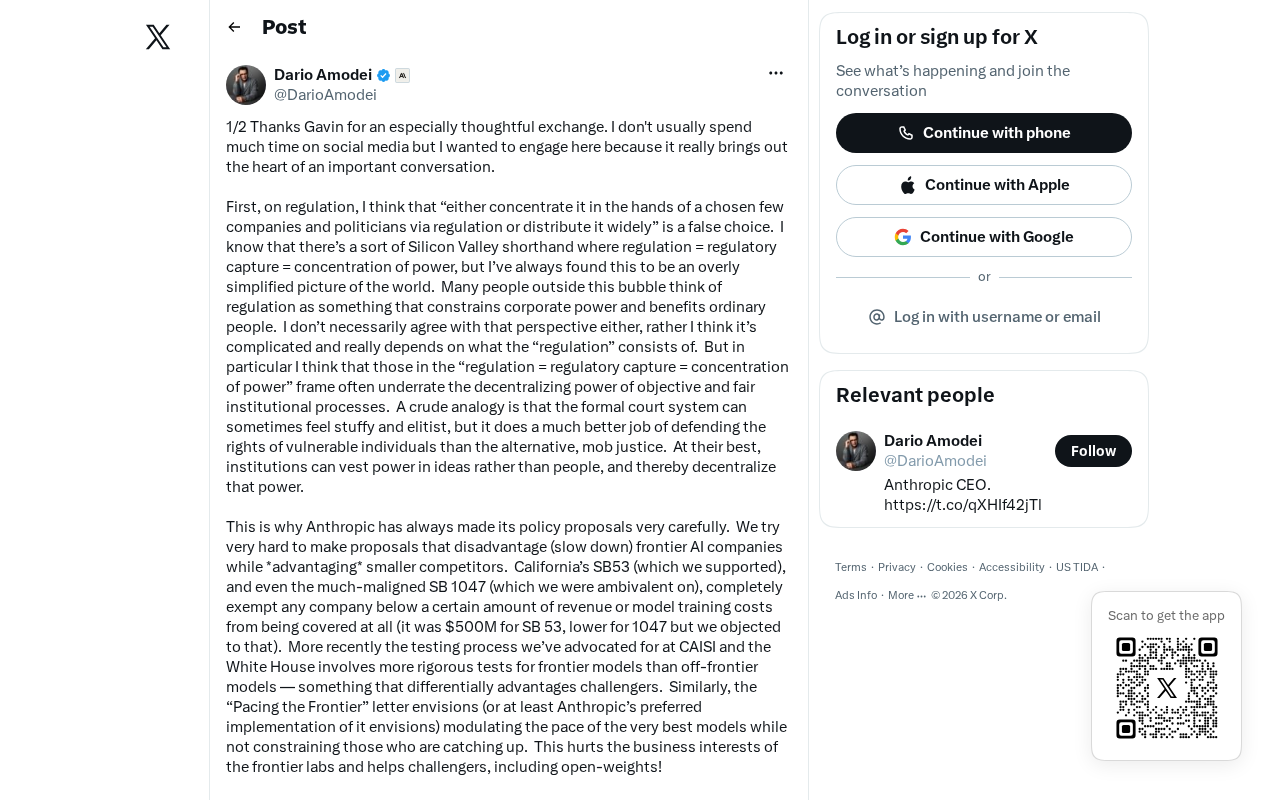
Exploring the power dynamics behind AI regulation debates, from narrative control to regulatory capture risks.
A viral Hacker News discussion on AI regulation reveals deep divisions in the tech community. This article examines the tension between rapid AI advancement and lagging legislation, the risk of regulatory capture by big tech, the unique challenges facing open-source AI, and pathways toward rational, tiered regulation that balances innovation with public safety.
Introduction: A Heated Discussion on AI Regulation
Recently, a post titled "On AI regulation and messaging" on Hacker News sparked an intense community discussion, garnering 233 upvotes and a remarkable 494 comments. The heat behind this discussion reflects the tech industry's deep concern and divided opinions on AI regulation.
As artificial intelligence penetrates every corner of society at an unprecedented pace, how to regulate it appropriately—and how the "messaging" behind regulation shapes public perception and policymaking—has become an unavoidable central issue. This article draws on that discussion to offer an in-depth analysis of AI regulation's current state, key controversies, and future direction.
Why AI Regulation Has Become a Focal Point
The Tension Between Rapid Technology and Lagging Institutions
The explosive growth of generative AI has left regulators trapped in a "catch-up legislation" dilemma. Technology iterates on a monthly basis, while legislative cycles often take years. This temporal mismatch means regulatory frameworks consistently lag behind technological reality.
Generative AI refers to artificial intelligence systems capable of autonomously generating text, images, code, audio, and other content based on input prompts—represented by OpenAI's GPT series, Google's Gemini, Anthropic's Claude, and other large language models. Since ChatGPT's release in late 2022, the field has experienced exponential technological leaps—model parameters have scaled from billions to trillions, and capabilities have expanded from simple conversation to complex reasoning, multimodal understanding, and autonomous agents. In stark contrast, legislative progress in major global economies has fallen far behind the pace of technological iteration. The EU's AI Act took nearly three years from proposal to formal passage, during which time AI technology underwent multiple generational shifts.
Many participants in the discussion pointed out that the complexity of AI regulation lies in its multi-dimensional nature—it simultaneously involves data privacy, algorithmic transparency, employment impacts, national security, and more. Any one-size-fits-all regulatory approach risks being either overly restrictive of innovation or leaving dangerous regulatory gaps.
Messaging: Who Defines AI's Risks and Opportunities
The word "messaging" in the post title is worth examining closely. It implies a key insight: the direction of AI regulation largely depends on how different parties "narrate" AI's risks and opportunities.
Large tech companies tend to emphasize a "responsible innovation" narrative—demonstrating self-regulation on one hand while subtly steering regulatory direction on the other, avoiding harsh rules that could disadvantage them. Critics argue that this industry-led narrative is itself a prelude to "regulatory capture"—shaping discourse to move regulation in directions favorable to incumbent interests.
Core Divisions in the Community Discussion
Key Arguments for Strong Regulation
Among nearly 500 comments, voices supporting stronger regulation raised several key arguments:
- Irreversibility of risk: Once AI systems cause systemic harm in critical domains (such as healthcare, judiciary, or finance), the consequences may be irreversible, necessitating precautionary regulation. This argument follows the logic of the Precautionary Principle—in the presence of scientific uncertainty, the absence of proof of harm should not be used as a reason to abandon preventive measures.
- Concentration of power: AI capabilities are concentrating among a few large tech companies, and the lack of regulation may exacerbate power monopolies in the digital age. The computational resources, data scale, and talent density required to train frontier large models today mean only a few companies with billions of dollars in investment capacity can stand at the technological frontier—a level of concentration far exceeding that of the traditional internet era.
- Public interest priority: The social impact of technology should not be left entirely to market forces and corporate self-judgment.
Key Concerns Against Over-Regulation
The other side expressed concerns about excessive regulation:
- Stifling innovation: Premature or overly strict regulation could kill innovation in its cradle, particularly hitting startups and open-source communities that lack compliance resources. Historically, many technological innovations (including the internet itself) flourished precisely because of relatively permissive regulatory environments in their early stages.
- Difficulty of defining technology through regulation: AI's boundaries are blurry, and legislators often lack sufficient technical understanding, easily producing rules that are both ineffective and harmful. For example, how to precisely define an "AI system" at the legal level is itself a highly contentious issue—from simple rule engines to complex neural networks, the technological spectrum is extremely broad, and definitions that are too broad or too narrow can both lead to regulatory misfires.
- International competition considerations: In the context of a global AI race, unilateral strict regulation may put domestic companies at a competitive disadvantage. This argument is particularly prominent in the geopolitical context of US-China AI competition, with critics worrying that over-regulation could push AI R&D activities toward jurisdictions with more lenient oversight.
Regulatory Capture: Why Big Companies Proactively Call to "Regulate Us"
A recurring deep theme in this discussion is the concern over "regulatory capture." Many tech practitioners have astutely noticed that when large AI companies proactively call to "regulate us," their true motivation may not be purely social responsibility.
Regulatory Capture is an economic theory proposed by Nobel laureate George Stigler in 1971. The theory argues that regulatory agencies, over time, tend to be "captured" by the very industries they are supposed to regulate, ultimately serving industry interests rather than public interests. This phenomenon has ample historical precedent in finance, telecommunications, energy, and other industries. In the AI domain, the risk of regulatory capture is particularly acute because regulators are highly dependent on industry experts' knowledge input to understand technical details—and these experts often come from the regulated companies themselves. Additionally, the "revolving door" phenomenon in the AI industry—personnel movement between government positions and tech companies—further blurs the line between regulator and regulated.
By participating in or even leading the development of regulatory rules, industry giants can set "compliance thresholds" favorable to themselves—thresholds that are merely a cost item for large companies with massive legal and compliance teams, but potentially fatal barriers to entry for small competitors and open-source projects. In this way, "regulation" paradoxically becomes a moat for consolidating market position.
This concern reminds us that when evaluating any AI regulation proposal, we need to ask: Who is pushing this regulation? Who will benefit from it? And who will bear the costs?
The Unique Regulatory Dilemma Facing the Open-Source AI Community
In the regulatory discussion, the fate of open-source AI is particularly concerning. The open nature of open-source models makes them difficult to fit into regulatory frameworks designed for closed commercial products. If regulation requires strict tracking and accountability for every AI system's use, the core characteristic of open-source models—"anyone can freely use and modify"—will fundamentally conflict with it.
Open-source AI models (such as Meta's Llama series, Mistral, Stability AI's Stable Diffusion, etc.) follow the open-source philosophy, making model weights, training code, and even datasets available to the public. This openness brings enormous innovation dividends—researchers can freely study and improve models, small and medium enterprises can build applications on top of them, and the entire ecosystem develops much faster as a result. However, the decentralized nature of open source also means no single entity can control a model's ultimate use. Once model weights are released to the public domain, anyone can fine-tune them to remove safety guardrails or deploy them in unvetted scenarios. This makes the traditional "deployer bears responsibility" regulatory logic difficult to apply, as the chain of responsibility between open-source model developers, distributors, and end users is extremely blurry.
Many community members worry that regulation under the banner of "AI safety" may ultimately become a tool to restrict open source and protect commercial closed-source models. How to ensure safety without stifling open-source innovation is an extremely thorny balancing problem in regulatory design.
Pathways Toward Rational AI Regulation
Synthesizing this discussion, a rational AI regulatory framework should perhaps possess the following characteristics:
Tiered and risk-based: Adopt differentiated regulation based on the risk level of AI applications—strict oversight for high-risk scenarios, permissive treatment for low-risk applications—avoiding one-size-fits-all approaches. The tiered regulatory approach already has important international precedents. The EU's AI Act is the world's first comprehensive AI legislation, employing a risk-based four-tier classification system: unacceptable risk (such as social credit scoring systems, completely banned), high risk (such as AI applications in medical diagnosis and judicial sentencing, requiring strict compliance), limited risk (such as chatbots, requiring transparency obligations), and minimal risk (such as AI-powered spam filters, essentially unregulated). The United States has adopted a more decentralized sectoral regulatory approach, advancing AI governance through executive orders and existing authority of various industry regulators. China has taken a targeted approach through a series of specialized regulations—including the Interim Measures for the Management of Generative AI Services and the Deep Synthesis Management Provisions—to regulate specific AI application scenarios.
Technology neutral: Regulation should focus on outcomes and impacts rather than specific technical implementation methods, to accommodate rapid technological evolution. Technology Neutrality is an important regulatory design principle whose core idea is that laws and regulations should govern the effects and behaviors technology produces, not the technical implementation itself. This principle was first widely applied in telecommunications and internet regulation—for example, the EU's General Data Protection Regulation (GDPR) regulates data processing behaviors, not specific data processing technologies. In the AI regulation context, technology neutrality means regulatory frameworks should not legislate against specific technical concepts like "neural networks," "Transformer architecture," or "large language models," but should focus on the actual impacts of algorithmic decisions on human rights, safety, and fairness. The advantage of this approach is greater temporal resilience—regardless of how underlying technology evolves, as long as its applications produce social effects within regulatory scope, the law can continue to function.
Multi-stakeholder participation: Regulatory rule-making should not be monopolized by industry giants; it needs to incorporate diverse voices from academia, civil society, the open-source community, and others to guard against regulatory capture. The challenge this principle faces in practice is knowledge asymmetry—civil society organizations and academic institutions often lack resources equivalent to those of large tech companies for deep participation in lengthy policy-making processes, requiring institutional mechanism design to ensure effective expression of diverse voices.
Transparent and accountable: The regulatory process itself should remain transparent, enabling the public to monitor "who is making the rules" and "whom the rules serve."
Conclusion
This Hacker News discussion—with its 233 upvotes and nearly 500 comments—is essentially the tech community's collective deliberation on AI's future governance. It reveals a core truth: AI regulation is never merely a technical issue; it is a profound contest over power, interests, and discourse.
In this contest, "how AI is narrated" matters as much as "how AI is regulated." Maintaining critical scrutiny of regulatory narratives and remaining alert to interest-driven motives behind seemingly benevolent facades may be the necessary stance for preserving technological democracy and innovation vitality in the AI era. This discussion offers no definitive answers, but the questions it raises are themselves enough to provoke our continued reflection.
Related articles

Gemini 4 Argon Hands-On: AI Builds Board Games, Constructs Temples, and Trains Robots Autonomously
Gemini 4 Argon hands-on roundup: AI autonomously builds a desk racetrack and temple in Blender, writes a ray tracing engine, trains a humanoid robot to sink 7 shots, plus API pricing and developer access.

The Magic Octagonal Coin: Why Only 9% of People Can Predict Its Flip?
Only 9% of people can correctly predict the Magic Octagon coin flip. This article explains its spatial rotation mechanism, common cognitive pitfalls, and a new hypothesis based on Relevance Theory, exploring the limits of human spatial reasoning.

Sam Altman: AI Is Entering the Era of Scientific Discovery — Math Breakthroughs Will Replicate in Biology and Energy
Sam Altman says AI is entering the era of scientific discovery — math breakthroughs will replicate in biology, materials science, and energy to help develop new drugs and energy sources.